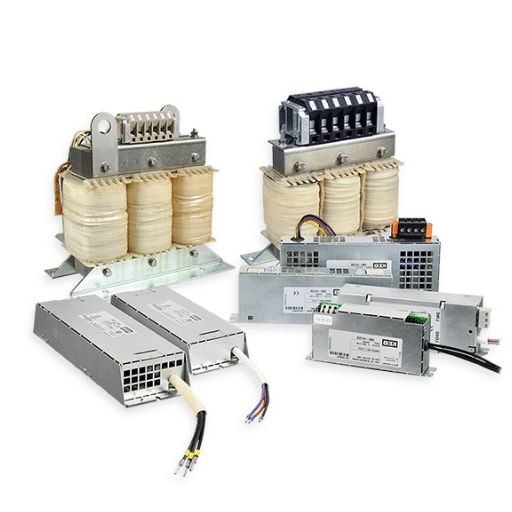
Ready to Get Your VFD Solution?
Whether you need a single drive or a complete system, we have the VFD products and engineering support to ensure your project's success.


The main advantages of VFDs are energy savings, soft starting, precise process control, longer motor life, built-in motor protection, improved power factor, and lower total cost of ownership.
For variable-load applications such as pumps, fans, and compressors, a well-sized VFD typically pays for itself in 1–3 years.
At a water treatment plant in Michigan, operators ran three 75 HP supply fans at full speed and choked airflow with inlet dampers. After retrofitting with VFDs, the fans ran at 60–80% speed for most of the year. The plant cut fan energy by 39.7% and saved $9,828 annually. Payback was 10–15 months.
That single case illustrates why VFDs remain one of the highest-ROI upgrades in industrial automation. This article breaks down 12 quantified VFD advantages. It shows you when the investment makes sense and points out the honest trade-offs no manufacturer likes to admit.
Key Takeaways
- VFDs reduce energy use by 20–50% in variable-torque loads because fan and pump power drops with the cube of speed.
- Soft starting limits inrush current from 6–8x full-load current down to 1–1.5x, cutting mechanical and electrical stress.
- Built-in protection functions can replace external overload relays and reduce panel cost.
- VFDs maintain near-unity power factor across the speed range, which lowers reactive demand and utility penalties.
- Average VFD payback is about 1.5 years for high-operating-hour systems, with utility rebates shortening it further.

A Variable Frequency Drive (VFD) controls motor speed by varying the frequency and voltage supplied to the motor. Instead of running a motor at fixed speed and throttling the mechanical load, a VFD slows the motor to match demand.
Here are the 12 advantages covered in this article:
If you want the full technical picture of how a VFD works, our variable frequency drive guide explains rectifiers, DC buses, inverters, and PWM. For the rest of this article, we focus on what those technical pieces mean for your bottom line.
Different stakeholders evaluate VFD advantages through different lenses. A plant manager cares about uptime and operating cost. An engineer cares about control and integration. A CFO cares about payback. A sustainability lead cares about carbon and compliance. Mapping the advantages this way helps everyone on the buying committee see the value that matters to them.
| Stakeholder | Top VFD Advantage | What They See on the Floor |
|---|---|---|
| Plant Manager | Reduced energy and maintenance | Lower utility bills, fewer breakdowns, less valve and belt work |
| Electrical Engineer | Soft starting and protection | Smoother starts, lower inrush, fewer nuisance trips |
| Process Engineer | Precise speed/torque control | Stable flow, pressure, or tension without throttling |
| CFO / Procurement | Financial ROI | 1–3 year payback, utility rebates, lower total cost of ownership |
| Maintenance Manager | Extended motor life | Fewer bearing replacements, longer coupling life |
| Sustainability Lead | Carbon reduction | Lower kWh, ESG reporting, LEED and rebate eligibility |
This stakeholder view also explains why VFD projects often succeed or fail. A project sold only on energy savings may stall in procurement. A project that also shows maintenance savings, improved product quality, and carbon reduction gets broader support.

Energy savings are the headline advantage of VFDs, and the physics are well understood. In centrifugal pumps, fans, and blowers, power is proportional to the cube of speed. The relationship is called the affinity law:
Power ∝ Speed³
This means a small speed reduction produces a large energy reduction. A fan running at 80% speed uses roughly 51% of full-speed power. At 60% speed, it uses about 22%. A 10% reduction in speed can reduce energy use by approximately 33%.
| Application | Typical Savings | Notes |
|---|---|---|
| HVAC fans (VAV) | 30–50% | Biggest wins when dampers previously throttled flow |
| Centrifugal pumps | 20–40% | Depends on static head and operating hours |
| Air compressors | 15–25% | Best on variable-air-demand systems |
| Chilled water pumps | 25–45% | Variable primary flow is common retrofit target |
| Conveyors | 5–15% | Savings from controlled acceleration and load matching |
The key condition is that the load actually varies. A motor that runs at full speed 24/7 will not save energy with a VFD. In that case, a soft starter or high-efficiency motor is the better investment.
For a deeper look at the math, see our VFD energy saving calculation guide.
A cement plant in India ran nine 830 kW, 6.6 kV blowers with inlet dampers. The dampers wasted pressure and energy. The plant replaced the fixed-speed starters with medium-voltage VFDs.
After the retrofit, the blowers tracked process airflow instead of fighting dampers. Power factor rose above 0.96, harmonic distortion stayed within plant limits, and maintenance dropped because operators no longer adjusted dampers manually. The project paid back in roughly 2.5 years.
When a motor starts direct-on-line (DOL), it pulls 6–8 times its rated full-load current. That inrush creates voltage sags, stresses windings, and slams couplings and belts. Across-the-line starting is hard on everything upstream and downstream of the motor.
A VFD starts the motor at zero voltage and frequency, then ramps both together. Starting current drops to roughly 1–1.5 times full-load current. The result is smoother acceleration, lower peak demand, and less mechanical shock.
The table below compares common starting methods.
| Starting Method | Starting Current | Speed Control | Best For |
|---|---|---|---|
| DOL starter | 6–8x FLA | None | Small motors, infrequent starts |
| Soft starter | 2.5–4x FLA | None | Fixed-speed loads needing inrush reduction |
| VFD | 1–1.5x FLA | Full 0–100% | Variable-speed loads |
This is why a VFD is often the right choice even when energy savings are modest. If your process requires controlled start-up and shut-down, the soft-start advantage alone can justify the drive. For a deeper look at how the drive ramps voltage and frequency together to achieve this smooth acceleration, see our dedicated guide to VFD soft start.
At an Ohio packaging plant, a 22 kW conveyor tripped several times per week on overcurrent. Maintenance found the acceleration ramp was set to 0.5 seconds. The mechanical shock was damaging the gearbox and causing nuisance trips.
After extending the ramp to 5 seconds, the conveyor accelerated smoothly, current stayed within limits, and the trips stopped. The fix took one parameter change and prevented roughly $2,400 of downtime per event.

Every DOL start heats the motor windings and puts torque shock through the drivetrain. Over thousands of cycles, that thermal cycling and mechanical stress shorten bearing life, crack couplings, and loosen mounts. AEGIS-bearing-protection data shows that 51% of motor failures are bearing-related.
A VFD reduces those stresses in three ways:
Fewer starts and stops, lower peak torque, and smoother operation translate directly into longer motor life and fewer repairs. For detailed maintenance guidance, see our article on how VFDs extend motor life.
| Component | Why It Lasts Longer |
|---|---|
| Motor bearings | Reduced vibration and thermal cycling |
| Couplings | Lower peak torque during starts |
| Belts/chains | No shock loading at startup |
| Throttling valves | Eliminated in favor of speed control |
| Pump seals | Reduced pressure spikes |
Beyond energy and starting, VFDs give you closed-loop control over speed and torque. That precision improves product quality in ways that are harder to quantify but easy to observe on the plant floor.
Examples include:
Winding and tensioning operations also benefit. Torque control prevents material breaks and wrinkles.
A VFD does not just save energy. It turns a fixed-speed motor into a variable-speed process actuator. For deeper coverage, read our VFD process control advantages article.
Modern VFDs include a full protection suite: overload, overcurrent, overvoltage, undervoltage, ground fault, phase loss, stall, and motor overheat via PTC thermistor input. In many cases, these functions can replace separate motor protection relays.
That has two practical benefits:
The catch is that the VFD must be listed for motor protection and set according to NEC 430.32. For the exact parameter settings, see our VFD protection settings guide.
Power factor is the ratio of real power to apparent power. Low power factor means you draw more current than you need for the work performed, which increases transformer and cable losses and can trigger utility penalties.
VFDs with diode front ends present a near-unity displacement power factor, typically 0.95 or higher, across most of the speed range. That improves the electrical system in two ways:
One caution: VFDs also create harmonic currents. The displacement power factor is high, but the distortion power factor can be lower. Proper filtering or line reactors keep total power factor within acceptable limits. For a full explanation, read our VFD power factor improvement article.
When a VFD replaces mechanical flow control, the maintenance burden shifts away from wear-prone hardware. Throttling valves, bypass dampers, and belt-drive speed reducers no longer need the same inspection and replacement schedule.
A water utility in Russia retrofitted three centrifugal pumps, two at 500 kW and one at 250 kW, with medium-voltage VFDs. Before the retrofit, operators throttled discharge valves to control flow. The throttling wasted energy and accelerated valve wear.
After the retrofit, flow control moved to pump speed. Energy use fell, valve maintenance dropped, and operators could fine-tune flow from the control room.
A motor running at reduced speed is quieter than one running at full speed with a mechanical throttle. In noise-sensitive environments such as HVAC mechanical rooms, hospitals, and food processing plants, that matters. Lower noise can also mean reduced worker fatigue and easier compliance with occupational noise limits.
Modern VFDs are data nodes, not just motor starters. Most drives include:
That connectivity enables remote monitoring, predictive maintenance, and integration with PLC/SCADA systems. You can trend motor current and temperature to detect bearing wear before it causes failure. For more on setup, see our VFD connectivity and Industry 4.0 guide.
Every kilowatt-hour saved is a kilowatt-hour not generated. At a grid emission factor of roughly 0.4–0.6 kg CO₂ per kWh, a 75 HP pump saving 50,000 kWh per year avoids 20–30 metric tons of CO₂.
Those savings support:
Many utilities now offer rebates of $50–150 per HP for VFD retrofits on qualifying equipment. For the sustainability angle, read our VFD environmental benefits article.

The financial case is usually straightforward for variable-load motors with high operating hours. The U.S. Department of Energy Industrial Assessment Center reports an average VFD payback of about 1.5 years across thousands of assessments.
| Application | Typical Payback | Key Assumptions |
|---|---|---|
| HVAC fan retrofit | 1–2 years | 4,000+ hours/year, damper throttling |
| Pump retrofit | 2–4 years | Variable flow, moderate head |
| Air compressor | 1.5–3 years | Variable air demand |
| Conveyor | 3–5 years | Controlled starting, synchronized drives |
For standard industrial variable frequency drives (VFDs), installation costs typically range from $150 to $300 per horsepower. Utility rebates of $50 to $150 per horsepower can reduce the initial cost by 15% to 30%, or sometimes even more.For a step-by-step method to calculate your own numbers, including rebates and energy rates, see our guide to the VFD payback period.
If you know your motor size, operating hours, and local electricity rate, you can estimate VFD savings in minutes. Use our HVAC VFD savings calculator or request a custom ROI analysis from our engineering team.
Not every advantage matters for every application. The matrix below maps the most important VFD benefits to the loads where they deliver the most value.
| Application | Energy Savings | Soft Starting | Process Control | Power Factor | Maintenance Reduction | Typical Payback |
|---|---|---|---|---|---|---|
| Centrifugal pumps | High | Medium | High | Medium | High | 2–4 years |
| HVAC fans | Very High | Low | High | Medium | Medium | 1–2 years |
| Cooling towers | High | Low | Medium | Medium | Medium | 1–3 years |
| Air compressors | Medium | Medium | High | Medium | Low | 1.5–3 years |
| Conveyors | Low | High | High | Low | Medium | 3–5 years |
| Crushers/mills | Low | High | Medium | Low | Medium | 3–5 years |
| Mixers/extruders | Medium | Medium | Very High | Low | Low | 2–4 years |
| Winding / tensioning | Low | Medium | Very High | Low | Low | 2–4 years |
Use this table as a quick filter. If an application scores high on two or more columns, a VFD is likely a strong candidate. If only one column is high, evaluate whether a simpler technology such as a soft starter can deliver that single benefit at lower cost.
No technology is perfect. The main limitations of VFDs are:
Two other limitations deserve attention. Efficiency drops sharply below 20% load. Proper configuration also requires parameter knowledge.
Each limitation has a mitigation. Upfront cost is offset by energy savings. Harmonics are managed with reactors, filters, or active front ends. Motor compatibility is verified before installation.
The key is matching the technology to the application.
For a complete treatment of the downsides, read our disadvantages of VFD article.
A VFD is the right choice when:
Operating hours also matter. The more the motor runs at partial load, the faster the VFD pays back.
A VFD is usually not the best choice when:
For a decision flowchart and full discussion, see our when to use a VFD guide.
| If You Need… | Choose |
|---|---|
| Variable speed + energy savings | VFD |
| Only soft starting at fixed speed | Soft starter |
| Full process control and automation | VFD |
| Lowest first cost for simple starting | Soft starter |
| Long motor life and protection functions | VFD |

Once you decide a VFD is worth evaluating, the next steps are sizing, selection, configuration, and commissioning. Getting each step right determines whether you capture the full advantage or create new problems.
Start with the motor nameplate data: voltage, current, power, speed, and duty cycle. Then match the VFD to the load type. Variable-torque loads such as pumps and fans need less overload capacity than constant-torque loads such as conveyors and crushers. For a step-by-step sizing walkthrough, see our guide on how to size a VFD for a motor.
After installation, configure motor parameters, acceleration and deceleration ramps, current limits, and protection thresholds. Save the final parameter set immediately. A drive failure without a backup means re-commissioning from scratch. Our VFD parameter backup guide explains how to upload, download, and restore settings across manufacturers.
Before start-up, verify:
The main advantages are energy savings, soft starting, precise process control, extended motor life, built-in protection, power factor improvement, and lower maintenance. These benefits matter most in variable-load applications such as pumps, fans, and compressors.
For variable-torque loads, VFDs typically save 20–50%. A 20% reduction in fan or pump speed can cut power consumption by approximately 50% due to the cube-law relationship between speed and power.
Yes. A VFD ramps motor voltage and frequency together, limiting starting current to about 1–1.5 times full-load current. DOL starting typically draws 6–8 times full-load current.
A VFD is usually worth the investment when the motor runs at partial load for a significant portion of the year. Average payback is about 1.5 years for high-operating-hour systems, and utility rebates can shorten it further.
A VFD can replace a soft starter only if variable speed is also needed. If the motor will always run at fixed speed, a soft starter is simpler and cheaper.
The main disadvantages are higher upfront cost, harmonic distortion, motor compatibility concerns, heat generation, and the need for proper configuration. Each has a standard mitigation.
Pumps, fans, blowers, HVAC systems, air compressors, conveyors, mixers, and process machinery with variable loads benefit most.
Yes. VFDs typically maintain a near-unity displacement power factor, which reduces reactive power demand and can lower utility demand charges.
Match the VFD current rating to the motor full-load amps, then add an overload margin based on load type and starting requirements.
A well-maintained industrial VFD typically lasts 10–15 years. Cooling fans and DC bus capacitors are the most common wear items, usually needing replacement every 3–5 years and 7–10 years respectively.
The advantages of VFDs go far beyond the headline energy savings. Yes, a 20% speed reduction on a centrifugal fan can cut power use by roughly 50%. But the full value also includes soft starting that protects your electrical system, precise control that improves product quality, built-in protection that simplifies panels, and connectivity that prepares your plant for Industry 4.0.
For plant managers, the win is lower operating cost and fewer breakdowns. For engineers, it is better control and cleaner integration. For CFOs, it is a 1.5-year average payback with measurable ROI. For sustainability teams, it is lower carbon and rebate eligibility.
The key is to match the technology to the application. Variable-load, high-operating-hour systems almost always justify a VFD. Constant-speed, low-hour systems usually do not.
If you are evaluating a specific motor or system, start with our HVAC VFD savings calculator or contact our engineering team for a custom ROI analysis. Then browse our VFD product range to find the right drive for your application. For a deeper look at any single advantage, follow the cluster links throughout this article to our dedicated guides on VFD soft start, VFD process control, VFD power factor, and VFD ROI.