Ready to Get Your VFD Solution?
Whether you need a single drive or a complete system, we have the VFD products and engineering support to ensure your project's success.

In the oil and gas industry, the importance of VFDs cannot be overstated. These devices play a critical role in ensuring the reliability and efficiency of operations by providing precise motor control. VFDs are used in many oil and gas applications, including refineries, gas turbines, and pumping systems, where they help to regulate motor speed and reduce energy costs. By using VFDs, oil and gas customers can achieve significant energy savings, minimize downtime, and extend the life of their equipment. The ability to provide variable speed control means that VFDs can help reduce energy consumption during periods of low demand, contributing to a more sustainable and cost-effective operation.

Variable Frequency Drives (VFDs) address fundamental operational challenges faced by oil and gas companies, driving improvements in efficiency, reliability, and safety. The integration of VFD technology is essential for addressing cost pressure, operational complexity, and ever-evolving regulatory requirements within the sector.
Oil and gas facilities often operate large-scale motors at constant speeds, resulting in significant energy wastage and elevated operational costs.
Implementing VFDs allows precise motor speed regulation based on real-time process demands. This targeted control minimizes unnecessary energy use, leading to substantial reductions in power consumption and operating expenses.
Traditional start-stop cycles and fixed-speed operations accelerate wear on pumps, compressors, and other critical equipment, leading to unscheduled downtime and increased maintenance costs.
VFDs facilitate smooth motor starts and gradual speed adjustments, reducing mechanical stress and extending equipment lifespan. This enhancement decreases maintenance frequency and minimizes unexpected shutdowns.
Variable load conditions and rapidly changing process requirements can compromise system stability and product quality.
By enabling dynamic adjustments to motor speed, VFDs provide precise process control. This ensures operational stability, enhances product consistency, and optimizes resource allocation in real time.
Sudden surges in power demand from equipment starting at full speed increase electricity costs due to utility peak demand charges.
VFDs enable soft starting and ramp-up control, leading to smoother power draw and reduced peak demand. This approach helps manage energy costs and eases the load on the facility’s electrical infrastructure.
The industry faces mounting regulatory pressures pertaining to emissions, safety, and environmental stewardship.
VFDs contribute to compliance by enabling efficient process control and reducing energy-related emissions. Enhanced automation and monitoring capabilities also support the implementation of advanced safety protocols.
Legacy equipment can present integration challenges when upgrading to Industry 4.0-ready automation and data-driven operations.
Modern VFDs are designed with advanced communication protocols and interoperability features, facilitating seamless integration with distributed control systems (DCS) and supervisory control and data acquisition (SCADA) platforms. This integration supports digital transformation initiatives and future-proofs facility operations.

A high-power drive with an advanced water-cooling system, ensuring high power density and adaptability for challenging upstream and downstream applications.
Technical features

This modular platform offers exceptional reliability, with well-sealed power units designed for harsh environments and demanding oil and gas operations.
Technical features

An all-in-one, integrated unit that saves significant space and simplifies on-site installation, providing a compact and convenient high-voltage solution.
Technical features
Variable Frequency Drives (VFDs) play a crucial role in enhancing the operational reliability, efficiency, and adaptability of oil and gas facilities. Their integration across critical infrastructure enables precise control over a wide range of processes, supporting both upstream and downstream activities.
VFDs enable precise adjustment of pump speed to match real-time process demands, leading to substantial reductions in energy consumption. By eliminating unnecessary operation at fixed speeds, facilities see a significant decrease in electricity costs and improved overall energy management.
By facilitating soft starting and controlled acceleration of pumps, VFDs minimize mechanical and hydraulic stresses during operation. This results in less wear and tear on components, reducing the frequency and cost of maintenance while extending the operational life of pump assets.
With a VFD, operators can regulate flow and pressure with high accuracy, ensuring processes remain within critical parameters. This level of control is particularly important in applications that require tight tolerances and rapid response to changing operational conditions.
The ability to gradually ramp pump speeds up and down helps mitigate risks associated with water hammer and pressure surges in pipelines. By minimizing these transients, VFDs contribute to safer system operation and reduce the likelihood of pipeline damage or failure.
Variable Frequency Drives (VFDs) are engineered to meet the demanding operational requirements of the oil and gas industry. These advanced systems deliver precise motor control, superior energy efficiency, and high reliability in harsh environments, supporting critical applications across upstream, midstream, and downstream operations.
| Specification | Parameter |
|---|---|
| Input Voltage Range | 380–690V AC, 3-phase |
| Output Frequency | 0–600 Hz |
| Power Rating | 5 kW – 2,000 kW |
| Control Modes | V/F control, Sensorless vector, Closed-loop vector |
| Overload Capacity | Up to 150% of rated current for 60 seconds |
| Protection Features | IP21/IP54 enclosure, motor thermal protection, surge protection |
| Ambient Temperature | -20°C to +50°C |
| Communication Protocols | Modbus, Profibus, Ethernet, CANopen |
| Certifications | ATEX, IECEx, CE, UL |
| Special Functions | Pump control, multi-motor support, harmonic mitigation |
Selecting the optimal VFD requires careful consideration of your motor specifications, application requirements, environmental conditions, and performance objectives. Our technical team provides comprehensive support throughout the selection and implementation process.
We assist with:
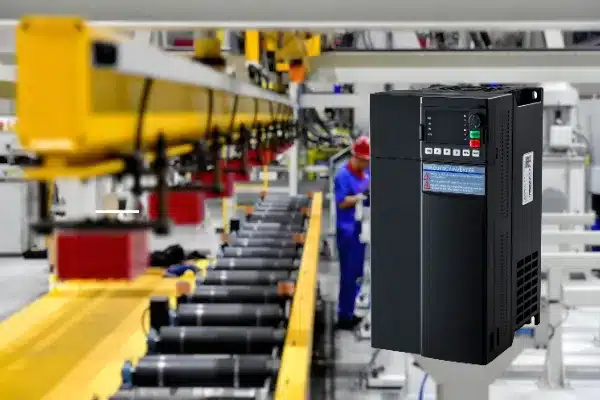


VFDs improve energy efficiency, enable precise motor control, enhance process reliability, and reduce maintenance costs by minimizing wear and tear on mechanical components.
VFDs are frequently applied to pumps, compressors, fans, and conveyors to optimize performance, prolong equipment lifespan, and ensure process stability.
Modern VFDs for oil and gas support multiple protocols, including Modbus, Profibus, Ethernet, and CANopen, enabling seamless integration with existing process control systems.
VFDs allow motors to run at optimal speeds for specific process requirements, significantly reducing power consumption compared to fixed-speed operation.
Yes, VFDs designed for the oil and gas industry often feature robust enclosures and carry certifications such as ATEX and IECEx to ensure safe operation in hazardous and explosive atmospheres.
By providing soft starting, overload protection, and continuous monitoring, VFDs reduce the likelihood of equipment failures and unplanned shutdowns.