Ready to Get Your VFD Solution?
Whether you need a single drive or a complete system, we have the VFD products and engineering support to ensure your project's success.

A VFD in an HVAC system is a type of motor controller used to regulate the rotational speed of an AC electric motor. Instead of running motors at a constant full speed, a VFD allows the motor’s speed to be adjusted to precisely match the real-time demand of the system. This capability is fundamental to modern, energy-efficient commercial HVAC design.
The primary function of using a VFD is to provide continuous and precise control over the speed of motors driving fans, pumps, and compressors. By adjusting the motor speed, the VFD directly controls the flow rate of air or liquids, ensuring the HVAC equipment operates at the most efficient level possible.
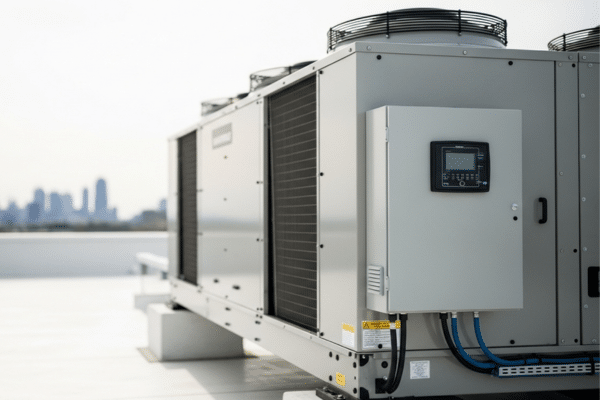
Traditional HVAC systems operate with inherent inefficiencies that lead to higher costs, increased equipment wear, and suboptimal performance. A Variable Frequency Drive (VFD) directly addresses these challenges by introducing intelligent motor control, transforming a fixed-output system into a dynamic and responsive one. The comparison below highlights the critical advantages of integrating a VFD.
Motors run at a constant full speed, regardless of the actual heating or cooling demand. Mechanical dampers are used to throttle output, wasting a significant amount of energy and driving up operational costs.
✔ The VFD Solution:
A VFD adjusts the motor speed to precisely match the load. Reducing fan speed by just 20% can reduce energy consumption by nearly 50%, leading to substantial energy savings.
Direct-on-line starting causes a large inrush of electrical current and a sudden mechanical jolt to the motor, belts, and bearings. This repeated stress leads to premature wear and tear and component failure.
✔ The VFD Solution:
The VFD provides a smooth, controlled ramp-up to operating speed, known as a soft start. This minimizes mechanical stress and electrical strain, which significantly extends the lifespan of the motor and other HVAC components.
Systems with a simple on/off control struggle to maintain a consistent temperature and airflow. This results in uncomfortable temperature swings, drafts, and poor indoor air quality.
✔ The VFD Solution:
VFDs enable fine-tuned control over fan and pump speeds. This allows the HVAC system to maintain stable temperatures, manage humidity levels, and deliver consistent airflow for superior comfort.
Fans, pumps, and compressors running at full capacity generate significant noise. This can be disruptive in environments like offices, schools, and hospitals, negatively impacting productivity and comfort.
✔ The VFD Solution:
By reducing the motor speed during periods of low demand, a VFD dramatically lowers the operational noise of the HVAC equipment. This creates a quieter and more pleasant indoor environment.
A constant speed system cannot adapt to dynamic changes in building occupancy or weather conditions. It lacks the intelligence to adjust its output, leading to inefficient operation and wasted energy.
✔ The VFD Solution:
A VFD allows the HVAC system to intelligently respond to real-time data from sensors and a building control system. This ensures the system operates at peak efficiency under all conditions, optimizing overall performance.
Simple motor starters offer no operational data. When a problem occurs, troubleshooting is reactive and time-consuming, leading to extended downtime and higher maintenance costs.
✔ The VFD Solution:
VFDs provide real-time data on motor performance (current, voltage, speed) and log fault codes. This predictive capability allows maintenance teams to identify issues early, reducing downtime and simplifying troubleshooting.
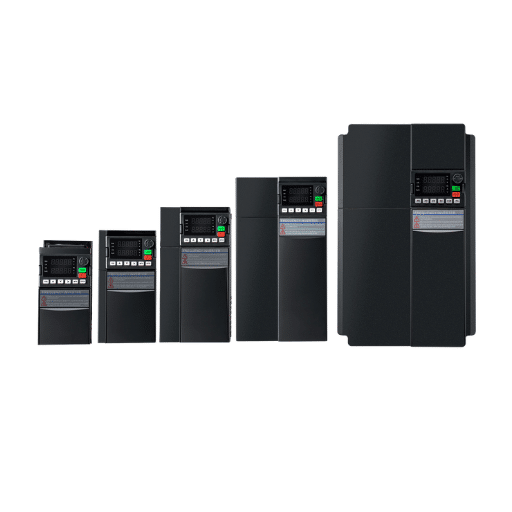
Engineered for superior control in fan and pump applications, this VFD ensures high efficiency and stable operation for commercial buildings.
Technical features
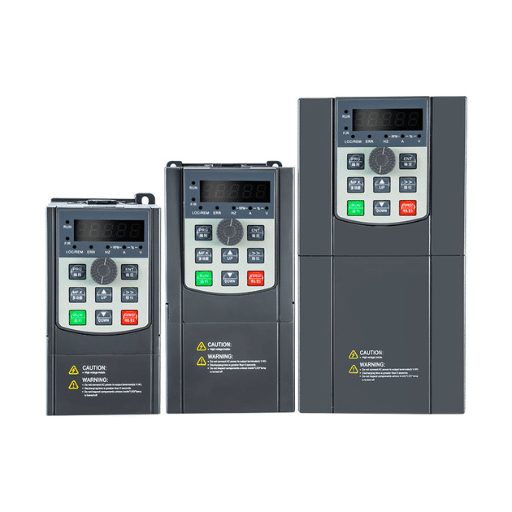
This universal VFD offers a compact design and excellent heat dissipation, providing a versatile and adaptable solution for diverse systems.
Technical features

A heavy-duty vector VFD built for demanding, high-torque industrial loads, ensuring robust performance and precise control in large-scale applications.
Technical features
VFDs are versatile controllers that can be applied to nearly any motor-driven component within an HVAC system. Their application in these key areas is crucial for achieving modern efficiency standards and maximizing both energy savings and operational control.
The most significant benefit of an HVAC VFD is substantial energy savings. Since the power required by a fan or pump motor is proportional to the cube of its speed, even a small reduction in motor speed results in a dramatic decrease in energy consumption. Slowing a motor by just 20% can reduce energy costs by nearly 50%.
VFDs enable the HVAC system to make fine adjustments to airflow and fluid circulation. This precise control allows for much tighter regulation of temperature and humidity levels within a building, leading to a more stable and comfortable indoor environment. This helps improve indoor air quality for all occupants.
The soft start capability of a VFD gradually ramps up the motor to its operating speed, avoiding the high inrush currents and mechanical shock associated with across-the-line starts. This reduced wear and tear on motors, belts, and bearings significantly extends the lifespan of critical HVAC components.
By reducing the motor and fan speed during periods of low demand, a VFD significantly lowers the operational noise produced by air handling units and other HVAC equipment. This creates a quieter and more pleasant environment for building occupants, which is especially important in commercial and residential settings.
Our HVAC VFDs are designed with a comprehensive set of features to meet the diverse needs of the modern HVAC industry. Below is a general overview of key technical specifications.
| Specification | Typical Range / Options |
|---|---|
| Power Range | 0.75 kW - 630 kW (1 HP - 800 HP) |
| Input Voltage | Single-phase 200-240V; Three-phase 200-240V, 380-480V, 500-600V |
| Output Frequency | 0 - 400 Hertz (Hz) |
| Control Method | V/f Control, Sensorless Vector Control |
| Enclosure Ratings | IP20, IP21 (NEMA 1), IP55 (NEMA 12), IP66 (NEMA 4X) |
| Built-in Protections | Overcurrent, Overvoltage, Undervoltage, Motor Overload |
| Communication Protocols | BACnet MS/TP, Modbus RTU, TCP/IP |
Selecting the optimal VFD requires careful consideration of your motor specifications, application requirements, environmental conditions, and performance objectives. Our technical team provides comprehensive support throughout the selection and implementation process.
We assist with:



For variable torque loads like fans and pumps, which are common in HVAC, the energy savings can be substantial, often ranging from 30% to 60%. The exact amount depends on the system’s operating profile. A system that frequently operates at partial load will see the highest energy savings because of the cubed relationship between motor speed and power consumption.
The return on investment for an HVAC VFD installation is typically very fast, often between 1 to 3 years. This rapid payback period is driven primarily by the significant reduction in energy costs, but it’s also accelerated by potential utility rebates and lower maintenance expenses due to reduced mechanical wear and tear.
A bypass is an electrical circuit, usually consisting of contactors, that allows you to run the motor directly from the main power line, effectively “bypassing” the VFD. It provides redundancy. If the VFD needs maintenance or fails, you can still run the fan or pump at full speed. It is highly recommended for critical applications (e.g., in hospitals, data centers) but may not be necessary for less critical systems where some downtime is acceptable.
Absolutely. VFDs are very commonly retrofitted onto existing HVAC units as a high-impact energy efficiency upgrade. The process typically involves installing the VFD between the power source and the motor. It is one of the most effective ways to modernize an older, constant-speed HVAC system.
VFDs can introduce harmonic distortion into the electrical system as part of their operation. However, our modern drives are designed with built-in mitigation features, such as DC link chokes or options for filtering, to minimize these effects and comply with international standards like IEEE 519, ensuring they operate seamlessly within your facility’s electrical network.
Modern VFDs are solid-state devices and are very reliable, requiring minimal maintenance. A standard annual preventative maintenance schedule should include a visual inspection for dust or debris, ensuring that cooling fans are operational, and checking that all electrical connections remain tight. Keeping the drive clean and cool is the key to ensuring a long service life.