Ready to Get Your VFD Solution?
Whether you need a single drive or a complete system, we have the VFD products and engineering support to ensure your project's success.

Variable Frequency Drives (VFDs) play a crucial role in optimizing the performance and safety of crane and hoist systems. By precisely controlling the speed and torque of the electric motors, VFDs enable smooth acceleration and deceleration, minimizing mechanical stress on critical components and extending equipment lifespan. This advanced motor control also enhances load handling accuracy, supporting delicate positioning of sensitive or valuable materials. Integrated braking and torque management features contribute to safer operation by reducing the risk of load swings and abrupt stops. Furthermore, VFDs offer significant energy savings through efficient motor operation and the ability to tailor performance to the specific demands of each lift. With real-time monitoring and built-in protection functions, VFDs ensure operational reliability, streamline maintenance, and ultimately reduce total cost of ownership for crane and hoist applications in demanding industrial environments.
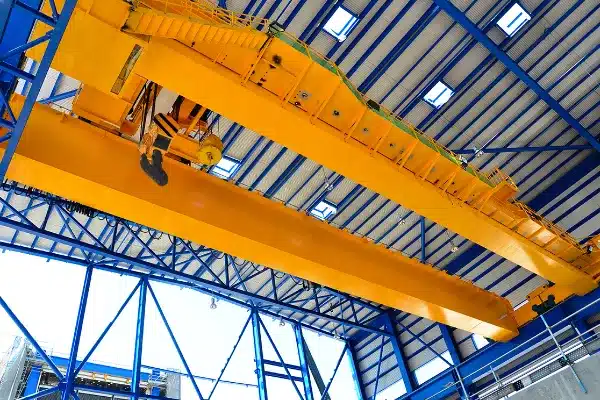
In modern crane and hoist operations, several persistent industry challenges can hinder efficiency, safety, and operational continuity. Addressing these obstacles with effective, technology-driven solutions is vital for maintaining competitiveness and ensuring dependable material handling in demanding environments.
Crane and hoist operators often encounter difficulties achieving smooth, precise load movements. Manual or outdated control systems can result in oscillation, abrupt starts and stops, or inaccurate placement, all of which may compromise process reliability and product integrity.
Solution:
Implementing advanced motion control with VFDs allows for refined speed regulation and soft starts/stops, facilitating accurate load handling. This reduces the risk of mechanical stress or misplacement and enables sensitive or high-value materials to be moved with precision.
Frequent cycling and abrupt operation subject crane components to considerable mechanical stress, accelerating wear and increasing the frequency and cost of maintenance interventions.
Solution:
VFD-driven systems provide smoother acceleration and deceleration curves, which minimize shock loads transmitted to gears, bearings, and structural elements. This extends equipment lifespan and decreases overall maintenance requirements.
Traditional crane and hoist systems often operate motors at constant speeds, regardless of load or task, leading to inefficient power usage and elevated energy costs.
Solution:
Variable frequency drives optimize motor speed and torque in real time, adjusting output to match the specific requirements of each operation. This targeted control significantly reduces energy consumption and lowers operational expenses.
Basic motor controls may not provide adequate safeguards against overloads, unintended motion, or hazardous conditions, exposing both personnel and materials to increased risk.
Solution:
Modern VFDs integrate comprehensive safety functionalities, including overload protection, emergency stop circuits, and programmable logic for customized safety protocols. These features greatly enhance workplace safety and minimize the potential for incidents.
As operational requirements evolve, legacy systems often lack the adaptability to accommodate new processes, load types, or regulatory standards, limiting their long-term viability.
Solution:
VFD-based controls support flexible configuration, seamless integration with automation systems, and easy parameter adjustments. This scalability future-proofs installations and allows for efficient adaptation to new production demands or compliance needs.
Traditional setups offer minimal visibility into system health, hampering preventative maintenance and prolonging unplanned downtime during faults or failures.
Solution:
State-of-the-art VFDs provide comprehensive real-time diagnostics, remote monitoring, and early fault detection capabilities. These tools empower maintenance teams to anticipate issues proactively, reduce unplanned outages, and improve overall system reliability.

High-power drive, advanced water-cooling: low noise, high efficiency, adaptable for challenging industrial environments.
Technical features

This modular platform offers reliable four-quadrant operation, making its well-sealed power units ideal for hoists in harsh operational settings.
Technical features

An all-in-one, integrated unit that saves space and simplifies installation, providing a compact and convenient solution for crane systems.
Technical features
Variable Frequency Drives (VFDs) are essential for optimizing performance, safety, and efficiency in modern crane and hoist systems. Their advanced features offer significant advantages over traditional control methods by addressing key operational challenges and supporting both productivity and reliability.
Modern Crane & Hoist VFDs are equipped with advanced safety features, including emergency stop, safe torque off, and overspeed detection. Integrating these capabilities ensures compliance with international safety standards and provides enhanced protection for personnel and equipment during all phases of operation.
Continuous monitoring of VFD operating parameters allows for early identification of performance deviations and potential faults. By leveraging diagnostic data, maintenance teams can schedule interventions proactively, significantly reducing unplanned downtime and ensuring optimal system availability.
Proper installation and environmental controls are critical for the longevity and reliability of Crane & Hoist VFDs. Factors such as dust, humidity, and temperature fluctuations must be managed through robust enclosure specifications and regular inspection routines to maintain stable drive performance.
Effective training programs for operators and maintenance personnel are essential when deploying VFDs in crane and hoist applications. Clear documentation and routine safety briefings equip staff to identify risks, follow best practices, and respond rapidly to any abnormal conditions, maximizing both safety and operational uptime.
Explore the comprehensive specifications for Crane and Hoist VFD systems, designed for enhanced performance and energy efficiency in industrial applications.
| Parameter | Specification |
|---|---|
| Input Voltage Range | 380-690V, 3-phase |
| Output Frequency Range | 0.1–400 Hz |
| Control Method | Vector control, V/F control |
| Overload Capacity | 150% rated current for 60 seconds |
| Braking Capability | Integrated dynamic braking support |
| Protection Features | Overcurrent, overvoltage, overheating, short circuit |
| Communication Protocols | Modbus, PROFIBUS, CANopen, Ethernet |
| Environmental Rating | IP20/IP54/IP65 options |
| Ambient Temperature | -10°C to 50°C |
| Application Features | Sway control, load feedback, multi-speed selection |
Selecting the optimal VFD requires careful consideration of your motor specifications, application requirements, environmental conditions, and performance objectives. Our technical team provides comprehensive support throughout the selection and implementation process.
We assist with:
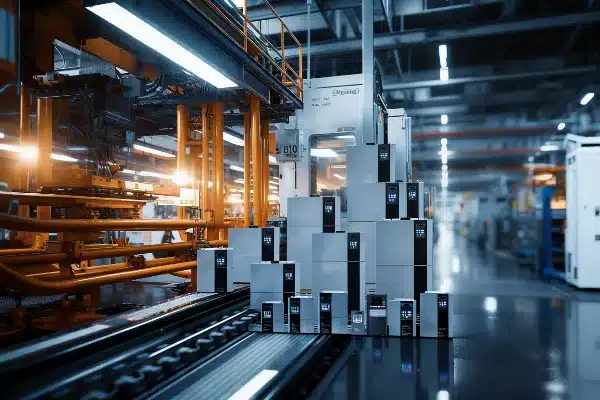


A VFD is an electronic device used to control the speed and torque of electric motors by varying the motor input frequency and voltage. This provides greater control over industrial processes, enhances energy efficiency, and reduces mechanical stress.
Yes, our VFD solutions are designed to work seamlessly with most existing crane and hoist systems. Engineering assessments may be required to ensure compatibility and maximize performance.
Routine maintenance involves regular inspection of wiring, connections, cooling systems, and software. We provide technical documentation and support to help users maintain optimal system performance.
By optimizing motor speed according to load requirements, a VFD reduces unnecessary energy consumption. This results in significant cost savings and improved operational efficiency.
Our VFDs are equipped with advanced safety features such as emergency stop functions, overload protection, thermal monitoring, and fault diagnostics to ensure secure and reliable operations.
Comprehensive support is offered, including remote diagnostics, on-site services, troubleshooting assistance, and ongoing user training for operators and maintenance personnel.