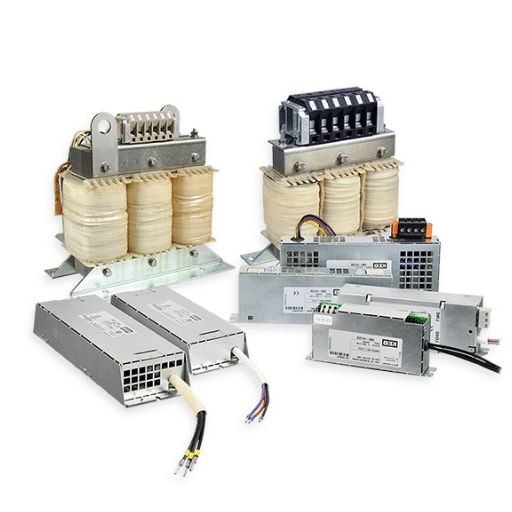
Ready to Get Your VFD Solution?
Whether you need a single drive or a complete system, we have the VFD products and engineering support to ensure your project's success.

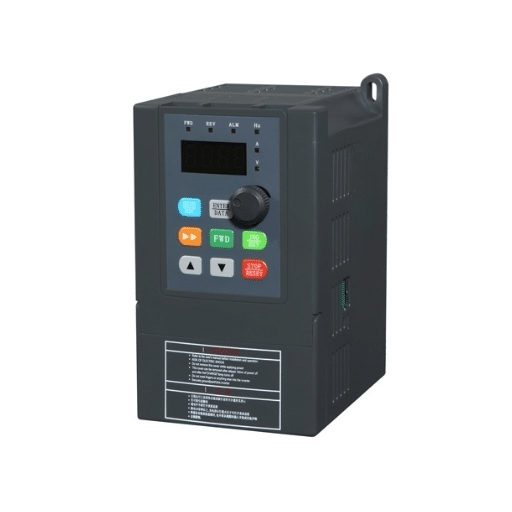
It’s crucial for facilities that are aiming at optimizing operational efficiency and at the same time reducing their costs, to be able to do energy-saving investment. The Variable Frequency Drive (VFD) found in HVAC systems is becoming a key solution for energy conservation, giving a considerable amount of savings by moving at the motor speed and consuming electricity in a way that just the system requires. The present study discusses the operational structure and the financial implications of the adaptation of the VFD technology in HVAC systems, providing a detailed analysis of the potential of energy-saving, ROI, and payback period. Being a facilities manager, an energy consultant, or a building owner, you will get a lot of information about how to make the best use of the efficiency of the energy while keeping the operation very excellent. Keep visiting to know how adapting to the VFD technology can make the investment cost to be recovered easily, generate the savings, and contribute to the long-term sustainability of the environment.
Variable Frequency Drives (VFDs) are highly effective in decreasing energy consumption by minute adjustment of the speed and torque of electric motors as per the requirements. The fixed speed motor systems are different from VFDs as the latter continuously and automatically adjust motor performance to the load requirement changes. Specifically, the fans and pumps of the HVAC systems are the most common examples of the units that work below their full capacities where the motor speed can be optimized by VFDs and this way power consumption can be effectively lowered.
The statistics show that the use of VFDs would result in 20-50% lower energy consumption and that the fast links to the above-mentioned: reduced operational cost due to lower energy bills, less wear and tear on components, and, in general, a longer life cycle for the system. In order to gain the biggest benefits, VFDs should primarily be used in areas where the demand is changing a lot, for instance, in heating, ventilation, and air-conditioning (HVAC) variable airflow systems or chilled water pump systems.
Variable Frequency Drives (VFDs), also called adjustable-speed drives, are electronic devices specifically made to regulate the speed of electrical motors through changing the frequency and voltage of the supplied power. The use of VFDs leads to the excellent energy usage and the equipment operation performance since the motor speed and torque can be controlled with the highest level of accuracy.
Advanced semiconductor technology partnered with complex algorithms makes modern VFDs control motors effectively and with a minimum of energy waste and harmonics. They are especially useful in places where the motor speed needs to be varied, e.g., conveyor systems, compressors, and HVAC systems, as the load calls are never predictable. In addition, some common features of VFDs now include fault detection, soft start capability, and communication interfaces for easy connection to building management systems. The increasing trend in energy efficiency and sustainability plays a crucial role in the rise of VFDs, as they are the major contributor to the reduction of both the operational costs and the environmental effects of motor-driven systems.
In the course of increasing system efficiency, Variable Frequency Drives (VFDs) are among the key factors. They help by controlling the motor’s speed and torque accurately to meet the real-time demand. Consequently, in applications where the load is constantly changing, the VFDs’ performance, reducing energy wastage, is at its best. The issue is that not having a VFD means the motor always running at full speed. It also seems that many have detected such constant full speed very often in pumps, compressors, and fans applications. Reducing motor speed by 20% via a VFD can result in energy savings of up to 50%, a fact that numerous studies have used to illustrate the VFD’s power consumption-lowering role.
Moreover, VFDs support process management wherein the acceleration and deceleration of motors are done subtly, thus less mechanical stress will be imposed on system elements. Consequently, it will enable the equipment to function for a longer time and with less maintenance, which is the primary goal of every industry that uses the device. In addition to these, the utilization of the VFDs coupled with other advanced technologies like predictive maintenance alerts, harmonic mitigation, and integrated diagnostics is done for the purpose of total system reliability and performance. The same features make VFDs a “must-have” for both green power developers and users who want to keep running at the best.
The use of Variable Frequency Drives (VFDs) in heating, ventilation, and air conditioning systems (HVAC) is one example of a method that can lead to effective and efficient use of energy through the optimization of motor speed and in this way matching the system’s need. The data gathered so far indicates the amount of energy saved can be anywhere from 20% to 50% of the total system consumption subject to the size of the load and the operational conditions of the system. Particularly, in the instances of centrifugal fans or pumps, it is possible to reduce energy consumption by up to 50% through a speed reduction of only 20%, because the relation between a fan speed and the energy consumed is cubed.
In addition, VFDs with modern control techniques, such as demand-controlled ventilation (DCV) and advanced temperature modulation, refine the performance of the equipment to handle the immediate environmental and occupancy changes successfully. When compared to open schedules or free spaces, this strategy will result in a substantial drop in energy use. Industry codes, like ANSI/ASHRAE/IES Standard 90.1, now take VFD devices seriously for their contribution in economic benefits and pollution control which are very significant.
VFD induction results in lower mechanical stress on HVAC parts which eventually results in cutting down the regularly incurred maintenance costs and extending the equipment’s life. In combination with energy-efficient building designs like high-performance building envelopes, the VFD-controlled HVAC systems when automated with smart systems play a central role in operational efficiency, and also in regulatory compliance with energy use.

VFD HVAC systems energy savings calculator calculation is a formula rightly made to count the possible savings in terms of energy and money when variable frequency drives are utilized. For you to make the most out of it, do enter the system’s motor size, operating hours, and energy rates as well as other data that the calculator needs. The calculator will thus make a comparison between the one using a VFD and a regular system with a constant speed motor. This way, the calculator supports in finding the economic incentives and the VFD payback time.
The VFD investment is a good business decision if the payback time is reasonable and the benefits are attractive. For visible savings, make sure the right VFD is selected and the right sensor is placed correctly and all data is the same as the actual ones and, secondary to this, consult the pre-known OEM calculators or software which are always made for a particular piece of equipment that you have and the energy profile too.
The motive of the VFD HVAC Energy Savings Calculator is to give detailed and workable information by matching tough algorithms with output data that is being used in the relevant industry. When different essential parameters like motor power, the time the motor runs, the profile of the load and the rate of energy in the area are entered, through the tool you are able to get a definite comparison and thus know the energy consumption and the efficiency of the saving policy over the traditional sistem which has a fixed frequency of the motor.
The current calculators take into consideration the newest up-to-date efficiency standards, power management, and pricing policies of the local utility company and the region to give the calculations which are still practical and true to market. Therefore, letting professionals know the right way to go when they invest and also giving them an accurate estimation of the financial period when the payback is through, hence making them double winners in terms of both energy saving and cost cutting goals.
Saving energy is possible for pumps and fans with a variable frequency drive (VFD) concerning the affinity laws and precise operational data. These laws say the power of a pump or fan is directly proportional to the cube of the rotational speed. Implementing a reduction of the fan or pump rotating speed level just 20% can mean close to 50% less power consumption. It is necessary to calculate the whole energy consumption of the system that is fed when the equipment is running at a fixed speed. After VFDs are in place, the real operational features such as flow rate and pressure needs are considered in the light of assessing the modified energy use.
Moreover, technical models consider and include such real-world variables, system inefficiencies, partial load conditions, and flow control methods. The method is to measure and track, over some time, the amount of kilowatts of electricity consumed (kWh), the comparison to the operational baselines enabling the precise energy savings estimation. Furthermore, the incorporation of industry data, for example, benchmark energy utilization rates and local electricity tariffs, makes the calculations in question more exact. The same modus operandi opens the way for the utility sector to derive from the results specific energy optimization strategies that are suitable for their various scenarios.

A precise determination of the ROI for the HVAC system that you have involves a meticulous evaluation of the initial costs as well as the savings over the long term. The calculation of the total installation cost will be your starting point, and it will involve the purchase of the system, the payment of fees for labor and such things as ductwork or electrical upgrades. Subsequently, the evaluation of the annual energy savings is needed, and that means the use of the Seasonal Energy Efficiency Ratio (SEER) for the cooling part of the system, and the Annual Fuel Utilization Efficiency (AFUE) for the heating part. Higher ratings lead to lower energy consumption and, consequently, lower bills.
It is also imperative to assess system maintenance costs and the duration the system is expected to operate for. Systems that conserve energy require usually little or no maintenance and have longer life-spans which in a way, may make up for the initial outlays. Also, do take into account any tax rebates, utility company incentives that are available or government subsidies that would apply to your system, as all these can greatly add to the overall savings. As a final step in this study, the yearly net savings that are estimated should be divided by the cost of the system. This computation will serve as the return on investment, showing a clear percentage that is highly likely to be possible with the system and, at the same time, pointing out the duration taken for the investment to be paid off.
An accurate ROI estimate requires the collection of appropriate data and the taking into consideration of local energy rates, weather conditions, and the use of the system. By putting together these factors, homeowners and businesses can come to a well-thought-out decision on the issue of HVAC upgrade or replacement, thereby balancing performance benefits and financial viability.

The first step to find the time it will take for Variable Frequency Drive (VFD) energy savings to cover costs in HVAC systems is to get the initial investment cost by adding the price of the equipment and the cost of its installation. The following step is to judge the yearly energy savings by comparing the energy proportion consumed by the system with and without VFD (based on the operational data and the local electricity rate). The payback period is ensured by unifying the total initial cost and the annual energy savings. If, for example, a VFD is installed with $10,000 total cost and the result is $2,500 energy savings per year, then the payback period would be 4 years. The numbers given should be supported by proper calculations, and consideration of correct operating hours, load variations, and energy tariffs would be greatly appreciated for the best possible assessment.
The payback period is a very remarkable parameter when it comes to project financial evaluations, especially in projects with high capital demands like energy efficiency, industrial machinery, and technology units. Essentially, this period displays the duration within which the total cost of the investment is compensated for by the savings or profits while considering the payback period as an evaluation criteria. For example, if the payback period is shorter, the investment would involve less risk and yield the money back in a faster way, thus making it a better choice for the stakeholders.
Industries all around are into making profits with their projects where they don’t have to wait for their money back for a long time. This trend goes well with their cash flow strategy and also shields them from the risks associated with market condition changes. Research claims that devices for energy conservation like Variable Frequency Drives (VFDs) not only minimize the costs of the operational run but in many cases bring money back in 3 to 5 years and the media for their payback is the energy charges, life time, and productivity of the end-users.
Doing an accurate payback period computation for VFD investments requires a systematic approach that considers both direct and indirect factors having an impact on cost savings and operational effectiveness. One of the easiest ways to do it is through the simple payback formula, where the total cost of investment for the VFD is divided by the annual energy savings received after the implementation. The calculation can be quite simple and thus it gives a useful estimate of the time needed to recoup the initial expenditures.
However, for a more complete analysis, advanced methods like the life-cycle costing (LCC) and the net present value (NPV) can be used. LCC takes into account the original cost of the equipment only indirectly if at all but also the maintenance, operation, and the effect of the equipment on energy costs throughout its lifetime, so that it gives a considerably more precise picture of the long-term financial implications. At the same time, NPV calculates the future value of energy savings by adding the net effect of the time value of money so as to demonstrate the real economic conditions.
Besides that, if peak load reductions, downtime avoidance, utility incentives or rebates are also considered, it can make the initial payback calculations even more precise. It is suggested that both methodologies in combination will give stakeholders a more detailed and therefore better VFD investment evaluation and will be more likely to result in the strategic decision-making that is in accordance with the organizational goals.

Optimizing the load and the control are the two supreme issues towards maximizing the energy savings by the use of the Variable Frequency Drives (VFDs) in HVAC systems. VFDs automatically adjust the motor speeds to the immediate load so as not to consume more than what is needed, especially in the case of fans, pumps, and compressors. Thus, the energy will not be wasted in periods of lower demand.
It is of great importance to invest in VFD in areas with the highest operational efficiency, such as systems that are running for long durations or those that have variable load conditions. Furthermore, combining VFD incorporation with regular maintenance and energy monitoring tools will lead to better overall performance. By making use of energy incentives that are currently available or by claiming rebates for VFD installations, the initial cost can be significantly reduced and the return on investment improved by a large margin.
Variable Frequency Drives (VFDs) are becoming more and more useful because technology is making them more capable and easier to integrate. The use of one very crucial trend is the introduction of Artificial Intelligence (AI) and Machine Learning (ML) into the field to improve real-time performance and predictive maintenance. The AI systems can predict failures, reduce downtime, and save energy through comprehensive data analysis.
One more development is the tighter and tighter fusion of VFD systems with Industrial Internet of Things (IIoT) platforms. The merge that IoT brings about makes it possible to control, maintain, and diagnose problems in VFDs remotely, as well as to use these drives through a common industrial network, which is increasing the visibility of the overall operations.
The improvement in the quality of materials and design efficiency is also contributing to the performance of VFDs. Innovations like the use of silicon carbide (SiC) semiconductors helped to achieve more power with less wastage of energy and at the same time improve voltage handling situations, which resulted in their use for high power and other applications with strict requirements.
The stress on decarbonization and the following of global energy laws and regulations is another major force for the need for the VFDs in renewable energy systems that are using wind power and solar panels. The above-mentioned non-conventional energy sources together with the VFDs present new and promising ways of energy conservation in the future energy mix and so their role in the energy network will still maintain its importance.
Variable frequency drives can be seen as the control system that adjusts the speed of the motor to match the load requirements. This is also an efficient way of saving energy since, usually, much more energy is used when the motor operates at a constant speed. Replacing the existing drives with VFDs and also automating the system often results in an amazing turnout in terms of energy savings as well as comfort. The energy impact evaluator should be utilized to calculate the energy saved and thus the ROI and payback periods, also from where the estimated money left over would exceed the energy savings. Energy savings can be attained very fast in the cases of systems having varying loads, particularly those that operate on fans and pumps.
An approach to determine the payback period and return on investment (ROI) for a VFD (Variable Frequency Drive) HVAC (Heating, Ventilation, and Air Conditioning) application is to gather data on operating hours, motor sizes, and energy consumption of the currently installed drives. This data will allow you to estimate the amount of energy that could be saved. The payback period can then be calculated and quantified through the use of a saving calculator or a simple spreadsheet model. In many cases, replacing old fixed-speed drives with new VFDs leads to energy savings and less equipment wear. Thus, consider also automation updates that can fine-tune setpoints and decrease unnecessary runtime which will only make the ROI better.
It’s a fact that an energy savings calculator has the ability to predict the energy savings that can be achieved by a variable speed drive system through load profiles, motor efficiency curves, and the hours of operation for the model. The information that relates to the motor nameplate data and the measured flow or pressure is still needed and without this, you cannot show the energy outcome more accurately. The payback calculation will be realistic if the calculator also takes into account the replacement cost of equipment and any expected maintenance reductions. Usually, if the system employs both automation measures and control enhancements, the potential savings are generally higher and the time it takes to recover costs is shorter.