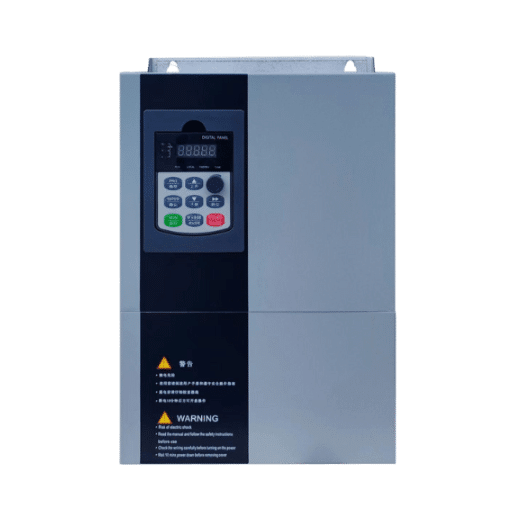
Ready to Get Your VFD Solution?
Whether you need a single drive or a complete system, we have the VFD products and engineering support to ensure your project's success.


Does a VFD shorten motor life? The honest engineering answer is that both outcomes are real. A properly applied variable frequency drive usually extends motor life through soft starting, reduced mechanical stress, and built-in protection. A misapplied one can destroy windings or bearings in 18 months. The difference comes down to a handful of controllable installation decisions.
A plant engineer we’ll call Tom learned this the expensive way. His facility retrofitted VFDs onto six legacy motors to cut energy costs. The savings were real, but within a year and a half, three motors failed with fluted bearings. The culprit was not the drives themselves. It was shaft voltage discharge, a known side effect with a cheap fix that nobody had specified: a shaft grounding ring costing less than $200 per motor.
If you have heard vendors promise that VFDs always protect motors, or warnings that VFDs always kill them, you have heard two halves of the same story. This guide gives you the full picture: the four mechanisms that shorten VFD motor life, the four effects that extend it, the thresholds that trigger each risk, and a checklist to run before any retrofit.Motor life is only one part of the drive value equation, so if you want the wider view of what a drive delivers, our guide to the advantages of VFD covers the energy, control, and protection benefits that sit alongside the longevity gains discussed here.
Key Takeaways
- A properly applied VFD typically extends motor life; a misapplied one can cut it to a fraction. The outcome is decided by installation choices, not the drive itself.
- The four life-shortening mechanisms are dV/dt insulation stress, harmonic heating, bearing currents, and reduced cooling at low speed.
- The four life-extending effects are soft starting (1-2x inrush vs 6-8x for direct-on-line), reduced mechanical wear, lower partial-load temperatures, and built-in electronic protection.
- Insulation life roughly halves for every 10°C rise above its thermal rating, so harmonic heating matters more than most guides admit.
- Bearing current damage is the most common VFD-related motor killer; an insulated bearing or shaft grounding ring prevents it for a few hundred dollars.
A VFD shortens motor life only when specific risk factors go unmanaged: long cable runs without filters, standard (non-inverter-duty) motors under heavy switching stress, unprotected bearings on larger frames, or constant-torque loads held at very low speed. When these are addressed, VFD motor life generally exceeds fixed-speed operation, because soft starting and reduced running speed remove the biggest sources of wear.
That is the verdict in one paragraph. The rest of this article explains why, and shows you how to land on the right side of it.

Every VFD-related motor failure traces back to one of four mechanisms. None of them is mysterious, and all of them are manageable.These four mechanisms are the core of the drive’s downsides, and our guide to the disadvantages of VFD covers each one alongside the harmonics, EMI, and cost trade-offs, pairing every drawback with its standard mitigation.
A VFD produces its output through pulse width modulation (PWM): thousands of fast-rising voltage pulses per second instead of a smooth sine wave. Each pulse edge stresses the motor’s winding insulation, and the faster the rise time (the dV/dt rate), the harder the hit.
Cable length makes this worse. On long runs, pulses reflect at the motor terminals and stack on top of incoming pulses, a phenomenon called reflected wave. Terminal voltage spikes can approach twice the DC bus voltage, which means roughly 1,200V peaks on a 480V system.
Rules of thumb used in the field: cable runs under about 15 meters are usually safe, runs between 15 and 50 meters call for a dV/dt filter or load reactor, and runs beyond 50 meters often justify a sine wave filter. Always confirm against your drive and motor documentation, because rise times vary by design.
The non-sinusoidal VFD output also adds harmonic content, which creates extra losses in the stator windings and rotor. The motor runs hotter than it would on clean sine wave power, even at the same load.
Why does a few degrees matter? Because of the Arrhenius relationship used in insulation engineering: for every 10°C rise above its thermal class rating, insulation life roughly halves. The U. S. Department of Energy cites this rule in its motor life guidance. A winding designed for 20 years at rated temperature can age out in five if it runs 20°C hot.
Motor nameplates carry an insulation class that defines the maximum temperature the winding system can survive long-term. Knowing yours tells you how much harmonic-heating headroom you have:
| Insulation Class | Max Winding Temperature | Typical Use |
|---|---|---|
| Class A | 105°C | Older or light-duty motors |
| Class B | 130°C | Standard industrial motors |
| Class F | 155°C | Modern standard and most inverter-duty motors |
| Class H | 180°C | Heavy-duty and high-ambient applications |
A useful detail: many quality motors are built with Class F insulation but rated for a Class B temperature rise. That 25°C margin is free insurance against harmonic heating, and one reason modern standard motors tolerate VFD duty better than their predecessors.
This is the most common VFD-related motor killer, and the one behind Tom’s failures in the introduction. PWM switching creates a common-mode voltage on the motor shaft. When that shaft voltage builds high enough, it discharges through the bearings as an electrical discharge machining (EDM) current.
Each discharge pits the bearing race. Over thousands of hours, the pits line up into a washboard pattern called fluting, the bearing gets noisy, and failure follows. ABB’s bearing current research documents how quickly unprotected motors on PWM drives can develop this damage, sometimes within months on larger frames.
Two distinct current types cause the damage. Capacitive EDM discharge affects motors of almost any size and attacks whichever bearing offers the easiest path to ground. High-frequency circulating currents appear mainly on larger frames, roughly 100 kW and above, and loop through both bearings and the stator frame at once.
The countermeasures differ by type, which is where many installations go wrong:
A standard totally enclosed fan-cooled (TEFC) motor carries its cooling fan on the shaft. Slow the motor to 50% speed and the fan moves half the air. On variable-torque loads like pumps and fans this rarely matters, because the load drops faster than the cooling. On constant-torque loads like conveyors and mixers, the motor still produces full torque at low RPM, and overheating becomes a real VFD motor life risk.

Now the other side of the ledger, which is why the net effect is usually positive.
Direct-on-line starting slams a motor with 6-8 times rated current. Every start heats the windings, flexes the rotor bars, and shocks the couplings, belts, and gearbox. A VFD ramps up gently at 1-2 times rated current. Across thousands of starts per year, soft starting removes one of the largest accumulated stresses a motor ever sees.For the mechanics behind that gentle ramp, including how the drive raises voltage and frequency together to hold inrush near full-load current, see our guide to VFD soft start.
Bearings, seals, and driven equipment all wear roughly in proportion to speed and load. A pump that spends its life at 80% speed instead of 100% simply accumulates fewer revolutions and less vibration. Slower operation also means less noise and less fatigue on the mechanical train.
For centrifugal loads, power falls with the cube of speed. A fan at 80% speed draws about half the power, and winding losses drop accordingly. Cooler copper means slower insulation aging, which pushes the Arrhenius curve in your favor for once.
A basic contactor gives you a thermal overload relay and not much else. A modern drive provides an electronic thermal model, phase-loss detection, stall protection, ground fault monitoring, and a motor PTC thermistor input. Many winding burnouts that would have destroyed a fixed-speed motor simply trip a drive instead.
Want drives with a full protection suite built in? Explore our industrial drive products with electronic thermal modeling and motor PTC inputs.
| Factor | Fixed-Speed (DOL) | VFD, Misapplied | VFD, Properly Applied |
|---|---|---|---|
| Starting stress | 6-8x inrush, mechanical shock | Soft start benefit kept | Soft start benefit kept |
| Insulation stress | None from waveform | dV/dt spikes + harmonic heating | Filtered/managed, near-normal |
| Bearing risk | Mechanical wear only | EDM fluting possible | Grounding ring or insulated bearing |
| Low-speed cooling | N/A (always full speed) | Overheating on constant torque | Aux cooling or derating applied |
| Protection | Basic overload relay | Drive protection available | Drive protection configured |
| Net motor life impact | Baseline | Often shorter | Usually longer |

Motor life problems announce themselves months before failure if you know what to watch. Four symptoms deserve immediate investigation:
A reliability technician we’ll call Marcus caught the first symptom early at a cement plant. Vibration routes flagged a 110 kW mill fan motor six months after its drive retrofit, and inspection found early race pitting. His team fitted a shaft grounding ring during a scheduled stop, and vibration levels returned to baseline within a week. The motor is still in service four years later.
These seven steps cover nearly every failure mechanism described above.

Most motor life problems appear in retrofits, not new builds. Before connecting a drive to a motor that has run for years on line power, work through this list:
A maintenance manager we’ll call Priya ran exactly this checklist before retrofitting drives at her water treatment plant. One 15-year-old motor on a 60-meter cable run failed the megger test, so her team replaced it with an inverter-duty unit and added a dV/dt filter on a second borderline installation. Three years later, all eight retrofitted motors are running with zero winding or bearing failures.
Planning a retrofit? Contact our engineering team for a free compatibility review of your motors, cable runs, and load profiles before you commission.
A properly applied VFD typically matches or exceeds fixed-speed motor life, often 15-20 years for industrial motors in clean conditions. A misapplied installation can fail in 1-3 years, most often from bearing currents or insulation breakdown. The deciding factors are motor rating, cable length, bearing protection, and load profile.
Not always. Modern standard motors with Class F insulation often perform well on short cable runs with variable-torque loads. Inverter-duty motors become important for long cable runs, wide speed ranges, constant-torque loads at low speed, or any application where replacement cost and downtime are high.
Bearing currents and insulation breakdown are the two fastest killers. Bearing EDM can flute a race within months on large unprotected motors, and reflected-wave voltage spikes can puncture weak winding insulation on long cable runs. Both are preventable with inexpensive, well-understood countermeasures.
Yes, in most properly engineered installations. Soft starting removes the 6-8x inrush stress of direct-on-line starting, reduced speed cuts mechanical wear, partial-load operation lowers winding temperature, and the drive’s electronic protection prevents many failures outright.
Often, yes, but verify before connecting. Megger-test the windings to confirm insulation health, keep cable runs short or add a dV/dt filter, fit bearing protection on larger frames, and set a conservative minimum speed for constant-torque loads. Many motors from the 1990s and 2000s run reliably on modern drives once these checks pass. A motor with already-marginal insulation is the exception: the voltage stress of PWM switching will find its weakness within months, so replacement with an inverter-duty unit is the safer investment.
VFD motor life is not a coin flip. The drives that destroy motors do so through four known mechanisms, and every one of them has a known, affordable countermeasure. The drives that extend motor life do it through soft starting, reduced wear, cooler operation, and better protection, benefits you get essentially for free once the risks are managed.
The key points to carry forward:
Whether you are retrofitting one pump or specifying drives for a new line, a 30-minute compatibility review is far cheaper than a premature motor failure. Talk to a Shandong Electric engineer about your motors, cable runs, and loads, and commission your next VFD with confidence that VFD motor life will work in your favor.