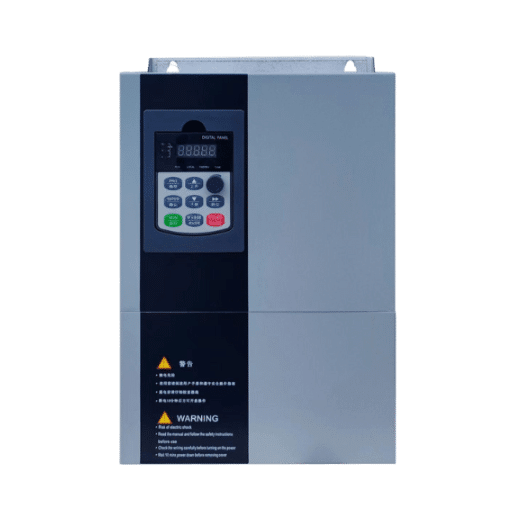
Ready to Get Your VFD Solution?
Whether you need a single drive or a complete system, we have the VFD products and engineering support to ensure your project's success.


No. Not every motor can run with a VFD. Three-phase AC induction motors are the standard choice. Even then, the motor must handle non-sinusoidal power, voltage spikes, and thermal stress from the drive. The wrong pairing wastes energy, shortens motor life, and can destroy windings within months.
Motor compatibility with VFD is one of the most common questions our engineering team hears. Plant managers want to reuse existing motors. Contractors need to know whether an inverter-duty upgrade is necessary. Maintenance teams are tired of replacing bearings and windings after a VFD retrofit.
If you have ever asked “can any motor run with a VFD?” the short answer is no, but many can with the right precautions. This guide answers those questions directly. You will get a compatibility matrix for VFD-compatible motors, inverter duty motor requirements, and practical rules for running standard motors on a drive.
If you are still selecting the drive itself, start with our guide on how to choose a VFD. If sizing is your main concern, see how to size a VFD for your motor.
Key Takeaways
- Three-phase induction motors are the best fit for VFDs; single-phase and most DC motors are poor candidates.
- Inverter-duty motors meet NEMA MG1 Part 31 and withstand 3.1× rated line-to-line voltage spikes (1,426 V peak for 460 V motors).
- Standard motors can run on a VFD if you limit speed range, keep cable runs short, and often add an output reactor.
- Bearing currents are a hidden failure mode; shaft grounding rings or insulated bearings protect critical motors.
- Permanent magnet and synchronous reluctance motors require the right VFD control mode and encoder feedback.

A VFD does not output smooth sine waves like the utility grid. It outputs high-frequency pulses of DC voltage through pulse-width modulation, or PWM. Those pulses create fast voltage rises, high-frequency harmonics, and reflected waves. Together, these stresses attack motor insulation and bearings.
The result is predictable. A maintenance manager in Mexico retrofitted a 75 HP fan with a VFD to save energy. The existing motor was a standard NEMA design built for 60 Hz sine-wave power. Within eight months, the motor winding shorted to ground.
Therefore, understanding motor compatibility with VFD prevents three common failure modes:
In addition, the right motor pairing protects your investment in the drive itself.
The fastest way to assess motor compatibility with VFD is to look at the motor’s construction and rated operating mode. The table below covers the VFD-compatible motors and problem cases most commonly found in industrial plants.
| Motor Type | VFD Compatibility | Notes |
|---|---|---|
| 3-Phase AC Induction Motor | Excellent | Standard choice; inverter-duty version recommended for demanding applications |
| Inverter-Duty Induction Motor | Excellent | Built to NEMA MG1 Part 31; handles spikes, dV/dt, and low-speed cooling |
| Permanent Magnet (PM) Motor | Good with correct drive | Requires synchronous motor control mode; often needs encoder feedback |
| Synchronous Reluctance Motor | Good with correct drive | Needs sensorless vector or encoder feedback; energy efficient |
| DC Motor | Possible but uncommon | Requires DC drive or special VFD topology; usually not cost-effective |
| Single-Phase Motor | Generally poor | Capacitor-start and shaded-pole motors overheat; limited specialized options exist |
| Old / Pre-1990 Motor | Marginal | Insulation systems age and become brittle; derate or upgrade recommended |
Three-phase induction motors are the default partner for a VFD. The rotating magnetic field from the three stator windings matches the VFD output well. The motor can also operate across a wide speed range.
However, standard three-phase motors are designed for sinusoidal utility power. Their insulation may not withstand the repeated voltage spikes from PWM switching. For light-duty variable torque loads with short cables, a standard motor often survives. For constant torque, frequent starting, or long cable runs, an inverter-duty motor is the safer choice.
For a deeper look at small-motor applications, see our guide on VFDs for small motors.
An inverter-duty motor is built specifically for PWM power. Key differences from a standard motor include:
A standard motor can often be upgraded to inverter-duty service by adding an output reactor or dV/dt filter. However, that does not fix cooling limitations or weak insulation. For installation best practices that protect both motor and drive, read our VFD installation best practices guide.
Permanent magnet motors offer high efficiency and compact size, but they require a VFD with synchronous motor control. Sensorless vector control works for some PM motors, while others need an encoder for rotor position feedback.
Synchronous reluctance motors are increasingly popular in energy-efficiency retrofits. They also need a VFD with the correct control algorithm. To learn more about matching control modes to motor types, see our VFD control modes explained guide. The good news is that many modern VFDs support both induction and synchronous reluctance control through parameter selection.
Most single-phase motors are poor candidates for VFD control. Capacitor-start and capacitor-run motors rely on a fixed-frequency auxiliary winding. Running them at variable frequency causes overheating, poor torque, and capacitor failure.
Specialized single-phase input VFDs exist for small applications, but they are limited. If you need variable speed on a single-phase motor, replacing the motor with a three-phase motor plus a small VFD is usually more reliable.
Older motors can work on a VFD, but the risk is higher. Insulation systems become brittle with age and thermal cycling. Pre-1990 motors often lack the slot liners and phase paper that modern inverter-duty motors use.
If you must run an old motor on a VFD, derate the load, limit the speed range, keep the cable short, and add an output reactor. Even then, budget for an upgrade if the motor is critical to production.

NEMA MG1 Part 31 defines definite-purpose inverter-fed motors. It specifies the inverter duty motor requirements for insulation, voltage withstand, and cooling when a motor is powered by a VFD.
For low-voltage motors rated 600 V and below, NEMA MG1-2011 Part 31.4.4.2 sets a clear rule. The insulation system must withstand peak terminal voltages up to 3.1 times the motor’s rated line-to-line voltage. For a 460 V motor, that equals 1,426 V peak.
Many manufacturers design their inverter-duty motors for 1,600 V peak as a conservative margin. For medium-voltage motors above 600 V, the requirement is 2.04 times rated line-to-line voltage, with a rise time of at least 1 microsecond.
Modern VFD IGBTs switch voltage extremely fast. The rise time can be under 0.1 microseconds. NEMA MG1 Part 31 tests insulation systems with rise times equal to or greater than 0.1 microseconds for low-voltage motors.
The problem is that fast pulses travel down motor cables as waves. If the cable is long enough, the reflected wave can nearly double the voltage at the motor terminals. That is why cable length and output filtering matter.
Inverter-duty motors typically use Class F (155 °C) or Class H (180 °C) insulation. A common specification is Class H insulation with Class B temperature rise, which leaves a large thermal buffer.
The magnet wire may be:
Phase paper, slot liners, and vacuum pressure impregnation (VPI) all help eliminate voids where partial discharge can occur.
A motor’s shaft-mounted cooling fan loses effectiveness as speed drops. At 20% speed, airflow may be only 8% of rated. For constant torque loads that run at low speed for long periods, an inverter-duty motor with a separate constant-speed blower is necessary.
PWM voltage creates common-mode voltages that can drive shaft currents through the bearings. Over time, this causes pitting and fluting of the bearing races, leading to noise, vibration, and premature failure.
Protection methods include:

In many cases, you do not need to replace a standard motor when adding a VFD. A standard motor can run reliably if you follow a few rules.
A standard motor is more likely to work on a VFD when:
If the motor is not inverter-duty, consider derating the continuous load. A common rule is to limit the motor to 80-90% of its nameplate horsepower when running on a VFD without an output reactor. If the motor is old or the speed range is wide, derate to 75%.
Cable length is one of the biggest factors in reflected-wave voltage stress:
| Cable Length | Typical Recommendation |
|---|---|
| Under 15 m (50 ft) | Often acceptable without filter |
| 15-50 m (50-160 ft) | Consider output reactor |
| 50-100 m (160-330 ft) | dV/dt filter recommended |
| Over 100 m (330 ft) | Sine-wave filter or motor upgrade |
An output reactor slows the voltage rise time and reduces peak voltage at the motor terminals. A dV/dt filter provides stronger protection. A sine-wave filter reconstructs a near-sinusoidal waveform but is larger and more expensive.
Running a motor above its base frequency reduces available torque because voltage cannot increase beyond rated. Running far below base frequency reduces cooling. As a general rule:
Consequently, always match the motor’s thermal limits to the speed profile of the application.
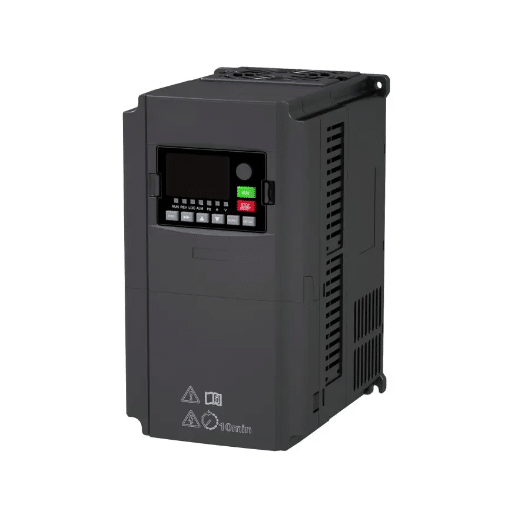
Use this checklist before connecting any motor to a VFD:
No. Three-phase AC induction motors are the standard choice. Single-phase motors, most DC motors, and very old motors with degraded insulation are generally poor candidates.
For light-duty, short-cable, variable-torque applications, a standard motor may work. For constant torque, frequent overloads, long cables, or critical equipment, an inverter-duty motor is strongly recommended.
NEMA MG1 Part 31 defines definite-purpose inverter-fed motors. It specifies insulation voltage withstand, rise-time capability, and thermal performance for motors intended to run on VFDs.
Yes. A VFD can damage a motor through voltage spikes, dV/dt stress, bearing currents, and overheating at low speeds. Proper motor selection, cable management, and filtering prevent most failures.
Generally no. Standard single-phase motors overheat and lose torque at variable frequency. Specialized single-phase VFDs are limited; a three-phase motor plus VFD is usually the better solution.
The motor may run, but it is at higher risk of insulation failure and bearing damage. Limit speed range, reduce load, keep cables short, and add an output reactor to improve reliability.
Most standard motors should not exceed 1.2× base speed continuously without manufacturer approval. Permanent magnet and synchronous reluctance motors have their own speed limits based on rotor design.
Motor compatibility with VFD starts with the right motor type. Three-phase induction motors are the safe default. Inverter-duty motors are the right choice when voltage spikes, long cables, or low-speed operation are involved. Standard motors can be used with care, but derating, short cables, and output filtering reduce risk.
NEMA MG1 Part 31 gives engineers a clear benchmark for inverter duty motor requirements. Inverter-duty insulation must withstand 3.1× rated voltage with rise times down to 0.1 microseconds. Add bearing protection for large or critical motors, and verify cooling for extended low-speed runs.
If you are unsure whether your existing motor is VFD-ready, our engineering team can review the nameplate, application, and cable layout. Explore our VFD drives or contact us to discuss your motor compatibility requirements.