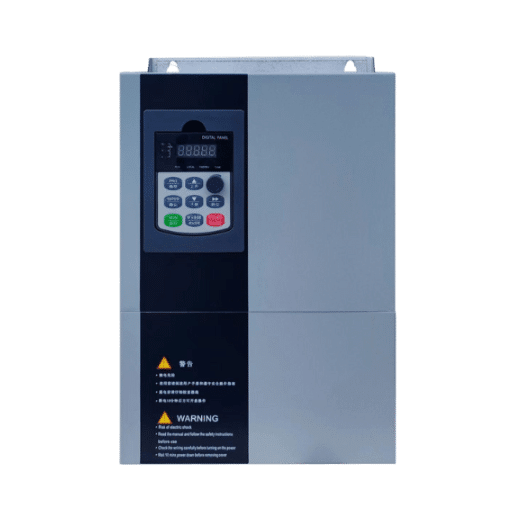
Ready to Get Your VFD Solution?
Whether you need a single drive or a complete system, we have the VFD products and engineering support to ensure your project's success.


A water-cooled VFD removes up to 95% of heat from the electrical room and can reach efficiency levels near 98.5%, making it the preferred choice for high-power motor control in harsh or space-constrained plants. Unlike air-cooled drives that move heat with fans and ambient air, a water-cooled variable frequency drive absorbs waste heat through a liquid loop and transfers it outside the drive enclosure.
What does that mean in real money? A single 5 MW water-cooled VFD can save roughly 100 kW of continuous losses and $80,000 per year in energy, while cutting the installed footprint by 60-70% compared with an air-cooled equivalent.
If you are comparing cooling methods for a medium voltage or high voltage drive project, this guide is for you. We will explain how water-cooled VFDs work, compare them side-by-side with air-cooled alternatives, break down the industries that benefit most, and show how to calculate ROI. By the end, you will have a practical framework for deciding whether liquid cooling fits your application.
For a closer look at how these drives are engineered to manage large motors safely, our guide to high voltage motor control explains the selection principles behind matching a drive to a large-motor application.
Key Takeaways
- Water-cooled VFDs remove ~95% of heat from the electrical room and can reach ~98.5% efficiency.
- They are ideal for high-power applications, typically above 200-300 kW, especially in harsh or space-limited environments.
- Typical industries include power generation, steel, cement, mining, marine, and chemical processing.
- Air-cooled VFDs are simpler and lower in first cost; water-cooled VFDs save space, HVAC costs, and maintenance in demanding duty.
- Payback typically ranges from 18-36 months when HVAC and energy savings are included.

A water-cooled VFD is a variable frequency drive that uses a pumped liquid coolant, usually deionized water or a water-glycol mixture, to remove heat from the power modules and heat sinks. Instead of relying on fans to blow ambient air across the electronics, the drive circulates coolant through cold plates or heat exchangers bonded to the switching devices.
The liquid carries the waste heat away from the drive cabinet to an external cooling circuit. That circuit may reject heat to a plant cooling-water loop, a chiller, or an outdoor radiator.
Water absorbs far more heat per liter than air. Engineers often use the rule of thumb that one unit of water volume can carry roughly the same heat as 3,300 units of air volume.
A typical closed-loop cooling system includes:
Water-cooled VFDs are most common in medium voltage and high voltage classes, typically from 2.3 kV to 13.8 kV and from 200 kW to more than 25 MW. They are also used in some high-performance low voltage systems above a few hundred kilowatts.
When plant engineer Marcus Chen was asked to upgrade the kiln fan drives at a dusty cement plant in northern China, he knew fans and filters would clog within weeks. He specified sealed, water-cooled variable frequency drives for the raw mill and kiln fans. The liquid-cooled path kept the electronics clean and stable, and the plant avoided the filter-maintenance cycle that had plagued the old air-cooled drives.
Want to see how this cooling technology fits into a complete high voltage drive line? Explore our G71 water-cooled high voltage VFD for voltage ranges, power ratings, and engineering support.
Choosing between an air-cooled and a water-cooled VFD is not about which technology is “better” overall. It is about matching the cooling method to the project constraints: available space, ambient conditions, power level, water access, and lifecycle cost expectations.
| Factor | Air-Cooled VFD | Water-Cooled VFD |
|---|---|---|
| Cooling principle | Forced ambient air over heat sinks | Pumped liquid coolant through cold plates/heat exchangers |
| Typical power range | Up to a few hundred kW to several MW | Typically 200-300 kW to 25+ MW |
| Footprint | Larger cabinet volume | 60-70% smaller for equivalent power |
| Heat removal from E-house | 0-5% retained, rest vented to room | Up to 95% removed from room |
| Typical efficiency | ~96-97% | Up to ~98.5% |
| Noise level | Higher, from fans | Lower, fans are external or absent |
| IP rating options | IP54 common, higher requires more space | IP54/IP55/IP66 easier in sealed cabinets |
| Maintenance focus | Fan/filter replacement, cleaning | Coolant quality, pump, heat exchanger, sensors |
| Initial cost | Lower | Higher |
| Operating cost | Higher HVAC and energy losses | Lower HVAC and energy losses |
| Best for | Clean rooms, lower power, budget projects | High power, harsh environments, limited space |
When should you choose air-cooled? Air-cooled drives are usually the right call when the electrical room is clean, the power level is modest, and capital budget is tight. They also work well when water or glycol service is not available. Maintenance teams without closed-loop cooling experience may find them simpler to support.
When should you choose water-cooled? Water-cooled VFDs make sense when power levels exceed roughly 200-300 kW. They also fit when floor space is limited, the environment is dusty or corrosive, or the plant already has cooling water infrastructure. In warm climates, reducing electrical room HVAC loads can become a major project saving.
At a steel rolling mill in Turkey, the operations team replaced two aging air-cooled main mill drives with a single line-up of water-cooled units. The new drives freed up about 60% of the floor area in the drive room. Because the heat was transferred to the plant cooling water loop, the mill also postponed a planned HVAC expansion. Maintenance manager Leila Ozer estimated the combined space and HVAC savings at more than $200,000.

Water-cooled variable frequency drives are not limited to one sector. Any high-power, continuous-duty application with challenging environmental conditions is a candidate.
In power plants, water-cooled VFDs control boiler feed pumps, induced draft and forced draft fans, cooling water pumps, and gas turbine starters. These drives often sit in an electrical house adjacent to the turbine building. Removing heat from the E-house reduces HVAC load and protects other switchgear from thermal stress. Learn more about these use cases in our guide to VFD for power plants and heavy industry.
Rolling mill main drives, blast furnace blowers, and fan systems operate in hot, dusty, and vibration-prone environments. Air-cooled drives would require frequent filter changes and larger enclosures. Water-cooled drives use sealed cabinets with high IP ratings, so dust and metal particles stay outside the electronics.
Kiln drives, raw mill fans, and high-temperature process fans need reliable motor control near abrasive dust and heat. A water-cooled VFD keeps the heat-producing semiconductors at stable temperatures and prevents dust infiltration. The result is longer uptime and less emergency maintenance during production campaigns.
SAG mills, ball mills, crushers, and conveyors operate at high altitude, wide temperature swings, and heavy dust loads. Water-cooled high voltage drives handle these conditions with little altitude derating compared with air-cooled systems. For more on this sector, see our article on industrial high voltage drives for mining.
Propulsion systems, thrusters, winches, and drilling rigs demand compact footprint and low noise. Marine-certified water-cooled VFDs meet ABS, DNV, or Lloyd’s Register requirements. The liquid cooling loop can tie into the vessel’s seawater cooling system, saving valuable machinery space.
Compressors, extruders, mixers, and large pumps in chemical plants benefit from the precise speed control and reduced heat load of liquid-cooled drives. In hazardous-area installations, water-cooled designs can be certified to IEC 60079 or GB 3836 standards with the appropriate enclosure and purge systems.

A reliable water-cooled VFD installation is more than the drive cabinet. The external cooling loop is what makes the system practical.
The drive-side cooling loop is usually a closed system filled with deionized water or a water-glycol mix. The main components are:
A water-to-water heat exchanger rejects heat into a plant cooling-water loop, chiller, or cooling tower. It is the most efficient choice when a reliable cold-water source is available.
A water-to-air heat exchanger uses a fan-cooled radiator, similar to a car radiator, when no plant water loop exists. This option adds some fan noise and space but still removes most heat from the electrical room.
For a deeper technical comparison of these heat exchanger types, MB Drive Services has a useful explanation of water-to-water and water-to-air heat exchangers for VFD cooling systems.
Coolant quality determines long-term reliability. Typical requirements include:
Industrial drives must survive more than controlled office conditions. Water-cooled VFDs can be packaged in sealed cabinets that improve protection without the airflow penalty of air-cooled designs.
Common enclosure ratings include:
NEMA equivalents are roughly NEMA 12 for indoor dust protection, NEMA 3R for outdoor rain, and NEMA 4X for corrosive washdown environments.
Water-cooled VFDs are often rated from -40 °C to +50 °C ambient. Because cooling does not depend on the temperature of air drawn through the cabinet, they suffer less performance loss at high ambient temperatures. Altitude derating is also minimal up to about 3,000 meters, which is a significant advantage for mining and high-altitude applications.
Relevant standards include:

The business case for a water-cooled VFD rests on three savings categories: energy efficiency, HVAC reduction, and installation or space value.
Water-cooled variable frequency drives (VFDs) can achieve an efficiency of approximately 98.5%, whereas comparable air-cooled units operate at around 96%–97%. For a 5 MW drive system, this 1.5%–2% efficiency difference translates to a reduction in power loss of approximately 75–100 kW during continuous operation. Based on an electricity cost of $0.10 per kWh and 8,000 hours of annual operation, this single VFD alone can save between $60,000 and $80,000 in annual electricity costs.
Because water-cooled VFDs remove up to 95% of heat from the electrical room, the HVAC system can be smaller or eliminated. Depending on climate, electrical room size, and utility rates, HVAC savings can range from 50,000to50,000to200,000 per year for a large drive installation.
Water-cooled drive units have a smaller footprint, saving 60% to 70% of the floor space required by air-cooled equipment. For existing facilities with space constraints, avoiding the need for plant expansion can save between $50,000 and $300,000; meanwhile, in large-scale projects, installation costs for ductwork, louvers, and filtration systems can be reduced by $150,000 to $400,000.
Water-cooled systems eliminate fan and filter maintenance inside the drive cabinet. However, they add coolant monitoring, pump service, and occasional heat-exchanger cleaning. On balance, most operators report lower total maintenance effort in harsh environments, because the sealed cabinet avoids the dust-related failures that drive air-cooled maintenance costs.
At a 400 MW combined-cycle power plant in the Middle East, the plant manager calculated that switching to water-cooled boiler feed pump drives would eliminate the need for an E-house HVAC expansion. Including energy savings and avoided capital, the projected payback was 24 months.
Ready to estimate the lifecycle cost for your project? Contact the Shandong Electric engineering team for a water-cooled VFD selection review and quotation.
A water-cooled VFD is a variable frequency drive that removes heat from power electronics using a pumped liquid coolant, usually deionized water or water-glycol, instead of forced ambient air. The coolant circulates through heat exchangers inside the drive and transfers waste heat to an external cooling system.
Choose a water-cooled VFD when the application is high power (typically above 200-300 kW), when floor space is limited, when the environment is dusty, hot, or corrosive, or when the plant already has cooling water available. Air-cooled drives are usually better for clean rooms, lower power, and tight capital budgets.
Yes. Most manufacturers require deionized water or a water-glycol mixture. The coolant must meet conductivity, pH, and cleanliness specifications to prevent electrical leakage, corrosion, and clogging of narrow cooling passages.
Water-cooled VFDs are often more reliable in dusty environments than air-cooled drives because they can be sealed to IP54, IP55, or IP66 ratings. Without fans drawing ambient air through the cabinet, dust cannot reach the electronics. The reliability of the coolant loop itself must still be maintained.
Payback typically ranges from 18-36 months when energy savings, HVAC reduction, and avoided space expansion are included. The strongest business cases exist in high-power, continuous-duty applications in warm climates or harsh environments.
A water-cooled VFD is not the right choice for every project, but it is often the best choice for high-power, continuous-duty motor control in demanding environments. By moving heat out of the electrical room through a liquid loop, these drives reduce HVAC loads, save floor space, cut energy losses, and survive conditions that would clog or overheat air-cooled alternatives.
Before you decide, weigh the three project variables that matter most: available space, ambient conditions, and lifecycle cost expectations. If your application is above 200-300 kW, faces dust or heat, or needs the smallest possible footprint, liquid cooling deserves serious consideration.
For more background on high voltage drive selection, see our complete guide to high voltage VFDs and medium voltage VFD selection guide. When you are ready to specify a water-cooled solution, explore our high voltage VFD systems or request details on the G71 water-cooled high voltage VFD. The Shandong Electric engineering team can help you match cooling method, voltage class, and application requirements to the right drive.