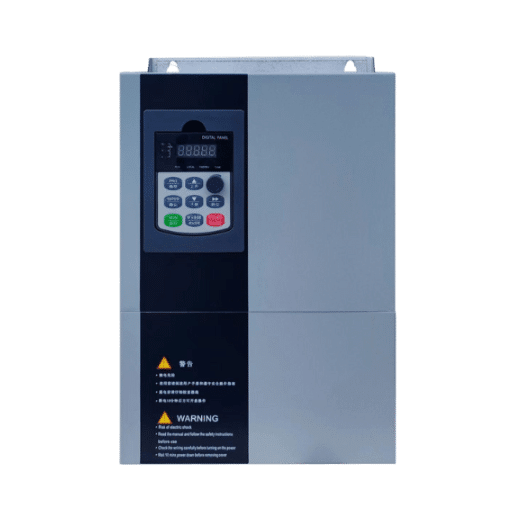
Ready to Get Your VFD Solution?
Whether you need a single drive or a complete system, we have the VFD products and engineering support to ensure your project's success.

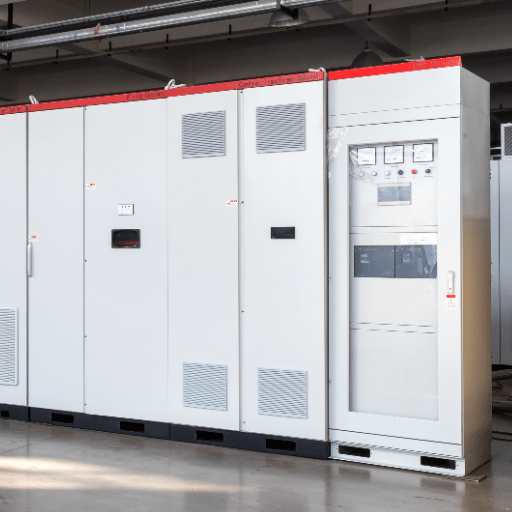
Industrial high voltage drives are adjustable-speed motor controls rated from roughly 2.3 kV to 13.8 kV and 400 kW to 25+ MW. In mining, they run the largest loads on a site: gyratory crushers, semi-autogenous (SAG) mills, ball mills, mine hoists, and long conveyors. Pick the wrong voltage class or topology and you’ll face stalled startups, harmonic penalties, or six-figure downtime losses.
A single hour of unplanned downtime at a large mine can cost more than $180,000, according to ValuAdd. That’s a costly mistake. The right drive doesn’t just spin a motor. It protects mechanical trains, recovers braking energy, and keeps remote sites within grid limits. Here’s what you need to know to choose the right industrial high voltage drive for crushers, SAG mills, and hoists, plus the harsh-environment standards you can’t ignore.
Main Takeaways
- Industrial high voltage drives cover 2.3 kV to 13.8 kV and 400 kW to 25+ MW, matching the largest mining motors.
- Crushers need 150-180% starting torque and short-term overload; SAG mills need slow run-up and frozen-charge protection; hoists need four-quadrant regenerative drives.
- Topology choice depends on voltage and load: 3-level NPC for 3.3-6.6 kV, cascaded H-bridge for 6-13.8 kV, and active front end (AFE) for regeneration.
- Mining drives must meet IP54/NEMA 12 minimum, explosion-proof (Ex d/Ex i) ratings where required, and IEEE 1566 / IEC 61800-3 / IEC 60079 standards.
- Proper selection cuts downtime, energy use, and mechanical stress while improving uptime.
For very large motors where power levels push into the multi-megawatt range, our guide to high power VFD systems covers the design considerations that come into play at the top end of this range.

An industrial high voltage drive is a variable frequency drive (VFD) that controls the speed and torque of an AC motor by varying voltage and frequency. Industrial high voltage drives are also called high voltage VFDs or medium voltage drives in some markets.
In mining, industrial high voltage drives usually cover the 2.3 kV to 13.8 kV range and power levels from about 400 kW to more than 25 MW. That’s a wide range, but most mining applications sit between 3.3 kV and 10 kV.
Strictly speaking, IEC standards call 1 kV to 35 kV “medium voltage.” Plant engineers and equipment suppliers, however, often say “high voltage” once they move above low-voltage (<1 kV) classes. That’s the range this article focuses on. It’s a naming quirk, but it matters on-site.
Mines use these drives because their largest motors can’t start direct-on-line (DOL) without pulling 600-700% inrush current. Without them, the mine grid simply can’t support direct-on-line starting for multi-megawatt motors.
A VFD ramps the motor smoothly. It limits starting current to 100-150% of rated and lets operators tune speed for process conditions.
The global medium and high voltage drives market was valued at about USD 3.89 billion in 2023 and is forecast to reach USD 5.40 billion by 2030, growing at a 4.8% CAGR, according to Next Move Strategy Consulting. Mining alone accounted for roughly 28% of medium voltage drive revenue in 2024. That’s one of the largest shares of any industrial segment.
Mining loads are big, slow, and unforgiving. They don’t forgive hard starts. A gyratory crusher can draw 500 kW to 5 MW. A SAG mill can run from 1 MW to 20 MW or more. A double-drum mine hoist may need 500 kW to 5 MW with exact speed and position control.
Industrial high voltage drives match the power and duty cycle of these machines.
Running these motors across-the-line stresses gearboxes, belts, and couplings. It also strains weak mine grids, especially at remote sites fed by long transmission lines. They don’t just start motors. Industrial high voltage drives solve these problems in three ways:
Industrial high voltage drives also reduce wear on mechanical components by avoiding hard starts.
Table 1: Typical energy savings by mining application
| Application | Typical energy savings |
|---|---|
| Ventilation fans | 13% – 42% |
| Crushers and pumps | 15% – 35% |
| Regenerative hoists | 20% – 35% recovered |
| Downhill conveyors | Up to 30% – 40% recovered |
Savings vary with duty cycle, ore type, and control strategy. The largest gains usually come from replacing throttle or damper control with variable speed.
The environment adds another layer. Mining conditions that shorten drive life include:
The minimum enclosure rating for dusty process plants is usually IP54 or NEMA 12.
Mining-specified industrial high voltage drives are built for these conditions. They use sealed cabinets, reinforced components, and cooling systems that won’t quit under dust and shock. For a broader view of mining motor control, read our VFD applications in mining overview.

Crushers are constant-torque to high-torque loads. Starting torque is everything. Jaw, cone, gyratory, and impact crushers all need high breakout torque to clear jammed material and restart after a power outage. For industrial high voltage drives, the main challenge is delivering 150-180% starting torque and 150% overload for one minute.
The control mode of choice is sensorless vector control or Direct Torque Control (DTC). You don’t need an encoder on the motor shaft to get fast torque response. For very large crushers or applications where speed accuracy matters, closed-loop vector with an encoder is an option.
Common voltage classes for mining crushers are 3.3 kV, 6 kV, 6.6 kV, and 10 kV. The right topology is usually a 3-level neutral-point clamped (NPC) inverter up to about 6.6 kV, or a cascaded H-bridge for 10 kV and above. Cascaded H-bridge designs offer cell redundancy; if one power cell fails, the drive can often continue at reduced output until maintenance.
Marcos, a plant engineer at a copper mine in Chile, learned this the hard way. After a storm, his gyratory crusher had to restart against a full hopper. The old across-the-line starter pulled nearly seven times rated current and damaged the input gearbox.
His team replaced it with a 6.6 kV VFD rated for 180% starting torque. Now the crusher restarts in about 20 seconds. It clears blockages without mechanical shock, and the maintenance team schedules gearbox work every 18 months instead of every 8.
Industrial high voltage drives give crushers the torque headroom needed to clear blockages without tripping. They must also survive vibration, dust, and blocked-material overloads.
Table 2: Typical crusher drive requirements
| Parameter | Typical range |
|---|---|
| Power | 500 kW – 5 MW |
| Voltage | 3.3 kV – 10 kV |
| Starting torque | 150% – 180% rated |
| Overload | 150% / 1 min, 200% short-term |
| Control mode | Sensorless vector or DTC |
| Preferred topology | 3-level NPC or cascaded H-bridge |
Grinding mills are some of the highest-inertia loads in industry. A SAG mill rotor can take 10 to 60 seconds to reach full speed. Direct-on-line starting would draw massive current. It’d also deliver poor torque control just when the load is most vulnerable.
Industrial high voltage drives for SAG mills are sized as much for run-up control as for full-load torque. A VFD run-up profile limits current, controls torque, and protects the mill’s ring gear, pinion, and coupling.
Industrial high voltage drives make variable-speed grinding practical.
One unique risk in grinding is frozen charge. If the mill stops with unground ore packed against the shell, a sudden restart can lift the charge and drop it. That’ll damage the shell liner or trunnion. Modern mill drives use frozen-charge protection: they rotate the mill slowly at first, detect abnormal torque signatures, and stop before damage occurs.
Variable speed helps process control in several ways:
It’s almost always DTC or closed-loop vector for grinding mills. Precise torque control matters more than simple speed regulation. Topology depends on size: cascaded H-bridge drives are common at 6 kV to 13.8 kV for mills in the 1-20 MW range, while load-commutated inverters (LCI) still appear on the largest synchronous mill motors above 20 MW.
Worked example: 10 kV, 5 MW SAG mill current sizing
For a 5 MW motor at 10 kV and 0.88 power factor, the approximate full-load current is:
I=P3×V×PF=5,000,0001.732×10,000×0.88≈328 AI=3×V×PFP=1.732×10,000×0.885,000,000≈328 A
A drive for this motor should be sized for at least 120% of rated current to cover overload and altitude derating. That means a continuous rating around 395 A, plus 150% overload capability for short periods. Industrial high voltage drives for this duty are specified with overload and altitude derating built in.

Mine hoists are four-quadrant machines. Energy flows both ways. They must raise a loaded cage, lower it, raise an empty cage, and lower an empty cage, with torque and speed direction reversing continuously. This makes regenerative braking necessary.
Industrial high voltage drives for mine hoists must switch continuously between motoring and regeneration. A regenerative VFD returns 20-35% of the hoist’s energy to the mine grid instead of wasting it in resistor banks.
Speed and position accuracy are non-negotiable. You can’t compromise on either. Hoist control systems use encoders or resolvers on the drum and motor to track cage position to within centimeters.
Safety functions include safe torque off (STO), overspeed protection, and integration with a safety PLC. For multi-rope friction hoists, master-slave control synchronizes multiple drives so each rope carries its share of the load.
The best topology for a hoist is usually an active front end (AFE) or a regenerative voltage-source inverter. Industrial high voltage drives for mine hoists are almost always regenerative so they can feed braking energy back to the grid. AFE draws near-sinusoidal current from the grid, reduces harmonics, and feeds braking energy back cleanly. Closed-loop vector or DTC with encoder feedback gives the precise torque response you need for smooth acceleration and deceleration.
At an underground gold mine in South Africa, Priya, the hoist electrical supervisor, upgraded a 3.3 kV double-drum hoist to a regenerative drive. The mine lowered a 25-tonne cage 1,200 meters on every trip, converting potential energy into electricity.
Over 12 months, the hoist’s net energy use fell by about 30%, and the old braking resistors that had needed constant cooling fan maintenance were removed entirely. She hasn’t had to service a braking resistor since.
Industrial high voltage drives on hoists turn braking energy into production savings.
Conveyors and feeders may seem simpler than crushers or hoists, but they have their own drive challenges. Long overland conveyors need controlled starting to avoid belt sag, take-up stress, and material spillage. An industrial high voltage drive on a long conveyor gives the operator full control over belt tension and acceleration time. Industrial high voltage drives on long conveyors also let multiple motors share load through master-slave control.
Downhill conveyors are regenerative loads. When a loaded belt descends, gravity pulls it faster than the motor. The drive must hold back the load and send braking energy back to the grid. Without regeneration, it’s burned off in braking resistors. That creates heat and maintenance headaches. Industrial high voltage drives on downhill conveyors turn gravity into usable electricity.
Long conveyors with multiple drives use master-slave load sharing. One drive acts as the master and sends torque references to slave drives along the belt. Industrial high voltage drives with master-slave control keep belt tension uniform and prevent slip.
Feeders under stockpiles and hoppers also benefit from variable speed. Operators can match feed rate to crusher or mill capacity, avoiding overloads and improving downstream efficiency.
Table 3: Quick selection guide by mining load
| Load | Priority need | Common voltage | Typical topology |
|---|---|---|---|
| Gyratory / jaw crushers | 150-180% starting torque | 3.3 kV – 10 kV | 3-level NPC or cascaded H-bridge |
| SAG / ball mills | Slow run-up, frozen-charge protection | 6 kV – 13.8 kV | Cascaded H-bridge or LCI |
| Mine hoists | Four-quadrant regeneration, position control | 3.3 kV – 6.6 kV | AFE / regenerative VSI |
| Long conveyors | Controlled start, load sharing | 3.3 kV – 6.6 kV | 3-level NPC or AFE for downhill |
| Feeders | Variable feed rate | ≤3.3 kV | 2-level VSI or 3-level NPC |
Topology choice affects voltage capability, harmonic performance, redundancy, and cost. Table 4 compares the main industrial high voltage drive topologies used in mining today.
Table 4: Topology comparison for mining loads
| Topology | Typical voltage | Best for | Main advantage | Main limitation |
|---|---|---|---|---|
| 2-level VSI | Up to ~3.3 kV | Smaller crushers, feeders | Simple, compact | May need output filter for long motor cables |
| 3-level NPC | 3.3 kV – 6.6 kV | Crushers, pumps, fans | Lower harmonics than 2-level | Device voltage sharing at higher voltages |
| Cascaded H-bridge | 6 kV – 13.8 kV | SAG mills, large crushers, hoists | Near-sinusoidal output, cell redundancy | Larger footprint, more cells |
| LCI | 6 kV – 13.8 kV+ | Very large synchronous mills | Proven on >20 MW mills | Higher harmonics, motor must be synchronous |
| AFE / regenerative VSI | 3.3 kV – 13.8 kV | Hoists, downhill conveyors | Energy recovery, low harmonics | Higher cost than non-regenerative drives |
For most new mining projects, the decision comes down to voltage. At 3.3 kV to 6.6 kV, a 3-level NPC drive is usually the best balance of performance and cost.
At 6 kV to 13.8 kV, cascaded H-bridge drives dominate because their modular cells produce a near-sinusoidal waveform and can keep running with a failed cell. For applications that regenerate, an AFE or regenerative VSI pays for itself through energy savings and reduced cooling load.
Industrial high voltage drives with the wrong topology cost more to operate and maintain.

Mining drives live in some of the toughest electrical environments on earth. Dust, humidity, vibration, altitude, and corrosive atmospheres all shorten equipment life if the drive isn’t specified correctly. Industrial high voltage drives for mining must match the enclosure, cooling, and certifications to the actual site conditions.
The minimum enclosure rating for dusty process plants is usually IP54 or NEMA 12. Underground coal mines and any area with explosive gas or dust require explosion-proof or flameproof enclosures certified to IEC 60079 or GB 3836, typically Ex d (flameproof) or Ex i (intrinsically safe) ratings for associated circuits.
Cooling is another major decision. Air-cooled drives are simpler and cheaper, but hot, dusty air clogs filters and reduces heat-sink efficiency.
Water-cooled or liquid-cooled drives move heat out through a closed loop. They keep cabinets sealed and run quietly. That’s why they’re common in hot climates, underground installations, and high-power mills where air cooling would be impractical.
Vibration certification matters near crushers and mills. Drives should meet relevant seismic and vibration standards for the installation class. Altitude derating is also necessary: cooling efficiency drops about 1% for every 100 meters above 1,000 meters, so a drive rated at sea level may need to be oversized for a mine at 3,000 meters.
Main standards to verify with your supplier:
You can’t skip these standards on a mining project. If you are evaluating liquid-cooled options, our G71 water-cooled high voltage VFD is built for exactly these conditions.
All industrial high voltage drives distort the supply current to some degree. It’s unavoidable. Mines must comply with local harmonic limits; in many countries, IEEE 519 or IEC 61800-3 set the boundaries.
At remote mine sites, the grid is often weak, meaning the source impedance is high. Even small harmonic currents can cause noticeable voltage distortion.
Industrial high voltage drives with active front ends or multi-pulse transformers help mines stay within harmonic limits.
Common mitigation methods include:
Before you specify a drive, ask for a harmonic study based on the actual short-circuit capacity at the point of common coupling. A drive that meets IEEE 519 at a strong grid may exceed limits at a weak remote substation. It’s smart to get this study before you buy.
They’re used to control large AC motors on crushers, SAG mills, ball mills, mine hoists, conveyors, and feeders. Industrial high voltage drives also protect mechanical equipment by limiting starting current and torque. They provide soft starting, variable speed, overload capacity, and energy recovery for loads from about 400 kW to more than 25 MW at 2.3 kV to 13.8 kV.
SAG mills usually run at 6 kV, 6.6 kV, or 10 kV, depending on motor power and site standards. You’ll often see 10 kV on mills above 5 MW, with a cascaded H-bridge or LCI topology to limit current and cable size. Industrial high voltage drives for SAG mills are sized as much for run-up control as for full-load torque.
A crusher drive should deliver 150% of rated torque for at least one minute and 200% for a few seconds. That’s enough for blocked-material clearance and restart against a full hopper.
Hoists need regenerative braking whenever the load overhauls the motor, and that mainly happens during lowering. Industrial high voltage drives with regenerative capability return 20-35% of hoist energy to the grid. They don’t waste it in braking resistors.
Frozen charge protection detects when unground ore has settled against the mill shell and stops the drive before the charge is lifted and dropped. Industrial high voltage drives with frozen-charge protection rotate the mill slowly at first to detect abnormal torque. That prevents shell liner, trunnion, and gear damage.
In coal mines and any area with potentially explosive dust or gas, explosion-proof or flameproof enclosures certified to IEC 60079 or GB 3836 are required. You can’t use a standard cabinet there. Industrial high voltage drives for underground coal mines must carry the right Ex certification.
3-level NPC drives work well at 3.3-6.6 kV for crushers and pumps. Cascaded H-bridge drives are preferred at 6-13.8 kV for SAG mills and large crushers. AFE or regenerative VSI topologies are best for hoists and downhill conveyors. Industrial high voltage drives are matched to the load, not the other way around.
Savings vary by application. Ventilation fans can drop 13-42% energy use, crushers and pumps often save 15-35%, and regenerative hoists can recover 20-35% of braking energy. Industrial high voltage drives save the most energy when they match motor speed to actual load demand instead of running full speed against a throttle or damper.
IEC defines medium voltage as 1 kV to 35 kV. In mining practice, “high voltage” often means the 2.3 kV to 13.8 kV drive class used for large motors, while low voltage covers drives below 1 kV. The terms overlap, so you’ll always want to confirm the actual voltage rating of any industrial high voltage drive you specify.
Yes. Soft starting and controlled acceleration reduce shock on gearboxes, couplings, belts, and bearings. Industrial high voltage drives reduce mechanical stress by ramping torque instead of slamming the motor to full speed. You’ll typically see longer service intervals on crusher gearboxes and conveyor take-ups after switching from DOL to VFD control.
Industrial high voltage drives are the backbone of modern mining motor control. They turn the largest crushers, SAG mills, and hoists from grid-straining fixed-speed machines into controllable, efficient, and protected assets. The right drive depends on the load. Crushers need high starting torque. SAG mills need slow controlled run-up. Hoists need four-quadrant regeneration. Add the right topology, cooling, enclosure, and harmonic compliance, and you’ll get lower energy use, less downtime, and longer mechanical life.
If you’re planning a new mine, upgrading an existing concentrator, or replacing aging motor controls, start with the load profile and the environment. Then match the voltage class, topology, and standards to the application.
Get the right industrial high voltage drive for your site and you’ll lower energy use, reduce downtime, and extend mechanical life. Our engineering team can help you select and size the right high voltage VFD systems for your site.
It’s worth getting the selection right the first time. Contact us for a project review or quote.