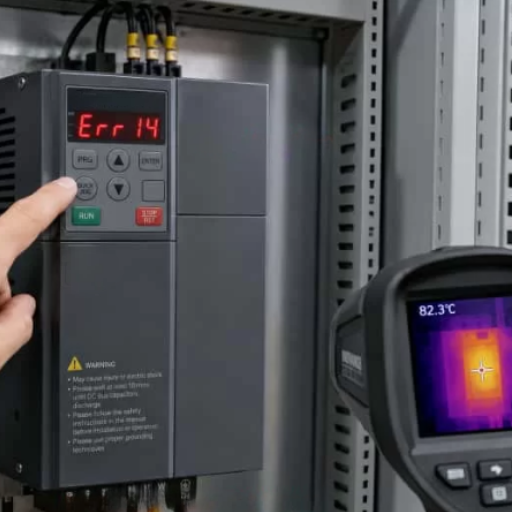
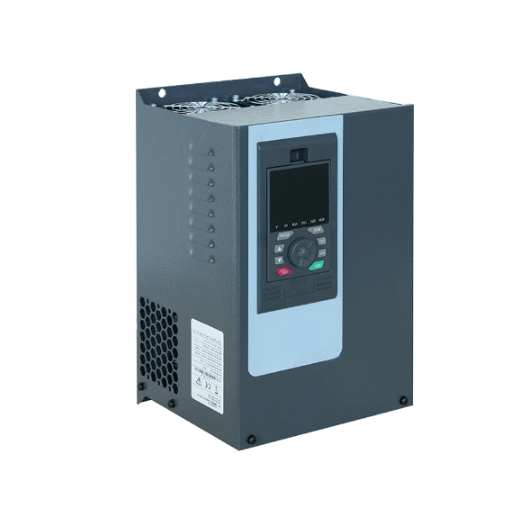
Ready to Get Your VFD Solution?
Whether you need a single drive or a complete system, we have the VFD products and engineering support to ensure your project's success.


A VFD in mining industry applications controls motor speed and torque in crushers, ball mills, ventilation fans, hoists, and conveyors. Mining VFDs cut energy consumption by 10-50%, depending on equipment type, while providing soft starting that eliminates mechanical shock and extends machine life. Unlike standard industrial drives, mining VFDs must survive extreme dust, vibration, temperature swings, and moisture. The mining industry consumes roughly 5-7% of global industrial electricity, and VFD retrofits are one of the most cost-effective ways to reduce that footprint.
In 2019, a maintenance superintendent at a surface copper mine in Chile was told his 400 kW primary crusher could not be retrofitted from a direct-on-line starter to a VFD because the starting torque requirement was too high. After verifying the drive’s 180% overload capability and installing a VFD with sensorless vector control, the crusher started smoothly every time, energy use dropped 22%, and the gearbox overhaul interval extended from 18 months to 4 years. That single retrofit saved the operation over $180,000 in maintenance and downtime costs.
This guide covers the benefits of VFD in mining operations, which machines benefit most, how to select the right voltage class and protection rating, and what certifications matter for surface and underground operations. Whether you are managing a greenfield project or planning a retrofit, the sections below give you the technical foundation to make the right decision.
Key Takeaways
- Mining VFDs reduce energy use by 10-50% depending on equipment type, with ventilation fans delivering the highest savings at 30-50%.
- Crusher breakaway torque demands 120-180% of rated torque, so drives must be sized for heavy-duty overload ratings, not standard duty.
- Low voltage VFDs handle most crushers and conveyors up to ~500 kW, while medium voltage drives are required for large SAG mills and main hoists.
- IP54 is the minimum protection for surface mines, but IP65 or higher is needed for washdown areas and high-dust zones.
- Underground operations require IECEx or ATEX certification for explosive atmospheres, plus MSHA compliance for US mines.
- Predictive maintenance through VFD data analytics can detect bearing degradation and liner wear before they cause unplanned stops.

A variable frequency drive (VFD) adjusts the frequency and voltage supplied to an AC motor, allowing precise control over speed, torque, and acceleration. In mining, this capability translates into four concrete benefits that standard fixed-speed starters cannot match.
Energy savings come from matching motor speed to actual load demand. A ventilation fan running at 80% speed consumes roughly half the energy of a fan running at full speed with a damper throttle. Soft starting limits inrush current to 150-200% of full load instead of the 600-700% spike caused by direct-on-line (DOL) starters. This reduces mechanical stress on couplings, gearboxes, and crusher frames. Process control allows operators to adjust throughput based on ore grade, particle size, or downstream capacity. Condition monitoring turns the VFD into a sensor platform, tracking current signatures, load trends, and vibration indicators that reveal equipment health.
Mining VFDs differ from standard industrial drives in three ways. First, they must handle higher starting torque and longer acceleration ramps. Second, they require enhanced environmental protection against dust ingress and moisture. Third, they often need safety certifications for explosive atmospheres when used underground. If you are new to drive technology, our complete VFD applications guide covers the fundamentals across all industries.
Not every machine in a mine delivers the same return from a VFD retrofit. The sections below break down the five equipment categories where variable speed control produces the strongest operational and financial impact.
Crushers present the toughest starting challenge in surface mining. Breakaway torque can reach 120-180% of the motor’s rated torque, depending on ore compaction and liner condition. A VFD for crushers handles this demand by ramping torque smoothly while keeping current within controlled limits. VFD for jaw crusher starting torque is typically set to 150-180% of rated load, with ramp times tuned to avoid mechanical shock.
Soft starting eliminates the mechanical shock that cracks crusher frames and wears drive train components. Energy savings of 15-25% are typical compared to DOL starting, especially when the crusher runs below peak capacity for significant portions of the shift. Sensorless vector control mode is the standard choice here because it maintains full torque at low speeds without requiring an encoder.
Ball mills and SAG mills are high-inertia loads with run-up times of 30-60 seconds. Starting a large mill with a DOL starter pulls 600-700% of full-load current, stressing transformers and causing voltage dips that affect other equipment. A VFD for ball mills limits starting current to 150-200% while delivering the torque needed to overcome initial inertia.
Once running, ball mill VFD energy savings of 10-20% come from load-following speed control that matches mill speed to ore feed rate and particle size targets. Large SAG mills above 1,000 kW typically require high voltage VFD for SAG mill and hoist applications.
Mine ventilation fans represent one of the most compelling VFD applications in the industry. Ventilation can consume 30-50% of total underground electricity, and the affinity laws state that fan power drops with the cube of speed reduction. A mine ventilation fan VFD running at 80% speed cuts energy use by roughly 50% compared to damper or inlet vane control.
Beyond energy savings, mine ventilation fan variable speed control allows airflow to match production shifts, blasting cycles, and emergency protocols. Reversible fans for emergency ventilation can be controlled smoothly through the VFD, avoiding the mechanical stress of sudden direction changes.
Mine hoists require four-quadrant operation, meaning the VFD must control motor torque in both directions during ascent and descent. During cage descent, the motor acts as a generator, producing regenerative energy. Mine hoist VFD regeneration systems handle this energy through regenerative braking units or resistor banks.
A VFD for mine hoists provides precision stopping for cage loading and unloading, reducing cycle times and improving safety. Energy recovery during descent can return 20-35% of the hoist’s total energy back to the grid. Given the high power levels (500 kW to 5,000 kW) and safety-critical nature, hoists almost always use medium voltage drives with closed-loop vector control and redundant safety systems.
VFD for mining conveyor belt systems provide soft starting that prevents belt slip, reduces mechanical stress on take-up assemblies, and eliminates the jerky acceleration that causes spillage. On multi-drive conveyor systems, VFDs enable load sharing between motors, ensuring even wear and preventing overload on a single drive.
For deep-dive coverage of conveyor-specific control strategies, see our dedicated article on conveyor VFD applications.
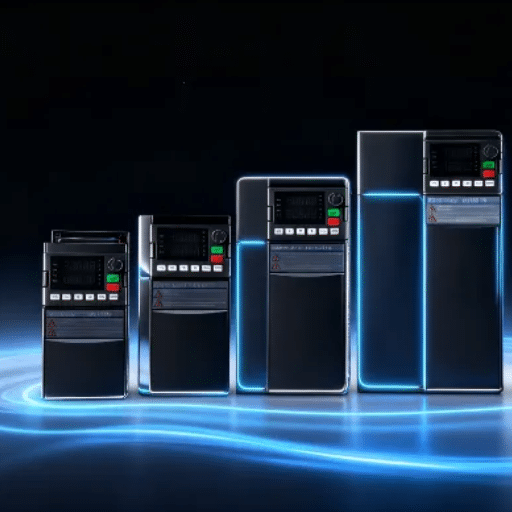
Choosing the wrong voltage class is one of the most expensive mistakes in mining VFD procurement. The decision depends on motor power, cable run length, and the practicality of motor current at a given voltage level.
Low voltage VFDs serve crushers up to approximately 500 kW, conveyors, small ventilation fans, and auxiliary equipment. At power levels below 400 kW, LV drives offer the best combination of cost, availability, and serviceability. Standard industrial enclosures are often sufficient for surface operations, though mining-specific protection upgrades are recommended.
When motor current exceeds 800A at low voltage, cable sizing becomes impractical and voltage drop over long cable runs can degrade motor performance. This threshold is where engineers should evaluate a medium voltage alternative.
Medium voltage drives handle large SAG mills, primary crushers above 500 kW, main ventilation fans, and mine hoists. MV systems reduce cable current, minimize copper losses, and improve overall efficiency for high-power applications. The trade-off is higher capital cost and the need for specialized commissioning expertise. Medium voltage is not always necessary. Many large crushers above 500 kW run successfully on low voltage drives with parallel motors, provided cable runs are short and transformer capacity is sufficient. The decision should be based on total cost of ownership, not just drive list price.
| Equipment | Typical Power | Voltage Class | Control Mode |
|---|---|---|---|
| Jaw crusher | 75-400 kW | LV | Sensorless vector |
| Cone crusher | 200-800 kW | LV or MV | Sensorless vector |
| SAG mill | 1,000-20,000 kW | MV or HV | Vector or DTC |
| Ventilation fan | 100-2,000 kW | LV or MV | V/f or vector |
| Mine hoist | 500-5,000 kW | MV | Closed-loop vector |
| Conveyor | 50-500 kW | LV | Sensorless vector |
Mining environments destroy standard industrial electronics. Dust, moisture, vibration, and temperature extremes are not edge cases in mining. They are the normal operating condition. A harsh environment VFD must be specified with protections that match the installation location. VFD IP rating for mining applications is one of the most important selection criteria, yet it is often treated as an afterthought.
IP ratings define how well an enclosure blocks solids and liquids. For surface mine installations, IP54 is the minimum acceptable rating, protecting against dust ingress and water splashing. Washdown areas and high-dust zones near crushers require IP65, which blocks dust entirely and withstands low-pressure water jets. Outdoor installations in tropical or monsoon climates should specify IP66 or IP67 to handle heavy water exposure and temporary submersion.
PCB conformal coating is a thin polymer layer that protects circuit boards from moisture condensation and chemical corrosion. In humid underground mines, conformal coating often matters more than the enclosure IP rating because humidity can penetrate even sealed cabinets through cable glands and breathing membranes during thermal cycling.
Thermal management requires careful attention. Forced ventilation brings cooling air through filters, but those filters clog quickly in dusty environments and require strict maintenance schedules. Sealed enclosures with heat exchangers or air conditioning avoid filter clogging but add cost and complexity. Ambient temperatures above 40°C require VFD derating, typically 1-2% per degree, to prevent overheating. In some surface operations, mine ambient temperatures reach 50°C, making derating calculations essential during specification.
Mining equipment experiences continuous vibration from crushers, mills, and haul trucks. VFDs installed near these machines must meet IEC 60068-2-6 standards for vibration resistance. Structural reinforcements, shock-mounted assemblies, and ruggedized terminal blocks prevent connection failures over time.
Positive pressure enclosures maintain a slight internal air pressure that prevents dust infiltration through gasket seams and cable entry points. In extremely dusty environments, such as near primary crushers or in dry climates, positive pressure combined with regularly maintained intake filters extends drive life significantly.
Undersizing a VFD for mining loads is a guaranteed path to startup failure. The torque demands of mining equipment exceed standard industrial applications, and the overload rating of the drive must match the application.
Crusher breakaway torque ranges from 120-180% of rated motor torque. Ball mill starting demands 150-200% of rated torque for 30-60 seconds while the mill overcomes inertia. VFD overload ratings are categorized as standard duty (120% for 60 seconds) or heavy duty (150% for 60 seconds). Mining applications almost always require heavy-duty ratings.
When a maintenance team at an underground zinc mine in Australia installed a standard-duty VFD on a 315 kW cone crusher, the drive tripped on overcurrent during every cold start. The root cause was a 160% breakaway torque demand that exceeded the drive’s 120% overload capacity. Replacing the unit with a heavy-duty drive rated for 150% overload solved the problem permanently. For guidance on calculating the correct overload margin, see our article on VFD sizing methodology. Motor behavior under converter-fed conditions is defined in IEC 60034-17, the international standard for cage induction motors when fed by converters.
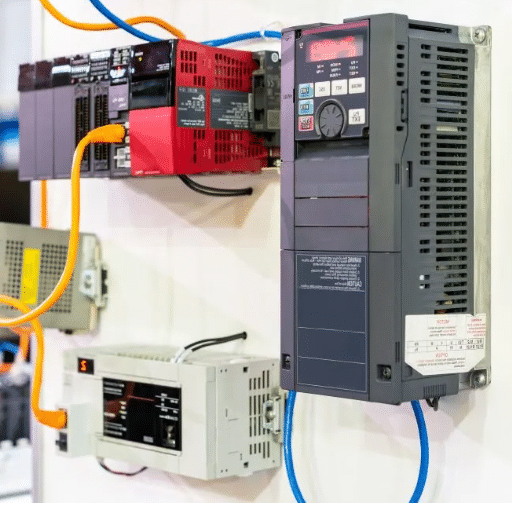
Mining safety regulations vary by country and by whether the operation is surface or underground. Specifying the right certifications during procurement prevents costly delays and compliance failures.
Surface mining VFDs generally require standard industrial certifications such as CE marking for European markets and UL listing for North American installations. Outdoor installations in lightning-prone regions need surge protection on both line and control sides. Ground fault protection and earth leakage monitoring are standard requirements for surface electrical rooms.
Underground operations face explosive atmosphere risks from methane gas and coal dust. Underground mine VFD requirements include IECEx or ATEX certification to confirm the drive will not ignite surrounding gas or dust under fault conditions. The IECEx Scheme provides international standards for equipment used in explosive atmospheres. For operations in the United States, MSHA approval is mandatory for electrical equipment used in underground coal mines. The Mine Safety and Health Administration publishes regulations governing electrical equipment certification for US mining operations.
Intrinsic safety considerations extend to control circuits. Remote control wiring, sensor connections, and communication cables entering hazardous zones must use intrinsically safe barriers or approved cable sealing methods.
Safe Torque Off (STO) is a safety function that immediately isolates motor torque during an emergency stop event. STO is required for hoist applications and recommended for crushers where personnel may need to clear jams. Integration with fire suppression systems allows the VFD to shut down and seal ventilation dampers automatically if a fire is detected in the electrical room.
Theory is useful, but real-world results prove the case. The following three examples show how VFDs solve specific mining challenges across different equipment types and geographies.
A surface gold mine in northern Chile operated a 400 kW jaw crusher with a direct-on-line starter. The 650% inrush current caused voltage dips that disrupted instrumentation and control systems across the crushing circuit. Mechanical shock from hard starting cracked the crusher frame welds twice in three years.
The mine installed a low-voltage VFD with sensorless vector control and 180% overload capacity. The starting current dropped to 180% of full load. Energy consumption fell 22% because the crusher could now run at reduced speed during low-tonnage shifts. The most significant gain was mechanical: gearbox overhaul intervals extended from 18 months to 4 years, and frame cracking stopped entirely.
An underground coal mine in southern Poland operated an 800 kW main ventilation fan at fixed speed with an inlet damper for flow control. The damper wasted energy while creating aerodynamic noise that exceeded regulatory limits near the shaft head.
Converting to a variable speed drive eliminated the damper. Fan speed now tracks production shifts, running at 100% during blasting and extraction periods and dropping to 60% during maintenance shifts. Total energy savings reached 35%. Noise levels fell below regulatory thresholds without additional acoustic treatment. The mine recovered its VFD investment in 18 months through electricity savings alone.
A copper concentrator in Peru commissioned a new 8,000 kW SAG mill in a remote location with limited grid capacity. DOL starting would have pulled 52,000 A from a grid that could only sustain 15,000 A transient loads. The utility threatened to delay commissioning unless the mine could guarantee controlled starting.
A medium voltage VFD with active front-end regeneration limited the starting current to 180% of full load. The mill reached full speed in 45 seconds without stressing the local grid. During normal operation, load-following speed control optimized power draw based on ore hardness measured by the control system. The concentrator avoided a $2 million grid upgrade and qualified for utility demand-response incentives.
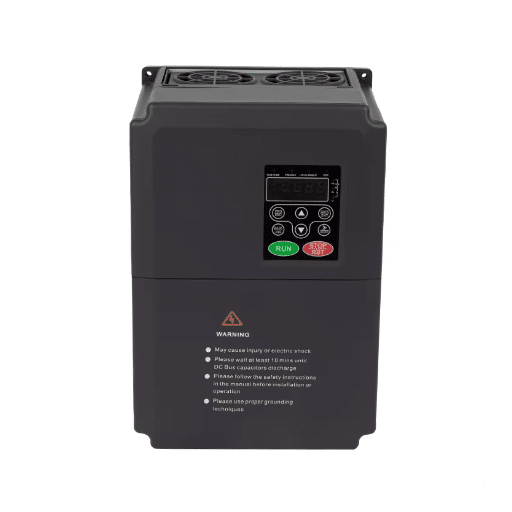
Even the best-specified VFD will underperform if commissioning and maintenance are neglected. Mining environments accelerate wear on cooling systems, connections, and enclosures, so preventive discipline is essential.
Before energizing a mining VFD, verify environmental sealing on all cable entry points. Test cooling fans and filters under load conditions. Confirm that external braking resistors or regenerative units are properly sized and ventilated. For underground installations, verify that all explosion-protection barriers and seals are intact before applying power.
Starting torque boost settings must be calibrated to the actual breakaway torque of the mechanical load. Excessive boost causes current spikes and motor heating. Insufficient boost causes stall faults. Ramp time optimization balances mechanical stress against production cycle time. A crusher that takes 20 seconds to reach full speed causes less wear than one that ramps in 5 seconds, but production planners may prefer faster ramps.
Modern VFDs log current, voltage, torque, and temperature data continuously. This data reveals equipment health trends before failures occur. Current signature analysis detects bearing degradation in motors by identifying characteristic frequency shifts in the current waveform. Load trend monitoring tracks power draw over time, revealing liner wear in crushers and mills as the gradual increase in power needed to process the same ore throughput. The global mining VFD market is growing at roughly 5-6% annually as more operations recognize these operational advantages.
A maintenance team at an iron ore operation in Brazil used VFD current trends to predict a ball mill bearing failure 6 weeks before vibration sensors confirmed the problem. The scheduled replacement during a planned outage avoided a 72-hour unplanned shutdown that would have cost $400,000 in lost production.
A mining VFD is built or specified with enhanced protections for dust, moisture, vibration, and temperature extremes. It typically carries heavier overload ratings (150% for 60 seconds versus 120%) and may require safety certifications such as IECEx or ATEX for underground use. Standard industrial VFDs lack these environmental and safety features.
A mine ventilation fan VFD can save 30-50% of the fan’s energy consumption compared to fixed-speed operation with dampers or inlet vanes. The exact savings depend on how much time the fan spends at partial load. Because ventilation can represent 30-50% of total underground electricity, these savings often justify the VFD investment in under two years.
It depends on power and motor current. Ball mills below 500 kW can often use low-voltage drives effectively. Above 1,000 kW, medium voltage VFDs become practical because they reduce cable current and associated copper losses. Between 500 kW and 1,000 kW, the decision depends on cable run length, transformer capacity, and total cost of ownership.
IP54 is the minimum for protected electrical rooms and surface installations. IP65 is recommended for crusher areas, washdown zones, and high-dust environments. Outdoor installations in harsh climates should specify IP66 or IP67. Remember that enclosure rating is only part of the solution; conformal coating on internal PCBs adds protection against humidity that can penetrate cable glands.
Yes, if the VFD is properly sized for heavy-duty overload and uses sensorless vector or closed-loop vector control. Gyratory crushers can require 150-180% breakaway torque. A standard-duty drive rated for 120% overload will trip on startup. Specify a heavy-duty drive with 150% overload for 60 seconds, and size it with a 10-15% margin above the measured breakaway torque.
For explosive atmospheres (gas or dust), IECEx or ATEX certification is required in most international jurisdictions. In the United States, MSHA approval is mandatory for electrical equipment in underground coal mines. Surface mines generally require standard industrial certifications (CE, UL) but should verify local electrical codes and lightning protection requirements.
A soft starter is cheaper upfront and reduces starting current, but it cannot vary speed or provide load-following energy savings. A VFD offers soft starting plus the ability to run at reduced speed during low-demand periods, typically saving 15-25% energy. For crushers that run at constant full load, a soft starter may be sufficient. For crushers with variable throughput or frequent starts, a VFD delivers stronger ROI. This is why crusher soft start vs VFD is one of the most common debates among mining maintenance managers.
A VFD in the mining industry delivers value across three pillars: equipment selection, environmental protection, and voltage class matching. Crushers, ball mills, ventilation fans, hoists, and conveyors all benefit from soft starting, energy savings, and process control. But mining VFDs are not commodity industrial drives. They must handle starting torque demands of 150-200%, survive dust and moisture that would destroy standard electronics, and comply with safety certifications for hazardous locations.
The equipment that delivers the fastest payback is often the ventilation fan, where affinity-law savings of 30-50% recover investment in 12-24 months. Crushers offer strong returns through both energy savings and extended mechanical life. Large mills and hoists require medium voltage solutions but solve grid stability and regenerative energy challenges that no other technology can address.
If you are evaluating a VFD retrofit or specifying drives for a new mining project, the right approach starts with understanding your load profile, environmental conditions, and certification requirements. Our engineering team has supported mining projects across six continents, from surface copper operations to underground coal mines.
For a detailed understanding of the applications of variable frequency drives in specific industries, please read the Oil and Gas Variable Frequency Drive Guide.
Contact our mining application engineering team → for voltage class selection support, harsh environment specifications, and commissioning guidance tailored to your site conditions.