Ready to Get Your VFD Solution?
Whether you need a single drive or a complete system, we have the VFD products and engineering support to ensure your project's success.

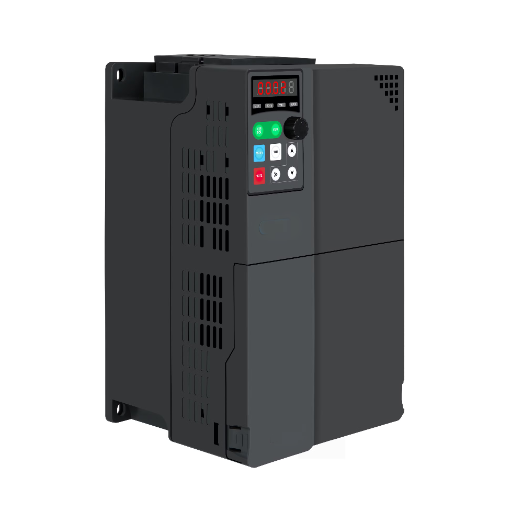
A VFD heavy duty rating is usually 150% of current for 60 s at 40 °C, on a stated repetition window. Five makers publish it differently. Check a claim.
A VFD heavy-duty rating promises 150% of the drive’s rated current for 60 seconds, at a stated ambient temperature, on a stated repetition window. That is the common form. It is not a standard. The percentage, the window and the derate on the same frame all change by manufacturer, and two drives sold as 22 kW heavy duty can carry different current in that class.
A search query for this phrase returns fewer than 200 results. Two of the top ten are forum posts, the oldest from 2010. The question gets asked constantly and answered incidentally.
In 2025 a maintenance engineer at a wastewater plant outside Jinan, call her Liu Wei, compared two quotes for six conveyor drives. Both quotes said 22 kW heavy-duty. Both were from reputable makers. One unit carried 43 A in that class, the other 39 A.
The lower-current drive tripped on the first cold morning of winter, at a cabinet temperature neither quote had mentioned. Nobody had compared the two numbers, because nobody had been told there were two numbers.
You already know what normal duty and heavy duty mean in principle. This article does something narrower and more useful. It shows what the label actually commits the manufacturer to, how five of them publish it differently, and how to check a claim before you sign.
Every ranking page explains the concept. None of them gives you a table you can hold against two datasheets, which is the reason this one exists.
Key Takeaways
– A heavy duty rating commits the maker to four things: an overload percentage, a duration, a repetition window and an ambient basis. A claim missing any of them is incomplete.
– The same class is called light duty, normal duty, normal overload, low overload or heavy duty depending on the brand, and the numbers behind those names differ.
– Schneider publishes 110% normal duty on its ATV600 range and 120% on its ATV900 range. Same manufacturer, same term, two figures.
– Heavy duty is not a fixed 20% derate. On real frames it runs 22%, 25% and 27%, which is why comparing drives by kilowatt rating fails.
– A drive that is 150% heavy duty at 40 °C is not 150% heavy duty in a sealed cabinet at 50 °C on a mountain site.
Send us the duty point and the cabinet temperature, and our engineers will tell you which current column your application actually needs.
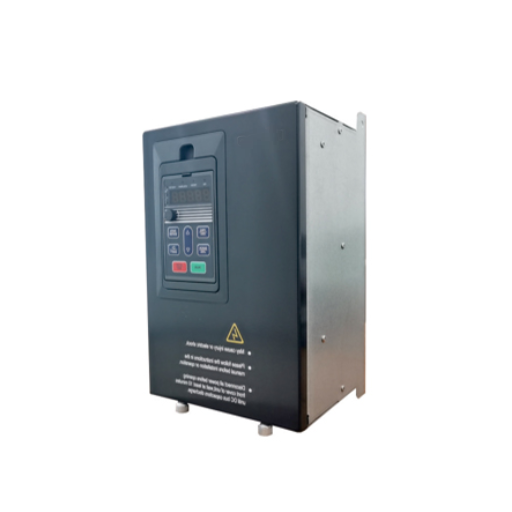
A heavy duty rating is a manufacturer’s promise about short-term current. It has four parts, and a datasheet that gives you fewer than four has not told you what the drive will do.
There is a fifth number that follows from the first four, and it is the one buyers actually need. It is the continuous current the drive can carry while still making the promise. Switching to heavy-duty lowers that continuous current, and the size of the drop depends on the platform.
This article doesn’t tell you to buy a heavy-duty VFD. It tells you what you are buying when you do. If you are still deciding which class your load needs, that is a different question, and our guide to VFD selection based on load type answers it properly.
The four parts also explain why two drives with the same percentage can behave differently. Two makers can both promise 150% and still disagree about what happens on the second overload in the same hour, because nothing in the phrase describes the thermal model behind it. The percentage is the headline. The other three parts are the contract.
The naming is the first obstacle in any normal duty vs heavy duty VFD comparison. ABB calls its two classes light duty and heavy duty. Danfoss calls them normal overload and high overload. Siemens uses low overload and high overload.
Mitsubishi sells five levels and gives them five abbreviations. A buyer comparing three quotes is often comparing three vocabularies.
The second obstacle is that the numbers behind the words move.
Six rating rows, five manufacturers, and two different figures behind the words “normal duty”.
| Manufacturer | Normal-duty class and figure | Heavy-duty class and figure | Repetition window | Ambient basis |
|---|---|---|---|---|
| ABB (ACS880) | Light duty, 110% | Heavy duty, 150% | 1 min every 5 min | 40 °C |
| Schneider (ATV600) | Normal duty, 110% | Heavy duty, 150% | 60 s maximum | 40 °C |
| Schneider (ATV900) | Normal duty, 120% | Heavy duty, 150% | 60 s maximum | 40 °C |
| Danfoss (FC302) | Normal overload, 110% | High overload, 150%, or 160% on some frames | 60 s | 40 °C |
| Yaskawa (GA500) | Normal duty, 110% for 1 min | Heavy duty, 150% for 1 min | 60 s | 40 °C |
| Mitsubishi (FR-E800) | Five levels: super light duty 120% for 3 s, then light, super normal, normal | Heavy duty, the top of the ladder | Varies by level | 40 °C |
Read the Schneider rows twice. One manufacturer, one catalogue, two normal-duty figures depending on the product line. If 110% and 120% can both be called normal duty inside one company, then “normal duty rated” tells you almost nothing on its own. The example comes from Schneider’s own FAQ on the Altivar range, not from a third-party summary.
Mitsubishi makes the same point from the other direction. Its FR-E800 publishes five ratings, and heavy duty is simply the most conservative rung. A buyer who assumes there are two classes will misread that datasheet.
So what do you do when two rows both say 150%? You stop comparing the percentage and start comparing the current column, in the class you will run, at the ambient you actually have. Two drives can agree on 150% and disagree by 10% on the continuous amps that sit underneath it.
The percentage is the part every datasheet prints. The current is the part that decides whether your motor starts.
The table is deliberately narrow. It covers the figures each manufacturer publishes for its current range, as of November 2026. It is not a claim that every drive from each brand matches every row, because frame size changes the numbers within a single series. Check the table in the catalogue for the model you are buying.
How these figures were gathered, stated plainly. The Schneider rows come from the manufacturer’s own FAQ, read directly. The ABB, Danfoss, Yaskawa and Mitsubishi rows come from published catalogue and product listings, not from operating manuals read in full.
That distinction matters on a page arguing that you should verify claims, so treat those four rows as a starting point for your own check rather than as a citation. Siemens is named above and given no row at all, because its figures were not confirmed well enough to print. Where a row and your supplier’s datasheet disagree, the datasheet wins.
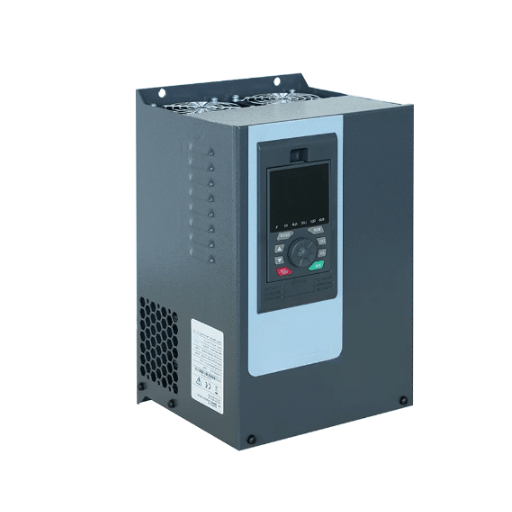
This is the part most buyers miss. Heavy duty is not a separate product. On most modern drives it is the same hardware sold with a different continuous rating.
Three published examples make the arithmetic concrete. Open the VFD overload rating column in both classes on the same frame, and the cost of the stricter promise shows up as a number.
A VFD duty rating chart for three frames: the same hardware sold at two overload classes, with the derate as the gap between the columns. No two rows agree.
| Frame or model | Rating at the lower class | Rating at the higher class | Derate |
|---|---|---|---|
| Schneider ATV630D75N4 | 100 hp / 75 kW normal duty | 75 hp / 55 kW heavy duty | 25% on hp, 27% on kW |
| ABB ACS880-04 | 450 hp at 110% overload | 350 hp at 150% overload | 22% |
| ABB small frame | 13.6 A at 110% overload | 9.9 A at 150% overload | 27% |
Three frames, and none of them derates by the 20% most buying guides repeat. The ABB rows come from the published ACS880 industrial drives range; the Schneider row comes from the ATV630 example in its own FAQ.
Take the third row and work it through, because this is the arithmetic the ratio hides. A frame sold at 13.6 A under the 110% class is promising roughly 15 A of short-term current. Move to the 150% class and the continuous rating becomes 9.9 A, so 150% of that is about 14.9 A.
The overload current barely moves. What moves is the continuous current you are allowed to draw the rest of the time. That is the trade: the drive keeps a similar burst and gives up steady-state capacity to keep it.
A buyer who reads only the 150% headline concludes the drive got stronger. It got more conservative.
Now line up the units. The ABB 450 hp to 350 hp step is a 22% cut. The Schneider step is 100 hp to 75 hp, which is 25%, and 75 kW to 55 kW, which is 27%. Same drive, same two ratings, two different derates, because the hp and kW labels round differently.
Three rows, four ratios, one nominal class. A derate quoted without its unit is not a number you can compare.
The consequence is practical. “Buy one frame up” is not a method, because the frame step does not carry a fixed ratio. The method is to open the current column in the class you will use and compare that number to your motor’s full load amps.
The same arithmetic explains why the kilowatt label misleads across brands. A 100 hp (75 kW) normal-duty drive and a 75 hp (55 kW) heavy-duty drive can be the same physical frame with two different promises attached, which is why the kilowatt column cannot settle a comparison. The current table is the document that decides it, not the headline rating.
Duration is the easy half of the promise. Repetition is the half that decides whether the VFD heavy duty rating survives a real duty pattern.
ABB’s own catalogue describes heavy duty as continuous current allowing 150% for 1 minute every 5 minutes. One widely read reseller summary of the overload classes says the overload is available once every 10 minutes. Both statements are in the public record, and they describe different drives. A buyer comparing them is comparing two products and does not know it.
The difference is not academic. A minute in five is 20% of the running time at up to 150%. A minute in ten is 10%. A conveyor that jogs, a hoist that cycles or a press that strokes will find that gap within a week of production.
Then there are the derates stacked on top of the class itself.
Why four separate axes and not one combined derate table? Because the thermal path is not additive in a simple way. Each factor changes how quickly heat leaves the module, and the module’s own thermal time constant decides how much of a 60-second burst it can absorb before the junction temperature reaches its limit.
A drive with a short time constant reaches its ceiling in 20 seconds under the same current that a drive with a long one holds for a minute. The percentage is the same on both datasheets. The behaviour is not.
This is also why the four factors stack rather than add. They compound, and the compounded result is what the manufacturer’s selection software computes when you enter all four. Enter all four, not the one you think matters most.
A commissioning engineer in Handan spent two days in 2024 chasing intermittent overload trips on drives that had been correctly sized on paper. The drives sat in a sealed enclosure at 52 °C, running at 6 kHz instead of the 4 kHz the sizing assumed. The class was right. The conditions were not the ones the class was published for.
Our frequency converter sizing guide works through the arithmetic for intermittent duty. If you need the IEC duty cycle definitions instead, they are a separate topic and our guide to VFD duty cycles covers them. Duty cycle and duty class are two different axes, and confusing them is the most common error in this whole subject.

Five questions separate a VFD heavy duty rating from a slogan. Ask all five of every supplier, including us.
A good answer to all five fits on one page. A supplier who can’t produce that page hasn’t tested the claim they are selling.
The same test applies to our own range. The YC-5000 series is published as a heavy-duty vector drive with overload capability up to 150%, encoder support and full vector control, and you can read the YC-5000 specifications against the five questions. Where a figure is not published, ask for it rather than assuming the convention. A checklist that only applies to competitors is not a checklist.
A VFD heavy duty rating is not a quality tier, and buying it for a centrifugal pump buys headroom the affinity laws never call on. You pay in frame size, cabinet space and money, and the process never uses the margin.
It also doesn’t fix a mechanical problem. A jammed conveyor with a heavy-duty drive still trips. It simply takes longer to trip and costs more per event, because the drive keeps pushing current into a fault the mechanics caused. If the trips arrive at start rather than at the jam, the class is not your problem, and our guide to VFD overcurrent on acceleration covers what is.
The honest version of the argument is simple. We build both, and the correct answer is the class the load asks for. Which class that is depends on the load, not on the budget.
If the load needs genuine precision rather than headroom, the question changes again, and our guide to the high performance VFD tier covers what that extra control actually buys.
These are the questions buyers ask most about a VFD heavy duty rating, answered the way you would need them at a quote review.
It means the drive can deliver 150% overload, meaning 150% of its rated current, for a stated duration, usually 60 seconds, at a stated ambient and repetition window. All four conditions travel together. A 150% figure quoted without a duration and an ambient is incomplete.
No, though they are related. Constant torque describes the load. Heavy duty describes the drive’s published promise. Most constant-torque loads are specified on a heavy-duty rating, but the two are not interchangeable terms and a datasheet can use either without the other.
The difference is how much short-term current the drive commits to. A normal duty VFD usually promises 110% for 60 seconds and carries more continuous amps for the same frame. A heavy duty VFD promises 150% and carries fewer. Our guide to VFD selection based on load type covers which one your load needs.
Because the hardware is the same and the promise is stricter. Holding more current in reserve for overload events means carrying less continuously, so the continuous rating drops. Schneider’s published example, 100 hp normal duty to 75 hp heavy duty on the ATV630D75N4, is typical of the size of that drop.
One minute per cycle is the usual convention, and the cycle length is where manufacturers disagree. ABB publishes 1 minute in every 5 minutes for its ACS880 range, while a widely cited reseller summary states once every 10 minutes. Read the window on the datasheet you are buying from.
On drives that publish both ratings on one frame, yes. Schneider exposes it as a dual rating parameter, and the continuous rating drops when you switch. On drives that publish only one rating, there is nothing to switch, and the label is the limit.
Ask for five things:
A supplier with test data answers all five in a page. A supplier without it answers with adjectives.
The VFD heavy-duty rating on a datasheet is a contract with four clauses. Percentage, duration, repetition window, ambient. Read all four, then find the current column in the class you will actually run.
The derate is not a fixed percentage, so no rule of thumb replaces the table. The numbers run 22%, 25% and 27% on frames that are all on sale today, and the only way to compare two drives is in amps.
Most loads are simpler than the marketing suggests. A pump with a clean start does not need the heavy rating, and paying for it buys margin the process ignores. A conveyor does. Either way, the difference between two heavy-duty drives is entirely in the small print.
Send us the duty, not the budget. Tell us what the load does at its hardest moment →