Ready to Get Your VFD Solution?
Whether you need a single drive or a complete system, we have the VFD products and engineering support to ensure your project's success.

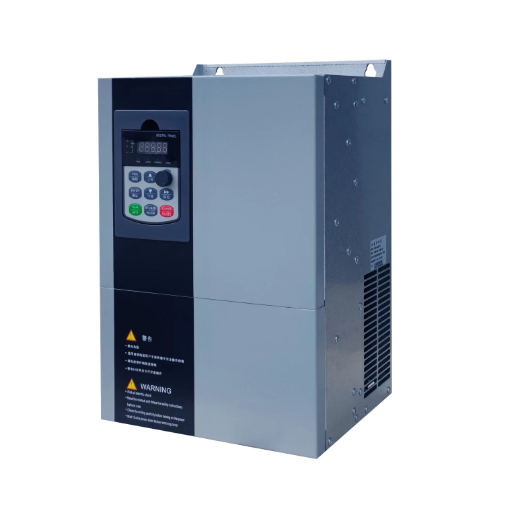
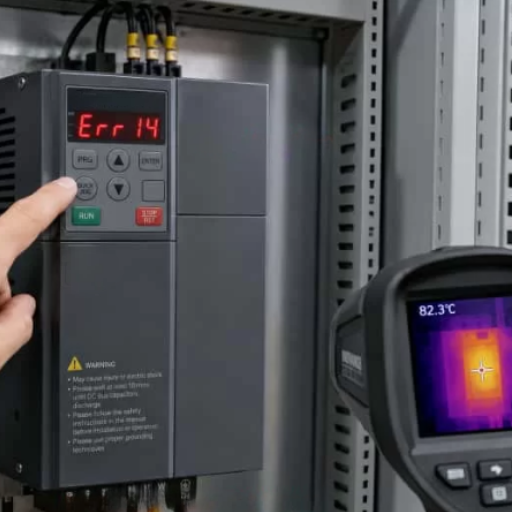
VFD overcurrent on acceleration happens when the torque the load demands exceeds the torque the drive can supply. Lengthening the ramp reduces the demand. It does nothing to the supply.
That distinction is where most of these faults are won or lost. The standard advice, which is correct as far as it goes, is to extend the acceleration time. It works when the demand was purely inertial. It fails when the load needs a torque your drive was never rated to deliver, and that’s more common than the fault code suggests.
Emeka ran into that on a quarry site in Nigeria. A 30 kW jaw crusher feeder had tripped on overcurrent during acceleration since commissioning. The ramp had been extended twice, first to 20 seconds and then to 45, and each time the trips returned within a week. Nothing was mechanically wrong.
The drive had been specified on its nameplate kilowatt rating rather than its duty class, and a normal-duty unit can’t supply the breakaway torque a loaded feeder demands at low speed. No ramp length was ever going to fix it.
This article is about the torque budget: what the load asks for, what the drive can actually supply, and how to tell which one is the limit. It is written for the case where the usual advice has already been tried and VFD tripping on acceleration has not stopped.
If you have a drive tripping on acceleration and want the torque numbers checked against your load, send us the nameplate and the application and our engineers will work it through.
Key Takeaways
- Acceleration overcurrent is a torque mismatch, not a settings problem. The ramp controls demand only.
- Your drive’s duty class sets the torque ceiling. A normal-duty drive supplies about 110% of continuous current for 60 seconds; a heavy-duty drive supplies about 150%. Same hardware frame, different contract.
- A normal-duty drive can’t deliver a motor’s breakaway torque. Locked-rotor torque is around 150% of full-load torque, which is exactly the heavy-duty rating and well above the normal-duty one.
- Lengthening the ramp fails when the load has a torque component that doesn’t scale with time: breakaway friction, gravity on an incline, or process load applied mid-ramp.
- The load inertia ratio is a hard ceiling. Published limits run from about 30:1 to 50:1, and it’s a parameter you set, not a property of the drive.
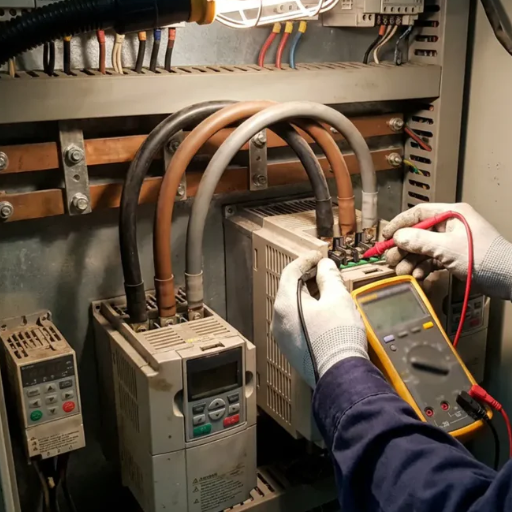
A drive under acceleration is running its output frequency up at whatever rate the acceleration time parameter allows, while holding voltage and frequency in a ratio that keeps the motor producing torque. If the load resists harder than the motor can push, the motor slows relative to the commanded speed, slip rises, and current climbs.
When that current reaches the drive’s overcurrent threshold, the drive stops. The trip is a current event, and the current is a consequence of torque demand. That is why VFD overcurrent during acceleration is diagnosed with the torque budget rather than with the fault code alone.
This article picks up where the fault code leaves off. For the fault itself, including the code names by manufacturer, the difference between overcurrent and overload, and the hardware failures that produce the same symptom, our guide to the VFD overcurrent fault covers the full diagnostic tree. This page is about the torque arithmetic behind one branch of it.
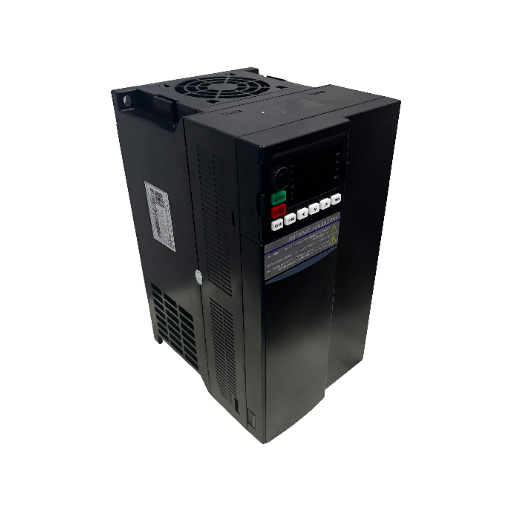
Every acceleration problem is a comparison between two numbers. Getting both of them on paper is usually enough to see which one you can change.
The torque needed to accelerate a load has two parts, and only one of them is negotiable.
The inertial component. This is the torque needed to change the speed of everything that rotates: the motor rotor, the driven machine, any gearbox reflected through the ratio. It obeys T = J x Δω / t, where J is the total inertia, Δω is the speed change and t is the ramp time. This part falls as the ramp lengthens, which is why lengthening the ramp is the first thing to try.
The non-inertial component. This is everything the load demands regardless of how slowly you accelerate it:
For example, this part doesn’t fall as the ramp lengthens. A 45-second ramp needs the same breakaway torque as a 5-second one, because the machine still has to start moving.
That’s the whole explanation for why extending the ramp sometimes fails, and it’s worth stating plainly: the fix addresses one of the two components.
The available torque is set by the drive, and specifically by its duty class.
| Duty class | Overload rating | Typical loads |
|---|---|---|
| Normal duty | about 110% of continuous current for 60 s | Centrifugal pumps, fans, centrifugal compressors |
| Heavy duty | about 150% of continuous current for 60 s | Conveyors, cranes, hoists, mixers, crushers, positive-displacement pumps |
| Some heavy-duty frames | Also 200% for about 3 s | High-impact starting |
The overload window is normally specified as 60 seconds within a 300-second cycle, so it’s a recurring allowance rather than a one-off.
The heavy-duty vs. normal-duty distinction is the one that decides most acceleration problems, and it’s settled at the specification stage rather than in the parameter menu.
However, the detail that catches people out is that the same frame carries both ratings. A drive sold as a 22 kW normal-duty unit is often the same hardware as an 18.5 kW heavy-duty unit. The manufacturer derates the continuous current to reserve thermal headroom for the larger overload pulse.
You don’t get heavy-duty overload by asking for it. You buy it by accepting a smaller continuous rating.
Written as the standard expresses it, the overload margin is:
I_peak ≤ k_OL x I_rated
where k_OL is 1.10 for normal duty or 1.50 for heavy duty, and I_rated is the drive’s continuous output current at that duty class.
Now compare the load side and the drive side.
A standard NEMA Design B motor has a locked-rotor torque of roughly 150% of full-load torque, and a breakdown torque of roughly 200%, with the NEMA MG 10 range running from about 175 to 300% depending on the rating.
A heavy-duty drive supplies 150% for 60 seconds. A normal-duty drive supplies 110%.
So a normal-duty drive can’t deliver a standard motor’s breakaway torque at all. The motor is capable of it. The drive won’t pass the current. If the load needs locked-rotor torque to start moving, a normal-duty drive on that application will trip on acceleration no matter what the ramp time is set to, and the fault will look exactly like a tuning problem.
That’s the single most useful check this article can offer, and it takes one line of specification to perform.
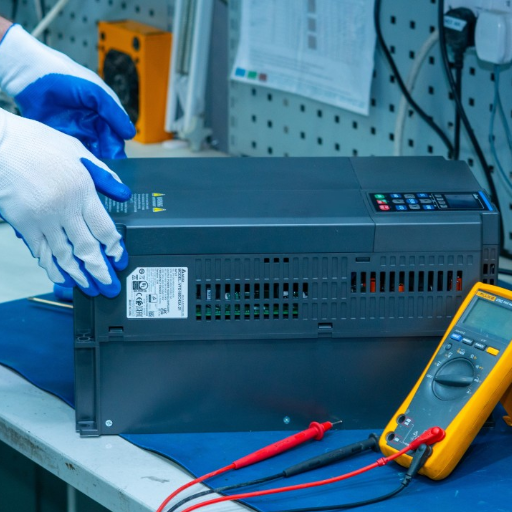
If extending the ramp has not helped, you are past the inertial component and into one of two limits. Both are diagnosable.
Work through the non-inertial list from the previous section against your machine:
The test that separates these from an inertial problem is simple. Disconnect the mechanical load and run the motor uncoupled. If the motor accelerates cleanly with no load, the drive is fine and the load is the issue. That step appears in every competent diagnostic sequence, and the reason to run it is to stop adjusting parameters that aren’t the problem.
The second limit is less obvious and much less discussed.
Every drive has a maximum ratio between the load inertia reflected to the motor shaft and the motor’s own inertia. Beyond it, the drive can’t maintain control of the motor, and lengthening the ramp doesn’t help because the limit is control stability rather than torque.
Published figures vary widely by manufacturer and control scheme, so there is no single number to look for:
| Source | Limit |
|---|---|
| SEW-Eurodrive, ELSM control program | Maximum permissible inertia ratio 50 |
| Mitsubishi FR-V500 | Parameter 880, “Load inertia ratio”, factory setting 7, adjustable to 200 |
| Mitsubishi FR-A701 | About 30 times or less for easy gain tuning to work |
| Toshiba | Parameter F459; the default assumes load inertia at 1.5 times the motor shaft |
Two things follow from that table.
First, the inertia ratio is a parameter you set, not a property of the drive. A drive left at its factory value on a high-inertia load is running with a wrong number in it, and nothing on the nameplate says so.
Second, the factory defaults assume a much smaller load inertia than many real machines present. A default of 7 against a large fan or a centrifuge at 40 is a mismatch the drive can’t tune around.
Lorena hit that on a water treatment works in Chile. A 45 kW blower drive had tripped on acceleration since a rotor change, and the ramp had been stretched from 15 seconds to 60 with no improvement. The blower’s inertia had roughly doubled, and the drive was still holding its original inertia ratio setting. Correcting that parameter and re-running the tuning brought the trips to an end.
If both components of the load torque are inertial, the calculation is available and short.
t = (J x Δω) / T_available
where t is the ramp time in seconds, J is the total inertia reflected to the motor shaft in kg·m², Δω is the change in angular velocity in rad/s, and T_available is the accelerating torque the drive can supply in N·m.
Convert motor speed to angular velocity with ω = 2π x RPM / 60. A 1,750 RPM motor going from standstill to full speed changes by about 183 rad/s.
Then add margin. In field work the inertia figure is often estimated rather than known, and a 25% safety margin on the calculated time is a reasonable allowance for the estimate being low.
If you would rather not calculate, published starting ranges by application exist, and our guide to VFD ramp settings carries a table of them alongside the tuning workflow. Start at the long end and shorten only if the drive and the process both allow it.
One caution on going longer. A ramp long enough to avoid overcurrent can introduce problems of its own: the machine runs at low speed for longer, which matters for cooling on a self-ventilated motor, and some processes can’t tolerate a slow start. The ramp is a tuning tool, not a substitute for enough torque.
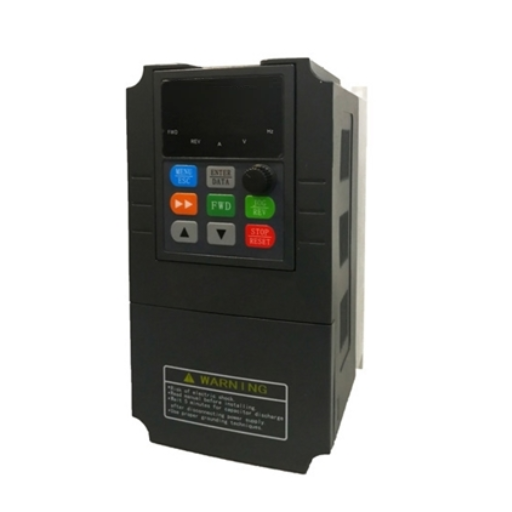
If the ramp has been extended and the torque budget still doesn’t balance, then VFD overcurrent on acceleration has stopped being a tuning problem and the options are the ones that change one of the two numbers.
Reduce the required torque.
Increase the supplied torque.
And check the setting that gets blamed for everything. A current limit parameter set below the motor’s full-load current will cause nuisance overcurrent trips on acceleration, and it’s worth reading before anything else is changed.
Soren found that on a Danish dairy line. A conveyor drive tripped on acceleration during every washdown cycle, and the ramp had been extended to 30 seconds with no effect. The current limit had been set to 90% of motor full-load current during a commissioning session to protect a jam-prone section. The limit was doing exactly what it was set to do.
Restoring it and addressing the jam with a mechanical guard solved the problem, and no ramp time was the issue at any point.
Because the torque the load demands exceeds the torque the drive can supply. The inertial part of that demand falls as you lengthen the ramp, and the non-inertial part doesn’t. If extending the acceleration time has not helped, the load needs torque that the drive’s duty class doesn’t permit, or the load has a torque component that doesn’t scale with ramp time.
No. It fixes the case where the demand was purely inertial, and that’s the case where an acceleration time too short for the load inertia is the whole story. It does nothing for breakaway friction, gravity on an incline, or process load applied during the ramp, because those demand the same torque at any ramp length. It also does nothing if the drive’s duty class can’t supply the current the torque requires.
Mainly the overload rating. A normal-duty drive supplies about 110% of its continuous current for 60 seconds, and a heavy-duty drive about 150% for the same period. The same hardware frame carries both ratings at different continuous currents, because the heavy-duty figure reserves thermal headroom for the larger overload pulse.
Because a standard motor’s locked-rotor torque is about 150% of full-load torque, and a normal-duty drive only supplies about 110% of continuous current. The motor could produce the torque, and the drive won’t pass the current. A heavy-duty drive rated at 150% is the usual answer.
It is the ratio of the load’s inertia, reflected to the motor shaft, to the motor’s own inertia. Every drive has a maximum beyond which it can’t maintain control of the motor, and manufacturers publish different limits, commonly in the 30:1 to 50:1 range. It’s normally a parameter you set, and factory defaults often assume a much smaller load inertia than a real machine presents.
Four things decide whether VFD overcurrent on acceleration is a tuning problem or a specification problem.
Separate the torque into its two parts. The inertial component responds to ramp time and the non-inertial component doesn’t. That single distinction tells you whether extending the ramp has any chance of working.
Check the duty class before anything else. A normal-duty drive supplies about 110% of continuous current and a heavy-duty drive about 150%, against a motor whose locked-rotor torque is around 150% of full-load torque. If the load needs breakaway torque, the normal-duty unit can’t deliver it at any ramp setting.
Look for gravity, breakaway and process load explicitly. These are the reasons a long ramp fails, and each one has a different fix that has nothing to do with the acceleration parameter.
And check the inertia ratio parameter, because it’s the one that silently carries a factory default your machine may not match.
If you want the torque budget worked through for a specific drive and load, send us the nameplate, the application and the ramp settings and our engineers will tell you which side of the comparison is short.
Therefore, the useful habit is to read the fault code as a symptom rather than a setting. The drive is telling you the current was too high. Which of the two numbers to change is the question worth answering.