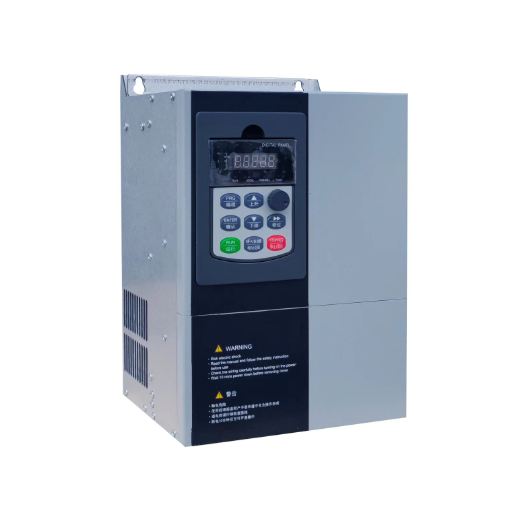
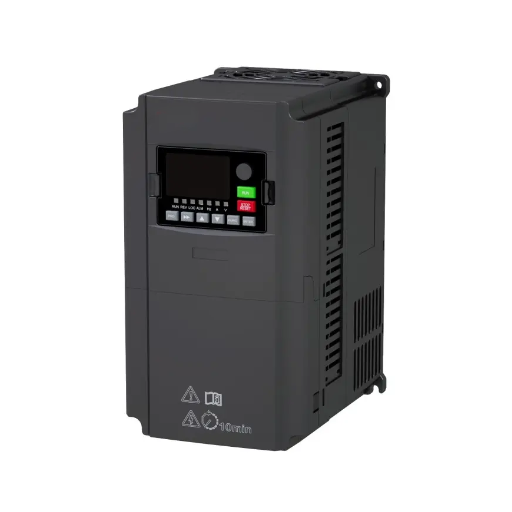
Ready to Get Your VFD Solution?
Whether you need a single drive or a complete system, we have the VFD products and engineering support to ensure your project's success.

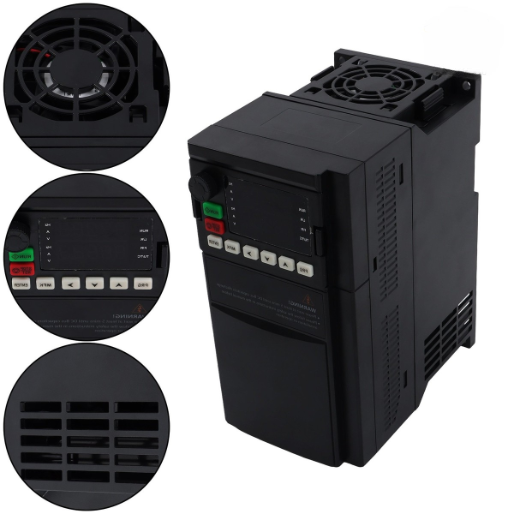
A high-performance VFD is a product tier, not a description of quality. It costs more than a general-purpose drive of the same power because it adds six capabilities you can measure. Those are torque at zero speed, speed range, speed accuracy, torque response, overload class and motor type support.
Most buyers need two of the six, and a fair number need none at all.
Aurelio Bianchi replaced a 30 kW fan drive at a ceramics plant near Sassuolo in 2024. He asked three suppliers for quotes and took the middle one, because the cheapest looked thin and the dearest looked like overkill.
The middle quote was a high-performance VFD. It ran that fan for two years without a fault, and it cost his employer roughly a third more than the application required. The plant never fitted an encoder and never asked the drive for torque at zero speed. Nothing failed, and nothing was learned either.
This page prices each of the six capabilities and says which ones most loads never use.
You are right to be suspicious of the word performance printed on a nameplate. That suspicion is healthy, and this article tests it rather than arguing with it. You will get the six capabilities with the test conditions attached. You will also get the overload arithmetic that turns the tier into money, and the section most competitor pages skip: when the cheaper drive is the correct purchase.
Key Takeaways
- A high performance VFD is defined by six measurable capabilities, not by the word “performance” printed on the case.
- The clearest dividing line is torque at zero speed: sensorless vector typically gives 150% at 0.5 Hz, closed-loop vector gives 200% at 0 Hz.
- Speed range and accuracy follow the same pattern, roughly 1:100 to 1:200 open loop against 1:1000 to 1:1500 closed loop.
- Overload class is where the tier turns commercial: one model number can be rated 75 kW at 110% or 55 kW at 150%.
- For pumps, fans and simple conveyors the premium never pays back, and the honest answer is the general purpose drive.
Tell us the load and the speed you need to hold, and our engineers will tell you which tier it lands in. Send us the duty point →
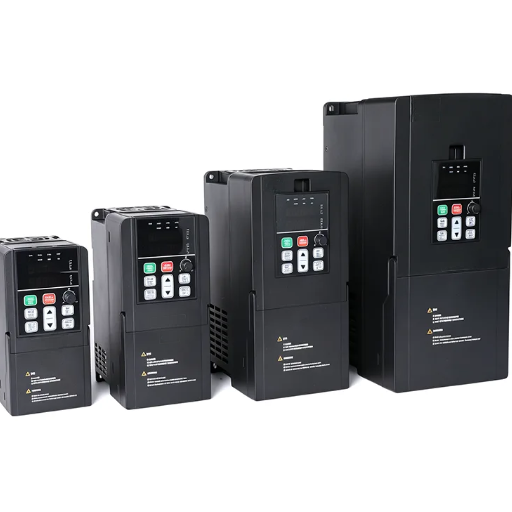
The phrase is a catalogue classification. Every large manufacturer splits its range this way, and the split usually shows up in the naming. One family is sold for general machinery, a second for feedback and positioning work, and a third for servo applications.
Manufacturers disagree about where the boundary sits, which is the first sign that it is a commercial line rather than a physical one. Some catalogues print the full form, high performance variable frequency drive, for the same tier. Others use a model prefix and never say the phrase at all.
So the useful definition is behavioural rather than nominal.
A high performance VFD is a drive sold with closed-loop vector control, encoder feedback, a wider speed range, faster torque response and a heavier overload rating than the general purpose model of the same power. The label belongs to the manufacturer. The capabilities are yours to check.
Everything below tests that definition against published figures. A high-performance VFD that cannot produce the numbers is a general-purpose unit with a different badge on the front.
Our own high performance VFD range sits alongside the general-purpose and heavy-duty families, which is how to read any catalogue. The tier is one axis. Power, voltage and duty are separate axes, and a premium label does not rescue a drive sized for the wrong load.
One more thing about the word. Tier names are marketing decisions, and they change. A family sold as high performance in 2020 may be the mid-tier product in 2026, because the manufacturer moved the general purpose line up.
A high-performance VFD is therefore a dated claim as well as a commercial one. Never buy by name. Buy by the six figures below, taken from the datasheet of the specific model in front of you.
This is the table most ranking pages are missing. Each row is a claim with a test condition, and the condition is the part that matters.
| Capability | General purpose | High performance | What it changes |
|---|---|---|---|
| Starting torque | 150% at 0.5 Hz, sensorless | 200% at 0 Hz, closed loop | Whether the load breaks away or trips |
| Speed range | 1:100 to 1:200 | 1:1000 to 1:1500 | Whether very low speeds hold under load |
| Speed accuracy | about ±0.2% | about ±0.02% | Whether two motors stay synchronised |
| Torque response | under 20 ms | under 10 ms | Whether a shock load is absorbed or trips the drive |
| Overload class | 110% for 60 s | 150% for 60 s | The real continuous rating of the frame |
| Motor support | induction motor | induction, permanent magnet, encoder feedback | Whether the drive can run the motor you own |
Read the first row carefully. “150% at 0.5 Hz” and “200% at 0 Hz” are not the same claim at different strengths. One of them can hold a load at standstill.
The other cannot, at any setting, because it has no rotor position to work from. That is a categorical difference, and it is the most common reason a buyer ends up in the upper tier.
The second row follows from the first. A drive that loses control authority near zero speed cannot promise a wide range at the bottom of it. Published figures run from 1:100 to 1:200 without an encoder, and from 1:1000 to 1:1500 with one. The ratio describes the band where the drive holds speed within its stated accuracy, not the band where it still turns.
Row three is where manufacturers disagree most. Yaskawa publishes ±0.2% for open loop and ±0.02% for closed loop on its U1000 series. Fuji publishes ±0.5% and ±0.01% on the FRENIC-MEGA. Both are honest, and the gap is a reminder that VFD speed control accuracy belongs to a model, not to a tier.
Row four decides whether a shock load trips the drive or gets absorbed. It is the figure suppliers quote most loosely. Under 20 ms sensorless and under 10 ms closed loop is a typical published split, and the test condition behind it is rarely printed. Treat the number as a ranking between models, not as a guarantee.
Rows five and six carry the most commercial weight, and each gets its own section below. Both are also the rows a high-performance VFD datasheet states most plainly, because neither can be faked with a control parameter.
One caution about this table. A datasheet can quote a torque figure at a single frequency and leave the rest of the curve unstated. A high-performance VFD asked for 200% at 0 Hz may deliver it for a few seconds only, or only inside a narrow temperature window. Ask for the curve, not the point.
If you want the theory behind rows one to four, our guide to vector control explains what closed-loop vector control does with the encoder signal. For the tier decision, the paragraphs above are enough.
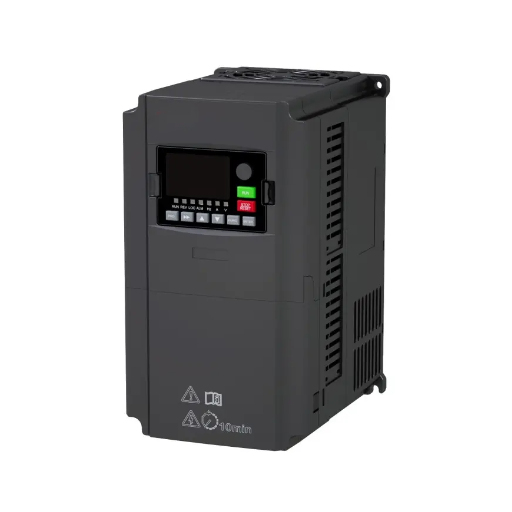
Strip the marketing and the general purpose vs high performance VFD question comes down to one thing: how much of the speed range you need under active control.
A general purpose drive holds a motor at speed across a wide band and does it cheaply. It will run a pump, a fan, a blower, a mixer or a simple conveyor for years without complaint. Its limits appear at the bottom of the range, where the torque it can produce collapses, and at the start, where it delivers about 1.1 times rated current for a minute.
A high-performance VFD extends both limits. It holds torque lower down the range, holds it longer, and with an encoder it holds it at zero speed. That extension costs money, and the cost is not small.
Where the money goes. The premium pays for a faster processor running a heavier control algorithm. It pays for an encoder interface and the wiring to reach it. It pays for a larger heatsink and higher-grade power devices to survive the heavier overload, and for a wider protection suite. A high performance VFD that never calls on those parts is an expensive way to buy a heatsink.
The honest premium. Any article quoting a single percentage price gap across the market is guessing. The difference varies by manufacturer, power rating and order volume, and it widens at low power. A high-performance VFD costs more in every market, so the only useful question is how much of the premium your process can consume.
The decision shortcut. Name the load. Name the one thing it cannot do without. The general-purpose vs. high-performance VFD comparison really does collapse to this. If that thing is on the six-capability list, you are in the upper tier, and if it is not, you are not.
The audit that catches overspend. Before signing, list the six capabilities and write “used” or “unused” beside each. A high-performance VFD with four unused rows is a general purpose purchase wearing a better badge, and the audit makes that visible to whoever approves the budget.
There is a wider point about the purchase. The premium is priced against the cost of downtime, not against the cost of the load. On a line that loses money by the minute when it stops, the premium is cheap. On a standby unit, it never is.
Here is the number that changes budgets. One frame can carry two ratings.
Take the Schneider Altivar 630 model ATV630D75N4. Read as a normal duty drive it is rated 75 kW, with 110% overload for 60 seconds. Read as a heavy duty drive, the same unit is rated 55 kW, with 150% overload for 60 seconds. Same hardware, same part number, two continuous ratings.
That is not a quirk of one brand. It is how the VFD heavy duty rating works across the industry, and it means the difference between the tiers is about 27% of nameplate power on the same box.
The reason is starting torque. A NEMA Design B induction motor develops roughly 150% of rated torque at locked rotor, so it draws roughly 150% of rated current when it starts against a load. A drive rated at 110% overload for 60 seconds cannot pass that current for the time a heavy start takes. It trips instead.
Ines Almeida ran into this on a Portuguese materials handling project in 2025. She specified a drive to match a 55 kW conveyor motor, which is the obvious way to size, and it tripped on every loaded start.
The fix was not a parameter change. It was a physically larger drive whose heavy duty rating reads 55 kW, which in that family means a unit rated 75 kW at normal duty. She had to buy a bigger box to get the smaller number on the label.
The lesson generalises. Size on the duty class the load actually imposes, not on the motor nameplate. Then check whether the resulting frame is the tier you thought you were buying, because the two ratings can point at different products.
Some manufacturers publish a third overload level, typically 120% for 60 seconds or 200% for a few seconds. Do not read them as a ladder. Read the definition attached to each, because the duration matters as much as the percentage. Check the VFD heavy-duty rating before the kW figure, because the rating is what the motor will actually see.
The practical test takes two questions. A high-performance VFD and a general-purpose unit in the same frame will both start a light load on the first try. Only one of them will start a loaded conveyor twice an hour for a decade. That second answer is what you pay for.
For the full arithmetic on why an undersized frame trips rather than simply ramping slowly, read our explanation of VFD overcurrent on acceleration.
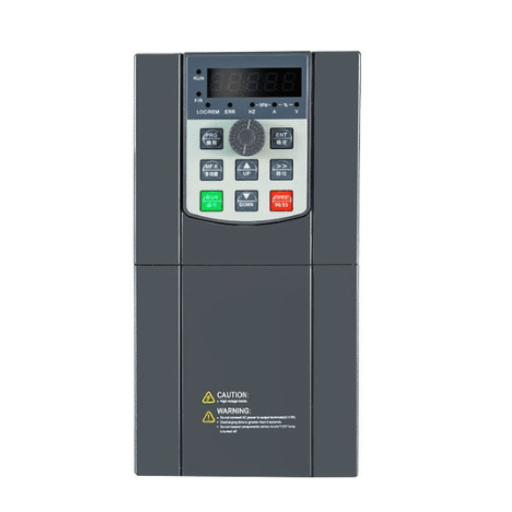
Induction motors run on either tier. That is the baseline, and it is why the general-purpose drive remains the default for most installations.
Permanent magnet motors are different. They need rotor position information before the drive can commutate correctly, and many general-purpose units simply cannot provide it. If your motor is PM, the tier question is often settled before the other five capabilities are discussed.
Identification happens at commissioning and is worth doing deliberately. A PM rotor produces a back-EMF when you turn the shaft by hand with the drive isolated, and that voltage tells you what you are connected to. Guessing at a parameter instead risks a commissioning fault that looks like a drive failure. Confirm the motor before the quote is issued, because a high-performance VFD cannot compensate for a motor it does not understand.
PM motors are worth the trouble on applications that run continuously, because they are more efficient than an induction machine of the same rating. They are not worth it on a load that runs four hours a week. The drive tier follows the motor decision, not the other way round.
Encoders draw the other boundary. Without feedback there is no closed-loop vector control, and without it the 200% at 0 Hz claim does not apply to you. A high performance VFD with no feedback is a very good open-loop drive and nothing more. The VFD speed control accuracy you paid for drops back to the open-loop figure as soon as the encoder is missing.
Encoder type matters too. An incremental encoder gives speed and direction. An absolute encoder adds position, which is what a holding application actually needs. Specify which one the drive expects before the motor is ordered.
Synchronous reluctance motors sit between the two families and are increasingly common on new installations. They need position feedback just as a PM motor does, so they land in the same tier for the same reason.
Four load types genuinely need the upper tier. Everything else is a judgement call, and most of it falls the other way.
The test for each is the same. Ask what the load must do at its slowest point and at its worst moment. If the answer is nothing unusual, a high performance VFD adds cost without adding function.
Winders and unwinders must hold a controlled tension while the roll diameter changes from full to empty. The drive is asked for accurate torque at very low speed, and often at zero speed during a splice. This is the clearest case for the premium tier, because both the accuracy and the zero-speed claims are load-bearing requirements. A high performance VFD is the only tier that can make either promise.
Indexing conveyors, rotary tables and lift stations that stop and hold need holding torque at standstill. That requirement alone forces closed-loop vector control with an encoder, and it is the one capability that cannot be substituted with clever parameter settings. If the machine must hold position against gravity, you are in the upper tier. A high performance VFD is the only tier that can hold a load once the speed reference reaches zero.
A screw extruder needs constant torque across its whole speed range, and the bottom of that range is where general-purpose drives struggle. An extruder running at 15% of base speed under a full melt load is asking for torque a general purpose drive cannot sustain. The premium buys the low end of the range, and the low end is where the process runs. That is the one case where a high-performance VFD earns its keep on throughput rather than on protection.
A centrifuge combines a heavy breakaway with a controlled deceleration, so both ends of the cycle stress the drive. The breakaway needs the overload class. The deceleration needs the braking capability that comes with the higher tier, because a general-purpose unit will trip on overvoltage when the load is pushed back into it.
Outside these four, the case gets thin quickly. A high-performance VFD on a centrifugal pump is not wrong in any technical sense. It is simply a purchase nobody can justify when the budget is reviewed.
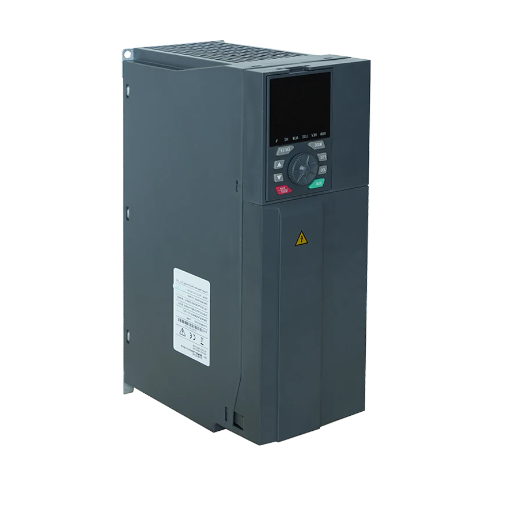
Most readers of this page are in this section. That is not a disappointment. It is the reason to trust everything above it.
Pumps, fans, blowers, HVAC air handlers and plain conveyors are variable torque loads. Their torque requirement falls with the square of speed, so the bottom of the range is where they rarely go and where they need the least. None of the six capabilities is a hard requirement.
Wei Lin, a plant engineer at a water treatment works in Bình Dương, Vietnam, was told in 2025 that his filter backwash pumps needed the premium tier. He asked what the pumps required at low speed and the answer was nothing, because the process ran them either at full flow or stopped. He bought general purpose drives and spent the difference on a third unit as a spare.
The arithmetic that settles it. If the application never asks for torque below 3 Hz, never needs better than ±0.5%, and never starts against a load, the premium buys nothing you can use. Three conditions, all easy to check. Any single one that fails moves you into the discussion above.
A high performance VFD on a line like that will run for twenty years without one of its six capabilities ever being used. That is not a failure of the drive. It is a failure of the selection.
There is a middle position worth knowing about. Many families now include a sensorless vector model between the cheap general purpose unit and the closed-loop flagship. It gives 150% at 0.5 Hz and a 1:200 range, which covers most constant-torque loads that never need to hold still. A high performance VFD is not the only step up from the bottom.
The retrofit case deserves its own note. When the motor stays and only the drive is replaced, the upper tier is rarely the right answer, because the motor cannot use what the drive adds. Some proposals print the full form, high performance variable frequency drive, on every line regardless of the load. Treat it as a category, not a compliment.
For the load-type reasoning behind this section, see VFD selection based on load type. If you are new to drives entirely, start with what a variable frequency drive is and come back.
Seven lines. Send them to a supplier and you will get comparable quotes, because every supplier will have to answer the same questions.
If a quote comes back without a figure against line two, it is not answering the question. That line separates a real selection from a catalogue lookup.
The checklist also protects you from the opposite error. A high-performance VFD specified from line two alone often comes back smaller than expected, because the required torque is lower than the motor nameplate suggests.
Only when one of the six capabilities is a hard requirement. Zero-speed torque, closed-loop accuracy or a heavy overload class will each justify it on their own. Two or more, and the answer is obvious. None, and it is money you will not recover.
No. Closed-loop vector control needs encoder feedback, and the encoder interface is a feature of the upper tier. A general-purpose unit can run sensorless vector, which is capable, but it cannot hold torque at zero speed.
The upper tier adds closed-loop control, encoder support, a wider speed range, faster torque response and a heavier overload rating. The lower tier delivers a motor at speed across a wide band, cheaply, and it does that well for most loads. A high performance VFD is the same machine underneath, sold with more of its capability enabled.
A faster processor, an encoder interface, a larger heatsink and higher-grade power devices to survive the heavier overload, plus a wider protection suite. Every item on that list costs money, and none of it is a brand premium.
Yes, and the capabilities go unused. A pump does not need zero-speed torque or closed-loop accuracy, so the premium buys nothing the process can consume. It is not harmful, only wasteful.
It is the current the drive can deliver for one minute above its continuous rating. It also defines the real continuous rating of the frame, because a drive sold as heavy duty is the same hardware derated so the overload figure can be met.
Usually not. The encoder interface is a hardware option fitted at build, not a parameter you enable later. A high performance VFD ordered without it may need a card and a firmware licence before feedback will work at all.
Six capabilities, one table, one arithmetic example and one honest section about when the premium is wasted.
The decision is not about quality. A high performance VFD is better hardware in the same way a bigger engine is better hardware, and both are waste when the load never asks for them. Find the one capability your process cannot live without.
If there is not one, buy the general purpose drive, buy a spare with the difference, and put the rest into commissioning. That is the whole method, and it works on any manufacturer’s catalogue.
If you are still unsure, the six rows are the conversation. A high performance VFD earns its price at the moment you can point at one of them and say that is the one.
Tell us what the load has to do at its slowest point, and we will tell you which tier it needs.