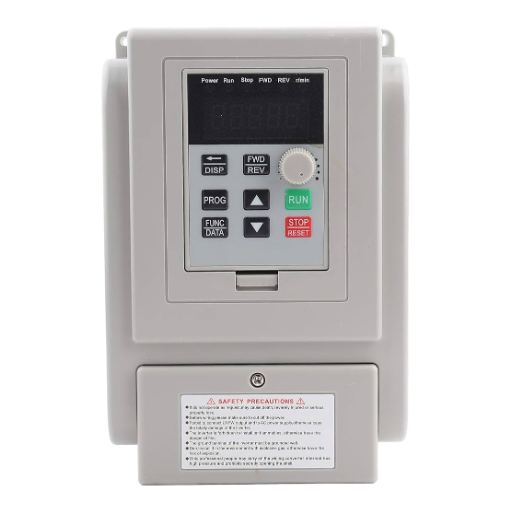
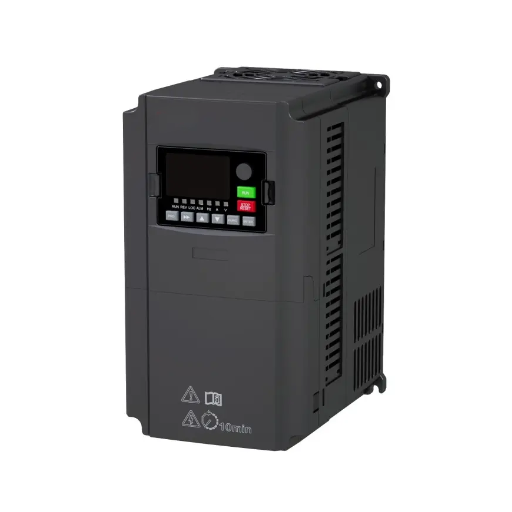
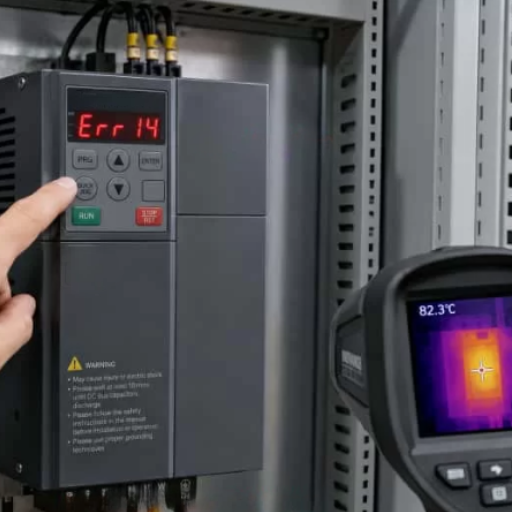
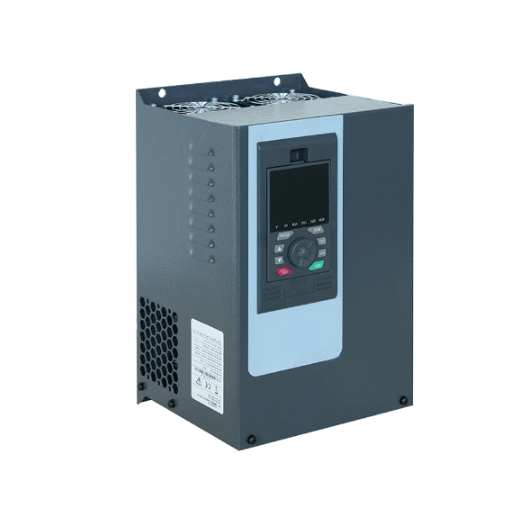
Ready to Get Your VFD Solution?
Whether you need a single drive or a complete system, we have the VFD products and engineering support to ensure your project's success.


If you need clarity on the AC drive vs VFD debate, the short answer is simple: they are usually the same piece of equipment. The difference is not technical. It is linguistic. Each term dominates in a different region, industry, or document type. Understanding when to use which word saves procurement teams days of confusion and prevents mismatched specifications in global RFQs.
If you have ever received three quotes for the same project — one for an “AC drive” from Asia, one for a “VFD” from North America, and one for a “frequency inverter” from Europe — and wondered whether you were comparing apples to apples, this guide is for you. For a broader introduction to variable frequency drives, see our complete VFD guide.
Key Takeaways
- An AC drive is the broadest term. A VFD is a specific type of AC drive. In most industrial contexts, they describe the same product.
- VSD (Variable Speed Drive) is broader than VFD and can include mechanical and hydraulic speed control, not just electronic.
- Regional usage matters: “AC drive” dominates Asia-Pacific, “VFD” rules North America, and “VSD” is standard in Europe and Australia.
- A servo drive is fundamentally different from a VFD — it is designed for precision positioning, not just speed control.
- Using the wrong term in a global tender can attract bids for entirely different equipment categories.
If you are still in the selection phase, learn how to choose the right VFD for your application to avoid mismatched drive-motor pairs from the start.

In nearly all industrial motor control contexts, yes. An AC drive is an electronic device that controls the speed and torque of an AC motor by varying the frequency and voltage of the power supplied to it. A Variable Frequency Drive (VFD) does the same thing. The term “AC drive” is the broader category. The term “VFD” is the most common North American name for that category.
However, not all terms are interchangeable. A Variable Speed Drive (VSD) can refer to mechanical belt drives, hydraulic couplings, or eddy current clutches — technologies that have nothing to do with power electronics. An Adjustable Speed Drive (ASD) is the formal term used in NEMA MG-1 and IEC 61800 standards. And a servo drive is an entirely different class of equipment for precision positioning.
The table below gives you a quick reference before we dive into each term.
| Term | Full Name | Scope | Primary Region | Typical Applications |
|---|---|---|---|---|
| AC Drive | AC Motor Drive | Broad — any electronic drive for AC motors | Asia-Pacific, global OEM specs | Pumps, fans, conveyors, compressors |
| VFD | Variable Frequency Drive | Subset of AC drive — varies frequency and voltage | North America, the Middle East | HVAC, water treatment, manufacturing |
| VSD | Variable Speed Drive | Broadest — includes mechanical, hydraulic, and electronic | Europe, Australia, UK | Any speed control application |
| ASD | Adjustable Speed Drive | Standards term (NEMA/IEC) for electronic drives | Standards documents, engineering specs | Formal documentation, compliance |
| Frequency Inverter | Frequency Inverter | Component-level term for the inverter stage | Germany and China manufacturing | Datasheets, component catalogs |
| Servo Drive | Servo Motor Drive | Precision positioning with a feedback loop | Global precision manufacturing | Robotics, CNC, packaging, indexing |
The core of the AC drive vs VFD question comes down to scope. An AC drive is the broad category. A VFD is the most common North American name for a specific type of AC drive.
| Comparison Point | AC Drive | VFD |
|---|---|---|
| Definition | Electronic device for controlling AC motor speed and torque | AC drive that varies frequency to control speed |
| Scope | Broader — includes V/f, vector, and DTC control methods | Narrower — specifies frequency-variation method |
| Regions | Asia-Pacific, global OEM specs, international tenders | North America, Middle East, HVAC industry |
| Standards | Informal industry term | Common term in NEMA and IEEE contexts |
| Interchangeable? | Yes — in 90%+ of industrial contexts | Yes — when referring to electronic AC motor drives |
In practical procurement, the AC drive vs VFD distinction rarely matters. A supplier quoting an “AC drive” and a supplier quoting a “VFD” are typically offering functionally identical equipment. The specification details — voltage, current rating, control mode, enclosure — matter far more than the name on the datasheet.
However, the AC drive vs VFD terminology gap becomes important in two situations: when you are reconciling quotes from international suppliers who use different terms, and when you are writing specifications that will be read by engineers trained in different regional standards.
An AC drive is an electronic device that controls the speed, torque, and direction of an AC induction or synchronous motor. It achieves this by converting fixed-frequency AC input power into variable-frequency, variable-voltage output power.
The term “AC drive” is the most inclusive and widely understood descriptor. It covers VFDs, vector drives, and direct torque control (DTC) drives — any electronically controlled system for AC motors. If you are writing a specification for a global audience, “AC drive” is the safest term because it carries minimal regional baggage.
“AC drive” is the dominant term in Asia-Pacific manufacturing. Chinese, Indian, and Southeast Asian suppliers almost universally use “AC drive” in product catalogs, datasheets, and quotes. Japanese manufacturers such as Yaskawa and Mitsubishi also favor “AC drive” or “inverter” in their English-language documentation.
Use “AC drive” when:
Ready to source the right AC drive for your application? Browse our VFD catalog or contact our engineers for application-specific recommendations.

A Variable Frequency Drive (VFD) is an AC drive that controls motor speed by varying the frequency of the electrical supply to the motor. The basic relationship is simple: motor speed is proportional to supply frequency. A motor designed for 60 Hz will run at half speed on 30 Hz, assuming voltage is scaled proportionally.
VFDs work by rectifying AC input power to DC, smoothing it on a DC bus, and then inverting it back to AC at the desired frequency using pulse-width modulation (PWM). This three-stage process — rectifier, DC bus, inverter — is the foundation of all modern electronic motor drives.
The term “VFD” is technically precise. It specifies how the drive controls speed: by varying frequency. This distinguishes it from older technologies such as variable-voltage drives (which reduce voltage to lower torque but not frequency) or mechanical VSDs.
“VFD” is the dominant term in North America. Walk into any electrical distributor in the United States or Canada and ask for an AC drive, and the counterperson will likely repeat the term back to you as “VFD.” Allen-Bradley, Eaton, and Rockwell Automation all use “VFD” in their product naming and technical literature. The term has also spread to the Middle East and parts of Latin America through U.S. engineering influence.
Use “VFD” when:
For a deeper technical dive into how VFDs work internally, see our guide on the VFD working principle. If you are new to variable frequency drives, our what is a variable frequency drive guide covers the fundamentals.
A Variable Speed Drive (VSD) is any device or system that controls the speed of machinery. This is where the terminology gets tricky. A VSD can be:
Because “VSD” includes non-electronic technologies, it is broader than “VFD.” Every VFD is a VSD. Not every VSD is a VFD.
In practice, however, most modern industrial conversations about VSDs refer to electronic drives. The mechanical alternatives have largely been phased out due to poor efficiency and high maintenance. When a European engineer specifies a VSD in 2026, they almost certainly mean an electronic drive — but the ambiguity remains.
“VSD” is the preferred term in Europe, the UK, and Australia. ABB, Siemens, and Schneider Electric — all European-headquartered giants — use “VSD” extensively in their home markets. Australian electrical standards and engineering education also favor “VSD” over “VFD.”
Use “VSD” when:
When Marcus, a procurement manager at a Melbourne water treatment plant, issued a global tender for “VSDs for pump control,” he received three bids for hydraulic couplings from a U.S. supplier who interpreted the term literally. The North American bidders had not encountered “VSD” as a default term and assumed mechanical variable speed drives were requested. A 15-minute terminology clarification call saved Marcus from awarding the contract to the wrong technology category entirely.
For installation best practices that protect both motor and drive, read our VFD installation best practices guide.

An Adjustable Speed Drive (ASD) is the formal standards term used in NEMA MG-1 (North America) and IEC 61800 (international) for power electronic systems that control motor speed. “Adjustable” is the standards-approved word. “Variable” is the marketing word.
Technically, an ASD is identical to a VFD. The difference is contextual. “ASD” appears in:
If you are writing a specification that will be reviewed by an electrical inspector, a standards body, or a legal team, “ASD” is the most defensible term. It signals that you are referring to the formally defined class of equipment.
Use “ASD” when:
Our guide to VFD control modes explained breaks down when to use V/f, vector, or servo control.
A frequency inverter is technically the inverter stage of a VFD — the component that converts DC power back to variable-frequency AC. In common usage, however, “frequency inverter” has become a synonym for “VFD” or “AC drive” in certain markets.
The term carries a component-level connotation. It suggests that the device inverts frequency. It does not inherently imply the full rectifier-DC bus-inverter architecture. For this reason, “frequency inverter” is more common in:
Some engineers argue that “frequency inverter” is less precise than “VFD” because it ignores the rectification and control stages. In practice, the distinction rarely causes problems. If a supplier quotes you a “frequency inverter” for motor speed control, they are offering a VFD.
For more on avoiding pitfalls, read our VFD troubleshooting common issues guide.
“Frequency inverter” is common in Germany (Frequenzumrichter), China, and among OEM equipment manufacturers who build drives into their machines rather than selling them as standalone units.
Use “frequency inverter” when:
A servo drive is fundamentally different from a VFD. While a VFD controls motor speed and torque, a servo drive controls position, velocity, and torque with closed-loop feedback from an encoder or resolver.
The key distinctions:
| Feature | VFD / AC Drive | Servo Drive |
|---|---|---|
| Primary control variable | Speed | Position |
| Feedback | Typically open-loop or basic | High-resolution encoder required |
| Dynamic response | Moderate (10-100 ms) | Very fast (< 1 ms) |
| Typical applications | Pumps, fans, conveyors | Robotics, CNC, indexing, packaging |
| Cost per kW | Lower | Higher |
| Motor type | Standard induction motor | Synchronous servo motor |
Servo drives are not interchangeable with VFDs. If your application requires precise positioning — such as moving a robot arm to an exact coordinate, indexing a packaging line, or synchronizing multiple axes in a CNC machine — a VFD will not deliver the accuracy you need.
When Linda, a manufacturing engineer in Ohio, specified a VFD for a new packaging line that required cartons to stop within 1 mm of a target position, she discovered the limitation the hard way. The VFD could control conveyor speed beautifully, but it had no position feedback. Cartons overshot the stop point by 10-15 mm. Switching to a servo drive with encoder feedback solved the problem — and taught her team that “drive” does not mean the same thing in every context.
For more on how VFDs control motors (and when they are the right choice), see our guide on VFD for motor control.

Before the 1980s, DC drives were the standard for industrial motor speed control. DC motors naturally allow speed control by varying armature voltage, and the technology was well understood.
AC drives replaced DC drives for three reasons:
Today, DC drives account for less than 5% of new industrial motor control installations. They persist only in specialized applications such as crane hoists requiring very high starting torque, legacy steel mill equipment, and certain battery-powered systems.
Use this framework to choose the right term for your audience and context.
| Region | Preferred Term | Secondary Term |
|---|---|---|
| North America | VFD | AC drive, ASD |
| Europe (continental) | VSD | Frequency inverter |
| UK and Ireland | VSD | AC drive |
| Australia and New Zealand | VSD | VFD |
| Asia-Pacific | AC drive | Frequency inverter |
| Middle East | VFD | AC drive |
| Standards documents | ASD | VFD, VSD |
| Industry | Common Term | Notes |
|---|---|---|
| HVAC | VFD | North American influence dominates |
| Water treatment | VFD / VSD | Region-dependent |
| Manufacturing | AC drive / VFD | Depends on equipment origin. See industrial VFD applications by sector. |
| Mining | AC drive | Heavy-duty specifications favor broad terms |
| Packaging | Servo drive | Precision applications need servo |
| Automotive | Servo drive / VSD | Mixed depending on process stage |
| Document | Recommended Term | Reason |
|---|---|---|
| Global RFQ | AC drive | Avoids regional confusion |
| North American spec | VFD | Aligns with local standards |
| European spec | VSD | Aligns with IEC terminology |
| Standards compliance | ASD | Matches NEMA MG-1 and IEC 61800 |
| OEM component sheet | Frequency inverter | Matches supplier terminology |
| Technical conversation | Match your audience’s term | Build rapport and clarity |
Even experienced engineers and procurement professionals make these errors:
Treating VSD and VFD as fully interchangeable in technical specs. They are close, but VSD’s broader scope can attract bids for mechanical systems. In electronic-only applications, specify “electronic VSD” or simply “VFD.”
Using “frequency inverter” when the full drive system is needed. A frequency inverter is a component. A VFD is a system. If you need the complete rectifier-DC bus-inverter package with control and protection, specify “VFD” or “AC drive.”
Specifying a VFD when a servo drive is required. If your application needs position control, indexing, or multi-axis synchronization, a VFD will not work. The cost of retrofitting to servo drives mid-project is typically 3-5x the cost of specifying correctly upfront.
Using regional terms in global tenders without clarification. A “VSD” tender in North America or a “VFD” tender in Germany can create confusion. Add a parenthetical clarification: “VSD (electronic variable frequency drive)” or “VFD (AC motor drive).”
Assuming “AC drive” implies only basic V/f control. Modern AC drives include vector control, sensorless vector, and DTC. The term “AC drive” does not constrain the control method.
In most industrial contexts, yes. The AC drive vs variable frequency drive question has the same answer regardless of which term you use: they describe the same equipment. An AC drive is the broad category of electronic devices that control AC motor speed. A VFD is a specific type of AC drive that varies the frequency. In North America, “VFD” is the default term for the same product that Asia-Pacific suppliers call an “AC drive.”
A VFD is always an electronic drive that varies frequency. A VSD can be electronic, mechanical, or hydraulic. Every VFD is a VSD, but not every VSD is a VFD. In modern practice, most VSDs are electronic VFDs, but the ambiguity persists in specifications and standards.
“AC drive” stands for “alternating current drive” — an electronic device that controls the speed and torque of an AC motor. It is sometimes written as “AC motor drive” or simply “drive” in contexts where AC is assumed.
In common usage, yes. The frequency inverter vs VFD distinction is mostly academic. Technically, a frequency inverter is the inverter stage of a VFD — the component that converts DC back to variable-frequency AC. Most suppliers and engineers use the terms interchangeably when referring to complete motor drive systems.
Use a servo drive when your application requires precise position control, fast dynamic response, or multi-axis synchronization. Use a VFD when you need speed and torque control for pumps, fans, conveyors, compressors, and similar applications where exact positioning is not required.
ASD stands for Adjustable Speed Drive. It is the formal term used in NEMA MG-1 and IEC 61800 standards for electronic motor speed control systems. An ASD is technically identical to a VFD. The VSD vs ASD distinction is minimal in practice — both refer to electronic speed control. The difference is contextual: ASD is the standards term; VFD is the common North American term; VSD is the common European term.
Terminology differences reflect historical standards development, dominant manufacturers, and educational traditions. North American engineering education and NEMA standards popularized “VFD.” European IEC standards and ABB/Siemens influence made “VSD” common in Europe. Asia-Pacific manufacturing exports spread “AC drive” globally through OEM equipment.
For the full commissioning workflow including test-run procedures and sign-off documentation, see our detailed VFD commissioning steps guide.
Motor drive terminology is inconsistent, but the underlying technology is not. An AC drive, a VFD, and a frequency inverter are usually the same product viewed through different regional and professional lenses. A VSD is broader and can include non-electronic systems. A servo drive is a fundamentally different category for precision positioning. And an ASD is the formal standards term that underpins them all.
The AC drive vs VFD question is less about technology and more about communication. Match your terminology to your audience. Use “AC drive” for global clarity. Use “VFD” in North America. Use “VSD” in Europe and Australia. Use “ASD” in standards documents. And never assume “drive” means the same thing to every supplier on your bid list.
Once your terminology is clear, the next step is selecting the right type of drive for your application. Our step-by-step guide on how to select a VFD walks through voltage class, control mode, and enclosure selection. If you are ready to source equipment, browse our full range of AC drives and VFDs or contact our engineering team for application-specific recommendations.