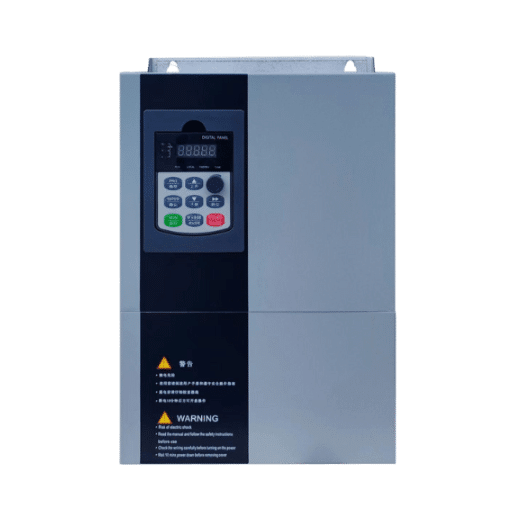
Ready to Get Your VFD Solution?
Whether you need a single drive or a complete system, we have the VFD products and engineering support to ensure your project's success.

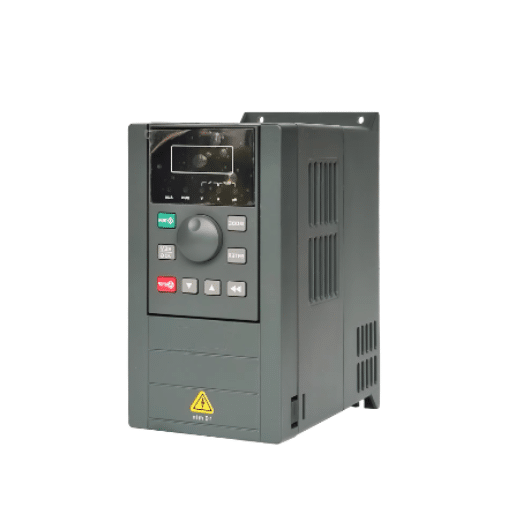
A variable frequency drive controls the speed and torque of an AC motor by varying the frequency and voltage of the power it supplies. Instead of forcing a motor to run at one fixed speed, a VFD matches motor output to what the process actually needs, moment by moment.
Here’s the thing: every fixed-speed motor in your facility does exactly one thing, no matter what the job calls for. Full speed, full power, all the time. If you’ve ever watched a pump fight against a throttled valve or a fan push air into a closed damper, you’ve seen the waste firsthand.
So what can a VFD do? It changes that one thing into seven distinct capabilities. In this guide, we’ll walk through each function, what it does for your equipment and your energy bill, and just as importantly, what a VFD won’t do. No theory dumps, just practical answers from an engineering team that sizes and commissions drives every week.
Key Takeaways
- A variable frequency drive controls motor speed and torque by adjusting output frequency and voltage, replacing fixed-speed operation with demand-matched control.
- Beyond speed control, a VFD provides soft starting, motor protection, process integration, and controlled braking, all in one device.
- On pumps and fans, cutting speed by 20% reduces power consumption by roughly 50% (the cube law in action).
- VFD protection functions guard against overload, overvoltage, phase loss, and overheating, and can save a motor in milliseconds.
- A VFD won’t save energy on motors that genuinely run at full load all the time, and some motors need inverter-duty ratings or output filters.

A variable frequency drive (VFD), also called an inverter drive or AC drive, sits between the power supply and an AC motor. It takes fixed-frequency grid power (50 or 60 Hz) and converts it into variable-frequency, variable-voltage output. By changing that output, it controls how fast the motor spins and how much torque it produces.
In practice, that one capability delivers seven core VFD functions:
Want the internal details of how the drive itself does this? Our guide on how a VFD works internally covers the rectifier, DC bus, and inverter stages, and our VFD components explained guide breaks down each part. Here, we’ll stay focused on what each function means for your operation.
This is the headline function, and the reason VFDs exist.
An AC induction motor’s speed is locked to the frequency of its power supply. The relationship is simple: RPM = 120 × frequency ÷ number of poles. A 4-pole motor on a 60 Hz supply runs at about 1,800 RPM. Feed it 30 Hz instead, and it runs at 900 RPM.
That’s the whole trick, and a VFD exploits it deliberately. Set the drive to 45 Hz and the motor runs at three-quarter speed. Set it to 20 Hz and you get a slow, controlled crawl for positioning a load. The motor follows the drive’s output frequency across its entire range, typically from near zero up to rated speed.
Here’s a question we hear often: can a VFD run a motor faster than its nameplate speed? Yes, within limits. Pushing output frequency above 50 or 60 Hz takes the motor into what’s called field weakening, where speed rises but available torque falls.
It works well for loads like fans and centrifuges, but the motor must be mechanically rated for overspeed. Always check the motor’s maximum safe RPM first.
Consider Marcus, a maintenance lead at a food processing plant in Ohio. His mixing line ran one recipe at full speed, and every other recipe meant a mechanical gearbox swap that took 40 minutes per changeover.
After fitting a VFD, operators dial in any speed from 200 to 1,750 RPM from the control panel. Changeovers now take four minutes, and product consistency improved because mixing speed is repeatable to the digit.
Speed is only half the story. A VFD also shapes how the motor gets there.
Basic drives use V/Hz control, which holds voltage proportional to frequency. It’s simple and reliable, perfect for fans and pumps where precision doesn’t matter much.
Vector control (also called field-oriented control) goes further. It manages motor flux and torque independently, delivering accurate torque even at very low speeds. If your application is a hoist, extruder, or winder that needs full torque at 5% speed, vector control is what makes it possible. Our 3 phase VFD range supports both modes, so you can match the control method to the load.
Start a motor directly across the line and it gulps 6 to 8 times its full-load current while delivering a mechanical jolt to every belt, coupling, and gearbox downstream. A VFD eliminates both. It ramps frequency up smoothly, holding starting current to roughly 1 to 1.5 times full load.
The same applies in reverse. A controlled deceleration ramp prevents water hammer in pumping systems and product spillage on conveyors. Less stress at every start and stop means longer equipment life, full stop.

This is the function that pays for the drive.
For centrifugal loads like pumps, fans, and blowers, power consumption scales with the cube of speed. Run a fan at 80% speed and it draws only about 51% of rated power. Run it at half speed and power drops to roughly 12.5%. Small speed reductions produce dramatic savings, which is why variable-torque applications typically see 20% to 50% energy reductions after a VFD retrofit.
The US Department of Energy’s motor systems resources consistently identify adjustable speed control as one of the highest-impact efficiency measures for industrial motor systems.
On suitable applications, payback commonly lands between 12 and 24 months.
Honesty matters here. If a motor truly runs at full load, full speed, 100% of the time, a VFD saves little on energy. The drive itself even consumes 2% to 4% of throughput (modern drives run at 96% to 98% efficiency). The savings case depends on variable demand. For constant-load machines, the value shifts to soft starting and protection instead.
Not sure whether your application will actually save energy? Talk to our engineering team and we’ll run the numbers on your real load profile before you spend anything.
A VFD watches over the motor like a full-time guard. This function gets overlooked in most buying conversations, and it shouldn’t.
Modern drives continuously monitor current, voltage, and temperature, and they react in milliseconds when something goes wrong:
A real example: last year at a water treatment plant in Texas, a failing contactor dropped one phase feeding a 75 kW pump motor. Running two-phased, that motor would have burned out within minutes. Instead, the VFD’s phase loss protection tripped in under a second and alarmed the control room. A $4,000 motor survived because of a feature the buyer never asked about during procurement.
Beyond protection, many drives now carry certified safety functions under IEC 61800-5-2, the International Electrotechnical Commission standard for adjustable speed drive safety. Safe Torque Off (STO) removes motor torque without cutting main power, so an emergency stop or guard door opens safely while the drive stays ready to restart. Higher-end functions include Safe Stop and Safely Limited Speed for maintenance work near running machinery.

A modern VFD isn’t a standalone box. It’s a networked control device.
Most industrial drives speak standard protocols like Modbus and Profibus, and plug directly into PLC and SCADA systems. That connectivity unlocks real automation: pressure transmitters feeding a pump drive for constant-pressure water supply, temperature sensors modulating fan speed in a cooling system, or a line PLC coordinating a dozen conveyor drives so product spacing stays perfect.
Many drives also include built-in PID control, so the loop closes right inside the drive without extra hardware. These are the variable frequency drive applications where integration pays off most: any process where motor output should follow a sensor instead of a fixed setpoint.
Elena, a system integrator in Poland, put this to work on a bottling line retrofit in 2025. Eight conveyor sections had run at mismatched fixed speeds, causing bottle jams every few hours.
She networked eight low voltage VFD systems over Modbus to the line PLC, with photoeye feedback adjusting each section’s speed. Jams dropped to near zero, and line throughput rose 11% without touching the filler itself.
Stopping a motor can matter as much as starting it, and a VFD gives you options that fixed-speed starters simply don’t have.
A controlled deceleration ramp handles most stops gracefully. For faster stops or high-inertia loads, DC injection braking holds the shaft still. On overhauling loads like descending cranes, hoists, and downhill conveyors, the motor acts as a generator, and regenerative drive configurations return that energy to the supply instead of burning it off as heat in braking resistors.
Direction control is built in too. Reversing a motor with a VFD is a parameter change or a digital input, not a contactor-swapping exercise. For applications like mixers, winches, and indexing tables, forward and reverse operation under full speed control comes standard.

You’ve seen what a VFD can do. Here’s where its capabilities end, because a trustworthy answer includes the boundaries.
None of these are reasons to avoid a VFD. They’re reasons to size and specify it properly, which is exactly what our variable frequency drive solutions team helps customers do.
Most three-phase AC induction motors can. The caveats: check that the motor insulation is inverter-rated (or add an output filter), and confirm the motor can cool itself at low speeds. A separate cooling fan may be needed for constant-torque loads. On larger frames, verify the bearings are protected against shaft currents. Single-phase and synchronous motors need specific drive types.
Not when properly specified. Problems come from mismatches: standard motors with weak insulation on long cable runs, inadequate cooling at sustained low speeds, or missing bearing protection. With an inverter-duty motor and correct filters, a VFD typically extends motor life through soft starting and fault protection.
A soft starter reduces voltage only during startup, then hands the motor to full grid power. A VFD controls frequency and voltage continuously, so it manages speed, torque, and energy consumption for the motor’s entire operating cycle, not just the first ten seconds.
Yes, by raising output frequency above the motor’s base frequency (field weakening). Speed increases while available torque decreases. It suits fans and centrifugal machines, but only if the motor is mechanically rated for the higher RPM.
The answer: far more than the name suggests:
And it does all of this honestly, with known limits that are easy to engineer around when you specify the drive correctly.
Your next step depends on where you are in the journey. If you’re still evaluating whether your application fits, our engineers will assess your load profile and tell you straight, including if the answer is that a VFD won’t pay back. Contact the Shandong Electric team for a free application review, from motor compatibility checks to commissioning support.