Ready to Get Your VFD Solution?
Whether you need a single drive or a complete system, we have the VFD products and engineering support to ensure your project's success.


A VFD manufacturer is a company that designs and builds the drive itself, and the most reliable ones split into two clear tiers: global majors like ABB, Siemens, Danfoss, and Yaskawa, and China-based specialists like Shandong Electric that compete on price, customization, and lead time. The right choice comes down to your application, your volume, and how much premium-brand markup you’re willing to pay for a name.
Here’s the problem nobody warns you about. On paper, every VFD works the same way. It rectifies incoming AC, smooths it into a DC bus, and switches it back out at the frequency your motor needs.
Two drives with the same nameplate can look identical in a spec sheet, yet one runs for a decade and the other dies quietly in a year. The difference isn’t the nameplate. It’s who built the drive, how they tested it, and what happens when something goes wrong.
If you’ve been pricing drives, you already know the wall you’re up against. On one side sit the brand names with their long lead times and longer invoices. On the other side sits a maze of Chinese suppliers where it’s genuinely hard to tell a real factory from a trading company with a website. This guide gives you a framework to sort them, applied the same way we’d want a buyer to apply it to us.
By the end, you’ll be able to look at any VFD manufacturer and answer four questions: do they actually build the drive, how do they test it, what happens after it ships, and is the price fair. Those four questions are the whole game.
Key Takeaways
- A VFD manufacturer is a company that designs and builds drives itself; a distributor or trading company only resells someone else’s product, and the distinction drives price, warranty, and support
- The landscape is two tiers: global majors (ABB, Siemens, Danfoss, Yaskawa, Schneider) and China specialists, which are typically 30-50% cheaper for equivalent spec
- Vet any supplier on four things: physical factory, test reports, certifications (CE, UL, ISO 9001), and warranty/support after the sale
- The premium-brand tax is real: you often pay for features and brand reach you don’t need, but the majors are the right call for some high-risk applications
- Shandong Electric covers 0.1 kW to 53,000 kW across 220V-690V and 6kV-10kV, with SVC/FVC vector control and 150% overload capacity

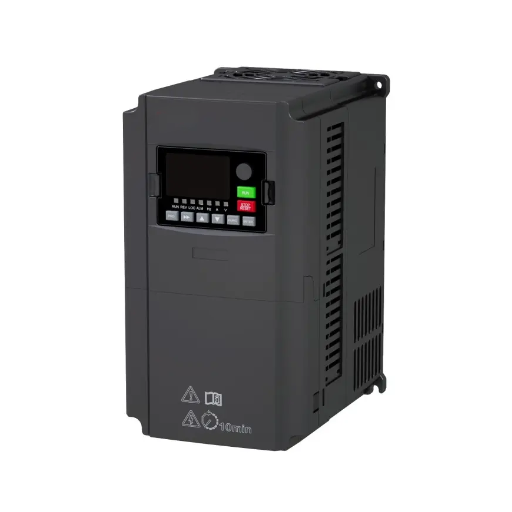
A variable frequency drive manufacturer is the company that designs the drive, lays out its power electronics, and builds it on its own production line. That sounds obvious, but it’s the single most important distinction in the whole buying process, because most “suppliers” in this industry are not manufacturers.
The supply chain usually runs in four layers:
Why does the layer matter? Because price, warranty, and support all attach to it. Buy factory-direct and you pay less but carry more of the sourcing work. Buy from a distributor and you get local stock and local support, but you pay a markup for it.
Buy from a trading company and you get the worst of both: distributor pricing with factory-direct risk, and nobody who can actually fix the drive.
The first question to ask any supplier is the one most buyers skip: “Do you own the factory, or do you buy from someone who does?” Their answer to that one question predicts almost everything else.
Want the full breakdown of when to buy direct versus through a channel? Our manufacturer vs distributor guide walks the decision with a flowchart.
The VFD manufacturers that matter in 2026 fall into two tiers, and they win different deals.
The global majors are ABB, Siemens, Danfoss, Yaskawa, Schneider, Rockwell, Eaton, and Mitsubishi. These companies own deep R&D, enormous installed bases, and service networks that reach almost every industrial region on Earth. When a buyer needs a drive for a process that can’t stop, a legacy plant full of one vendor’s drives, or a specification that literally names a brand, the majors are the safe, defensible call.
The China specialists are the second tier, and they’ve moved far past the “cheap copy” era of twenty years ago. Shandong Electric and its peers now ship drives built on the same IGBT modules from Infineon, Mitsubishi, and Fuji that the majors use, with vector control, full protection suites, and CE/UL certification. What they don’t carry is the brand premium. That’s where the 30-50% price gap comes from, and it’s the reason the sourcing question keeps pointing east.
Here’s the landscape at a glance.
| Manufacturer | Origin | Typical Range | Best For |
|---|---|---|---|
| ABB | Switzerland | 0.18 kW-100 MW | Process industries, high-availability plants |
| Siemens | Germany | 0.12 kW-100 MW | Full automation ecosystems, legacy integration |
| Danfoss | Denmark | 0.18 kW-1.4 MW | HVAC, water, food and beverage |
| Yaskawa | Japan | 0.1 kW-630 kW | High-precision motion, machine control |
| Schneider | France | 0.18 kW-1.5 MW | Building and light industry |
| Shandong Electric | China | 0.1 kW-53,000 kW | Cost-sensitive OEM and retrofit, LV+HV range |
The majors aren’t a monolith. ABB and Siemens dominate high-availability process plants, Danfoss owns a big slice of HVAC and water, and Yaskawa is the motion-control specialist. A China manufacturer like Shandong Electric is strongest where the buyer values the same performance at a better price, or needs one supplier to cover the whole low-voltage to high-voltage span.
For the complete manufacturer-by-manufacturer breakdown, read our top VFD manufacturers survey, and for the quality/reliability angle, see best VFD brands compared.
The single biggest opportunity in VFD sourcing today is also the single biggest source of buyer anxiety: China. Let’s separate the two.
The opportunity is real and quantified. A China-based VFD manufacturer buys the same core components, runs the same SMT placement and burn-in tests, and ships a drive that is typically 30-50% cheaper than an equivalent Western major at the same spec. For an importer buying container quantities, or an OEM putting drives into every machine they build, that gap is the difference between a profitable line and a non-starter.
The anxiety is also real, because “China manufacturer” hides a spectrum. At one end sit genuine factories with SMT lines, test rigs, and export certifications. At the other end sit trading companies that rent a logo, buy drives from a factory they’ll never show you, and vanish the moment a batch fails.
So the sourcing question isn’t “should I buy from China.” It’s “how do I tell which end of the spectrum I’m buying from.” That’s exactly what the next section is for.
This is the deepest topic in the cluster. Read our VFD manufacturer China sourcing guide for the factory-vs-trader test, certification checklist, and a worked landed-cost example.

Every reliable VFD manufacturer passes the same four tests, and you don’t need to be an electrical engineer to run them.
A buyer in Rotterdam learned this the expensive way. David, a procurement lead at a pump distributor, found a “VFD factory” offering drives at 40% under his usual line. The samples arrived with no test reports, and he asked three times and got three excuses.
He ordered anyway. Six months later a full batch came back dead from a failure the “manufacturer” couldn’t diagnose. By then the trading company had renamed itself.
David now runs the four tests on every supplier, and he told us the factory question alone would have saved him the whole write-off.
Here’s the actionable version of this section. Our how to vet a VFD manufacturer checklist turns these four tests into a printable audit sheet.
Not every buyer wants an off-the-shelf drive. Some want their brand on it, and some want a drive built to their exact spec. That’s where custom manufacturing enters the picture, and it’s worth knowing the two terms.
OEM means you sell a drive under your own brand, but the manufacturer still builds it from their standard platform. Think of it as private labeling: your logo, your color, your keypad defaults, but a proven drive underneath. It’s the low-risk way to “own” a product line without running a factory.
ODM means original design manufacturing. You specify the requirements, and the manufacturer designs and builds a drive to meet them. This is for buyers with enough volume to justify the engineering and enough clarity to specify the drive correctly.
The trade-off is the classic one. OEM branding is cheap and fast; ODM is expensive and slow but gives you something no competitor sells. Most buyers land on OEM and reserve ODM for high-volume or specialized applications where a standard drive genuinely won’t fit.
Deciding whether custom is worth it? Our custom VFD manufacturer guide breaks down NRE cost, MOQ, and lead time so you can price the decision before you commit.
You can’t evaluate what you can’t picture. So here’s what actually happens inside a real VFD factory, and why each step predicts whether your drive will last.
Here’s the drive you’re buying, in 90 seconds:
It starts with SMT placement. The control board begins as a bare PCB, and a pick-and-place machine mounts hundreds of tiny components at speed. The soldering that follows, reflow or wave, has to be consistent, because a cold solder joint on a control board is a field failure waiting two years to happen.
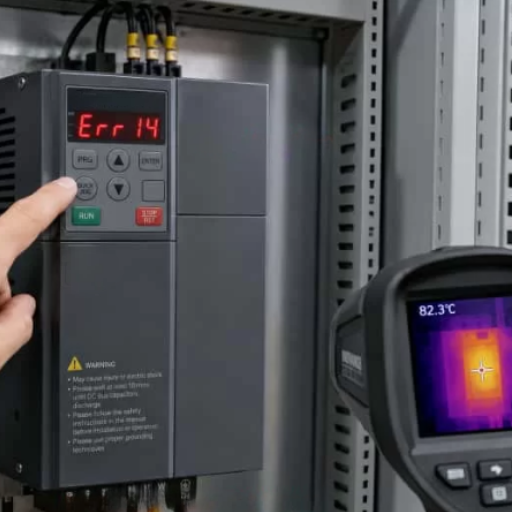
Then comes the power section. The IGBT modules that switch the motor current get mounted to a heatsink, and this is where thermal management is decided. A factory that skimps here builds drives that overheat under load. A factory that cares runs thermal imaging on every design.
Finally, every drive goes through test rigs:
Each of these steps costs time and money, which is exactly why trading companies skip them. When a price looks too good to be true, what’s been cut is usually a test, not a feature.
Want the full walk-through? Our inside-a-VFD-factory explainer maps each station so you know what to look for in a factory photo, video, or audit.

If you build machines, your VFD decision is different from an end user’s. You’re not buying one drive; you’re committing a product line to a supplier, and the wrong choice compounds across every machine you ship.
A machine builder named Ines, running a mid-size packaging-equipment company near Lyon, made the case concrete. She was carrying three drive brands across her catalog, one for the compact machines, one for the high-torque units, and one because a customer had specified it. Three sets of spares, three commissioning routines, three fieldbus profiles to master.
She standardized on one drive platform. The result wasn’t a cheaper drive. It was one spares inventory, one commissioning checklist, and one service manual her team finally knew cold. Support calls from the field dropped because the field techs now knew every parameter the drive had.
For an OEM, the supplier decision comes down to a few specifics:
Building machines? Our OEM VFD supplier guide has the scorecard Ines used to pick her platform.
The question buyers ask most is the brand question, and the honest answer is that it depends. ABB and Siemens are both excellent. They’re also both expensive, and they win for different reasons.
ABB is the process-industry leader, strong where a plant runs continuously and downtime is measured in six-figure increments. Siemens wins inside a broader automation ecosystem, where the drive is one node in a TIA Portal project and the buyer values that integration. Neither is the right call for every application.
The premium-brand tax is the part most comparisons leave out. A major-brand drive carries the cost of that brand’s R&D, its global sales force, and its marketing, and you pay for all three even if you use none of it. For a cost-sensitive retrofit, an OEM run, or a straightforward pump-and-fan application, a specialist manufacturer delivers the same control at a materially lower price.
The decision rule is simple. When downtime is catastrophic or the spec names a brand, buy the major. When the application is routine and the spec is open, a China specialist wins on value. Most plants need both, and smart buyers use the majors where it matters and the specialists everywhere else.
For the full two-brand head-to-head, read ABB vs Siemens VFD and see how all the brands compare for the broader picture.
Price is where buyers lose the most money, usually because they have no benchmark. So here’s what actually drives VFD cost and what a fair quote should look like.
The big cost drivers are power rating, voltage class, and enclosure. Power is obvious: more kilowatts, more IGBTs, more heatsinks, more money. Voltage class matters because a 690V drive costs more than a 400V drive of the same power, and a 6kV drive is a different product category entirely. Enclosure and IP rating add cost too, with washdown and outdoor ratings pushing the number up fastest.
Then come the options. A braking unit, a fieldbus card, an output filter, a keypad in your language. Each adds a line to the quote, and a fair supplier itemizes them so you can see exactly what you’re paying for.
What does a red-flag quote look like? One that’s dramatically below market, refuses to itemize, or comes from a supplier who won’t name the factory. Unusually low prices usually mean recycled components, a skipped test, or a trading-company markup hiding a cheaper drive underneath.
An importer in Lagos caught this in real time. Amara was comparing two quotes for a container of drives. The first, from a trading company, was 15% lower and refused to itemize. The second, factory-direct, listed every option and every test.
She benchmarked both against a per-kW table and found the “cheaper” quote was actually a 40% markup over the factory price. She bought directly and saved the difference.
Benchmark your next quote. Our VFD price guide walks through the cost drivers and gives you a quote-request checklist so your RFQ comes back comparable.

This is the section where we tell you who we are, and then hand you the same four tests to judge us by.
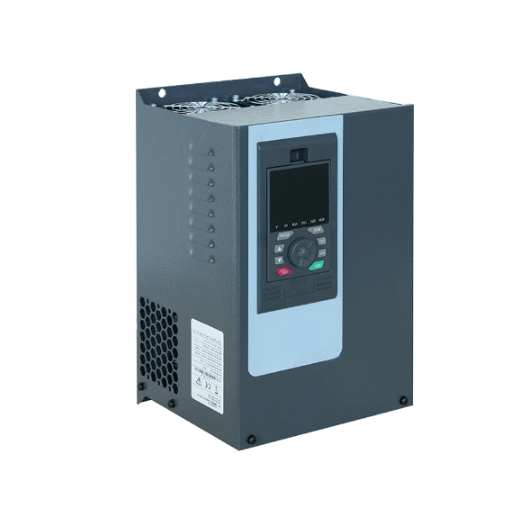
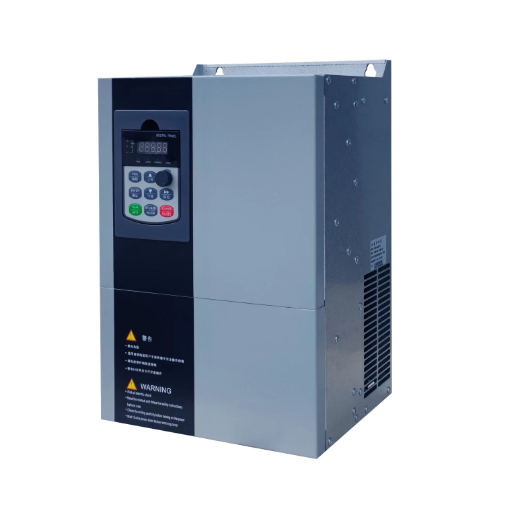
Shandong Electric Co., Ltd. is a VFD manufacturer with a range that spans 0.1 kW to 53,000 kW, from 220V-690V low-voltage drives up to 6kV-10kV high-voltage systems. Our drives use vector control (SVC and FVC) and V/F control, deliver 150% overload capacity, and reach up to 98% efficiency. They speak Modbus and Profibus, so they drop into existing automation without a fight.
Against the high-end European brands, we compete on the three things that actually move a sourcing decision: price, customization speed, and lead time. We build the same drive for less, turn a custom request in weeks instead of months, and ship on a schedule that keeps your line moving.
And the honest caveat, because it matters. If you’re running a continuous process where an hour of downtime costs more than our entire invoice, buy the major. Their service reach is real, and it’s worth paying for in that one scenario. For everything else, judge us by the four tests: factory, test reports, certifications, and support.
See what we actually build. Browse our full VFD range, our low-voltage drive systems, and our high-voltage drive systems.
The leading VFD manufacturers are ABB, Siemens, Danfoss, Yaskawa, Schneider, Rockwell, Eaton, and Mitsubishi, plus a strong tier of China specialists like Shandong Electric. The “best” one depends on your application, volume, and price tolerance.
Yes, if you buy from a genuine manufacturer and not a trading company. Confirm the factory, demand test reports, and verify CE/UL and ISO 9001 certifications. A real China manufacturer builds on the same IGBT modules as the majors and saves you 30-50%.
A manufacturer designs and builds the drive; a distributor stocks and resells it with local warranty support. You buy factory-direct for price and customization, and through a distributor for local stock and local service.
Look for CE and UL/cUL for the markets you sell into, ISO 9001 for the quality system, and IEC 61800 compliance for the drive itself. A legitimate manufacturer provides these on request.
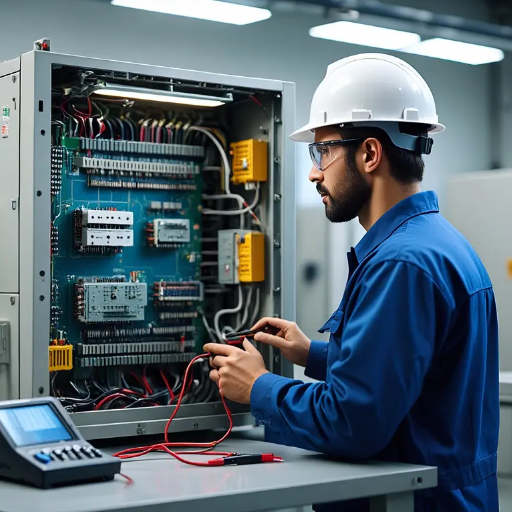
Ask for the factory address and proof that they occupy it, then request test reports for a sample drive. A genuine manufacturer sends photos, video, or hosts a virtual audit. A trading company stalls.
Not automatically. A China specialist can be cheaper because it skips the brand premium, not the quality. The reliability risk comes from buying a trading company’s drive with no test reports, not from the country of origin.
Choosing a VFD manufacturer isn’t a brand decision. It’s a supply-chain decision, and it comes down to the four questions you can now run on any supplier.
Ask if they actually build the drive. Ask how they test it. Ask what happens after it ships. Ask if the price is fair.
A global major like ABB or Siemens passes all four and charges for the privilege. A China specialist like Shandong Electric passes all four and doesn’t. The choice stops being about names and becomes about which one fits your application and your budget.
If you came here trying to decide between a wall of brand names and a maze of Chinese suppliers, you now have the framework that cuts through both. Run the four tests, benchmark the quote, and you’ll buy with confidence instead of hope.