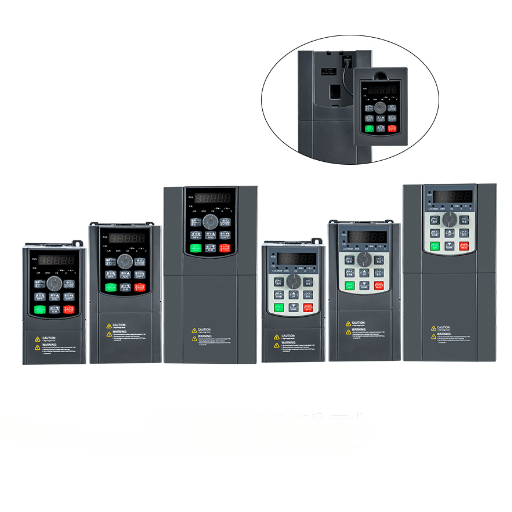
Ready to Get Your VFD Solution?
Whether you need a single drive or a complete system, we have the VFD products and engineering support to ensure your project's success.

A custom VFD manufacturer builds variable frequency drives to your specification, but “custom” ranges from a free logo print on a standard drive to a six-figure design program that starts from a blank circuit board. OEM or private label, the lightest level, puts your brand on an existing drive with preset parameters. ODM, the deepest, means the factory designs and builds a drive around your machine. Most buyers only need the first, and suppliers who blur that line are why so many custom projects overrun their budgets.
Here is the honest framing before we go deeper. “Custom” does a lot of work in this market. Distributors searching for their own brand, machine builders with a special voltage need, and importers launching a drive line all type the same query, but they are asking for different levels of engineering. A factory that quotes OEM branding prices when you need an ODM design will discover the gap only at sampling, when the firmware can’t be changed.
This guide comes from the factory floor of a VFD manufacturer that builds both OEM and ODM work. You’ll be able to name your level of customization, read a custom-VFD quote line by line, protect your certification, and know when to skip customization. Choosing the drive rather than the build? Our how to choose a VFD guide covers sizing and control modes first.
Key Takeaways
- “Custom VFD” spans five levels, from a free logo print to a fully designed drive, and each level carries a different cost and lead time
- OEM means your brand on an existing drive; ODM means the factory designs the drive for you, and suppliers who blur the terms usually blur the quote
- NRE, tooling, and MOQ are where custom projects hide their real cost, so demand an itemized quote before comparing unit prices
- Changing firmware, cooling, or the enclosure can void a drive’s CE or UL file, while branding alone cannot
- Roughly 80 percent of custom-VFD buyers only need branding plus preset parameters, not a full custom design

A custom VFD manufacturer is a drive factory that will alter its product for you instead of selling only off-the-shelf models. The alterations can be cosmetic, like your logo and packaging; configurational, like preset parameters tuned to your machine; or structural, like a new voltage rating, a custom control board, or firmware written around your application. Because the word covers all three, you need a precise vocabulary before you request a quote.
Three kinds of buyers search for a custom VFD manufacturer, and each means something different:
New to drives? The primer our engineers send customers explains what a VFD is before the customization conversation starts:
One more distinction matters before we talk about depth. A custom VFD manufacturer builds the drive. A system integrator takes a major-brand drive and packages it into a custom panel with extra controls and cooling. Both call their work “custom,” but only the manufacturer can change what is inside the drive.If you want to see exactly what happens behind the roller doors before you commit, our look inside a working VFD factory shows how a drive moves from board assembly to final test, which makes the manufacturer-versus-integrator line much easier to draw.
Need a re-engineered panel around an ABB or Siemens core? You want an integrator. Need your brand, your voltage, or your logic inside the drive? You want a manufacturer. Our manufacturer vs distributor guide maps where each supplier type sits in the chain.
Here is the single most useful distinction in this market, and almost no sales page will state it cleanly because blurring it helps the vendor quote you the cheaper option.
OEM (Original Equipment Manufacturer) means you take an existing drive design, often the factory’s own standard product, and make it yours. You add your logo, packaging, manual, brand name on the keypad, and usually your preset parameters. The hardware and firmware stay the factory’s, lightly adjusted to your defaults, so design ownership remains with the factory. This is also called private label or white label.
ODM (Original Design Manufacturer) means the factory designs and builds a drive to your specifications. You bring the requirement, a special voltage range, a dedicated control algorithm, a custom PCB, a bespoke enclosure, or a new protocol, and the factory engineers it into a product that does not exist in its catalog. You may share or own the resulting design. This is a real engineering project, not a branding exercise.
The table below is the version to keep when you compare quotes:
| OEM / Private Label | ODM | |
|---|---|---|
| What changes | Branding, packaging, manual, preset parameters | PCB, firmware, algorithms, enclosure, power stage |
| Who owns the design | The factory | You and the factory, or you alone |
| Engineering depth | Light to none | Full product development |
| Typical lead time | 7 to 25 working days | Weeks to months plus tooling |
| Tooling / NRE | None or minimal | Usually required |
| Why buyers choose it | Quick own-brand market entry | A genuinely differentiated product |
Priya, a pump distributor in Pune, wanted to launch her own drive brand, so she asked three factories for “ODM” quotes. Two quoted OEM branding prices, which she accepted happily.
At sampling she asked for a custom control algorithm matched to her pumps and discovered the firmware was locked: the drives carried her logo but not her engineering. Re-running the project as true ODM cost more, but the product finally did what its customers needed. The vocabulary error alone cost a full sampling cycle.
Before you pick a partner for OEM work specifically, our guide to choosing an OEM VFD supplier covers what machine builders should demand from a supplier at design time, from fieldbus support to spare-parts commitment.

Rather than a binary custom-or-not choice, think of a ladder. Each rung changes more, costs more, and takes longer. Name your rung before you talk to any factory, and you will be able to compare quotes that would otherwise look incomparable.
Level 1: Branding and private label. Your logo, nameplate, packaging, and manual on a standard drive. Commonly no NRE, a flexible MOQ in the tens of units, and lead times as short as one to two weeks. Many factories print logos at no charge.
Level 2: Preset parameters. The factory loads your defaults so the drive arrives tuned for your application, a pump curve, a fan profile, or your machine’s acceleration ramp. No hardware change, minimal or no NRE, and your customer installs without reprogramming. Often bundled with Level 1.
Level 3: Communication and options. Adding or reconfiguring interfaces: a fieldbus card, remote monitoring, custom I/O, an IoT connection, or a modified control panel. Usually requires firmware or option-board work and a modest engineering charge or a higher MOQ.
Level 4: Hardware specification changes. A non-standard voltage or power rating, a higher IP protection grade, a special enclosure or cooling structure, or a wide-voltage design for unstable grids. This is where real tooling and type testing begin, and certification work often follows.
Level 5: Full ODM design. A drive designed around your requirements from component selection up: custom PCB, custom firmware and algorithms, bespoke power stage, your industrial design. Expect NRE in the low to mid five figures before unit one, MOQs in the hundreds or a negotiated NRE instead, and a development cycle measured in months.
Here is the same ladder in one line each, for a quick quote-to-quote comparison:
| Level | What changes | NRE | Typical MOQ | Lead time |
|---|---|---|---|---|
| 1. Branding / private label | Logo, nameplate, packaging, manual | None | Tens of units | 7 to 25 working days |
| 2. Preset parameters | Factory-loaded defaults for your application | None or minimal | Flexible; bundled with L1 | 7 to 25 working days |
| 3. Communication & options | Fieldbus, remote monitoring, I/O, control panel | Modest engineering charge | Higher than L1-L2 | Adds option-board time |
| 4. Hardware spec changes | Voltage, power, IP rating, enclosure, cooling | Tooling and type testing | Moderate | Adds tooling and certification weeks |
| 5. Full ODM design | PCB, firmware, algorithms, power stage | Low to mid five figures | Hundreds plus, or NRE | Weeks to months |
Around 80 percent of buyers who contact us for a “custom VFD” land at Level 1 or 2. A good factory will tell you so rather than sell you Level 5 engineering you don’t need. Level 5 exists for genuine product differentiation, not for putting your sticker on a standard box.
Three numbers decide whether a custom project makes sense, and vendors order them differently depending on what they want to hide. The numbers are NRE, MOQ, and lead time.
NRE (non-recurring engineering) is the one-time charge for work that happens before unit one: PCB layout, firmware development, enclosure tooling, and certification retests your changes force. OEM branding rarely carries NRE. ODM work always should; a quote that hides it isn’t saving you money, it’s hiding cost.
MOQ is the minimum order a factory will produce, and it climbs with the level of customization. Private-label runs commonly start in the tens to low hundreds of units. Deeper ODM work needs hundreds to thousands, or the factory charges NRE to make a small run economical. Ask not “what is your MOQ” but “what MOQ makes the unit price real.”
Lead time splits into tooling time and production time. Simple branding and parameter work typically ships in 7 to 25 working days. Structural changes add tooling and certification weeks. A full ODM program is measured in months.
When a vendor quotes one number for all of it, ask for the split.
Dan, an engineer at an Ohio packaging machinery builder, compared unit prices from three custom VFD manufacturers for a 500-drive order. One quote was dramatically cheaper, so he moved fast. When the engineering review landed, the cheap quote carried a separate NRE line, a certification retest, and a minimum that forced him to buy 800 units. The “cheap” vendor had simply split its price differently; an itemized quote would have made the comparison honest in one pass.
Demand these five lines in every custom VFD quote:
Send your spec and your target volume to our engineers, and we will tell you which level you actually need before we quote it. Start the conversation here.Much of the price advantage on custom work comes from where the drive is built, so if you are weighing cost against engineering depth, our guide to sourcing from a VFD manufacturer China explains how value-tier and mid-tier Chinese factories price OEM and ODM projects, and what that means for your unit cost at real volume.
For a wider view of what drives cost and what a fair quote contains, our VFD price guide walks through the cost drivers line by line.

This is the question no vendor sales page answers, because the answer costs some projects their budget. Customizing a drive can affect the certificates it ships with, and branding is the only change that never does.
CE marking and UL or cUL listing are tied to the product as tested. Logo, nameplate, packaging, and manual don’t change the electrical design, so they don’t affect the certificate. The moment you change something electrical or mechanical, firmware, an EMC filter, an enclosure, or a power-stage component, the tested configuration is no longer what you’re shipping. Whether the change forces a retest depends on the standard; firmware that changes behavior and enclosure changes that affect EMC or thermal performance are the two most common.
IEC 61800 governs adjustable speed drives and is the reference point for most national certifications. CE marking and UL listings are the two documents buyers see most. Three documents protect you with any custom manufacturer:
A textile machinery maker in Taiwan asked for a sealed, dust-resistant enclosure on an OEM drive for its factory floor. Only during an export audit did the buyer discover the enclosure change had invalidated the CE file: the altered cooling changed the EMC and thermal behavior the certificate covered. A retest and a revised Declaration of Conformity added weeks and real money to a change that was worth making but never budgeted.
Our guide to vetting a VFD manufacturer explains how to verify each of those documents in the issuing body’s registry rather than trusting the PDF you are sent.
Here is the decision rule a manufacturer would rather you have than not: customize only when the standard drive cannot do the job or cannot carry your brand credibly. For everything else, buy off-the-shelf and add branding.
Custom makes sense in four situations:
Custom is not worth it in three others:
When the honest answer is a standard drive, our VFD manufacturer guide and the buying guides that hang off it help you make this call without over-engineering.

We build both sides of this ladder. From low-voltage drives at 220 to 690 volts up to high-voltage systems at 53,000 kW, we offer the full range of OEM and ODM work: private-label branding, preset parameters tuned to your application, custom voltage and enclosure builds, and Level 5 ODM design with firmware and algorithms developed around your machine.
Our position on NRE and MOQ is stated plainly in every quote rather than discovered later. Simple branding and parameter runs typically ship in one to three weeks. Structural and design work is quoted with the tooling, lead time, and certification work separated, so the number you compare is the number you pay.
The differentiators that matter for a custom project are the ones that show up when the drive is yours: faster engineering response than a Western major, competitive pricing at equivalent specifications, and a factory team that answers a technical question about your configuration instead of forwarding it. Every custom unit is tested before shipment, and the warranty on a customized drive matches that of the standard product.
The honest closing note opens this article. Most custom-VFD inquiries do not need a custom VFD, and a manufacturer that tells you so before quoting is a manufacturer you can trust with the build when you truly need one.
What is a custom VFD manufacturer?
A custom VFD manufacturer builds variable frequency drives to your specification, from private-label branding on a standard drive up to a fully designed ODM product with custom firmware and hardware. Light customization carries little or no cost; full design work carries NRE and longer lead times.
What is the difference between OEM and ODM for VFDs?
With OEM, also called private label, you brand an existing drive design with your logo, packaging, and preset parameters while the factory keeps ownership of the design. With ODM, the factory designs and builds a drive to your specifications, and you may own the resulting design. OEM is faster and cheaper; ODM delivers a differentiated product.
Can I put my own brand on a VFD?
Yes. Most VFD manufacturers offer private-label or OEM branding, including your logo on the drive and keypad, custom packaging, and a manual under your name. Branding alone does not change the electrical design and does not affect certification.
What does VFD customization actually mean?
It can mean your logo, your preset parameters, a custom communication protocol, a non-standard voltage or enclosure, or a fully custom PCB and firmware design. The term spans five levels, from cosmetic to structural.
How much does it cost to customize a VFD?
Branding and preset parameters often cost nothing extra beyond the MOQ. Structural changes and ODM design carry NRE, commonly in the low to mid five figures before unit one, plus certification retests if the change affects the tested configuration.
What is the MOQ for custom VFDs?
Private-label runs commonly start in the tens to low hundreds of units. Deeper ODM work needs hundreds to thousands of units, or a negotiated NRE charge that makes a smaller run economical. Ask what volume supports the unit price you were quoted.
When is a custom VFD worth it?
Customize when the standard drive cannot do the job or cannot carry your brand credibly: you are building a brand, need a non-standard voltage or input, your machine needs a dedicated behavior, or the drive is part of your differentiation. Otherwise, buy off-the-shelf and add branding.
Do custom VFDs still pass CE and UL certification?
Branding alone does not affect certification. Firmware, EMC, enclosure, or power-stage changes can, because the certificate covers the product as tested. Request a Declaration of Conformity, a type-test report, and a certificate body you can verify in the registry.
The difference between a smooth custom project and a costly one is usually decided before the factory is ever contacted. Name your level of customization, OEM branding or ODM design or something in between, and the quote, the lead time, and the certification work all become legible. Watch the NRE line, ask what MOQ supports the unit price, and protect your CE or UL file by treating electrical changes as certification events.
The two sentences that will save you the most money are the contrarian ones. Most buyers who search for a custom VFD manufacturer do not need a fully custom drive, and the best supplier will tell you that. The drives that genuinely need Level 5 engineering are rare, and they are worth paying for properly.
When you’re ready, send us your specification and your target volume. We’ll tell you which level of customization you actually need and quote it with the NRE, lead time, and certification work separated. Send your spec to our engineers and get an honest answer before you spend on tooling you may not need.