Ready to Get Your VFD Solution?
Whether you need a single drive or a complete system, we have the VFD products and engineering support to ensure your project's success.


The VFD manufacturer vs distributor decision is a support decision in disguise. Buy factory-direct when you need volume pricing, customization, or direct engineering support. Buy through an authorized distributor when you need local stock, fast delivery, and a local warranty claim. And never buy from a “factory” that won’t prove it builds the drive, because that’s usually a trading company charging distributor prices with no factory behind it.
The same drive can cost 10 to 30 percent more from a distributor than from the plant that built it. And sometimes that distributor’s price is still the better buy. The markup pays for real things: stock on a shelf, a warranty claim you can walk into, a spare that ships today. Whether that’s worth it depends on your volume, your urgency, and how far you are from the factory door.
This guide is the straight version of when each path wins, written from the seat of a manufacturer that sells both factory-direct and through authorized distributors. You’ll leave with the layer-by-layer breakdown, the markup math, the trading-company trap, and a decision framework you can run before you request a quote. If you are still choosing the drive rather than the buy-path, our how to choose a VFD guide handles sizing and control modes, and this article picks up at the supplier.
Key Takeaways
- Buy factory-direct for volume pricing, customization, and direct engineering support; buy through an authorized distributor for local stock, fast delivery, and a local warranty
- The distributor markup typically runs 10 to 30 percent, and it buys local stock, a local warranty claim, and one accountable call
- An authorized distributor passes the factory’s warranty and engineers through; an unauthorized trader gives you neither
- The riskiest buy is a “factory” that is really a trading company: distributor prices with no factory behind them
- Run the five-branch decision framework: volume and customization go direct, urgency and small lots go local, unverifiable sources go nowhere

A VFD manufacturer designs and builds drives: it owns the R&D, the circuit design, the SMT line, the test rigs, and the firmware. A VFD distributor stocks and resells drives, usually several brands at once, and backs them with local stock and local service. A trading company resells someone else’s drives too, but it holds no real stock and can answer no engineering question beyond a price sheet.
Three layers is the clean model used across industrial distribution. The manufacturer builds. The wholesale distributor buys in bulk, stocks many brands, and sells mainly to dealers and volume buyers.
The local dealer buys from distributors and serves one region or industry with installation and urgent support. You can buy from any of the three, and the price and the protection both climb as you move down the chain.
Why does the layer matter? Because price, warranty, and support are all attached to it. Buy factory-direct and you pay for engineering and inherit the sourcing work.
Buy from a distributor and you pay a markup that buys stock and local accountability. Buy from a trading company and you get the worst of both: distributor-level pricing with no factory and no stock behind it.
Our VFD manufacturer guide maps the full supplier market if you want a wider view before you pick a path.
If you need the primer on what a drive actually is before deciding where to buy one, this is the explainer our engineers point customers to:
Here’s the honest arithmetic. Factory to your door is one margin layer. Factory to importer to regional distributor to local dealer is three or four. Every layer takes a cut, which is why the same drive can carry a 10 to 30 percent gap between factory-direct and shelf price.
What is the gap actually buying?
None of that is trivial, and none of it shows up on a price list.
Here’s where the channel splits in quality. An authorized distributor passes through the factory’s warranty, certificates of origin, and application engineers, usually 18 to 24 months of real coverage. An unauthorized trader offers a six to twelve-month shop-level promise, no traceable paperwork, and twelve-month support when the drive fails. The gray-market pitch is “40 percent cheaper than list,” and it works exactly until the first fault.
Tell us your annual quantity and where the drives ship, and we’ll tell you honestly whether factory-direct or an authorized distributor is the cheaper path. Talk to our engineers before you commit to either.
| VFD Manufacturer | VFD Distributor | Trading Company | |
|---|---|---|---|
| Builds the drive | Yes | No | No |
| Holds stock | Build-to-order, limited | Yes, multiple brands | Little to none |
| Minimum order | MOQ on custom runs | Single units, no MOQ | Flexible, no support |
| Warranty | Factory-backed | Local claim; factory-backed if authorized | Shop-level, unverifiable |
| Customization | Full OEM and private label | Limited | None |
| Who you talk to | Factory engineers | Local account and service | Whoever answers |
| The real risk | MOQ and lead time | Markup | Distributor pricing with no factory behind it |

Direct wins when the things a distributor sells are the things you don’t need. That happens in three situations.
Volume. Once you buy a repeat quantity, the MOQ flips from a barrier to an advantage. You qualify for factory pricing, scheduled production slots, and a parts commitment the distributor cannot match on a SKU it does not make.
Customization. If you need a private label, OEM firmware defaults, a special control panel, or a voltage grade off the standard sheet, only the factory can do it. Our OEM VFD supplier guide covers those terms in depth, from panel footprint to firmware lock.
Direct engineering support. On a custom project, you want the people who wrote the firmware on the call, not a secondhand version of their answer.
Olav runs this exact play. His pump-skid company in Aarhus buys two hundred drives a year for its systems and used to source them through a three-layer chain that added roughly 20 percent and a two-week lead on every order. He moved the recurring SKUs factory-direct, kept one local distributor for emergency one-offs, and cut his landed cost enough to reprice his next bid. The distributor stayed on the books because it earns its keep on the unplanned purchase, not the planned one.
Buying direct from a China factory adds a verification step that belongs in a Chinese of its own. Our VFD manufacturer China sourcing guide covers the factory-versus-trader test, the audits, and the payment structure that protect a direct import order.
Distributors earn the markup when your purchase looks nothing like Olav’s.
You need drives now, in ones and twos. A manufacturer’s build-to-order model cannot help a line that is down today. The distributor’s same-day shelf stock is the product.
You need a local warranty claim. If a drive fails at month 14, you want to hand it to a counter that honors the factory warranty in your currency and your language, not ship it overseas and wait.
You need the factory’s backing without the factory’s distance. This is the authorized middle path most buyers miss. You buy from the local distributor, but the manufacturer authorizes the distributor, so the warranty is still the factory’s, the spare parts come from the factory’s line, and the application engineer answers through the channel. You get local stock plus factory backing at one layer of markup instead of three.
You genuinely need a different brand tomorrow. A multi-brand distributor lets you switch without re-engineering your panel. That flexibility has real value when a project specifies a certain nameplate.
Camille buys exactly this way. She manages maintenance at a bottling plant near Lyon that runs three lines around the clock, and she buys two or three drives a year as replacements. Factory-direct pricing would save her a few hundred euros a year, and that saving would vanish the first time a down line waited three weeks for a drive, while the distributor down the road had one in stock. She buys from an authorized local distributor, and the markup is the cheapest insurance she carries.
The most expensive path is neither direct nor through a distributor. It is the company that claims to be a factory and is actually a trading company.
Here is how the trap works. A trader registers a polished site, publishes a catalog of drives it has never built, and answers your RFQ with distributor-level pricing and a promise of “factory support.” The giveaways are consistent: no address you can visit, no SMT-line photos that verify, no test reports with serial numbers, and a “customization” answer that is a sales line, not an engineering one. Buy from it and you pay trading-company margins for factory-direct risk, and when the drive fails, there is no factory behind it to call.
Diego learned this the expensive way. A production engineer at a stamping plant in Monterrey, he bought twenty relabeled drives from a parallel importer at roughly 40 percent under the authorized price. Nine months in, three drives tripped on fault codes the importer had never seen.
The warranty turned out to be a shop-level promise with no factory behind it, and the replacement drives cost more than the discount he had celebrated. His next order went to an authorized channel, and the “savings” never appeared again.
A trading company is not always a wrong answer. For a small test order below a factory’s MOQ, or a mixed shipment across several brands, a legitimate trader can be the practical route. The rule is that you verify before you pay. Our how to choose a VFD manufacturer guide has the checklist, from certifications in the registries to the factory visit, and it applies to any source that calls itself a manufacturer.

Run these five branches in order and the right path appears fast.
The honest caveat is the one a manufacturer rarely says out loud: the distributor quote is sometimes the right answer, and the factory-direct quote is sometimes a trap dressed as a discount. The path that fits your volume and your downtime risk is the one worth taking.

We wrote this guide from the seat of a company that does exactly what the title compares. Shandong Electric Co., Ltd. builds drives from 0.1 kW to 53,000 kW, across 220V-690V low-voltage and 6kV-10kV high-voltage systems, with vector control (SVC and FVC), 150 percent overload capacity, and up to 98 percent efficiency.
And we sell in two ways. Factory-direct, you talk to the factory’s engineers, get our private-label and OEM support, and buy at factory pricing with a factory warranty. Through our authorized distributors, you get local stock, a local warranty claim, and the same factory backing at one layer of markup. When a buyer asks us which path is cheaper, the honest answer depends on their quantity and location, which is why we ask before we quote.
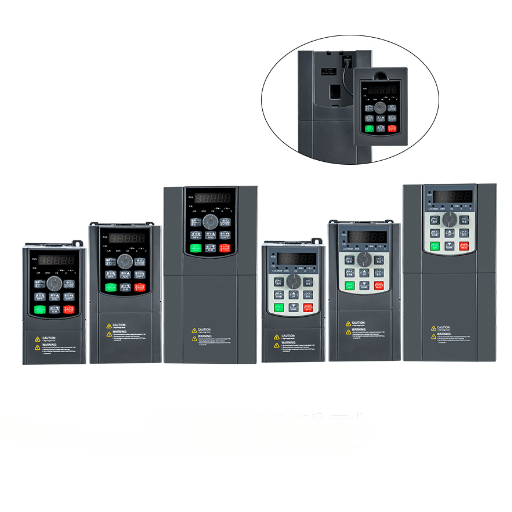
See the drives you’d be buying either way. Browse our full VFD range, our low-voltage drive systems, and our high-voltage drive systems, and check our company profile for the factory, certifications, and test facilities behind the name.
A VFD manufacturer designs and builds the drive, owns the factory and test equipment, and supports customization. A distributor stocks and resells drives, usually several brands, with local stock and local service. You buy factory-direct for price and customization, and through a distributor for local stock and local warranty support.
Usually yes on the unit price, by roughly 10 to 30 percent, because you remove one or two margin layers. That saving is real, and it is also the price you pay in sourcing work, lead time, and the absence of local stock. For small urgent orders, the distributor’s price can be the cheaper total cost.
Buy from a distributor when you need drives now in small quantities, when you want a local warranty claim, or when you need multi-brand flexibility. An authorized VFD distributor gives you factory backing without the factory’s distance. Volume and customization buyers should go factory-direct instead.
A trading company resells drives it does not build, holds little stock, and provides no engineering support beyond a price sheet. It is not always a bad choice for a small test order, but it becomes dangerous when it poses as a factory, because you pay distributor-level prices for factory-direct risk with nobody to call when the drive fails.
Yes, most do, but many route routine small orders through distributors and keep factory-direct sales for volume buyers, OEMs, and custom projects. If a manufacturer redirects you to its authorized dealer, that is normal policy, not a refusal to sell.
Verify before you pay. Ask for the factory address and visit it in person or by video, check its certifications in the registries, and ask for test reports with serial numbers. A real factory answers engineering questions with specifics. A trader answers with adjectives.
The VFD manufacturer vs distributor decision is not a price decision. It is a volume, urgency, and support decision, and the markup is the price of the support you actually need.
Buy factory-direct when volume and customization make the MOQ and lead time worth carrying. Buy through an authorized distributor when local stock and a local warranty protect a live line. And never buy from a “factory” that cannot prove it builds the drive. Run the five branches, let the answer follow your situation rather than a discount, and keep the trading-company test close at hand.
If you are weighing a buy now, tell us your annual quantity and where the drives ship. We’ll quote you factory-direct and, if an authorized distributor near you is the cheaper path, we’ll say so. Talk to our engineers and get the straight answer.