Ready to Get Your VFD Solution?
Whether you need a single drive or a complete system, we have the VFD products and engineering support to ensure your project's success.

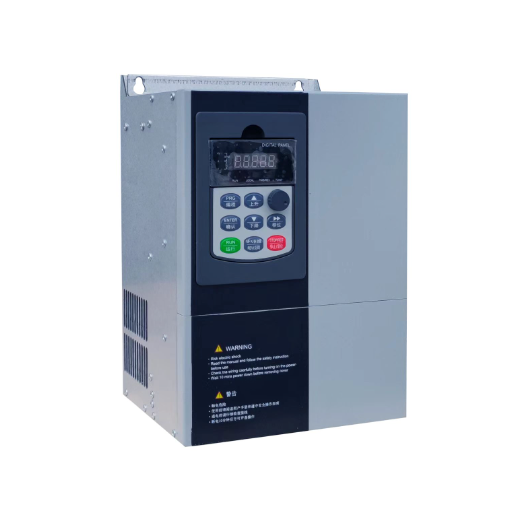
A frequency converter is a device that changes the frequency of an AC supply. It takes power at one frequency and delivers it at another. That is the whole definition, and it is broad enough to cover three products that share almost nothing else.
Here is the problem. Search for the term and you will find pages that describe one of those products and never mention the other two. Read a datasheet and you may meet a third meaning entirely.
The word is not wrong. It is just doing too much work.
This guide separates the three things people mean by “frequency converter,” gives you two questions that tell them apart, and shows you which one your application actually needs. No prior power-electronics background required.
Key Takeaways
- A frequency converter changes AC frequency, not voltage. A transformer changes voltage at the same frequency, which is why the two are not interchangeable.
- The term covers a motor drive, a fixed-output supply converter, and a rotary motor-generator set. The first is a purpose; the other two are two ways of building a second purpose.
- Two questions sort any frequency converter: is the conversion direct or indirect, and is the output fixed or variable.
- If your load is a motor whose speed must change, you want a variable frequency drive. If the supply frequency is simply wrong for the equipment, you want a fixed-output converter.
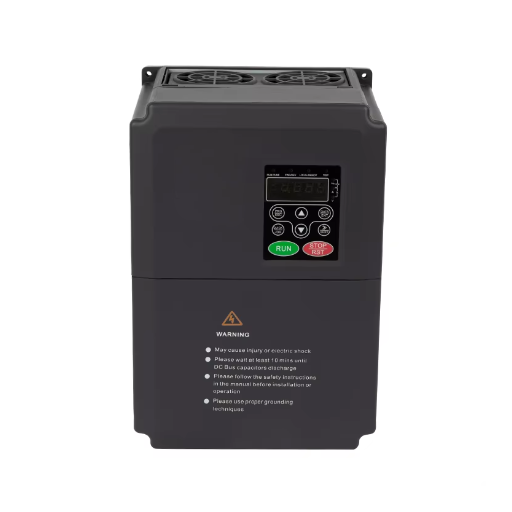
A frequency converter takes an AC supply at one frequency and produces AC at a different one. Most designs do this in two steps: rectify the incoming AC to DC, then invert that DC back to AC at the frequency you want. The middle DC stage is what makes the output frequency independent of the input.
However, it does not change voltage as its primary job. A transformer does that, and it does it at a fixed frequency. A frequency converter changes the frequency, and any voltage change is a secondary function.
That distinction is the source of more specification errors than any other part of the topic. A transformer is a passive device with no active switching, so it cannot alter frequency at all. A frequency converter switches power electronically, which is why it can. If someone offers you a transformer to solve a 50 Hz versus 60 Hz problem, they have misunderstood the requirement.
The same logic explains why a frequency converter is not a phase converter, and why it is not a UPS. A phase converter changes the number of phases. A UPS supplies power when the mains fails. Neither changes frequency as its purpose, though some products combine functions and blur the labels further.
Talk to our engineers about your supply and load, and we will tell you which type fits before you specify anything.
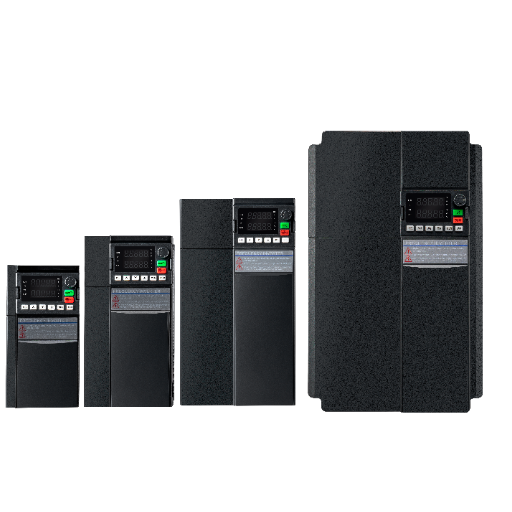
The three are not three products on one shelf. The first is a purpose: controlling a motor’s speed. The second and third are two ways of building a different purpose: matching equipment to a supply frequency it was not designed for. Keep that split in mind, because it explains most of the confusion.
It also explains why frequency converter meaning shifts with the industry you are standing in. An automation engineer hears a motor drive. A marine electrician hears a shore-power unit. A procurement officer may hear either, depending on which quote arrived first.
| What people mean | Output | What it is for |
|---|---|---|
| A motor drive (VFD) | Variable | Controlling motor speed |
| A static converter | Fixed (50, 60 or 400 Hz) | Bridging a supply mismatch |
| A rotary motor-generator set | Fixed | Bridging a supply mismatch, older construction |
In most of Europe and much of Asia, “frequency converter” is the ordinary word for a variable frequency drive. The device takes a fixed supply and delivers a variable frequency and voltage to an AC motor, so the motor runs at whatever speed the process needs.
If that is what you are looking at, the detailed explanation lives in our guide to what a variable frequency drive is. The point here is narrower: this is the sense of the term that most industrial buyers mean, and it is the one the pages currently ranking for this query never mention.
The second sense is a device with a fixed output. It takes 50 Hz in and gives 60 Hz out, or the reverse. Alternatively it might produce 400 Hz for aircraft ground power.
The output does not follow a motor; it is set and left alone. If you have seen the phrase static frequency converter, this is the device it names, and it is the most common reading of the term in supply-equipment catalogues.
These units exist because equipment and grids do not always agree. Therefore the output is fixed rather than tracking a load. A machine built for 60 Hz will not run correctly on a 50 Hz supply, and a ship taking shore power may need a different frequency than the port provides. For the frequency converter definition in this narrow sense, our static frequency converter guide covers the type in depth.
Before semiconductors were cheap, the way to change frequency was mechanical. A motor runs on the incoming supply and turns a generator that produces the frequency you want. The output is clean and the overload tolerance is generous, but there are moving parts to maintain and the efficiency is lower than a solid-state design.
This is a construction, not a third purpose. A rotary set and a static converter do the same job by different means, and the choice between them is a separate decision from the one this article is about.
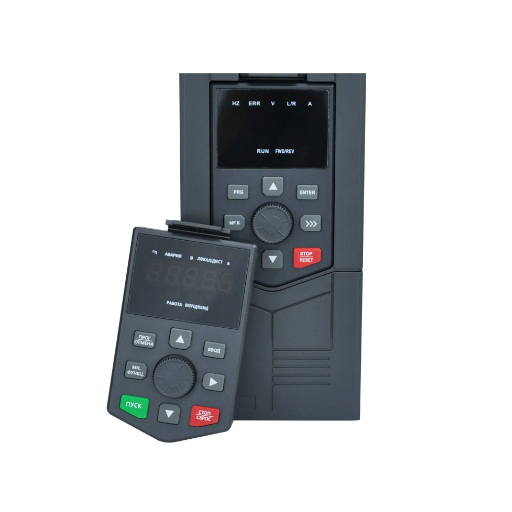
Two questions, asked in order, will tell you what you are looking at. The first is about how the device converts. The second is about what the output is for.
This is the standard classification in power electronics, and it is the one most buyer-facing pages skip.
| Direct (AC-AC) | Indirect (AC-DC-AC) | |
|---|---|---|
| How it works | Output built directly from segments of the input | Rectify to DC, then invert |
| Examples | Cycloconverter, matrix converter | VFD, static converter, LCI |
| Main limit | Cycloconverter: output frequency capped at roughly a third to a half of input. Matrix: output voltage capped near 87% of input | No inherent frequency limit; the DC link adds cost, losses and bulk |
The two direct types have different limits, and it is worth keeping them apart. A cycloconverter is restricted in frequency. A matrix converter is restricted in voltage. Neither has a DC link, which is what makes them compact and efficient in the applications where they fit.
An LCI, or load commutated inverter, is indirect but behaves unlike a standard drive. It is built for starting and controlling very large synchronous motors, and it sits at the variable-output end of the next question. That straddle is why it confuses people.
| Fixed output | Variable output | |
|---|---|---|
| Purpose | Bridge a supply mismatch | Control motor speed |
| Typical device | Static frequency converter | VFD |
| Example | 50 Hz equipment on a 60 Hz site; 400 Hz ground power | Pump, fan, conveyor |
A fixed-output converter is set to one frequency and holds it. A variable-output converter, by contrast, follows a motor and changes frequency and voltage together so the motor produces the torque the load demands.
The distinction sounds academic until you see what happens when it is ignored. A converter rated for 100 kVA of steady load and a VFD rated for the same 100 kVA are not interchangeable. The VFD has to deliver starting current into a motor that is not yet turning.
Fixed-output units are usually specified against a steady load with a modest overload margin. Motor drives are specified against the motor’s starting surge, which can run several times the running current for a few seconds.
That is also why the two types carry different overload figures on their datasheets, and why comparing them on kVA alone will mislead you. The number tells you the continuous rating. It does not tell you what the unit will survive for thirty seconds.
A marine engineering team ran into the practical version of this. They were testing hydraulic power units built for 60 Hz vessels and powering them from diesel generators, because the UK test site ran on 50 Hz. Their own figures put the generator running cost 41% above mains supply.
The device they needed was a fixed-output converter, not a drive. Nothing about the test required variable speed, only a different frequency. Specifying a VFD would have worked electrically while costing more than the job required.
Ask both at once and the field resolves. A VFD is indirect and variable. A static converter is usually indirect and fixed.
A cycloconverter is direct and variable. An LCI is indirect and variable, at very large scale.
That grid is the answer to the question of what the types of frequency converters actually are. It is more useful than a list, because it tells you where an unfamiliar device belongs rather than asking you to memorise names.
Here is how to use it on a document you have been handed. Find the output specification first. If it names a single frequency, the device is fixed-output and the conversion path matters only for cost and footprint. If it names a range, the device is a drive and the motor’s requirements will drive the rest of the specification.
Then look at the input stage. A unit with a DC link will be larger and need more cooling than a direct converter of the same rating, but it will accept a wider range of output frequencies. A direct converter will be compact and efficient, and constrained in the way the table above describes.
Neither is better. They fit different jobs.
The third question people ask, whether a converter changes voltage as well as frequency, is answered by the same grid. A drive must change both, because motor torque depends on the voltage-to-frequency ratio. A fixed-output converter usually holds voltage steady and treats any shift as a separate function. That is why a drive and a converter with the same kVA rating are not substitutes.
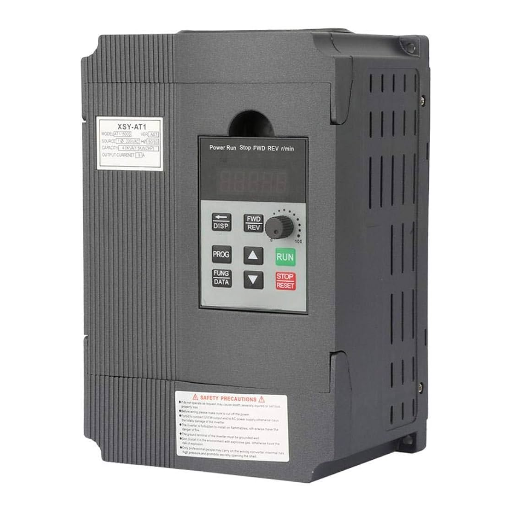
Two questions, and the first one usually settles it.
1. Is the load a motor whose speed must vary? If yes, you want a variable frequency drive. The frequency has to track the motor, and consequently a fixed-output unit is the wrong tool no matter how it is rated.
2. Is the supply frequency wrong for the equipment? If yes, you want a fixed-output converter, and the remaining choice is static or rotary. Start with our guide on how to select a frequency converter if you are sizing one, or our explanation of converting equipment between 50 Hz and 60 Hz if that is the specific mismatch.
If neither question matches your situation, the term you are reading is probably being used loosely, and it is worth going back to the source document to see which device it names.
Daniel Okafor, a procurement engineer at a food processing plant in Lagos, learned that the expensive way. His tender document specified “two frequency converters, 150 kVA” for a new packaging hall. He received quotes for two different products.
One supplier offered variable frequency drives, reading the line as motor control for the conveyors. The other offered fixed-output static converters, reading it as supply conditioning for European machinery running on Nigerian 50 Hz power. Both quotes were valid against the words in the document.
The hall needed one of each. Sorting it out cost three weeks and a reissued tender. A single line in the specification, stating whether the output frequency had to vary, would have prevented it. That is the practical cost of a term that carries three meanings, and it is why the two questions in this article are worth asking before anything is quoted.
One more thing worth settling. In most industrial contexts, a frequency converter and a VFD are the same device, and the name is regional rather than technical. Our AC frequency converter overview maps all eight names the industry uses for it, if you need the full list.
Two jobs. It controls the speed of an AC motor by varying the frequency and voltage supplied to it. Or it matches equipment to a supply frequency it was not built for, such as running 60 Hz machinery on a 50 Hz grid.
A transformer changes voltage at a fixed frequency. A frequency converter changes frequency. That is why you cannot substitute one for the other: a transformer will not turn 50 Hz into 60 Hz, however it is tapped.
A static converter uses semiconductors and has no moving parts. A rotary set uses a motor driving a generator. Both produce a fixed output frequency; they differ in construction, maintenance and efficiency rather than in what they do.
It can, but that is not its defining job. A variable frequency drive changes voltage along with frequency, because a motor needs both to run efficiently at a new speed. A fixed-output converter may hold voltage steady or shift it as a secondary function.
Any converter with a rectifier draws current in non-sinusoidal pulses, which injects harmonics back into the supply. The severity depends on the design and the load. Harmonic filters and reactors are the usual remedies, and the topic deserves its own treatment.
Most designs rectify the incoming AC to a DC link, then invert that DC back to AC at the target frequency. The DC stage decouples output frequency from input frequency. Direct converters skip it and build the output waveform from segments of the input instead.
The phrase “frequency converter” is not a precise term, and no amount of definition will make it one. What you can do is ask the two questions that sort it.
Is the conversion direct or indirect? That tells you how the device is built. Is the output fixed or variable? That tells you what it is for.
Answer both and you know which family you are dealing with, whatever the datasheet calls it.
Most readers who arrive here are looking at a motor drive and did not know that was the name for it. If that is you, the variable-frequency path is the one to follow. If your equipment simply needs a different supply frequency, the fixed-output path is shorter and usually cheaper.
Either way, the specification starts with the same two facts: what frequency you have, and what frequency the load expects. Send us both and our engineering team will confirm the type and the rating before anything is ordered.