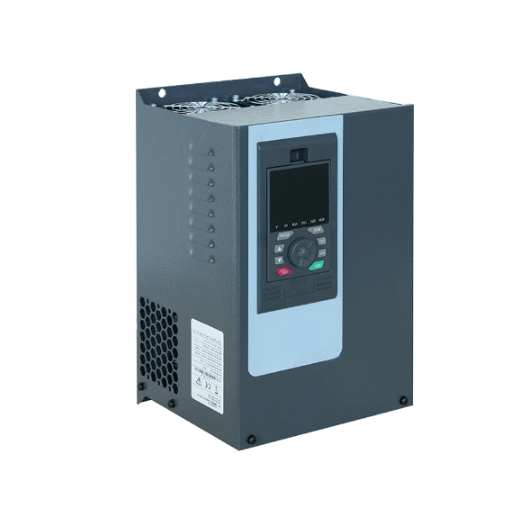
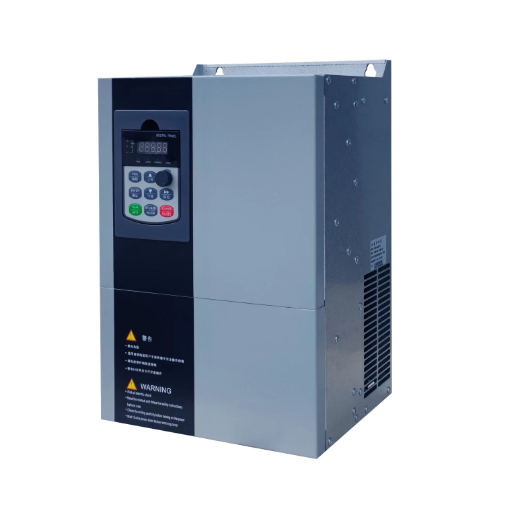
Ready to Get Your VFD Solution?
Whether you need a single drive or a complete system, we have the VFD products and engineering support to ensure your project's success.

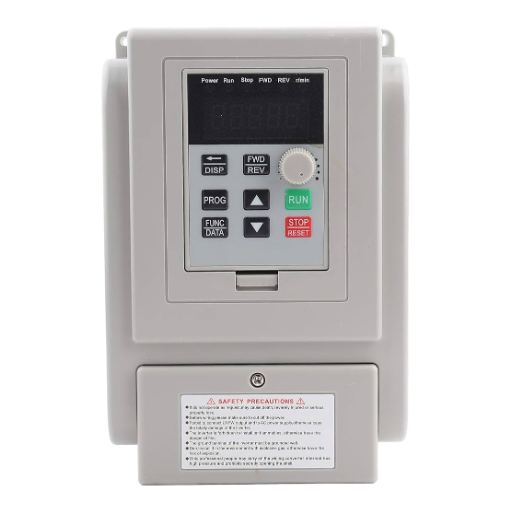
An AC frequency converter is an electronic device that changes the frequency of an alternating current supply. The term covers two different products. A variable frequency drive varies output frequency to control motor speed. A static frequency converter converts one fixed frequency to another, such as 50 Hz to 60 Hz or 50 Hz to 400 Hz.
Getting that distinction right is the difference between a working installation and a returned unit.
Consider what happened at a European test facility. A lab needed a fixed 400 Hz supply to run aircraft instruments on the bench. The buyer searched for “frequency converter,” found a well-rated unit, and ordered it.
What arrived was a variable-frequency drive designed to ramp a motor up and down. It could reach 400 Hz, but it was built to follow a motor’s load, not to hold a clean fixed output for sensitive instruments. The specification was wrong from the first search.
You already know you need to convert frequency. The problem is that the market uses one phrase for several devices, and the phrase does not tell you which one you need. This guide separates them.
You will learn what an AC frequency converter is, how each type works, how the naming conventions map to each other, and how to specify the right unit for your load. For an in-depth look at the motor-drive branch, our guide to the variable frequency drive covers speed control end-to-end.
Key Takeaways
- “Frequency converter” names two different products: a VFD (variable output frequency for motor speed control) and a static frequency converter (fixed-frequency conversion such as 50 to 60 Hz).
- Decide by load first. If the load is an AC motor whose speed you want to control, you need a VFD. If it is anything else, you almost certainly need a static converter.
- Eight names circulate for the same motor-drive device, including VFD, VSD, ASD, AFD, inverter drive and frequency inverter. IEEE standards prefer “adjustable speed drive.”
- Cycloconverters and matrix converters convert frequency directly with no DC link. Cycloconverters are limited to roughly a third of the input frequency, which is why they are used for very large, very slow drives.
- Static frequency converters handle 50/60 Hz, 400 Hz and other fixed outputs, typically from 10 kVA to a few thousand kVA.
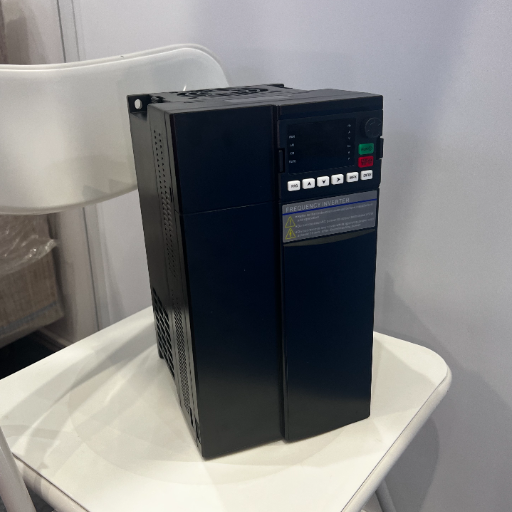
An AC frequency converter is a power electronic device that takes an AC supply at one frequency and delivers AC at another. It contains a rectifier, a DC link, and an inverter. The inverter stage is what produces the new output frequency.
That definition covers both device families, which is exactly why the term causes confusion.
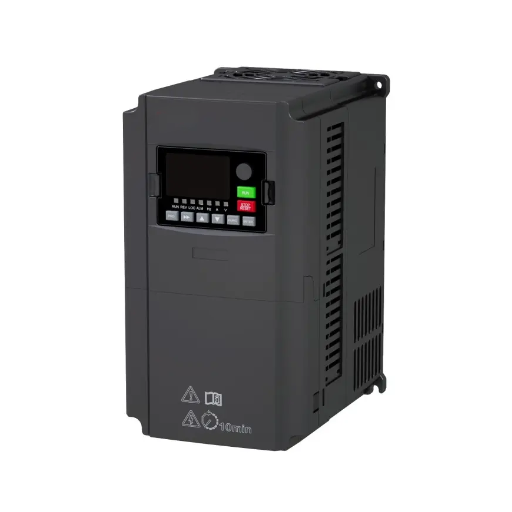
In IEC and European usage, and in most industrial contexts, “frequency converter” means a variable frequency drive. This is the variable frequency drive most engineers picture. It is a cabinet or panel-mounted unit. It takes a fixed 50 or 60 Hz supply and produces a variable-frequency, variable-voltage output for an AC induction or permanent magnet motor.
Its purpose is speed and torque control. Change the frequency, and the motor’s synchronous speed changes with it. That is how a pump moves from 100 percent flow to 60 percent flow without a valve, and how a conveyor starts smoothly instead of slamming into motion.
If you want the fundamentals of the motor-drive branch, our explainer on what a variable frequency drive is covers it in detail.
The second meaning is a static frequency converter. This device also converts frequency, but it does not drive a motor and its output frequency is usually fixed. It exists to bridge a frequency mismatch in the power supply itself.
The classic case is 50 Hz against 60 Hz. Equipment built for one grid does not run correctly on the other. A static converter takes the local supply and delivers the frequency the equipment expects, at whatever load the equipment presents. Common outputs include 50 Hz, 60 Hz, and 400 Hz.
The two devices share a power topology, so the shared name is not careless. Both rectify AC to DC and invert it back to AC at a new frequency. From the outside, both are boxes with an input and an output.
They differ in what they control. A VFD varies frequency to follow a motor. A static converter holds a fixed frequency for a load that is not a motor. That single question, “does this box follow a motor,” sorts nearly every specification decision that follows.
Not sure which device your application needs? Talk to our engineers about your load, supply frequency and duty cycle before you specify.
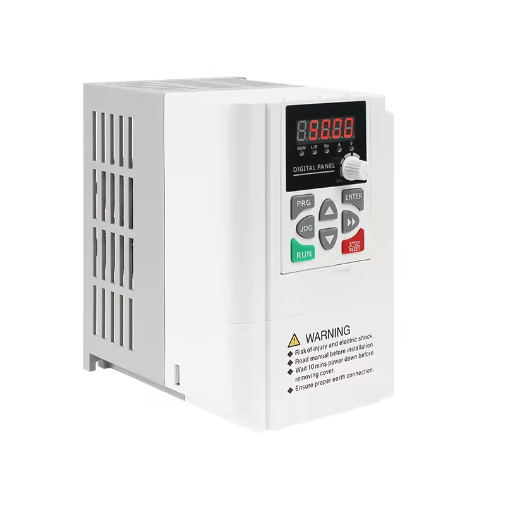
Almost every AC frequency converter, whatever its name, uses the same three-stage chain. Understanding it explains why the two device families behave differently.
The rectifier converts incoming AC into DC. It may use diodes, which are simple and inexpensive, or thyristors, which can be controlled to regulate the DC level.
Diode rectifiers are common in standard drives. Controlled rectifiers appear where the DC link voltage must be regulated directly, or where regenerative operation is required.
The DC link smooths and stores energy between the two conversion stages. Its design splits converters into two families.
A voltage source inverter (VSI) holds a constant DC voltage, usually across a capacitor. It is the common architecture for standard industrial drives. A current source inverter (CSI) regulates DC current through a large inductor instead, which gives excellent torque control and inherent short-circuit tolerance.
The trade-off matters at the top of the power range. CSI designs suit very high power and single-motor duty. VSI designs are simpler, cheaper, and can run several motors from one unit.
The inverter is where the output frequency is created. It switches semiconductor devices, typically IGBTs, to synthesize an AC waveform at the target frequency.
Most modern converters use pulse width modulation (PWM). The inverter switches at a high carrier frequency and varies the pulse widths to approximate a sine wave. PWM gives a near-sinusoidal output, near-unity power factor, and the flexibility to run multiple motors. Pulse amplitude modulation (PAM) is a related approach that varies pulse height instead.
A control circuit ties the chain together. It generates the switching signals, reads feedback from encoders or sensors, communicates with PLC and SCADA systems, and trips the unit on fault conditions.
Protection functions are not optional extras. Overcurrent, overvoltage, phase loss, and thermal protection are what let a converter survive a real industrial supply rather than an ideal one.
The table below places the main types side by side. It is the fastest way to see which one your application points to.
| Type | What it does | Output | Typical use |
|---|---|---|---|
| VFD / VSI drive | Varies frequency and voltage to control motor speed | Variable, motor-tracking | Pumps, fans, conveyors, compressors |
| CSI drive | Regulates DC current for high-power motor control | Variable, motor-tracking | Very high power single-motor duty |
| Static frequency converter | Converts one fixed frequency to another | Fixed (50, 60, 400 Hz) | 50/60 Hz equipment, aerospace ground power |
| Cycloconverter | Direct AC-to-AC conversion, no DC link | Variable, below input frequency | Very large slow drives, cement mills, ship propulsion |
| Matrix converter | Direct AC-to-AC with bidirectional switches | Variable, up to about 87% of input voltage | Compact drives, research, specialist applications |
The VSI and CSI split is the most important internal distinction in motor drives. Voltage source designs dominate general industry because they are simpler and cheaper. Current source designs survive where the load is enormous and the motor is singular, which is why they persist in heavy process industries.
For a motor speed control application, our guide to motor control using a frequency inverter walks through the control methods that sit on top of this hardware.
Both of these convert frequency without an intermediate DC link, which makes them a different family from the drives above.
A cycloconverter uses naturally commutated thyristors to build the output waveform directly from segments of the input. Because it depends on the input voltage crossing zero to commutate, the output frequency is limited to roughly a third to a half of the input frequency. That constraint makes cycloconverters unsuitable for general speed control, but ideal for enormous, very slow drives: cement mills, mine hoists, and ship propulsion.
Their other traditional role is generating 400 Hz power for aircraft, where the direct topology was historically simpler than a DC link design.
A matrix converter replaces the thyristor bridges with an array of bidirectional switches, one for each input-output phase pair. Nine switches handle a three-phase-to-three-phase conversion. It produces clean sinusoidal input and output waveforms and unity input power factor, at the cost of a voltage transfer limit of about 87 percent and more complex commutation.
Static frequency converters occupy the fixed-output niche. They use the same rectifier, DC link and inverter chain, sized for a defined output frequency rather than a motor’s demand.
Typical units span roughly 10 kVA to a few thousand kVA and offer outputs at 50 Hz, 60 Hz, 83 Hz, or 100 Hz, with 400 Hz units for aerospace duty. Because the load is not a motor, selection is driven by kVA, duty cycle and output waveform quality rather than motor torque curves.
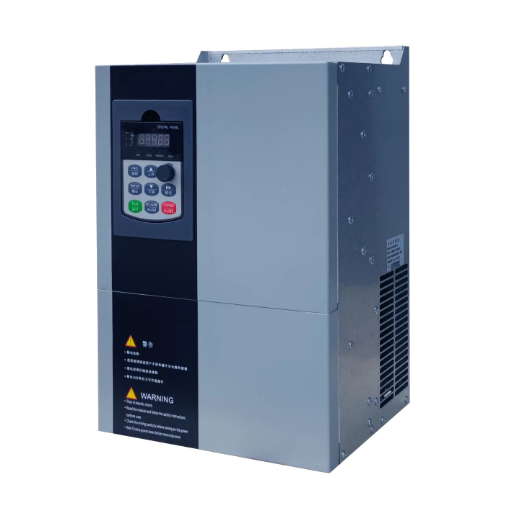
Eight names circulate for what is often the same device. Engineers use them interchangeably; standards bodies do not. This table maps them.
| Name | What it describes | Notes |
|---|---|---|
| VFD | Variable frequency drive | Most common in North America |
| VSD | Variable speed drive | Common in the UK and Europe |
| ASD | Adjustable speed drive | The term IEEE prefers |
| AFD | Adjustable frequency drive | Used by some manufacturers |
| AC drive | AC drive | Generic industry shorthand |
| Inverter drive | Inverter drive | Emphasises the inverter stage |
| Frequency inverter | Frequency inverter | Common in European manufacturer literature |
| Frequency converter | Frequency converter | The IEC-style term, and this article’s subject |
The variation is regional and historical rather than technical. North American literature settled on VFD, European literature on VSD and frequency converter, and standards bodies on ASD. Manufacturers pick whichever name their market expects.
This is why a specification that searches for one term misses the others. A buyer searching “frequency converter” and a buyer searching “VFD” may want the identical product, which is why a frequency converter vs VFD comparison often resolves to a single item.
Some engineers draw a stricter line: an inverter runs from a DC supply, while a converter runs from an AC supply. Technically the inverter is one stage inside the device, the part that synthesizes the output waveform, and colloquial usage applies it to the whole unit.
The distinction is worth knowing when reading datasheets and standards. It rarely changes what you buy. If you are weighing the naming against a related device, our comparison of AC drive vs VFD covers those two terms directly.
For procurement, rarely. For specification, sometimes. When a tender document says “frequency converter” and the intended device is a motor drive, a supplier may quote a static converter, or the reverse. Writing the load type into the specification removes the ambiguity.
Selecting an AC frequency converter follows a fixed order. Work through the steps below, because each one narrows the field before the next begins.
Ask what the load does.
If the load is an AC motor and you want to control its speed, you need a VFD. Stop here; the remaining steps size the drive.
If the load is not a motor, or the motor must run at one fixed speed tied to a supplied frequency, you need a static frequency converter. This is the single most important branch in the decision.
For a drive, identify the load type. Variable torque loads such as pumps and fans behave differently from constant torque loads such as conveyors and positive displacement pumps, and they size differently.
For a static converter, the load profile sets the kVA rating. A resistive test load behaves very differently from a transformer or a motor load with high inrush.
Frequency converter sizing starts with converting your load to kVA, then applying derating for real conditions. Ambient temperature above the rated value, altitude above roughly 1,000 metres, and high switching frequencies all reduce usable capacity.
Specifying at the nameplate rating without derating is one of the most common causes of premature failure. A unit that runs at its limit in a 40 °C panel room will not last.
Every converter draws a non-linear current, which introduces harmonics. Where the supply is weak or other equipment is sensitive, you may need a line reactor, a harmonic filter, or a 12-pulse or 18-pulse front end.
This step is easy to defer and expensive to retrofit. Check it during specification, not commissioning.
Enclosure rating, cooling method and ambient limits must match the installation. A dusty foundry and a climate-controlled electrical room should not receive the same enclosure.
Where the environment is aggressive, water-cooled units or a sealed cabinet with a heat exchanger may be the practical answer. The specification should say so up front.
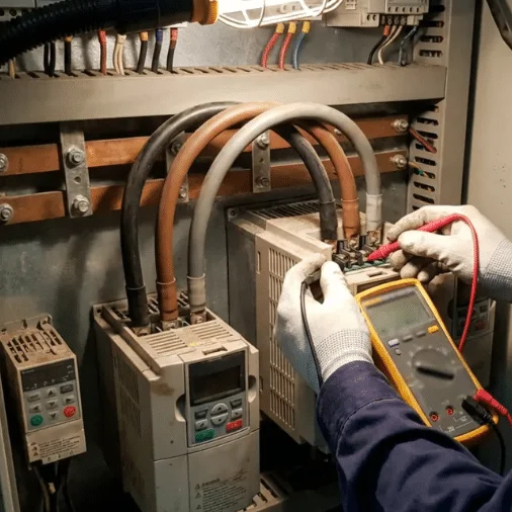
The largest application by volume is motor speed control: pumps, fans, compressors, conveyors, mixers, and machine spindles. The value is energy and process control. Trimming a pump’s speed to match demand rather than throttling a valve typically cuts energy use substantially and reduces mechanical wear at the same time.
Frequency mismatch is a real and expensive problem for any organization that moves equipment between regions. Machinery built for a 60 Hz grid runs 20 percent fast on a 50 Hz supply, with consequences for speed, torque, cooling and control logic.
This is where a static frequency converter earns its place. For a plant engineer facing exactly this problem, here is how it plays out.
A food processing company in Ontario relocated a 60 Hz packaging line to a plant in Ireland supplied at 50 Hz. The line’s motors would have run slow, and the control electronics were frequency-referenced. Retrofitting every motor with a drive was quoted at five figures and weeks of downtime.
Instead, the plant installed a single static frequency converter rated for the line’s total load and fed the whole panel from it. The line ran at its original speed, the control logic stayed valid, and the commissioning window closed in days rather than weeks.
Aircraft use 400 Hz because higher frequency allows smaller, lighter transformers and motors, which matters enormously in the air. On the ground, that creates a conversion requirement: airports, maintenance hangars and test benches need to produce 400 Hz from a 50 or 60 Hz supply.
Historically cycloconverters filled this role. Modern installations more often use static converters, which offer better output quality and control.
Ships built for a 60 Hz grid regularly berth at ports supplying 50 Hz, and the reverse. Shore power connections, sometimes called cold ironing, need frequency conversion to let a vessel run from the local grid with its generators shut down.
Rail traction and specialist traction supplies present similar mismatches.
A ferry operator running a 60 Hz vessel out of a 50 Hz port found the same problem every turnaround. Running generators alongside the berth to keep hotel loads alive was expensive and drew complaints about exhaust and noise. The operator installed a shore-side static frequency converter sized for the vessel’s berth load. Generators shut down alongside, fuel burn at the berth fell sharply, and the port’s air quality rules were satisfied without changing the ship.
These applications share a pattern: high kVA, continuous duty, and a strong preference for reliability over first cost.
An AC frequency converter is a power electronic device that changes the frequency of an AC supply. The term therefore covers variable frequency drives, which control motor speed by varying output frequency. It also covers static frequency converters, which convert one fixed frequency to another, such as 50 Hz to 60 Hz or 400 Hz.
Often, yes. In IEC and European usage, “frequency converter” is the standard term for what North American literature calls a variable frequency drive. However, the term also covers static frequency converters, which are a different product with a fixed output frequency and no motor control function.
An inverter is one stage inside a frequency converter, the part that synthesizes the output AC waveform from the DC link. In colloquial use, “inverter” is applied to the whole device. Some engineers reserve “inverter” for units fed from a DC supply and “converter” for units fed from an AC supply.
Broadly there are two families by function: variable frequency drives and static frequency converters. Within them, the main hardware types are voltage source inverters, current source inverters, cycloconverters, and matrix converters.
Decide first whether the load is an AC motor whose speed you need to control. If it is, you need a VFD. If not, you need a static frequency converter. Then size by kVA, derate for temperature and altitude, check harmonic requirements, and match the enclosure to the environment.
Yes. That is precisely the job of a static frequency converter. It takes the local supply frequency and delivers a fixed output at the frequency the connected equipment expects. That is how 50 Hz equipment runs from a 60 Hz grid, and the reverse.
Both convert frequency directly without a DC link. A cycloconverter uses naturally commutated thyristors and is limited to roughly a third of the input frequency, which suits very large slow drives. A matrix converter uses bidirectional switches, delivers cleaner waveforms and unity power factor, but has a voltage transfer limit of about 87 percent.
Convert the load to kVA, then derate for ambient temperature, altitude and switching frequency. Size for the worst-case continuous load rather than the average, and account for inrush where the load includes transformers or motors.
An AC frequency converter is one term for two products, and the fastest way to specify correctly is to ask what the load is. If it is a motor whose speed you control, you need a VFD. If it is anything else, and the requirement is a fixed output frequency, you need a static frequency converter.
Keep four things in view as you specify:
The device is not the hard part. Naming the requirement is. Once you know the load and the output frequency you need, the specification writes itself.
Shandong Electric builds variable frequency drives across the full range, from compact low voltage units to high voltage systems for heavy industry, with engineering support through selection, commissioning and after-sales service. Tell us about your application and we will help you match the right converter to the job.