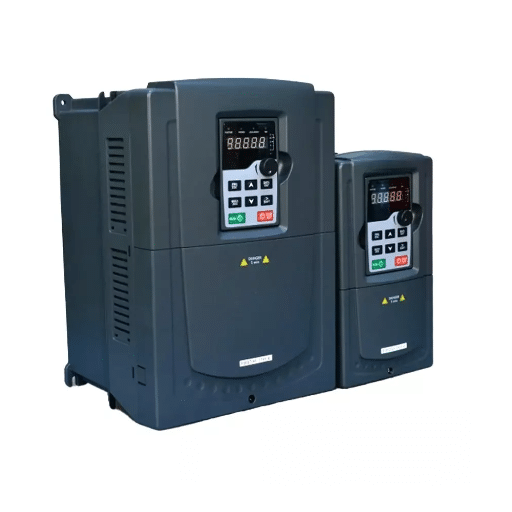
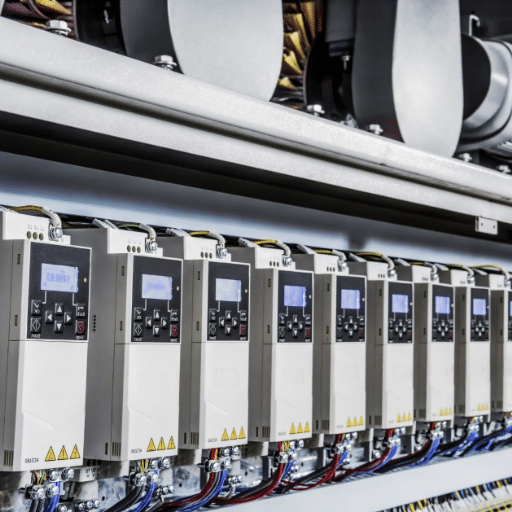
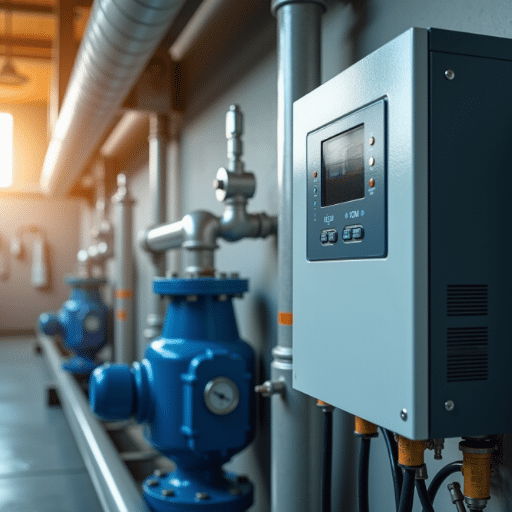
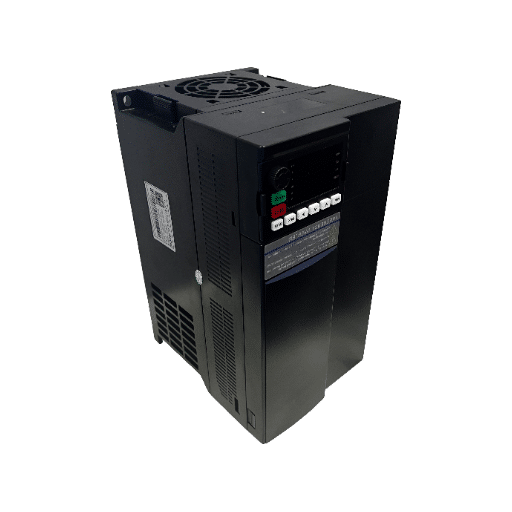
Ready to Get Your VFD Solution?
Whether you need a single drive or a complete system, we have the VFD products and engineering support to ensure your project's success.


Variable Frequency Drives (VFDs) are used in virtually every industrial sector that relies on electric motors, from water treatment plants and HVAC systems to mining operations and food processing lines. By controlling motor speed to match actual demand rather than running at full speed continuously, VFDs reduce energy consumption by 20–50% depending on the application.
If you have ever asked yourself where VFDs are used or whether your facility could benefit from VFD technology, the answer is almost certainly yes. The challenge is not deciding if you need a VFD, but selecting the right type, control mode, and voltage class for your specific industrial VFD application. In this guide, we cover the ten most important VFD applications in industry, quantify the energy savings for each, and provide an application-selection matrix you can use immediately.
What you will learn in this guide:
Key Takeaways
- Pumps and fans represent the largest VFD application category, with typical savings of 20–50% through affinity law optimization.
- HVAC systems, water treatment, and manufacturing account for the next three largest application segments.
- Control mode selection matters: V/f for simple pumps, vector control for high-torque manufacturing loads, DTC for dynamic mining applications.
- Low voltage VFDs (220V–690V) cover 80% of industrial applications; high voltage drives (6kV–10kV) serve mining, power generation, and heavy process industries.
- Industry 4.0 integration (IoT connectivity, predictive maintenance, PLC communication) is rapidly becoming a standard requirement.

A Variable Frequency Drive (VFD) is an electronic device that controls the speed and torque of an AC motor by varying the frequency and voltage supplied to the motor. Learn more about what a VFD is and how it works.
Industrial motors consume approximately 50% of global electricity, according to the International Energy Agency. In many facilities, these motors run at full speed regardless of actual demand, wasting enormous amounts of energy. A VFD solves this problem by allowing the motor to slow down when full output is not required. Learn more about low voltage VFD systems for standard industrial motors, or explore high-voltage VFD systems for heavy industry applications.
Application-specific selection matters because the wrong drive can cause poor performance, shortened motor life, or even system failure. A pump system needs different control logic than a conveyor. A mining crusher requires 150% overload capacity that a standard HVAC fan drive simply cannot provide. Understanding these differences is what separates a successful installation from an expensive mistake.
In the sections that follow, we examine each major application category in detail. Every section includes typical energy savings, recommended control modes, voltage class guidance, and a link to a deep-dive article for that specific industry.
Pumps represent the single largest category of VFD applications worldwide. Centrifugal pumps in particular offer exceptional energy savings because pump power consumption is proportional to the cube of speed. Reducing pump speed by just 20% cuts energy use by nearly 50%.
Common pump VFD applications include:
For centrifugal pumps, V/f control with a quadratic V/f curve is typically sufficient. For positive displacement pumps or systems requiring constant pressure, sensorless vector control with PID feedback provides better accuracy. Read our complete guide to VFD for pumps and fans for sizing, PID tuning, and affinity law calculations.
Energy savings: 20–40% for centrifugal pumps; 10–20% for positive displacement pumps. These figures align with U.S. Department of Energy estimates for pump system retrofits.
When Raj Patel took over as operations manager at a municipal water utility in Pune, India, he inherited six distribution pumps running direct-on-line starters at full speed 24 hours a day. Water demand varied dramatically between peak morning hours and overnight lows, yet the pumps never adjusted. After installing VFDs with pressure feedback control, the system reduced energy consumption by 38% — saving approximately $41,000 annually. The soft-start capability also eliminated water hammer that had been damaging pipeline joints for years.
Fans and blowers follow the same affinity laws as pumps: power drops with the cube of speed reduction. This makes HVAC systems one of the most financially attractive VFD applications, with payback periods often under two years.
Key HVAC VFD applications include:
ASHRAE 90.1 and similar energy codes increasingly require variable speed control for fans over a certain horsepower threshold. A VFD not only ensures compliance but also reduces mechanical wear through soft starting and eliminates the need for damper control, which wastes energy by restricting airflow.
For standard HVAC fans, V/f control with a quadratic curve is the economical choice. For systems requiring precise airflow control, such as cleanrooms or laboratories, closed-loop vector control with airflow sensors provides tighter regulation. See our detailed guide to VFD in HVAC systems for ASHRAE compliance notes and retrofit guidance.
Energy savings: 30–50% for variable-air-volume systems; 15–25% for constant-volume retrofits.
Ahmad Al-Rashid, facilities director for a 12-story commercial building in Dubai, faced a 14,000monthlyelectricitybilldrivenlargelybythechillerplant.AfterretrofittingthechilledwaterpumpsandAHUfanswithVFDs,thebuildingreducedHVACenergyconsumptionby3214,000monthlyelectricitybilldrivenlargelybythechillerplant.AfterretrofittingthechilledwaterpumpsandAHUfanswithVFDs,thebuildingreducedHVACenergyconsumptionby3289,000 meant the retrofit paid for itself in 18 months. Perhaps more importantly, tenant comfort complaints dropped by 60% because the system could now match cooling output to actual occupancy rather than overcooling every floor.
Water and wastewater treatment plants are ideal candidates for VFD technology because they operate continuously with variable flow demands. From raw water intake to final distribution, nearly every pump and blower in a treatment plant can benefit from speed control.
Key water treatment VFD applications include:
Aeration blowers deserve special attention. In biological treatment processes, aeration can account for 50–70% of total plant energy use. A VFD on the blower allows dissolved oxygen levels to be maintained precisely where they are needed, rather than oversupplying air continuously. This single application often delivers the fastest payback in a water treatment plant.
PID control is essential for water treatment applications. Pressure loops for distribution, flow loops for filtration, and dissolved oxygen loops for aeration all require closed-loop feedback. Most modern VFDs include built-in PID controllers, eliminating the need for external control hardware. Read our complete water treatment VFD guide for NPSH considerations and EPA compliance benefits.
Energy savings: 20–35% for distribution pumps; 30–50% for aeration blowers.

Manufacturing applications represent some of the most technically demanding VFD deployments. Unlike pumps and fans, which are primarily variable-torque loads, many manufacturing processes require constant torque or even increased torque at low speeds.
Key manufacturing VFD applications include:
Extruders are a classic example. A plastic extruder may require 150% starting torque to overcome the cold material in the barrel. Once running, it operates as a constant-torque load. This demands a VFD with sensorless vector or flux vector control and substantial overload capacity.
Machine tool spindles present the opposite challenge. They require constant power above the motor base speed, meaning the VFD must maintain torque while increasing speed. This requires a drive with wide constant-power range capability, typically achieved through field weakening.
For most manufacturing applications, sensorless vector control (SVC) provides the best balance of performance and cost. For the most demanding applications, such as high-precision spindles or servo-like positioning, field-oriented vector control (FVC) may be necessary. Explore manufacturing VFD applications in depth.
Energy savings: 10–25% for continuous processes; 15–30% for intermittent operations.
Conveyor systems benefit from VFDs in ways that go far beyond simple energy savings. While reducing speed during low-demand periods does save power, the bigger advantages are mechanical: soft starting eliminates belt slip and shock loading, while precise speed matching prevents material spillage and jams.
Key conveyor VFD applications include:
In warehouse automation, multiple VFDs often operate in master-slave configuration to synchronize line speed across dozens of conveyor zones. Load sharing between multiple drives on long conveyor systems is another common requirement, particularly in mining applications where a single belt may stretch several kilometers.
For most conveyors, V/f control with slip compensation is adequate. For applications requiring precise speed matching or position control, such as indexing conveyors or pick-and-place systems, vector control with encoder feedback provides the necessary accuracy. Braking resistor selection is critical for downhill conveyors or high-inertia systems where regenerative energy must be dissipated. See our conveyor VFD guide for load-sharing and braking resistor guidance.
Energy savings: 10–20% for continuously running conveyors; up to 40% for variable-duty systems.
Mining applications push VFDs to their extreme limits. Crushers, ball mills, ventilation fans, and hoists all require drives with high overload capacity, robust protection, and the ability to operate in harsh environments.
Key mining VFD applications include:
Crushers and ball mills present the most challenging load profiles. A crusher may need 150–200% starting torque to break through a jam, while a ball mill requires high torque at low speed to get the charge moving. These applications typically require high voltage VFDs (6kV–10kV) for large motors and vector control with encoder feedback for torque precision.
Environmental protection is non-negotiable in mining. Drives must withstand dust, vibration, and temperature extremes. IP54 or higher enclosure ratings, conformal coating on circuit boards, and reinforced cooling systems are standard requirements. NEMA enclosure standards provide the baseline for industrial drive protection ratings. Learn more about VFD applications in mining.
Energy savings: 15–30% for ventilation fans; 10–20% for crushers and mills.

Air compressors are often the largest electricity consumers in a manufacturing facility, and VFDs can transform their efficiency. A fixed-speed compressor runs at full capacity and unloads when demand drops, wasting enormous energy. A VFD-controlled compressor matches motor speed to actual air demand, eliminating the unload cycle entirely.
Key compressor VFD applications include:
For rotary screw compressors, the VFD maintains a stable discharge pressure by adjusting motor speed rather than cycling between load and unload states. This not only saves energy but also reduces mechanical wear on the inlet valve and motor starter.
Centrifugal compressors require more sophisticated control. As flow demand drops, the compressor approaches its surge limit — a destructive condition where flow reverses through the machine. A VFD with anti-surge control adjusts speed while simultaneously modulating inlet guide vanes to keep the compressor safely away from the surge line.
Permanent magnet (PM) motors paired with VFDs are increasingly popular in compressor applications. PM motors maintain higher efficiency across a wider speed range than induction motors, making them ideal for the variable-duty profiles typical of compressed air systems. Read our compressor VFD guide for anti-surge and PM motor pairing guidance.
Energy savings: 20–35% vs. load/unload control; up to 50% vs. modulation control.
Beyond the major categories above, VFDs serve numerous specialized industries with unique requirements. These variable frequency drive uses demonstrate how adaptable the technology has become across diverse operational environments.
Food processing demands washdown-duty enclosures (typically IP66 or IP69K) to withstand high-pressure cleaning. Stainless steel construction is often required to prevent corrosion from cleaning chemicals and food acids. Applications include mixers, blenders, conveyors, packaging lines, and refrigeration compressors. See our food processing VFD guide for hygienic drive selection criteria.
In the oil and gas sector, VFDs control pump-jacks, downhole pumps, pipeline pump stations, and process cooling fans. Explosion-proof enclosures (ATEX or IECEx certified) are mandatory for Zone 1 and Zone 2 hazardous areas. Long motor cable runs — common in oilfield applications — require output reactors or dv/dt filters to protect motor insulation. Explore oil and gas VFD applications.
Textile machines require precise speed synchronization between multiple motors. A warping machine, for example, may have a main drum motor, traverse motor, and tension motor that must maintain exact speed ratios. Paper machines similarly require tight speed control across dozens of rollers to prevent web breaks.
Energy savings: 15–25% for food processing; 10–20% for oil and gas pump stations.
The role of the VFD is evolving from a standalone motor controller to an intelligent node in the smart factory ecosystem. Modern VFDs are no longer just speed controllers — they are data collection points, predictive maintenance sensors, and energy management devices.
Key Industry 4.0 VFD capabilities include:
For facilities building smart automation systems, VFD selection should include communication protocol compatibility as a primary criterion. A drive with excellent motor control but no Profinet or EtherCAT interface may require an expensive gateway or reprogramming effort that negates any cost savings.
The integration of AI-driven analytics with VFD data is an emerging trend. Machine learning algorithms can analyze patterns in current draw, temperature, and vibration to predict failures weeks in advance, enabling scheduled maintenance rather than emergency repairs. Read our industrial automation VFD guide for PLC integration and protocol selection.

Choosing the right VFD for your application requires matching the drive’s capabilities to your industry’s specific demands. The matrix below summarizes the key selection criteria for each major application category.
| Industry | Primary Use | Typical Savings | Control Mode | Voltage Class | Recommended VFD Type |
|---|---|---|---|---|---|
| Water / Wastewater | Distribution pumps, aeration blowers | 20–50% | V/f + PID (pumps) / Vector (blowers) | Low Voltage (400–690V) | Standard LV with built-in PID |
| HVAC | AHU fans, chilled water pumps, and cooling towers | 30–50% | V/f with quadratic curve | Low Voltage (400–690V) | Compact LV with BACnet/Modbus |
| Manufacturing | Extruders, mixers, spindles | 10–25% | Sensorless Vector (SVC) or FVC | Low Voltage (400–690V) | High-performance vector drive |
| Mining | Crushers, mills, conveyors, hoists | 10–30% | Vector with encoder (FVC) | High Voltage (6kV–10kV) | Heavy-duty HV with 150% overload |
| Food Processing | Mixers, conveyors, and packaging | 15–25% | V/f or Vector | Low Voltage (400–690V) | IP66/69K washdown-duty drive |
| Oil and Gas | Pump-jacks, pipeline pumps | 10–20% | Vector or V/f + PID | Low to High Voltage | Explosion-proof or panel-mounted |
| Compressors | Rotary screw, centrifugal | 20–35% | Vector (PM motor compatible) | Low Voltage (400–690V) | PM motor-capable vector drive |
| Conveyors | Belt systems, elevators, cranes | 10–40% | V/f with slip compensation | Low Voltage (400–690V) | Standard LV with braking resistor |
| Textile / Paper | Rollers, winding, tension control | 15–25% | Vector with encoder (FVC) | Low Voltage (400–690V) | High-precision vector drive |
| Smart Automation | All of the above + data integration | 10–50% | Application-dependent | LV or HV | IoT-enabled drive with EtherCAT/Profinet |
Decision flow: Start with your voltage requirement. If your motor is below 1,000V, a low-voltage VFD is appropriate. For motors above 1,000V, you need a high voltage drive. Next, determine your torque requirement. Variable-torque loads (pumps, fans) work well with V/f control. Constant-torque or high-dynamic loads (extruders, crushers, cranes) require vector control. Finally, consider your environment — harsh or washdown conditions demand specialized enclosures.
The energy savings potential of VFDs varies significantly by application. Understanding these differences helps prioritize which systems to retrofit first for maximum return on investment.
| Application | Typical Energy Savings | Payback Period | Key Driver |
|---|---|---|---|
| Centrifugal pumps | 20–40% | 1–2 years | Affinity laws (cube relationship) |
| Fans and blowers | 30–50% | 1–2 years | Affinity laws + elimination of damper loss |
| HVAC systems | 25–40% | 1–3 years | Combined pump and fan savings |
| Air compressors | 20–35% | 1–2 years | Elimination of unload cycle |
| Water treatment aeration | 30–50% | 6–18 months | Precise dissolved oxygen control |
| Conveyors | 10–20% | 2–4 years | Reduced speed during low demand |
| Manufacturing processes | 10–25% | 2–3 years | Optimized process control |
| Mining ventilation | 15–30% | 1–2 years | Variable airflow vs. constant full speed |
Worked example: Assuming a 75-horsepower centrifugal pump operates for 6,000 hours per year at an electricity price of $0.12 per kilowatt-hour, the pump consumes approximately 56 kilowatts at full load. Installing a variable frequency drive (VFD) can reduce the average speed by 150 kilowatts. The typical installation cost of a VFD is $8,000 to $12,000, with a payback period of 8 to 12 months.
Real world VFD applications in heavy industry show equally impressive results. When Nguyen Tran became plant engineer at a cement facility in northern Vietnam, the 12 cooling and process fans were the facility’s biggest energy drain. Each fan ran at full speed with outlet dampers throttling airflow. After a systematic VFD retrofit, average fan speed dropped to 78% of maximum. The plant saved 127,000inelectricitycostsinthefirstyearalone.Withatotalretrofitinvestmentof127,000inelectricitycostsinthefirstyearalone.Withatotalretrofitinvestmentof148,000, the project paid for itself in 14 months. The reduced mechanical stress also cut fan bearing replacements from six per year to one.
Where are VFDs used? Virtually everywhere AC motors need speed control. The largest application categories are pumps, fans, compressors, conveyors, machine tools, and HVAC systems. They are also used in specialized industries such as mining, water treatment, food processing, oil and gas, and textile manufacturing. Essentially, any industrial process with an electric motor that does not need to run at full speed 100% of the time can benefit from a VFD.
VFD applications in industry reduce energy consumption by 20–50%, extend equipment life by eliminating mechanical and electrical stress from direct-on-line starting, and improve process control by matching motor output to actual demand. In an era of rising energy costs and tightening environmental regulations, VFDs are one of the most cost-effective efficiency upgrades available.
Industries with the highest concentration of variable-torque loads benefit most. Water and wastewater treatment, HVAC, and chemical processing typically see the fastest payback because pumps and fans dominate their energy profiles. Manufacturing and mining also benefit significantly, though their applications often require more sophisticated (and more expensive) vector-controlled drives. The industry with the single highest savings potential is water treatment, where aeration blowers alone can account for 50–70% of total plant energy.
Energy savings depend entirely on the application and the duty cycle. A pump or fan running at constant full speed will save nothing until the speed is reduced. In practice, most industrial processes have variable demand, and typical savings range from 10% to 50%. The U.S. Department of Energy estimates that VFD retrofits on pumps and fans average 20–40% energy reduction. The fastest paybacks are usually found on aeration blowers, HVAC fans, and variable-flow pump systems.
V/f (Volts per Hertz) control is the simplest and most economical method, ideal for variable-torque loads like pumps and fans where precise torque control is not required. Sensorless Vector Control (SVC) provides better torque and speed accuracy without needing an encoder, making it suitable for most manufacturing applications, conveyors, and compressors. Field-Oriented Vector Control (FVC) with encoder feedback delivers the highest precision and is required for demanding applications such as cranes, hoists, high-performance spindles, and precise tension control. Direct Torque Control (DTC) offers the fastest dynamic response and is used in the most demanding mining and metal processing applications.
Yes, but with important limitations. A single VFD can control multiple motors in parallel if they are identical and if the application does not require independent speed control for each motor. The VFD must be sized for the total connected motor horsepower, and each motor should have its own overload protection. This configuration is common in HVAC systems with multiple fan coils or in water treatment with multiple identical pumps. However, if motors need to run at different speeds or if precise individual control is required, each motor needs its own dedicated VFD.
Yes, provided you select the correct enclosure and protection features. Standard VFDs are designed for clean industrial environments with ambient temperatures up to 40°C. For harsh environments such as mining, paper mills, or food processing plants, look for drives with IP54 or higher enclosure ratings, conformal-coated circuit boards, and enhanced cooling systems. In extremely harsh conditions, consider panel-mounted drives installed in climate-controlled electrical rooms, with only the motor cables running to the field. High-voltage VFDs for mining and heavy industry often include additional vibration isolation and dust filtration as standard.
VFD applications in industry span virtually every sector that relies on electric motors. From the pumps that move water through our cities to the fans that cool our buildings, from the conveyors that transport raw materials to the compressors that power manufacturing plants, Variable Frequency Drives deliver measurable energy savings, improved process control, and extended equipment life.
The key to success is application-specific selection. A pump system needs V/f control with PID feedback. A mining crusher needs a high-voltage vector drive with 150% overload capacity. A smart factory needs an IoT-enabled drive with EtherCAT or Profinet communication. Understanding these differences ensures you get the performance you need without paying for capabilities you do not.
If you are evaluating VFD technology for your facility, start with the highest-impact applications: pumps, fans, and compressors running at partial load. These typically offer the fastest payback and the most straightforward installation. As you gain experience, expand into more sophisticated applications such as manufacturing process control and smart automation integration.
Ready to find the right VFD for your application? Contact our application engineering team for a free consultation, or browse our complete range of low-voltage and high-voltage VFD systems designed for industrial environments worldwide.