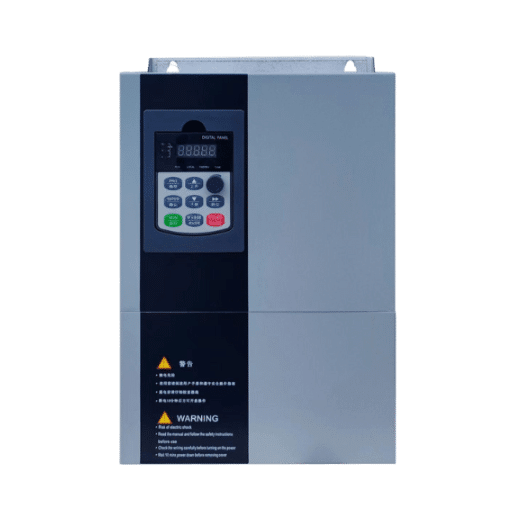
Ready to Get Your VFD Solution?
Whether you need a single drive or a complete system, we have the VFD products and engineering support to ensure your project's success.

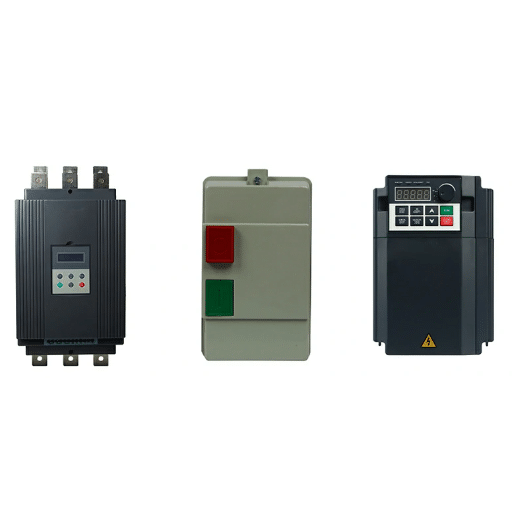
A Variable Frequency Drive (VFD) controls motor speed and saves energy. A soft starter only reduces starting current. The core VFD vs soft starter differences come down to one question: do you need speed control?
If the answer is yes, you need a VFD. If the answer is no, a soft starter may be sufficient. But most buyers discover they needed speed control only after installing the cheaper option. A water treatment plant in Maharashtra, India, installed soft starters on all 12 pump motors to reduce starting current and save money on the upfront purchase. Six months later, operators realized they needed flow control to match variable demand throughout the day. Soft starters cannot control speed. The plant had to remove every soft starter and install VFDs at double the original equipment cost. The wrong choice cost more than choosing right the first time.
This guide breaks down every VFD vs soft starter difference, cost, capability, energy savings, and application fit, so you choose once and choose right. Whether you are a plant engineer, procurement manager, or system integrator, you will leave with a decision framework you can apply immediately. For a complete overview of VFD technology, see our variable frequency drive guide.
Key Takeaways
- A VFD controls motor speed and saves 20 to 50% energy in variable torque applications; a soft starter only reduces starting current and saves almost no energy during run.
- Soft starters typically cost 2 to 4x less upfront than VFDs, making them attractive for budget-constrained, fixed-speed applications.
- Choose a soft starter for fixed-speed pumps, conveyors, and crushers where the motor only needs reduced mechanical stress during start.
- Choose a VFD when you need speed control, energy savings, process integration, or regenerative braking.
- The wrong technology choice can double your total installed cost if you have to replace equipment later.

A soft starter is a solid-state motor control device that temporarily reduces the voltage applied to a motor during startup. It uses thyristors, silicon-controlled rectifiers, to ramp up voltage gradually rather than applying full voltage instantly. Standards such as IEC 60947-4-2 and NEMA ICS 7 define the requirements for semiconductor motor controllers and AC adjustable speed drives.
When a motor starts direct-on-line (DOL), it draws 6 to 8 times its full load current. This inrush current stresses mechanical components, drops line voltage, and can trip protection devices. A soft starter limits starting current to 2 to 4 times full load current by controlling the firing angle of thyristors. The voltage increases over a preset ramp time, typically 2 to 60 seconds, until the motor reaches full speed. At that point, a bypass contactor often closes to eliminate thyristor losses and heat during normal operation.
Soft starters also offer limited torque control. You can adjust initial torque, acceleration ramp time, and sometimes deceleration ramp time. Some advanced models include pump control algorithms that reduce water hammer during start and stop cycles.
Here is the critical limitation: once the motor reaches full speed, the soft starter does nothing. It cannot vary speed. It cannot save energy during normal operation. It cannot provide regenerative braking. The motor runs at fixed speed, just as it would with a DOL starter, but with less mechanical stress during the start phase.
If your application requires flow control, pressure modulation, or any form of speed variation, a soft starter will not help. This is where many buyers discover the gap too late.
A Variable Frequency Drive (VFD) is a motor control device that varies both the frequency and voltage supplied to a motor. By changing frequency, it changes motor speed. By changing voltage proportionally, it maintains proper magnetic flux. This is fundamentally different from a soft starter, which only manipulates voltage during startup. In any soft starter vs variable frequency drive evaluation, this difference in operating principle is the root of every other functional gap.
A VFD consists of three main stages. The rectifier converts AC line power to DC. The DC bus filters and stores energy. The inverter converts DC back to AC at variable frequency using insulated-gate bipolar transistors (IGBTs) and pulse-width modulation (PWM).
The VFD adjusts output frequency from near zero to the motor’s rated frequency, typically 50 or 60 Hz, and often beyond for overspeed applications. At 50% frequency, the motor runs at half speed. At 75% frequency, it runs at three-quarters speed. This continuous variability is the foundation of both energy savings and process control.
Unlike a soft starter, a VFD remains active throughout motor operation. It provides:
For more on how VFDs control motors, read our article on VFD control modes explained.

The following table summarizes the core functional VFD vs soft starter differences side by side.
| Feature | VFD | Soft Starter |
|---|---|---|
| Speed control | Full range (0 to 100%+) | None, full speed only |
| Starting current | 1.5 to 2.5x full load current | 2 to 4x full load current |
| Starting torque | Fully adjustable | Limited adjustment |
| Energy savings during run | 20 to 50% in variable torque | Less than 1% |
| Power factor to line | Near unity (0.95+) | Same as motor (0.75 to 0.85) |
| Braking capability | Dynamic and regenerative | Limited (pumping only) |
| Motor protection | Comprehensive suite | Basic overload and phase loss |
| Harmonics to supply | Present, requires mitigation | Minimal |
| Noise during operation | Motor whine from PWM | None |
| Integration with automation | Full analog/digital I/O | Limited digital I/O |
Purchase price is where soft starters win decisively. On a unit basis, a VFD typically costs 2 to 4 times more than a soft starter of equivalent power rating. But purchase price is not total cost. This VFD soft starter cost comparison shows why total cost of ownership often favors the VFD in variable torque applications.
| Cost Factor | VFD | Soft Starter |
|---|---|---|
| Unit cost (per kW) | 2 to 4x soft starter baseline | Baseline |
| Installation | Higher, shielded cables, filters, cooling | Lower, standard motor cables |
| Enclosure cooling | Often requires active cooling | Passive cooling sufficient |
| Energy savings (annual) | 20 to 50% in variable torque | Negligible |
| Maintenance | Moderate, fans, capacitors, IGBT modules | Low, bypass contactor only |
| Power factor penalty | None | Possible if motor PF is low |
| Replacement risk | Low, covers future speed control needs | High, may need full replacement |
A commercial building in Dubai replaced DOL starters with VFDs on four 55 kW chilled water pumps. The annual energy savings reached 18,000.Despitethehigherupfrontcost,thepaybackperiodwasjust14months.Afterpayback,thebuildingsaves18,000.Despitethehigherupfrontcost,thepaybackperiodwasjust14months.Afterpayback,thebuildingsaves18,000 every year. A soft starter would have produced no comparable return.
Knowing when to use VFD vs soft starter technology starts with understanding your process requirements. Soft starters are the right choice when three conditions are met: the motor runs at fixed speed, energy savings are not a priority, and budget is constrained.
Soft starters work well for:
If your primary constraint is upfront capital and you have no foreseeable need for speed control, a soft starter delivers the core benefit, reduced starting stress, at the lowest possible cost. Installation is simpler. Cooling requirements are minimal. Maintenance is limited to occasional bypass contactor inspection.
Not sure which technology fits your application? Talk to our engineers and we will help you match the right motor starting solution to your process requirements and budget.

When to use VFD vs soft starter decisions should always start with the process requirement checklist. A VFD is the right choice when any of the following conditions apply.
If your process needs variable flow, pressure, or speed, a VFD is non-negotiable. Soft starters cannot help. Applications include:
This is where VFDs separate decisively from soft starters. A soft starter reduces energy consumption by less than 1% over DOL starting because it only operates during start, a matter of seconds. A VFD reduces energy use by 20 to 50% in variable torque applications because it controls speed throughout operation.
For a detailed breakdown of energy savings by application, see our guide on VFD energy savings explained.
VFDs enable integration with automation systems through analog signals, digital I/O, and industrial protocols like Modbus and Profibus. This allows closed-loop control of pressure, temperature, flow rate, and tension. Soft starters offer only basic digital inputs for start/stop commands.
The following matrix rates VFD and soft starter suitability across common industrial applications. Use it as a quick reference during project planning. For industry-specific system examples, see our overview of VFD applications in industry.
| Application | VFD Fit | Soft Starter Fit | Recommended Choice |
|---|---|---|---|
| Centrifugal pump (variable demand) | 5/5 | 2/5 | VFD |
| Fixed-speed pump (constant demand) | 2/5 | 5/5 | Soft starter |
| HVAC supply fan | 5/5 | 2/5 | VFD |
| Exhaust fan (fixed speed) | 2/5 | 4/5 | Soft starter |
| Conveyor (variable speed) | 5/5 | 1/5 | VFD |
| Conveyor (constant speed) | 2/5 | 4/5 | Soft starter |
| Air compressor (variable demand) | 4/5 | 3/5 | VFD |
| Air compressor (load/unload) | 3/5 | 4/5 | Soft starter |
| Crusher / ball mill | 3/5 | 4/5 | Soft starter |
| Crane / hoist | 5/5 | 2/5 | VFD |
| Mixer / agitator | 4/5 | 3/5 | Depends on control needs |
| Chiller / cooling tower | 5/5 | 2/5 | VFD |
Ready to explore VFD solutions for your project? Browse our industrial VFD range to find drives from 0.1 kW to 53,000 kW with vector control and full automation integration.

Energy consumption is often the decisive factor in the VFD vs soft starter decision. Understanding why requires looking at what each device actually does during motor operation.
A soft starter operates only during motor startup. It reduces voltage for a few seconds, sometimes up to a minute for large motors, and then disengages. During the remaining hours, days, and years of operation, the motor runs at full speed and full load. The energy consumed is identical to a DOL starter.
The only savings come from slightly reduced copper losses during the brief ramp period. In annual terms, this amounts to less than 1% of total energy consumption. Soft starters are motor protection devices, not energy saving devices.
VFDs save energy through the affinity laws. In centrifugal pump and fan applications, power is proportional to the cube of speed. Reducing motor speed by just 20%, from 100% to 80%, reduces power consumption by approximately 49%.
Here is a worked example for a 75 kW centrifugal pump running 8,000 hours per year at an electricity cost of $0.10 per kWh:
| Operating Condition | DOL / Soft Starter | VFD at 80% Speed |
|---|---|---|
| Power consumption | 75 kW constant | 38.4 kW (0.8 cubed x 75) |
| Annual energy | 600,000 kWh | 307,200 kWh |
| Annual cost | $60,000 | $30,720 |
| Annual savings | None | $29,280 |
At this savings rate, a VFD costing 8,000to8,000to12,000 pays for itself in 4 to 5 months. A soft starter costing 2,000to2,000to3,000 never generates comparable savings because it cannot reduce speed.
VFDs also improve power factor. A VFD presents near-unity power factor (0.95+) to the supply line regardless of motor load. A soft starter presents the motor’s native power factor, typically 0.75 to 0.85 for induction motors, which can trigger utility power factor penalties in some regions. The U.S. Department of Energy confirms that optimizing motor systems with variable speed drives is one of the most cost-effective industrial energy efficiency measures available.
Even experienced engineers make these errors when evaluating VFD vs soft starter differences.
Buying a soft starter for an application that needs speed control. This is the most expensive mistake. Replacing a soft starter with a VFD later means paying for both devices plus installation and commissioning.
Installing a VFD where a soft starter would suffice. A mining operation in Western Australia specified VFDs for all 20 conveyor motors during a greenfield project. Analysis showed that 18 conveyors ran at fixed speed with no control requirement. Switching those 18 motors to soft starters saved $45,000 in equipment costs with zero operational impact. The two variable-speed conveyors retained VFDs.
Ignoring future expansion needs. A plant may run fixed speed today but add process control tomorrow. If there is any chance of future speed control requirements, a VFD is the safer long-term investment.
Choosing based on unit price alone. Total cost of ownership includes energy, maintenance, power factor penalties, and replacement risk. A VFD often wins on TCO within 12 to 24 months in variable torque applications.
Not factoring energy savings into the budget. Many procurement teams treat energy as an operating expense and equipment as capital. This accounting separation hides the fact that a VFD’s energy savings often fund its own purchase within a single budget year.
A VFD varies both voltage and frequency to control motor speed continuously. A soft starter only reduces voltage temporarily during motor startup to limit inrush current. The fundamental VFD vs soft starter difference is speed control: VFDs have it; soft starters do not.
No. A soft starter cannot control motor speed. If your application requires variable speed, flow control, or energy savings through speed reduction, a soft starter is not a substitute for a VFD.
No. A soft starter saves less than 1% energy annually because it only operates during the brief startup period. A VFD saves 20 to 50% in variable torque applications by controlling speed throughout operation.
A VFD costs 2 to 4 times more than a soft starter on a unit basis. However, in variable torque applications, a VFD’s energy savings typically produce a 6 to 24 month payback. After payback, the VFD continues generating savings. A soft starter produces no comparable return.
Use a soft starter when the motor runs at fixed speed, energy savings are not required, and upfront budget is the primary constraint. Fixed-speed pumps, constant-speed conveyors, and crushers are typical applications.
No. Soft starters ramp voltage during startup and then run the motor at full speed. They provide no speed control capability during normal operation.
The main disadvantage is the lack of speed control and energy savings. Soft starters also present the motor’s native power factor to the line, which can trigger utility penalties. They offer limited motor protection compared to modern VFDs.
Yes, but it requires removing the soft starter, installing a VFD, rewiring with shielded cables, and reconfiguring protection settings. In many cases, this costs more than installing a VFD initially due to duplicated labor and downtime.
Understanding VFD vs soft starter differences is not about declaring one technology better than the other. It is about matching the right device to your application. A soft starter is the right tool for fixed-speed motors where the only goal is reducing mechanical and electrical stress during startup. A VFD is the right tool when you need speed control, energy savings, process integration, or any combination of these capabilities.
Choosing wrong is expensive. A water treatment plant in India learned this when soft starters had to be ripped out and replaced with VFDs six months later. A mining operation in Australia learned the opposite lesson when VFDs were over-specified on conveyors that did not need them. Both mistakes were avoidable with a clear decision framework.
If you need speed control, choose a VFD. If you need energy savings, choose a VFD. If your motor runs fixed speed and your budget is tight, a soft starter may be sufficient. When in doubt, plan for the application you will need in three years, not just the one you have today.
If a VFD is the right choice for your project, learn how to select a VFD with our step-by-step selection guide covering voltage class, power rating, and load type.
Contact Shandong Electric for application-specific guidance. Our engineers will help you evaluate your motor starting requirements, calculate energy savings potential, and select the right technology for your project, whether that is a VFD, a soft starter, or a hybrid configuration.