Ready to Get Your VFD Solution?
Whether you need a single drive or a complete system, we have the VFD products and engineering support to ensure your project's success.


Food and beverage manufacturing consumes roughly 15% of all industrial electricity worldwide, and refrigeration compressors alone account for 30-50% of a typical food plant’s energy bill. A VFD for food processing is the single most cost-effective upgrade plant managers can make to cut energy waste, improve product consistency, and keep equipment running reliably through daily washdown cycles. From dough mixers and cooling conveyors to blast-freezing compressors and packaging lines, variable frequency drives match motor speed to actual demand — instead of running everything at full throttle regardless of load.
Most industrial VFD guides treat VFD in food industry applications as an afterthought: one bullet point in a long list of “other applications.” That is a mistake. Food plants operate under a unique combination of hygiene mandates, temperature extremes, and chemical washdown that makes standard industrial drive selection inadequate. When a Wisconsin dairy plant retrofitted four 75 kW refrigeration compressors with VFD load-following control, energy costs dropped 28% and product temperature variation shrank from ±2.5°C to ±1.0°C. The plant manager later said the only regret was not doing it two years sooner.
This guide covers every major VFD for food processing applications: mixing, conveying, pumping, ventilation, refrigeration, and packaging. You will learn how a VFD for food processing addresses the unique challenges that set the food industry apart from general manufacturing, including washdown-duty enclosures, food safety compliance, and torque requirements. You will also see real plant case studies with quantified savings, and get a practical framework for sizing VFDs in your facility.
If you are new to drive technology, our complete VFD applications guide covers the fundamentals across all industries.
Key Takeaways
- VFDs in food processing save 15-35% energy across mixers, conveyors, pumps, fans, and refrigeration compressors
- A washdown duty VFD requires IP66/69K enclosures and stainless steel VFD construction to survive daily chemical cleaning
- VFD for refrigeration compressors delivers 20-30% energy savings while maintaining precise cold chain temperatures
- VFD for packaging lines synchronization reduces product waste 10-15% by matching speed between filling, sealing, and labeling stations
- Food safety compliance (FDA, HACCP, EHEDG) affects VFD placement, enclosure material, and cable routing decisions
- Mixing applications require torque-controlled VFDs capable of handling high-viscosity loads (dough can demand 150% starting torque)
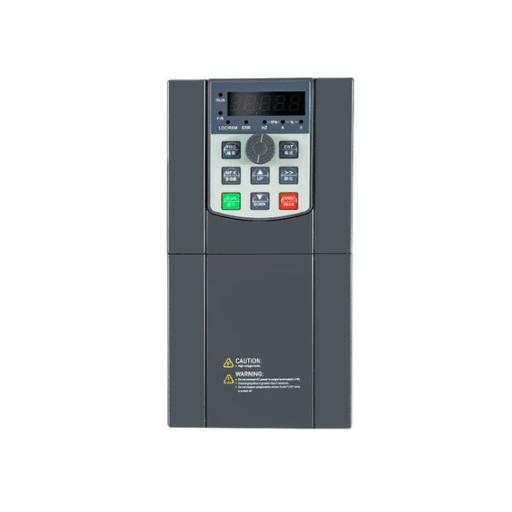
Food plants clean equipment one to four times per day with high-pressure water, steam, and caustic or acidic chemicals. Standard industrial VFD enclosures — painted steel with IP20 or IP54 ratings — corrode and fail within months in these conditions. A washdown duty VFD is built differently from standard industrial drives.
IP ratings define how well an enclosure resists water and dust ingress. In dry areas such as packaging rooms and dry ingredient storage, IP54 is the minimum acceptable rating. In wet processing zones like filling stations, CIP circuits, and wash tunnels, IP66 is required to withstand direct water jets. For high-pressure washdown areas common in meat, dairy, and seafood processing, IP69K is the gold standard: it certifies survival against high-temperature, high-pressure spray from close range.
Stainless steel enclosures — 304 grade for most environments, 316 grade for high-chloride areas like seafood plants or facilities using sodium hypochlorite sanitizers — resist the corrosion that destroys painted steel. Smooth surfaces, rounded corners, and sealed cable entry points eliminate crevices where bacteria can harbor. Some VFD manufacturers offer designs certified to EHEDG hygienic design guidelines, with sloped tops to prevent standing water and tool-free access covers for faster sanitation.
VFD selection in food processing is not purely an engineering decision. It is also a compliance decision. FDA 21 CFR regulations govern equipment design for food contact and adjacent surfaces. HACCP plans must account for equipment placement so drives do not create contamination risks. GMP standards require that equipment be designed for effective cleaning and inspection.
These rules affect where you mount the VFD, what materials touch or surround it, and how cables are routed. A VFD mounted above a processing line with inadequate drip protection could violate HACCP if condensate or dust falls into product. Allergen control protocols may require that drives in allergen-free zones use fully sealed enclosures to prevent cross-contamination from airborne particles. While food processing has unique compliance requirements, the underlying drive integration challenges — mounting, cable routing, and environmental protection — are shared with general industrial settings covered in our overview of VFD in manufacturing.
Food plants contain some of the most extreme ambient temperature swings in industry. Cold storage rooms operate at -25°C to +4°C. Blast freezers pull product temperatures down rapidly. Hot processing areas near ovens, cookers, and steam kettles reach 40-60°C ambient. VFDs must survive both ends of this range.
Condensation is a particular threat in cold rooms. When warm, humid air enters during door openings, moisture condenses on cold surfaces — including VFD enclosures and circuit boards. Sealed enclosures with internal heaters or thermostatically controlled space heaters prevent this moisture damage. In hot areas, drives need derating or enhanced cooling to maintain safe operating temperatures. These extreme temperature challenges — from sub-zero cold storage to high-heat processing zones — parallel the harsh environmental demands faced by drives in the energy sector, as detailed in our guide to VFD for oil and gas.
Mixing is one of the most torque-demanding applications in food processing. Bread dough can require 120-150% starting torque and operates in a constant torque profile — the motor must maintain force regardless of speed. Batters and sauces are less demanding but still benefit from precise speed control to achieve batch-to-batch consistency.
A VFD for food processing mixers enables recipe-based speed profiles: slow speed for dry ingredient incorporation, medium speed for wet blending, and high speed for aeration or emulsification. Vector control mode is essential here because it maintains accurate torque output even at low speeds where standard V/F control becomes unstable.
Mini-story: At a German industrial bakery, three 30 kW spiral dough mixers were running across-the-line with mechanical variable-speed pulleys. The pulleys slipped under heavy dough loads, producing inconsistent batches and requiring operators to add water mid-mix to compensate. After retrofitting the mixers with sensorless vector control VFDs, the bakery eliminated pulley slip entirely. Batch-to-batch dough consistency improved by 35%, and energy consumption dropped 22% because the VFDs only delivered the torque each recipe actually required.
Conveyors are everywhere in food plants: raw material intake, processing lines, cooling tunnels, and packaging feeds. Each conveyor type has different VFD requirements. Raw material conveyors need gentle acceleration to prevent damage to delicate ingredients like leafy greens or berries. Processing line conveyors must synchronize speed with upstream and downstream equipment. Cooling conveyors after baking or cooking need precise speed control to ensure uniform temperature reduction.
For VFD for food processing conveyor applications, drives provide soft start to reduce mechanical shock on belts, chains, and bearings. Speed synchronization across multiple conveyor stations prevents product pile-ups or gaps. Learn more about conveyor-specific control strategies in our complete guide to VFD for conveyors.
A complete VFD for food processing strategy includes pump control. Food plants use pumps for ingredient transfer, CIP circulation, syrup handling, and wastewater removal. Centrifugal transfer pumps for water-like liquids follow variable torque curves and save 20-35% energy with VFD speed control. Positive displacement pumps for viscous liquids like honey, chocolate, or tomato paste need constant torque VFDs with overload headroom.
CIP pump systems are a unique application. These pumps circulate cleaning chemicals at high pressure and temperature, then switch to rinse water. A VFD allows the CIP system to modulate pump speed based on the circuit’s actual flow requirement rather than throttling with a valve, which wastes energy as heat. The flow modulation techniques used in CIP systems share principles with municipal and industrial water treatment applications explored in our article on VFD in water treatment.
Cooling tunnels, drying lines, exhaust hoods, and freezer air circulation all use fans that run continuously. The ASHRAE affinity laws state that fan power consumption drops with the cube of speed reduction: a fan running at 80% speed uses only 51% of the power required at full speed. This makes VFD control extraordinarily effective for food plant ventilation.
A VFD for food processing ventilation control can slow cooling tunnel fans when product flow is light and ramp them up during peak production. Drying fans after washing or blanching can modulate air flow based on moisture sensors. Freezer circulation fans maintain even temperature distribution, which is critical for cold chain compliance and product shelf life. The same fan control principles that save energy in food plants also apply to larger climate control systems — see our guide to VFD in HVAC systems for broader ventilation strategies.
VFD for refrigeration compressors is one of the highest-ROI investments in food processing. Refrigeration is the largest single energy consumer in most food plants. Fixed-speed compressors cycle on and off or use hot gas bypass to modulate capacity, both of which waste enormous amounts of energy. A VFD-controlled screw or reciprocating compressor modulates speed to match actual cooling demand — delivering 20-30% energy savings while maintaining tighter temperature control.
The key challenge is minimum speed. Compressor manufacturers specify a minimum operating speed to maintain proper lubrication and avoid mechanical damage. The VFD must respect this limit, typically 30-50% of rated speed for screw compressors. Coordination with hot gas defrost cycles is also essential: the VFD manages compressor speed during normal operation and allows controlled shutdown during defrost.
A VFD for food processing refrigeration system does more than save energy. It improves product quality. Fixed-speed compressors create temperature swings of ±2-3°C as they cycle. VFD compressors hold temperatures within ±0.5°C, which extends shelf life and ensures compliance with cold chain standards like HACCP and BRC.
VFD for packaging lines solves one of the most complex coordination challenges in food plants. Filling machines, sealing stations, labeling heads, cartoning equipment, and palletizers must run at matched speeds or product is damaged or wasted. VFDs provide the precise, synchronized speed control that makes this possible.
On a typical food packaging line, the VFD on the filler matches the container flow rate. The sealer’s VFD coordinates heat and speed so seals are tight without burning. The labeler’s VFD adjusts for registration accuracy so labels align perfectly on every package. When all stations communicate through a common PLC or fieldbus network, the entire line can ramp up and down together for changeovers or reduced production schedules.
VFD for packaging lines synchronization typically reduces product waste by 10-15%. The savings come from fewer misaligned labels, fewer open seals, and less spillage during speed transitions. For food plants running high-value products like organic sauces or specialty cheeses, this waste reduction alone can justify the VFD investment.

Selecting the right enclosure rating is the most critical decision when specifying a VFD for food processing washdown system. Get it wrong, and the drive fails within months. Get it right, and it runs for years with minimal maintenance.
| Plant Zone | Typical Applications | Minimum IP Rating | Recommended Rating |
|---|---|---|---|
| Dry processing | Packaging, dry storage | IP54 | IP55 |
| Wet processing | Filling, washing, CIP | IP66 | IP66/66N |
| High-pressure washdown | Meat, dairy, seafood | IP66 | IP69K |
| Cold storage | Freezers, chill rooms | IP55 | IP66 with heater |
| Hot processing | Baking, cooking, steaming | IP55 | IP66 with derating |
Enclosure material matters as much as the IP rating. Painted carbon steel enclosures begin rusting within weeks in washdown environments. A stainless steel VFD with a 304-grade enclosure is the standard for most food plants. Stainless steel 316 is required for high-chloride environments such as seafood processing or plants using chlorine-based sanitizers.
Gaskets and seals must be FDA-compliant materials such as EPDM or silicone. Cable glands and conduit fittings should be stainless steel and rated to match the enclosure IP level. Cooling methods must also be sealed: sealed air-to-air heat exchangers or liquid cooling loops are necessary for IP69K drives that cannot use open ventilation.
For large drives above 75 kW, or for drives in the most aggressive washdown zones, remote mounting is often the most reliable approach. The VFD is installed in a protected electrical room or panel, and motor cable runs to the washdown area. This eliminates the need for an expensive stainless steel VFD enclosure while improving accessibility for maintenance.
The trade-off is cable length. Long motor cables create voltage reflection and dV/dt stress on motor insulation. For runs over 50 meters, specify a dV/dt filter or sine wave filter. For runs over 150 meters, consult the VFD manufacturer for cable sizing and filtering recommendations.

Different VFD for food processing applications place different demands on motor torque. Specifying a VFD without understanding these profiles leads to underperformance or premature failure.
Most food processing VFDs are low-voltage drives operating at 230V, 400V, or 480V three-phase. Typical sizes by application:
For food plants with a mix of international equipment, dual-voltage VFDs simplify inventory and spare parts management. Our low-voltage VFD guide covers voltage selection in detail.
Modern food plants rely on centralized control. VFDs should integrate seamlessly with:
Recipe management is particularly valuable in food processing. A bakery might store 20 different dough recipes, each with its own mixer speed profile. The PLC calls up the recipe, and the VFD executes the exact speed sequence required.

A dairy processing plant in Wisconsin implemented a VFD for food processing refrigeration retrofit on four 75 kW screw compressors for cold storage and blast freezing. The compressors ran fixed-speed with hot gas bypass capacity control. Energy costs were high, and product temperature varied ±2.5°C during the summer months when ambient loads peaked.
The plant retrofitted all four compressors with VFD load-following control and upgraded the compressor sequencing logic. Each compressor now modulates from 40-100% speed based on actual cooling demand. During low-load night shifts, one or two compressors slow to minimum speed instead of cycling on and off.
Results after 18 months:
The plant manager noted that the quality improvement was as valuable as the energy savings. Tighter temperature control reduced spoilage claims and extended product shelf life by two days.
A large industrial bakery in southern Germany produced 50,000 loaves daily across three production lines. Dough mixers used mechanical variable-speed pulleys that slipped and required frequent belt replacement. Cooling conveyors after the ovens ran at fixed speed, meaning product sometimes cooled too slowly during high-output periods and too quickly during low-output periods.
The bakery retrofitted three 30 kW spiral mixers with vector-control VFDs and replaced the pulleys with direct-drive configurations. Cooling conveyor fans and belts were also fitted with VFDs linked to the oven discharge sensor.
Results:
The head baker reported that the VFDs paid for themselves through reduced ingredient waste alone. Before the retrofit, inconsistent mixing forced bakers to add 2-3% extra water to compensate for pulley slip. The VFDs eliminated this overuse.
A seafood processing facility in Thailand installed a VFD for food processing washdown system on 12 conveyors and 6 transfer pumps in a high-salinity, high-humidity environment. The plant used standard painted-steel VFDs in IP54 enclosures. Corrosion from saltwater spray and cleaning chemicals caused drive failures every 8-12 months, requiring emergency replacements that disrupted production.
The maintenance team switched to IP66-rated stainless steel 316 VFDs with sealed cable entry systems. The drives were remotely mounted in a climate-controlled electrical room where possible, with dV/dt filters on motor cables exceeding 30 meters.
Results after 24 months:
The maintenance supervisor stated that the stainless steel VFDs cost 50% more upfront but eliminated the hidden costs of emergency repairs, spoiled product from line stoppages, and overtime labor for weekend replacements.
For dry areas such as packaging rooms and dry storage, IP54 is the minimum acceptable rating. For wet processing zones like filling stations, CIP circuits, and wash tunnels, IP66 is required to protect against direct water jets. For high-pressure washdown areas common in meat, dairy, and seafood processing, IP69K is recommended to withstand high-temperature, high-pressure spray from close range. Always specify stainless steel enclosures in any area exposed to cleaning chemicals.
Standard VFDs can be used in dry, non-washdown areas of food plants such as packaging rooms and dry storage. However, in wet processing areas, washdown zones, and cold storage, standard enclosures will corrode and fail prematurely. For these areas, specify washdown-duty VFDs with IP66 or IP69K stainless steel enclosures. Remote mounting the VFD in a protected electrical room and running motor cable to the washdown zone is another valid strategy.
Typical energy savings vary by application: refrigeration compressors 20-30%; fans and ventilation 30-50%; pumps 20-35%; mixers 15-25%; conveyors 10-20%. A comprehensive retrofit across multiple systems in a mid-size food plant can reduce total facility energy consumption by 15-25%. Refrigeration typically offers the largest single opportunity because compressors run continuously and food plants have significant cooling loads.
Yes, positively. VFDs improve product quality through precise speed control. Mixers produce more consistent dough and batter. Cooling conveyors maintain uniform product temperature. Packaging lines have less product waste from misalignment. Refrigeration compressors maintain tighter temperature control (±0.5°C vs. ±2-3°C with fixed-speed), which is critical for cold chain compliance and shelf life.
Washdown duty refers to VFDs designed to survive the high-pressure water, steam, and chemical cleaning used in food plants. Key features include IP66 or IP69K ingress protection, stainless steel enclosures (304 or 316), sealed cable entry points, smooth surfaces without crevices where bacteria can harbor, and corrosion-resistant hardware. Some manufacturers offer VFDs specifically certified to EHEDG hygienic design guidelines.
Yes, and this is one of the highest-ROI applications in food processing. Screw and reciprocating compressors with VFD control modulate cooling capacity to match demand rather than cycling on/off or using hot gas bypass. This delivers 20-30% energy savings and maintains more stable temperatures. The VFD must be selected for compressor duty with appropriate torque characteristics, and the compressor manufacturer’s guidelines for minimum speed must be followed to prevent lubrication issues.
A VFD for food processing is not just an energy-saving device — it is a quality control tool, a reliability upgrade, and a compliance enabler. Across mixing, conveying, pumping, ventilation, refrigeration, and packaging, variable frequency drives match motor performance to actual production demand. The result is lower energy bills, more consistent product quality, reduced waste, and equipment that survives the daily washdown cycles that define food plant operations.
The unique requirements of food processing — washdown duty enclosures, food safety compliance, temperature extremes, and high-viscosity torque demands — make drive selection more specialized than in general industry. But the payoff is substantial. Whether you are implementing a VFD in food industry settings by retrofitting refrigeration compressors, synchronizing a packaging line, or replacing mechanical mixers with precision VFD control, the savings and quality improvements are measurable and fast.
Ready to spec VFDs for your food processing operation? Contact our application engineers for a free consultation on washdown-duty drive selection, refrigeration compressor retrofit design, or packaging line synchronization. We will help you size the right VFD for every motor in your plant.