Ready to Get Your VFD Solution?
Whether you need a single drive or a complete system, we have the VFD products and engineering support to ensure your project's success.

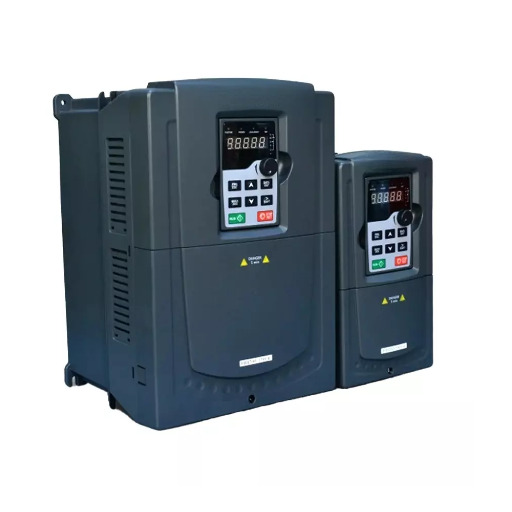
An industrial automation VFD is alluded to as a variable frequency drive inside a PLC-controlled machine through digital I/O, analog signals, or industrial fieldbus communication (Mod-bus, PROFINET, EtherNet/IP, EtherCAT). It maintains control over motor speed, torque, and position in conveyors, packaging lines, indexing tables, winders, and material-handling equipment. The modern automation VFDs introduce functional safety (Safe Torque Off, Safe Stop 1) and closed-control liberality (sensorless vector, encoder feedback) to traditional-speed control.
The way he tells it, Daniel Reyes, the company’s master controls integrator from the Monterrey OEM, was charging toward FAT on a new shrink-wrap line in March 2024, when the customer’s automation lead started going through the BOM. The panel was controlled by drives using Modbus RTU; the customer’s plant standard was EtherNet/IP, Class 1 Implicit Messaging, where the diagnostic code fault is mapped to a FactoryTalk dashboard on their Allen-Bradley PLC. Reyes had two weeks to reconstruct the pecking order, a frantic inquiry to someone to get the EtherNet/IP option cards, and definitely a “boss fight” out with his Project Manager. The line shipped, and it was a lesson well learned: Protocol Consideration for Industrial Automation VFDs is a project-defining decision that must never be left to be defined by BOM defaults.
If you are a controls engineer or systems integrator, or machine builder that is considering drives for a new production line or retrofit project, you know that the brochure is just static. Really, all that I am saying is that you need a clear and pure thread through three entwined tasks: whether to connect the VFD to PLC, and which fieldbus protocol is right for your ecosystem and motion requirements, and how do you layer in selective automation, including design and architecture of functional safety to protect its drive, in particular when looking to follow ISO 13849-1 or simply IEC 62061.
This article is sevenfold, which demonstrates first, what an industrial automation VFD really is and how it is different when it is compared to a stand-alone drive. Second: alongside this, methods of integration (analog, digital, fieldbus) and where each one fits. Third: a side-by-side decision matrix for the six most common fieldbus protocols. Fourth: control modes (V/f control, sensorless vector control, closed-loop V/f drive) and where each is needed. Fifth: an unvarnished approach to STO, demonstrating where STO is not alone enough. Sixth: three real machine examples. Seventh: a commissioning checklist that you can take to the field.If you are new to drive technology, our complete VFD applications guide covers the fundamentals across all industries.
Key Takeaways
- An industrial automation VFD integrates with a PLC through analog/digital I/O, fieldbus communication, or a hybrid of both, fieldbus is the scalable choice once a machine has 3+ drives.
- Modbus RTU remains a strong fit for cost-sensitive multi-drive lines; PROFINET, EtherNet/IP, and EtherCAT dominate motion-grade and ecosystem-aligned automation.
- Safe Torque Off (STO) certified to PL d Cat 3 or SIL 2 covers emergency stop on coast-permitted machines, but vertical loads and setup modes need SS1 or SLS in addition.
- Sensorless vector control handles most automation tasks; encoder feedback is required for true positioning, tight zero-speed torque, or web-tension applications.
- A documented commissioning checklist (pre-power, power-on, on-machine, production validation) prevents the surprises that show up at FAT.

A standard variable frequency drive regulates motor speed by varying frequency and voltage. An industrial automation VFD does the same, but it lives inside a controlled machine and takes commands from, and reports status to, a PLC, motion controller, or safety PLC. It is one node in an automation stack that typically runs HMI, then PLC, then VFD, then motor.
The four roles a VFD plays in an automation system overlap and stack on top of each other:
A drive that handles all four roles is what we mean by an industrial automation VFD. The energy savings story still applies (motors consume roughly 65% of industrial electricity according to the IEA Energy Efficiency 2024 report), and the affinity-law math we walk through in our VFD energy savings calculation guide is the same. The difference is that automation VFDs are specified first on integration capability and safety certification, with energy savings as a downstream benefit.
For the broader landscape of low-voltage drives covered in this cluster, see our complete guide to low voltage VFD selection or explore our low voltage VFD systems.
Three VFD PLC integration patterns dominate the field. Each fits a different machine, and the right choice often depends more on plant standards than on what the drive can technically do.
The classic integration uses a 0-10 V or 4-20 mA analog output from the PLC for speed reference, a digital output for run/stop, a second digital output for direction, and a digital input back to the PLC from the VFD’s fault relay. Wiring is point-to-point: PLC AO1 to VFD AI1, PLC DO1 to VFD DI1 (run), PLC DO2 to VFD DI2 (direction), VFD relay R1 to PLC DI1 (fault).
This is the right choice when the machine has one or two drives, the speed reference is a simple analog setpoint, and there is no requirement for parameter access from the HMI. It is also the fastest retrofit path on legacy panels that already have spare analog and digital points.
A single network cable carries the speed reference, run command, direction, parameter access, and full diagnostic visibility. Fieldbus shines once a machine has three or more drives, when the integrator wants HMI-driven parameter changes, or when the customer requires fault-code mapping for their plant maintenance system.
VFD PLC integration over fieldbus collapses the wiring count. Four drives that would have needed sixteen-plus discrete wires now share a daisy-chained RS-485 cable for Modbus RTU or a star-topology Ethernet drop for EtherNet/IP, PROFINET, or EtherCAT.
Most production machines end up hybrid. Fieldbus carries the primary control loop, hardwired STO inputs run on a dedicated dual-channel safety circuit, and a legacy 4-20 mA loop reports drive current to an old chart recorder the plant insists on keeping. There is nothing wrong with this. It reflects how real plants actually work.
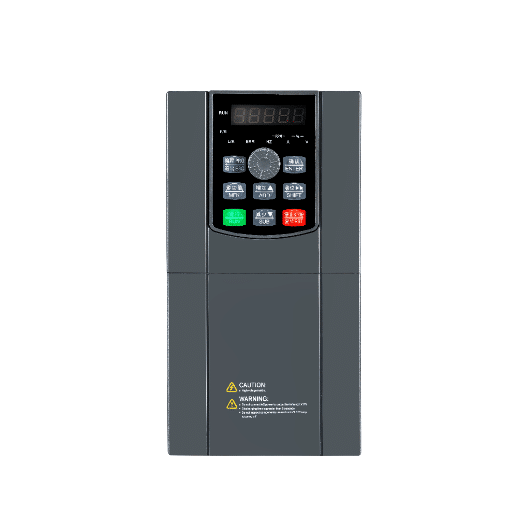
Six protocols cover the vast majority of installed automation drives. The right one is rarely a technical choice in isolation, it is a question of plant standard, PLC ecosystem, motion requirements, and budget.
| Protocol | Cycle Time | Topology | Cost Adder | Best For |
|---|---|---|---|---|
| Modbus RTU | 10-30 ms | Daisy-chain RS-485 | Lowest | Simple multi-drive lines, cost-sensitive OEMs |
| Modbus TCP | 5-20 ms | Star (switched Ethernet) | Low | Modbus shops moving onto Ethernet |
| PROFINET RT | 1-10 ms | Star or line | Medium | Siemens-standard plants |
| EtherNet/IP | 1-10 ms | Star or line | Medium | Allen-Bradley and Rockwell-standard plants |
| EtherCAT | 0.1-1 ms | Line or ring | Medium-High | Multi-axis motion, sub-ms determinism |
| Profibus DP | 1-10 ms | Daisy-chain RS-485 | Medium | Legacy Siemens lines, brownfield retrofits |
VFD Modbus communication is the workhorse for cost-sensitive automation. Modbus uses 16-bit holding registers for the speed reference, 16-bit input registers for the actual frequency and motor current, and coil bits for run, stop, and reset. RTU runs over RS-485 in a daisy-chain at 9600, 19200, 38400, or 115200 baud, with up to 32 nodes (or 247 with repeaters). TCP wraps the same register model in an Ethernet frame.
The choice between VFD Modbus RTU vs Modbus TCP usually comes down to existing plant infrastructure. RTU is cheaper and simpler on serial networks; TCP bridges easily onto Ethernet and avoids repeater limits. Both are master-slave only and slower than motion-grade protocols, but they are everywhere. Roughly 30 to 40% of installed industrial drive networks still run Modbus. For a four-drive indexing conveyor at 50 ms scan times, Modbus RTU is exactly enough.
VFD PROFINET integration uses GSDML device files imported into Siemens TIA Portal. Cyclic data exchange runs at 1 to 10 ms in standard real-time class, and IRT (isochronous real-time) drops below 1 ms for synchronized motion. PROFINET dominates Siemens-aligned plants in Europe and increasingly worldwide.
VFD EtherNet/IP uses EDS files imported into Studio 5000 (CompactLogix, ControlLogix). Class 1 implicit messaging carries cyclic process data; Class 3 explicit messaging handles parameter reads and writes. The protocol is governed by ODVA’s EtherNet/IP standard, and it is the default in Allen-Bradley plants in North America and many global Tier-1 manufacturers.
EtherCAT delivers cycle times below 1 ms with deterministic jitter measured in microseconds. It is the right call for multi-axis coordinated motion (servo-grade synchronization, electronic camming) and overkill for most conveyor and packaging applications.
Still installed and still maintained. New designs rarely specify it, but retrofits into existing Siemens S7-300/S7-400 lines still default to Profibus when the customer’s plant standard predates PROFINET migration.
Choosing your protocol comes down to three questions. What does the customer’s plant already standardize on? Does the application require sub-millisecond motion synchronization? What is the total drive count and how does it affect wiring cost?
If you want help mapping protocol choice to a specific machine, request integration support from our application engineers and we will walk through your PLC, drive count, and motion requirements.
The control mode determines how the drive translates a speed or torque command into actual motor performance. Choosing the wrong mode produces nuisance trips, sloppy positioning, or wasted money on encoder hardware you never needed.
Constant volts-per-hertz, simplest mode, accuracy roughly ±2 to 3% of slip. Right for fans, simple conveyors, mixers, and any application where the load is stable and the speed reference does not need to be precise. Often used on multi-motor drives where one VFD drives several mechanically linked motors.
The drive estimates rotor flux and slip from current and voltage feedback, holding speed within ±0.1 to 0.5% and producing rated torque from about 1 Hz upward on most modern drives. Sensorless vector is the default for serious automation: indexing conveyors, ungeared positioning at moderate accuracy, packaging-line cam followers without tight position holds, and torque-controlled winders where the dancer takes care of fine tension.
An incremental or absolute encoder mounted on the motor shaft (or on the load) gives the drive true position and speed feedback. Speed accuracy improves to ±0.01% or better, full torque is available at zero speed, and the drive can execute true point-to-point positioning. This is required for crane and hoist applications (vertical loads at zero speed), high-accuracy indexing (better than 0.1 degree), and webbed material handling where shaft-position synchronization matters.
If you are still scoping motor and drive size before committing to a control mode, our walkthrough on how to size a VFD on motor full-load amps covers the load-based methodology.

Safe Torque Off VFD functionality, commonly called STO, is the most widely deployed integrated safety function on industrial automation VFDs. Understanding what STO does, what it does not do, and which standards apply is the difference between a machine that passes safety validation and one that does not.
STO removes the gate-drive signal to the IGBTs, so the inverter output cannot produce torque. The motor coasts. There is no controlled deceleration. No mechanical brake is engaged unless wired separately. STO is defined under IEC 61800-5-2 as Safe Torque Off, with redundant dual-channel inputs (typically labelled STO-A and STO-B, or DI-S1 and DI-S2) and a diagnostic feedback signal back to the safety controller.
STO alone is sufficient when coast-to-stop is acceptable. That covers many horizontal conveyors, most fans, most pumps, and any machine where the kinetic energy at run speed will not create a hazard during the coast.
STO alone is not enough in three common scenarios:
VFD safe torque off wiring starts with dual-channel inputs from a safety relay (Pilz PNOZ, Siemens 3SK, Allen-Bradley GuardLogix safety output module) or directly from a safety PLC. Both channels must be 24 V healthy for the drive to enable. Either channel dropping to 0 V triggers STO. The drive’s STO diagnostic output reports the state back to the safety controller for fault verification.
The relevant standards stack:
When you read a drive datasheet, look for “STO certified to PL d Cat 3 per ISO 13849-1” or “SIL 2 per IEC 62061.” Both are equivalent for most safety risk assessments, but the integrator must verify the system-level PL or SIL using the validated tool chain (SISTEMA for PL, dedicated calculator for SIL).
For the terminal-by-terminal wiring of STO inputs and other I/O, our low voltage VFD installation and wiring guide walks through the full panel layout. The same guide covers the cable, grounding, and shielding checks you will repeat during commissioning.
The decisions above abstract quickly. Here are three real machines that pull them together.
A four-drive indexing conveyor at a tier-2 automotive supplier in Ohio is a classic VFD for conveyor systems deployment. It runs four 5 HP induction motors with sensorless vector control, all on a single Modbus RTU daisy-chain at 38400 baud. The PLC is a Siemens S7-1200 acting as Modbus master, scanning all four drives every 50 ms. Each drive holds a dwell-and-step profile triggered by digital inputs from photoelectric sensors. STO is wired from a Pilz PNOZ s5 safety relay; both channels are wired through the cell light curtain and an emergency stop pushbutton. Total panel BOM saved roughly $1,800 versus an EtherNet/IP variant, with no measurable performance loss for this application.
A film converting line at a packaging plant in Wisconsin runs paired winder and unwinder drives in master-slave torque mode. The CompactLogix 5380 PLC commands torque setpoints over EtherNet/IP Class 1 implicit messaging at a 5 ms RPI. A dancer arm provides closed-loop tension feedback into the PLC, which trims the winder torque setpoint in real time. STO is hardwired from a GuardLogix safety output module independent of the EtherNet/IP control path, certified PL d Cat 3. For similar torque-control applications in fluid-handling systems, see our notes on VFD for pumps and fans.
A six-axis cartoner in Frankfurt runs servo-grade induction-motor drives synchronized through PROFINET IRT at a 1 ms cycle time. The Siemens S7-1500 PLC distributes a virtual master cam to all six drives; each drive follows the cam profile in closed-loop vector with absolute encoder feedback. STO is integrated and certified SIL 2 per IEC 62061. The line achieves 280 cartons per minute with positioning accuracy better than 0.05 degrees across all axes. For building-automation projects that need comparable precision, review our VFD for HVAC systems guide.

A documented checklist prevents the surprises that show up during FAT or production validation.
A standard VFD focuses on motor speed regulation. An industrial automation VFD adds the integration features (fieldbus communication, PLC handshaking, parameter access from HMI) and the functional safety features (STO, SS1, SLS) that production machines and global OEMs require. Most modern low-voltage drives can be specified either way; the difference is which option cards and certifications you order.
The question of how to connect VFD to PLC starts with the plant standard. Siemens shops default to PROFINET. Allen-Bradley and Rockwell shops default to EtherNet/IP. Cost-sensitive multi-drive lines often run Modbus RTU. Multi-axis motion runs EtherCAT or PROFINET IRT. There is no universal best, only best fit for the ecosystem and the motion requirements.
Not always. Sensorless vector control handles indexing accurate to roughly 0.5 to 1 degree on a typical induction motor. For tighter positioning, vertical loads requiring zero-speed torque, or web-tension applications, an incremental or absolute encoder feeding the drive is required. Our vector control decision framework explains when sensorless vector is enough and when closed-loop feedback becomes necessary.
It depends on the load. For horizontal conveyors, fans, and pumps where coast-to-stop is acceptable, STO certified to PL d Cat 3 (or SIL 2 per IEC 62061) is sufficient. For vertical loads, high-inertia stops, or setup modes where the operator is inside the guarded zone, you must add SS1 (controlled stop), SLS (safely limited speed), or an external mechanical brake interlocked with STO.
Yes, if the drive supports the relevant fieldbus option cards (PROFINET for Siemens, EtherNet/IP for Allen-Bradley, CC-Link or Modbus for Mitsubishi) and you import the correct device file (GSDML, EDS, or CSP+). Cross-vendor support is one of the strengths of modern low-voltage automation drives.
Modbus RTU at 38400 baud typically delivers 10 to 30 ms cycle times for a multi-drive network. Modbus TCP runs 5 to 20 ms. EtherNet/IP Class 1 implicit messaging runs 1 to 10 ms RPI, often configured at 5 ms for typical packaging and conveyor lines. EtherCAT pushes well below 1 ms when sub-millisecond synchronization is required.
Three decisions define an industrial automation VFD project. First, the integration method (analog and digital I/O for simple machines, fieldbus once the drive count grows, hybrid for most production lines). Second, the fieldbus protocol (matched to the plant standard, the PLC ecosystem, and the motion requirements). Third, the functional-safety design (STO is the foundation, but vertical loads and setup modes need SS1, SLS, or external safety devices).
Five takeaways to bring back to your team:
If you are scoping a new automation line or a retrofit and want help mapping VFD PLC integration, VFD Modbus communication, or Safe Torque Off VFD wiring to a specific machine, contact our application engineers for integration support. We will review your PLC platform, your fieldbus standard, your motor list, and your safety requirements, and come back with a drive specification and integration plan you can take into design review with confidence.