Ready to Get Your VFD Solution?
Whether you need a single drive or a complete system, we have the VFD products and engineering support to ensure your project's success.

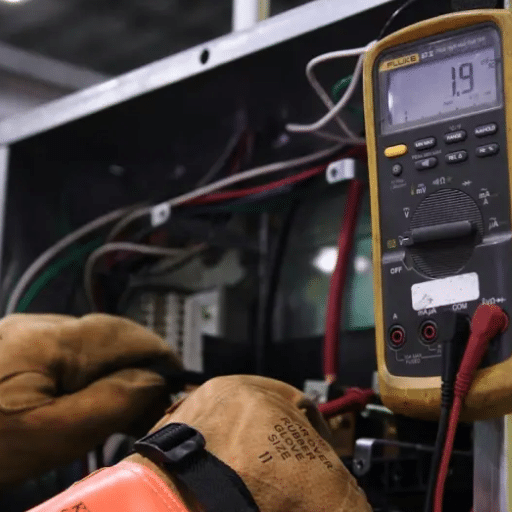
An installation guide must also accompany a breakdown of a high voltage VFD into four essential steps: mechanical installation within well-ventilated and IP rated enclosures, wiring power from the input disconnect to the output motor’s terminals using shielded cable for EMC compliance, grounding and bonding to one low impedance star point, and commissioning with auto-tune and parameter verification. For drives up to 220V to 690V, the general terminal layout might be R/S/T input, U/V/W output, PE ground, and 24V control I/O. It ensures safe operations, harmonic compliance, and long-term reliability going by IEC 60204-1, NEC Article 430, and IEEE 519.
A panel builder in Vietnam wired up a new 30 kW low voltage VFD for a packaging line conveyor. The drive powered up cleanly, the motor ran in the right direction, and the control system worked perfectly on commissioning day. Three days later, every PLC on the same panel started locking up at random. The cause was not the drive. The motor cable was unshielded, the shield bonding plate was disconnected, and high-frequency switching noise was radiating into the 24V control wiring through capacitive coupling. After installing a properly shielded VFD cable, bonding the shield to the panel grounding bar at both ends, and adding a 3% line reactor on the input, the PLC lockups stopped completely. Total fix: about $180 in parts and 90 minutes of labor. Total downtime caused by the original mistake: 22 hours of lost production.
That story is the core thesis of this guide. A VFD installation is not finished when the motor turns. It is finished when the entire panel and every adjacent system runs reliably for years. This article walks through every phase in the order a commissioning engineer would tackle it, with cross-brand terminal labels so the same procedure works on ABB, Siemens, Yaskawa, Schneider, and our own Shandong Electric low voltage VFD systems.
Key Takeaways
- Roughly 80% of VFD installation problems trace to improper grounding or cable shielding, not to the drive itself.
- Shielded VFD-rated cable bonded 360 degrees at both ends is non-negotiable for EMC compliance and motor bearing protection.
- A 3% to 5% line reactor reduces input current THD by 30% to 50% and protects the drive from utility transients.
- Output filters (dV/dt or sine wave) are required when motor cable length exceeds roughly 30 to 50 meters on PWM drives.
- A 20-point pre-power commissioning checklist prevents most first-start failures and warranty issues.
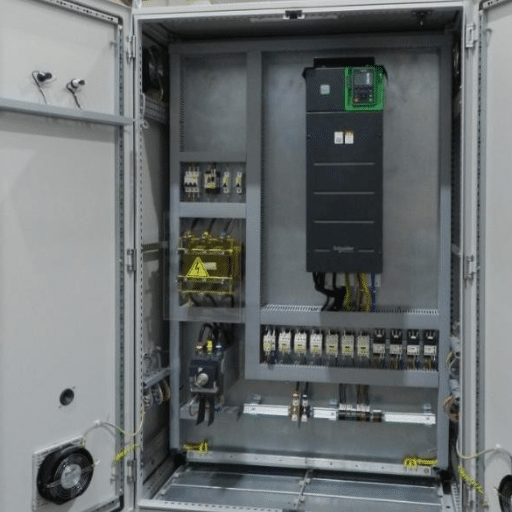
Every successful low voltage VFD installation guide begins before any cable is pulled. The site assessment, documentation review, and tool inventory you do in the first hour saves days of rework later.
Walk the installation site with a clipboard. Confirm ambient temperature stays under 40 degrees C without derating, humidity is non-condensing under 95%, and the area is free of conductive dust, corrosive vapor, and excessive vibration. A 30 kW drive in a 50 degree C electrical room will trip on overtemperature within hours. If the site is hotter than the drive’s rated ambient, plan for forced ventilation, an air conditioner, or a larger frame size with derating headroom.
Before energizing anything, gather the drive manual, motor nameplate, single-line diagram, panel schematic, and the VFD wiring diagram for your specific frame size. The motor nameplate alone provides eight critical commissioning parameters: rated voltage, rated current, rated frequency, rated speed, rated power, power factor, motor type (induction or PM), and connection (delta or wye). Missing one parameter is the single most common reason auto-tune fails.
Stock the cart before you start: torque screwdriver calibrated to drive terminal specs (typically 1.2 to 4.0 Nm), insulation tester (megger) rated to 1000 V DC, clamp meter with true RMS, oscilloscope for advanced commissioning, and category-rated PPE for the system voltage. Lockout-tagout the upstream disconnect before any wiring work.
For broader drive selection considerations, our complete low voltage VFD selection guide covers sizing, frame ratings, and feature trade-offs in detail.
VFD enclosure requirements protect the drive from the environment and protect the environment from the drive’s heat and EMC emissions. Choose the wrong rating and the drive overheats; choose the wrong layout and you cannot run the auto-tune.
Match the IP or NEMA rating to the worst-case environmental exposure:
A drive rated IP20 mounted inside an IP54 cabinet inherits the cabinet’s overall rating, which is usually the right approach for cost and serviceability.
Drives dissipate roughly 2% to 4% of rated power as heat. A 75 kW drive at full load gives off about 1.5 to 3 kW (5,000 to 10,000 BTU/hr) inside your cabinet. Maintain manufacturer-specified clearance, typically 100 to 150 mm above and below the heatsink, plus 50 mm on the sides for larger frames. For multi-drive panels, run heat-rejection calculations and add filtered fans or a cabinet AC unit. For tight installations, see our notes on compact drive panel layout.
Bolt the drive to the back panel with the manufacturer’s specified hardware. For mobile equipment or high-vibration sites, anti-vibration grommets prevent solder joint fatigue on control boards. Never DIN-rail-mount a drive larger than the manufacturer rates for DIN mounting.
This is the part most contractors get wrong. How to wire a VFD correctly comes down to three rules: size cables to current, separate power from control, and use the right cable type for the job.
Size the input conductors per NEC Article 430 (US) or IEC 60204-1 (international). The drive nameplate gives input current; the breaker or fuse is typically 1.25x that value, and the conductor is sized for the breaker. Always install an upstream disconnect that meets local code, with arc-flash labeling per NFPA 70E. For how to size a VFD on motor full-load amps, use the motor service factor and worst-case ambient.
Output wiring is where VFD shielded cable becomes mandatory for VFD EMC compliance, not optional. The PWM output of a low voltage VFD switches at 2 to 16 kHz with rise times under 100 ns. Unshielded cable radiates this energy into every adjacent circuit. Use VFD-rated cable with XLPE insulation, copper-tape or braid shield, and three symmetrical ground conductors arranged 120 degrees apart. Bond the shield 360 degrees at both the drive end and the motor terminal box.
Cable length matters. As a rule of thumb on PWM drives:
Power and control cables must never share the same tray, conduit, or wireway. Maintain at least 200 to 300 mm of physical separation between them. When power and control cables must cross, cross at 90 degrees to minimize coupling. Run motor cables in their own grounded steel conduit when EMC requirements are strict. Get these three rules right and how to wire a VFD becomes a procedure, not a puzzle.

VFD grounding is where most installations fail silently. The drive runs, the motor turns, and three days later something else on the system starts misbehaving. A clean grounding architecture is the single most important investment in your VFD installation.
The best VFD grounding best practices are simple but unforgiving:
Run a dedicated PE conductor from the drive terminal to a single low-impedance star ground point in the panel. Do not daisy-chain PE through other equipment. The PE conductor must be sized at least equal to the largest phase conductor for drives up to 25 mm squared, and per local code above that.
The motor cable shield is part of the safety and EMC system. Best practice is 360-degree bonding at both ends using a full-circumference EMC clamp or shield connector. The pigtail method (twisting the shield into a wire and landing it on a screw) creates a high-impedance loop at high frequencies and defeats the shield’s purpose. Single-end grounding is acceptable only for analog signals on long runs where ground loops are a concern, never for VFD motor cable.
Common-mode voltages from a PWM drive can drive currents through motor bearings, eroding the bearing race within 6 to 12 months on inverter-driven motors that lack protection. For drives over 11 kW or any application with cable runs over 30 meters, specify inverter-duty motors per NEMA MG1 Part 31, and add insulated bearings or shaft grounding rings on the non-drive end.
Filter selection causes more confusion than any other part of a low voltage VFD installation guide. Drive manuals mention four different filter types, and the upsell pressure is real. Here is the honest truth: most installations under 50 meters of cable, with a modern inverter-duty motor and good VFD shielded cable, do not need a sine wave filter. They probably do need a line reactor for VFD harmonic mitigation on the input side.
A 3% to 5% impedance line reactor on the input does three things: reduces input current THD by 30% to 50%, protects the drive’s DC bus capacitors from utility transients, and limits inrush current on power-up. Required when the source impedance is very low (typical of installations near a large transformer) and recommended on most general installations. Cheap insurance.
A dV/dt filter VFD output stage is a small inductor and RC network that slows the voltage rise time at the motor terminals. It protects motor winding insulation from voltage reflections on long cable runs. Required for cable runs over 30 to 50 meters, or whenever you are powering an older non-inverter-duty motor.
A sine wave filter is a larger LC network that converts the PWM output to a near-sinusoidal waveform. Required for cable runs over 100 to 150 meters, or where the motor cannot tolerate any PWM (older motors, submersible motors, motors with sensitive insulation). These are expensive and add real losses, so use them only when needed.
For utility-side compliance with IEEE 519-2014, voltage THD must stay under 5% at the point of common coupling for general industrial systems. Multiple drives on the same bus can push you over the limit. Solutions include passive harmonic filters, 12-pulse or 18-pulse drive configurations, or active front-end (AFE) drives. Run a harmonic study before buying anything; the right answer depends on your transformer, load mix, and utility.
| Condition | Line Reactor | dV/dt Filter | Sine Wave Filter | Active Harmonic |
|---|---|---|---|---|
| Cable under 30 m, modern motor | Optional | No | No | No |
| Cable 30 to 50 m | Recommended | Recommended | No | No |
| Cable 50 to 100 m | Required | Required | Optional | No |
| Cable over 100 m | Required | Required | Required | No |
| IEEE 519 compliance required | Required | n/a | n/a | Often required |
| Older or non-inverter motor | Required | Required | Required | n/a |
For HVAC retrofits with long fan-coil cable runs, see our HVAC retrofit installation tips.
Need a second opinion? Request a wiring and filter review before you commission. Our application engineers run the harmonic and dV/dt math against your actual cable lengths and source impedance.

Control wiring carries low-current 4 to 20 mA, 0 to 10 V, or 24 V DC signals. It is far more vulnerable to noise than power wiring, so the rules tighten.
Decide sourcing versus sinking inputs once at panel design and keep it consistent. Run analog inputs (0 to 10 V or 4 to 20 mA) on shielded twisted pair, with the shield grounded at the drive end only. Pull-up or pull-down resistors are usually built into the drive; check the manual before adding external resistors.
For Modbus RTU, use shielded twisted pair (typically Belden 3105A or equivalent), terminate both ends of the daisy-chain with 120-ohm resistors, and never branch off in a star. For PROFINET or EtherNet/IP, use Cat5e or Cat6 industrial Ethernet with M12 or RJ45 connectors and route separately from power cables. Encoder cables need their own conduit or tray; for VFD PLC integration and Safe Torque Off wiring details, see our automation guide.
The VFD commissioning steps below are the last 10% of an installation that determines whether the project ends in a clean handover or a callback. The pre-power VFD installation checklist is the single most useful artifact in this guide. Print it, tick each item, sign and date it.
Energize the panel from upstream with the drive in safe state (no run command). Watch for any input-side trips, smoke, or unexpected fan operation. Open the drive keypad, enter motor nameplate parameters, select control mode (V/f for fans/pumps, vector control commissioning and auto-tune for tight torque or speed regulation), set max frequency, and run the drive’s auto-tune routine with the motor decoupled if possible.
With the load mechanically aligned and safe, give a low-frequency run command (5 to 10 Hz). Verify rotation direction; if reversed, swap any two output phases at the drive (never at the motor side without re-doing the motor frame bonding). Increase frequency in steps to operating speed while monitoring drive current, motor current, and ambient sound. Adjust acceleration and deceleration ramps until motion is smooth and the drive is not tripping on overcurrent or DC-bus overvoltage.

Three failure modes account for most VFD warranty claims and field callbacks. None of them are drive defects.
The temptation to run PE through one piece of equipment to the next is strong, especially in retrofits where time is short. The result is a high-impedance ground path at high frequencies, which causes EMC failures, nuisance trips on adjacent equipment, and ground-loop currents that erode motor bearings. Fix by reterminating PE in a star topology at a single bus bar, with one dedicated conductor from each device.
Standard THHN or XHHW cable is not VFD cable. Without a shield bonded at both ends, the PWM output radiates into adjacent circuits. Symptoms: PLC lockups, encoder errors, analog signals reading garbage, breakers tripping on sister circuits. Retrofit with VFD-rated shielded cable, terminate the shield 360 degrees at both ends, and bond the motor frame to the panel ground.
On any PWM drive with cable runs over 30 to 50 meters, voltage reflections at the motor terminals can hit 1.8 to 2.0 times the bus voltage. The result is motor winding insulation failure within 6 to 24 months, and bearing pitting from common-mode currents. Fix by adding a dV/dt filter at the drive output, switching to inverter-duty motors per NEMA MG1 Part 31, and adding shaft grounding rings.
Use VFD-rated shielded cable with XLPE insulation, copper-tape or braid shield, and three symmetrical ground conductors. Standard THHN or XHHW is not adequate because it lacks the shield needed for EMC compliance and the symmetric ground geometry that controls common-mode currents.
A 3% to 5% line reactor is recommended on most installations. It reduces input current harmonics by 30% to 50%, limits inrush current, and protects the drive’s DC bus capacitors from utility transients. It is required when source impedance is very low (typical near a large transformer) or when the utility requires IEEE 519 compliance.
Run a dedicated PE conductor from the drive to a single low-impedance star ground point in the panel. Bond the motor cable shield 360 degrees at both ends with full-circumference EMC clamps. Bond the motor frame to PE. Avoid daisy-chain grounding. Verify continuity to under 1 ohm before energizing.
Under 30 meters, shielded VFD cable is usually sufficient. From 30 to 50 meters, add a dV/dt filter. Over 100 meters, consider a sine wave filter. Always confirm the drive manufacturer’s stated cable length limits with and without filters, since they vary by frame size and switching frequency.
Run the 20-point pre-power checklist before applying power. Verify torque on every terminal, confirm PE continuity under 1 ohm, megger the motor cable above 100 megohm at 500 V DC, and confirm cable shields are bonded at both ends. Skipping the checklist is the leading cause of first-start failures.
IEEE 519-2014 limits voltage THD to 5% at the point of common coupling for general industrial systems and tighter limits for hospitals and sensitive loads. Most utilities require an IEEE 519 study for connections above a few hundred kVA of nonlinear load. Run a harmonic study early; the answer determines whether you need passive filters, 12-pulse drives, or an active front-end.
A clean low voltage VFD installation rests on four pillars: mechanical mounting in the right enclosure, power wiring with the right shielded cable, grounding in a true star topology, and commissioning against a written checklist. Filters (line reactors, dV/dt, sine wave, harmonic) close the gaps that physics and code compliance demand, but only where they are actually needed. Honest filter selection beats blanket upselling every time.
For broader context on selecting the right drive for your application, work back through our low voltage VFD selection and sizing guide. For control-mode-specific commissioning, see our vector control commissioning walkthrough.
If you are commissioning a 220V to 690V VFD this week and want a second pair of eyes on the wiring, harmonic study, or first-start sequence, request commissioning support from our application engineering team. We work across ABB, Siemens, Yaskawa, Schneider, and our own Shandong Electric drive lines.
For a deeper technical breakdown of small motor VFD application timing, operation methods and key precautions, see our VFD for Small Motors guide.