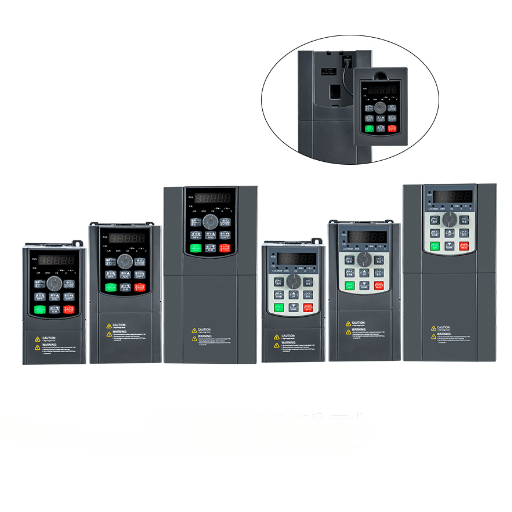
Ready to Get Your VFD Solution?
Whether you need a single drive or a complete system, we have the VFD products and engineering support to ensure your project's success.


Choose a VFD for single-motor applications where you need variable speed control and energy savings. Choose a phase converter when you need to run multiple three-phase machines from one circuit or power sensitive CNC controls. The wrong choice can cost thousands in energy waste, equipment damage, or voided warranties.
If you are trying to run 3 phase motor on single phase power, the VFD vs phase converter question is the first one you need to answer. The cheapest option between a VFD and a phase converter might cost you the most money over ten years. Many workshop owners learn this the hard way after buying what seemed like a simple solution, only to discover their motor runs hot, their CNC glitches, or their compressor warranty is void. A VFD vs phase converter decision is not about which technology is “better.” It is about which technology matches your specific machines, your power setup, and your long-term plans. This guide gives you the engineering facts, real cost numbers, and application-specific guidance that biased manufacturer articles leave out.
You will learn exactly how each technology works, when each wins, how to size a VFD for single-phase input, and why the hybrid approach, an RPC feeding your shop panel plus VFDs on individual machines, is the setup many experienced shops actually run. If you need the basics of converting single-phase power to three-phase output first, our single-phase to three-phase VFD guide explains derating and wiring in detail.
Key Takeaways
- A VFD is the best choice for single-motor, variable-speed applications like lathes, fans, and pumps, delivering 20-60% energy savings on variable-torque loads.
- A rotary phase converter (RPC) is the best choice for multi-machine shops, CNC equipment, and HVAC compressors where warranty protection and true sine-wave power matter.
- Single-phase input VFDs must be derated to roughly 50% of their three-phase rating, a 3 HP motor needs a 5.5-7.5 HP VFD on single-phase input.
- The hybrid RPC-plus-VFD setup combines the strengths of both technologies and is the optimal solution for many growing workshops.
- Installing a VFD on a refrigeration or HVAC compressor can void manufacturer warranties from Copeland, Carrier, and Trane.
For a deeper dive on single-phase input configurations, see our guide to single phase vfd guide

A Variable Frequency Drive (VFD) is an electronic motor controller. It rectifies incoming AC power into DC, stores it on a DC bus, then uses pulse-width modulation (PWM) to recreate variable-frequency, variable-voltage AC output. This lets you control motor speed precisely, ramp up gently to reduce mechanical stress, and match power consumption to actual load demand.
A rotary phase converter is an electromechanical device that uses a large idler motor, called a pony motor or generator, to create true three-phase power from a single-phase input. The single-phase supply spins the idler motor. Once running, that motor generates the third phase through its own rotation. The output is a true three-phase sine wave, identical in quality to utility three-phase power.
A digital phase converter sits between these two approaches. It uses solid-state electronics similar to a VFD, rectifying single-phase input and generating three-phase output through an inverter stage. Unlike a VFD, it outputs fixed line frequency, typically 50 or 60 Hz, and doesn’t provide variable speed control. Digital phase converters are efficient, compact, and produce cleaner power than rotary units, but they lack the soft-start and energy-saving features of a full VFD.
For a deeper look at how VFDs handle single-phase input wiring and protection settings, see our single-phase VFD wiring guide.
| Factor | VFD | Rotary Phase Converter | Digital Phase Converter |
|---|---|---|---|
| Output power quality | PWM waveform (square-ish) | True sine wave | Near-sine wave (filtered PWM) |
| Speed control | Yes, full variable speed | No, fixed speed | No, fixed speed |
| Soft start | Yes, programmable ramp | No, direct-on-line | Limited or none |
| Energy savings potential | 20-60% on variable torque | None, idler wastes 15-30% | 5-10% vs rotary |
| Multiple motors | Not recommended | Yes, powers entire panel | Yes, limited by capacity |
| Harmonic distortion (THD) | 3-8% typical | Near zero | 5-12% typical |
| Motor heating | Slightly higher due to PWM | Normal | Normal to slightly elevated |
| Upfront cost (3 HP) | 300−300−600 | 1,200−1,200−2,500 | 800−800−1,800 |
| Lifespan | 7-15 years | 20-30+ years | 10-15 years |
| Maintenance | Minimal (fan, capacitor) | Bearings, belts, idler motor | Minimal |
| Installation complexity | Moderate | Higher (idler motor, wiring) | Moderate |
| CNC / DRO compatibility | Can cause interference | Excellent | Good |
| Warranty risk for HVAC | High (voids compressor warranty) | None | Low |
Power quality is the single biggest technical difference. A VFD outputs a PWM waveform that approximates a sine wave. Modern motors handle this well, but the high-frequency switching creates harmonic currents, typically 3-8% THD according to IEEE 519 limits, that can heat motor windings and interfere with sensitive digital readouts (DROs) or CNC controllers. A rotary phase converter produces a true sine wave with harmonics so low they are negligible. For machines with computer controls or precision feedback systems, that difference matters.
Want help sizing a drive for your motor? Our guide on how to size a VFD for your motor walks through current matching, overload settings, and duty cycle confirmation.
A VFD wins in four specific situations: single-motor applications, variable-speed needs, energy-saving opportunities, and compact installations.
When you have one machine and you want complete control over it, a VFD is the simplest and most capable solution. You wire the VFD directly to the motor, bypassing the machine’s existing contactor panel. The VFD becomes the motor’s power source and brain. You get push-button speed control, programmable acceleration and deceleration ramps, and built-in overload protection.
Dave runs an irrigation operation in Kansas. His 7.5 HP well pump fed a center-pivot system that ran at full speed 24 hours a day during growing season, even when only half the pivot was active. Dave faced the classic VFD or phase converter dilemma: pay for clean three-phase power he didn’t need, or invest in a drive that could also cut his energy bill.
A phase converter salesman quoted him 3,800forarotaryunit.Instead,Daveinstalleda3,800forarotaryunit.Instead,Daveinstalleda950 VFD with a pressure transducer. The VFD now slows the pump to match actual water demand. During low-demand periods, the motor runs at 35 Hz instead of 60 Hz. Because pump loads follow the affinity laws, power drops with the cube of speed. Dave cut his pumping energy bill by 42%, and the VFD paid for itself in 16 months.
On variable-torque loads, pumps and fans especially, VFDs routinely deliver 20-60% energy savings according to NEMA MG1 guidelines. The savings come from matching motor output to actual demand rather than throttling with valves or dampers.
A VFD ramps motor speed from zero to setpoint over seconds or minutes. This eliminates the mechanical shock of across-the-line starting, which can be 6-7 times full-load current. Reduced inrush means less wear on couplings, belts, gears, and motor windings.
Here is the derating calculation most articles mention but never show. When you feed a three-phase VFD with single-phase power, only two of the three input rectifier diodes carry current. The DC bus capacitor must filter double the ripple. The result is higher peak currents and more thermal stress.
The industry-standard derating factor is approximately 50%. In practice, this means:
Some manufacturers publish specific single-phase input ratings. Always check the drive’s datasheet. If the datasheet lists a single-phase input rating, use that number. If it only lists three-phase input, apply the 50% derating rule and verify the input current doesn’t exceed your branch circuit capacity.
For workshop environments with single-phase supply, our low-voltage VFD systems designed for single-phase input offer drives with wider input tolerance and built-in protection.

A phase converter wins when you need to power multiple machines, run sensitive controls, protect warranties, or achieve decades of service life.
When comparing rotary phase converter vs VFD output, the single biggest technical difference is power quality. A rotary phase converter produces a true three-phase sine wave with harmonics so low they are negligible. A VFD outputs a PWM waveform that approximates a sine wave. For machines with computer controls or precision feedback systems, that difference matters.
If your shop has a lathe, a mill, and a bandsaw, and all three need three-phase power, a single rotary phase converter feeding a subpanel is the cleanest solution. You run one large RPC sized for your total concurrent load. From there, you wire conventional three-phase branch circuits to each machine.
Each machine starts and runs as if it were on utility three-phase power. There’s no individual derating calculations and no reconfiguration when you switch machines.
A CNC shop in Arizona learned about power quality the hard way. They installed a VFD on their Haas TM-1P mill to gain spindle speed control. Within two weeks, the digital readout flickered randomly and the tool changer threw position errors.
The VFD’s PWM switching frequency created conducted EMI that interfered with the CNC’s 5V logic lines. They added shielded cables, ferrite chokes, and an output reactor. The problems improved but never fully disappeared.
After six months of frustration, they replaced the VFD with a 15 HP rotary phase converter. The DRO stabilized immediately. The tool changer ran flawlessly. The issue wasn’t the VFD’s quality; it was a mismatch between PWM power electronics and millisecond-precision CNC controls.
For pure three-phase power without harmonic baggage, an industrial 3-phase VFD system running on true three-phase input is ideal. But when your shop only has single-phase service, a rotary phase converter gives you that same clean sine wave.
This is the decision point that can cost you a warranty claim. Copeland, Carrier, Trane, and most major compressor manufacturers explicitly exclude warranty coverage for compressors run from VFDs unless the VFD is a manufacturer-approved variable-speed drive system. A standard VFD used as a phase substitute voids that coverage. Why? PWM waveforms create voltage spikes and bearing currents that erode compressor motors designed for fixed-speed operation. A rotary phase converter delivers true sine-wave power. The compressor manufacturer cannot void a warranty for running on utility-grade three-phase power, which is exactly what an RPC provides.
A well-built rotary phase converter is essentially a heavy-duty motor on a frame. With periodic bearing grease and belt checks, it runs 20 to 30 years. A VFD’s electrolytic capacitors and cooling fans have finite lifespans, and typical VFD service life is 7 to 15 years in industrial environments.
If you plan to keep your shop running for decades and hate replacing electronics, the RPC’s mechanical simplicity is a genuine advantage.
The best solution for many workshops is not a binary VFD vs phase converter choice. In practice, the VFD or phase converter debate often ends with “both.”
Marcus opened a one-man machine shop in Ohio in 2022. He bought a 2 HP VFD for his South Bend lathe and loved the variable speed for threading operations. Two years later, he acquired a Bridgeport mill.
Marcus figured he could wire both machines through the same VFD by adding a switch. On the first day he tried it, the mill’s startup surge overloaded the VFD’s single-phase input stage and blew the rectifier bridge. The repair cost $340. The downtime cost a rush job.
Marcus’s real mistake was trying to make one device do two incompatible jobs. His eventual solution was smarter. He installed a 10 HP rotary phase converter to feed a three-phase subpanel. The RPC gave him clean three-phase power throughout the shop.
Then he added a dedicated 3 HP VFD on the lathe for variable-speed threading, fed from the RPC’s three-phase output. He wired the mill directly to the three-phase panel, no VFD needed, because the mill didn’t require variable speed.
The hybrid approach works because it assigns each technology to what it does best. The RPC generates clean three-phase power for the whole shop. Individual VFDs go only on machines that benefit from speed control. The VFDs now run on three-phase input, so no derating is required. The RPC carries the base load. The VFDs add precision where it matters. This is the setup most professional shop owners eventually land on, even if they started with just one or the other.
| Application | Best Choice | Why |
|---|---|---|
| Lathe (single motor) | VFD | Speed control for threading and facing operations |
| Milling machine (manual) | VFD or RPC | VFD if you want variable spindle speed; RPC if machine has DRO or power feed |
| CNC machine (mill or lathe) | RPC | True 3-phase power eliminates EMI issues with controls |
| Surface grinder | RPC | Multiple motors (wheel, coolant pump, hydraulic) |
| Air compressor | RPC | Warranty protection; hard-starting load |
| HVAC fan | VFD | Energy savings from variable airflow demand |
| Irrigation pump | VFD | Variable flow demand; major energy savings potential |
| Dust collector | VFD | Match airflow to machine usage; significant savings |
| Whole shop (multiple machines) | RPC | Powers everything from one source |
| Welder / plasma cutter | RPC | High inrush; fixed speed not an issue |
When deciding between a digital phase converter vs VFD for a specific machine, the application matters more than the brand. Use this table as a starting point, not a rigid rule. A manual mill with no DRO and no power feed can run beautifully on a VFD. A lathe with a hydraulic copy attachment might need an RPC to power both the spindle and the tracer pump. Match the solution to the machine’s actual electrical requirements.

Upfront cost is only part of the VFD vs phase converter equation. Installation, energy, maintenance, and replacement all factor into the true lifetime cost.
| Cost Item | VFD (Single-Phase Input) | Rotary Phase Converter |
|---|---|---|
| Equipment | 350−350−600 | 1,200−1,200−2,000 |
| Installation | 100−100−200 (DIY-friendly) | 300−300−600 (electrician recommended) |
| Annual energy (1,000 hrs) | Baseline minus 20-40% savings | Baseline plus 15-25% idler draw |
| Maintenance (10 years) | $50 (fan replacement) | $100 (bearings, belts) |
| Replacement at 10 years | $400 (new VFD) | $0 (RPC still running) |
| 10-year total | 900−900−1,350 | 1,600−1,600−2,700 |
For a single machine with variable-speed needs, the VFD is cheaper even accounting for replacement. The energy savings on variable-torque loads close the gap quickly.
| Cost Item | VFD (Derated to ~15 HP Input) | Rotary Phase Converter |
|---|---|---|
| Equipment | 800−800−1,400 | 2,500−2,500−4,000 |
| Installation | 200−200−400 | 500−500−900 |
| Annual energy (2,000 hrs) | Baseline minus savings | Baseline plus idler draw |
| Maintenance (10 years) | $100 | $200 |
| Replacement at 10 years | $1,000 | $0 |
| 10-year total | 2,100−2,100−3,900 | 3,200−3,200−5,100 |
At this size, the VFD is still competitive on cost for single-machine setups. However, if you’re powering multiple machines, one RPC serving several motors often beats buying separate VFDs for each.
The VFD vs phase converter break-even point depends heavily on energy prices and run hours. At $0.12 per kWh and 1,500 run hours per year, a VFD saving 30% on a 5 HP pump load pays back its premium over an RPC in approximately 2 to 3 years. After that, the VFD generates net savings. If energy is cheap or the machine runs only a few hundred hours per year, the RPC’s longer lifespan may make it the cheaper long-term option.
Even the right technology fails when installed wrong. Here are the errors we see most often in the field.
The VFD accounts for multiple motor output as well, though its configuration is a trifling and hazardous one. Running multiple motors out of one VFD implies all motors and one overload setting on them all. Another thing to consider is the fact that all motors are required to be lively simultaneously. Failure in a single motor will portray the shut down of the VFD to all motors. The phase converter feeding separate motor starters is the standard and safest approach for multiple machines.
A properly sized and configured VFD won’t damage a modern inverter-duty motor. Standard motors can also run on VFDs successfully if you stay within certain limits: avoid extreme low-speed continuous operation below 20 Hz without external cooling, keep the carrier frequency reasonable to reduce heating, and add an output reactor or dv/dt filter for long cable runs. Motors manufactured before the 1990s with older insulation systems are more vulnerable to PWM voltage stress.
Yes, and many people do. A VFD fed with single-phase power and configured for fixed 60 Hz output effectively functions as a digital phase converter for one motor. This is essentially a digital phase converter vs VFD comparison where the same device plays both roles, but with trade-offs. The motor gets three-phase power and runs at full speed. However, you lose the energy-saving benefit of variable speed, and you still have the PWM waveform quality issues. For a single motor that doesn’t need speed control, a dedicated digital phase converter is often simpler and more reliable. If you do need speed control, see our single-phase to three-phase VFD guide for wiring and derating details.
The idler motor in a rotary phase converter draws 15-30% of its rated full-load current even when no machines are running. A 10 HP idler might draw 6-8 amps at 230V continuously. At 0.12perkWh,thatidledrawcostsroughly0.12perkWh,thatidledrawcostsroughly400-$700 per year if left running 24/7. Many shop owners install a contactor or timer to shut down the RPC when the shop is not in use, cutting idle cost dramatically.
If you are comfortable working in an electrical panel, familiar with lockout/tagout procedures, and can correctly size conductors and breakers, then either device can be seen as a DIY project. However, note that a rotary phase converter usually entails wiring up a subpanel, conduit runs, and proper grounding; many jurisdictions would require a licensed electrician to be behind the same. A VFD installation, on the other hand, is usually simpler, needing merely a disconnect, the drive, and the motor. Always consult your local electrical code.
Digital phase converters are more efficient, quieter, and require less maintenance than rotary units. They also take up less floor space. However, they cost more per HP than rotary converters, produce some harmonic content, and their electronic components have a shorter expected lifespan than a simple induction motor. In the broader digital phase converter vs VFD comparison, digital converters lack variable speed control but output cleaner power than a VFD’s PWM waveform. For light commercial or residential shops where noise and space matter, digital is attractive. For heavy industrial use where durability and repairability matter, rotary still holds advantages.
In the ongoing VFD vs. RPC debate, there is no universal winner-as such, the right decision at the right time is defined by the application, the utility, and finally, the budget.
An RPC is a more sensible consideration if you only need to power one machine hereto. You can certainly get one that runs the motor from a single-phase source; wire it directly to the motor, and you will gain finer (not wide) control with definite measurable savings. The rotary type, therefore, commands a safer long-term choice, assuming that you intend to serve more than one machine with three-phase power from a single phase, or if you have to clean sine-wave power a CNC machine, let the misinformation continue in the minds of many.
In case of an expanding shop, the best bet would be a hybrid approach; that is, a panel-fed RPC combined with VFDs on selected machines to take advantage without sacrificing any.
Ready to select a drive for your application? Browse our single-phase VFD product catalog to compare specifications, protection features, and pricing. If you need help matching a drive to your motor and application, contact our engineering team for a recommendation.