Ready to Get Your VFD Solution?
Whether you need a single drive or a complete system, we have the VFD products and engineering support to ensure your project's success.

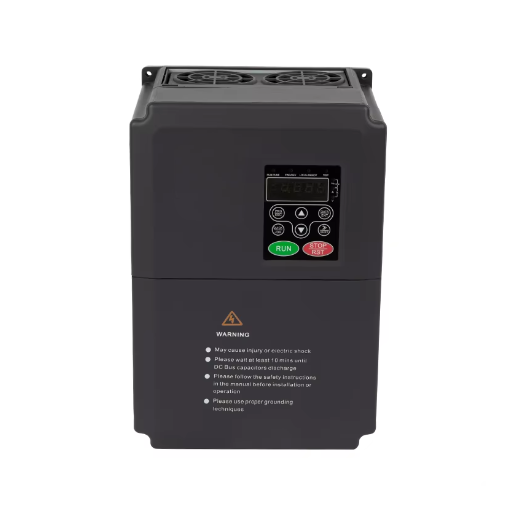
Specify a VFD for mining from the load, site and grid. Check breakaway torque, altitude derating, dust, cable length, harmonics and Ex approval before the RFQ.
A VFD for mining is specified from the load, the site, and the grid, not from the motor nameplate. Breakaway torque, ambient temperature, altitude, dust, cable length, harmonics, and hazardous-area approval are each factors that drive what a mine can use. A unit that looks adequate in a catalogue can trip on a hot afternoon at 1,800 m or fail an approval review before it ships.
Consider a common pattern. A 6.6 kV mill drive is ordered at the motor’s rated power, with an IP54 enclosure and a 6-pulse front end. In service, the mill start exceeds the drive’s heavy-duty rating, the enclosure recirculates dust, and the utility objects to harmonic current at the point of common coupling. The fix isn’t a bigger drive. It’s a specification that named the site conditions first.
This guide covers seven decisions that determine whether a VFD for mining survives its site, and it ends with an RFQ checklist you can send to any supplier.
If you’re still mapping equipment, start with our VFD applications in mining overview. If you already have a draft specification, send it to our engineers for a review.
Key Takeaways
- Specifying a VFD for mining starts with the job: speed control, soft start, or both. Not every crusher needs full speed control.
- Constant-torque mining loads need breakaway torque of 1.3 to 1.8 times rated torque, so heavy-duty rating matters before headline kW.
- Above 1,000 m, the common manufacturer rule is 1% derating per 100 m. Above 40 °C, it’s 1% per °C.
- Cable length is a drive-package decision. Many drives stop at 150 m of shielded cable without a filter; 300 m and beyond usually needs a dv/dt or sine filter.
- Hazardous-area approval is site-specific: IECEx or ATEX, GB 3836 with MA, or MSHA 30 CFR Part 18.

A plant drive and a mining variable frequency drive can share a frame size and still need different specifications. Three conditions separate them.
The load is less predictable. Ore hardness, feed rate, moisture, and liner wear move the torque demand across a shift. The environment is harsher. Ambient can sit above 45 °C, altitude can exceed 2,000 m, and dust is abrasive and conductive.
The approval can be legal. An underground gassy mine may require explosion-protected equipment, and no IP rating substitutes for that.
These inputs belong in the specification before the supplier quotes:
| Site input | Why it changes the drive |
|---|---|
| Machine and duty | Determines speed-control need, overload, and quadrant |
| Ambient and altitude | Sets derating and cooling |
| Dust, moisture, washdown | Sets IP, coating, and cooling method |
| Motor type and cable run | Sets voltage class, cable, and output filter |
| Supply voltage and fault level | Sets drive topology and harmonic strategy |
| Hazardous zone | Sets certification and enclosure type |
The most expensive VFD in mining is the one specified from a catalogue.
Variable speed isn’t the only reason to buy a drive. On a mine, it earns its cost when speed is the process variable. For example, a VSI crusher uses rotor speed to set gradation, a conveyor matches plant throughput, and a mill follows ore hardness.
However, on a jaw or cone crusher with a fixed setting, speed variation may buy little. A soft starter plus a variable feeder often captures most of the benefit at lower cost. The question isn’t “VFD or nothing”, but which machine needs continuous speed control.
| Machine | What variable speed buys | When soft start may be enough |
|---|---|---|
| VSI crusher | Product gradation via rotor speed | Not applicable; speed sets the product |
| Jaw or cone crusher | Controlled start, feed matching | Fixed setting with a variable feeder |
| Feeder | Rate matched to crusher load | Rarely enough; feed control is the point |
| Mining conveyor VFD | Throughput, soft start, load sharing | Fixed-rate belt with a gentle start |
| SAG or ball mill | Speed vs ore hardness, inching | Only if speed is fixed by design |
| Fan | Airflow and energy | Damper control acceptable at constant demand |
| Hoist | Speed, position, regeneration | Not applicable; control is safety-critical |
The torque-speed curve tells you what the drive must deliver. Centrifugal pumps, fans, and blowers are variable-torque loads: torque rises with the square of speed, and breakaway torque is low. Positive-displacement pumps, compressors, HPGR mills, and crushers are constant-torque loads, with breakaway torque typically 1.3 to 1.8 times rated torque. Hoists and downhill conveyors must accept energy back from the load.
Schneider’s mining white paper puts downhill conveyors and hoists in Q4 operation and states that they need drives with an active front end. A 6-pulse drive with a braking resistor can stop a load, but only a regenerative VFD returns energy to the grid. If the site needs regeneration, that’s a topology decision, not an option pack.
Our guide to selecting a drive by load type covers the general method. In mining, however, the addition is the starting condition: a loaded crusher or a mill with settled charge doesn’t start like a clean pump.
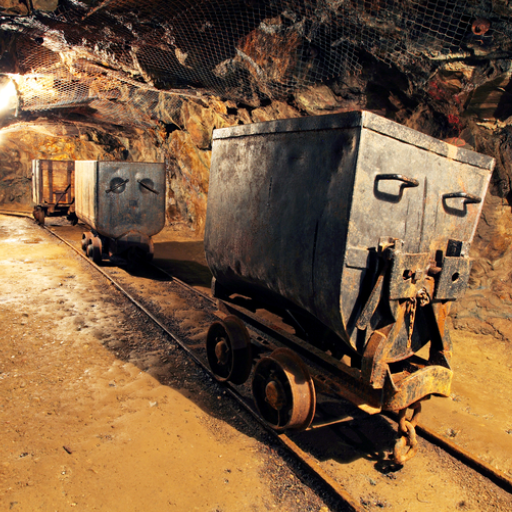
A drive has two ratings that matter: continuous current and short-time overload. Moreover, dual-rated drives publish a normal-duty setting for pumps, fans, and compressors and a heavy-duty setting for hoists, presses, mills, shredders, and crushers. A heavy-duty VFD setting gives more overload but less continuous current from the same frame.
Read the overload figure with its duration. “150% for 60 s and 180% for 10 s” describes two different events. A mill start may need the 60-second window; a crusher jam may need the 10-second window. Neither is a 150% continuous rating. Therefore size it for the start, not the steady state.
| Sizing step | What to establish |
|---|---|
| 1. Continuous current | Maximum site ambient, after derating |
| 2. Breakaway torque | Acceleration time the process allows |
| 3. Overload | Magnitude, duration, and frequency |
| 4. Starting method | Load sharing and control method |
Consider a 4.5 MW ball mill. The motor nameplate says the drive only needs 4.5 MW. The mill’s breakaway torque and its 35-second run-up say otherwise.
If the drive is sized on continuous power alone, the start may trip on current limit every time the mill settles overnight. The correct input is the torque-time curve, not the nameplate.
Load sharing is its own specification item. Furthermore, dual-pinion SAG and ball mills, HPGRs, and overland conveyors use two or more motors on one load. Schneider lists droop control, torque leader/follower, and speed leader/follower as the three methods.
Droop needs no drive-to-drive communication but is the least accurate. Therefore a hard-coupled load needs a tighter method than a soft-coupled one. Write the required balance into the RFQ; don’t leave it to commissioning.
Most drives are rated at 40 °C ambient. ABB’s ACS880 manual derates output current by 1% for every 1 °C above 40 °C, up to 55 °C. At 45 °C, that’s a 5% current reduction before any other factor.
Altitude follows a similar rule. From 1,000 to 4,000 m, ABB derates 1% per 100 m. At 1,800 m, the factor is 0.92.
The manual allows a credit if ambient is below 40 °C: reduce the altitude derating by 1.5% for each 1 °C below 40 °C. Consequently, the final factor multiplies every applicable derating, including a non-default switching frequency. Check the manual for the drive you are buying.
These aren’t edge cases. A pit at 3,000 m and a concentrator at 45 °C both sit inside the derating curve. Our G71 page publishes 1,000 m without derating, where the site calculation starts.
The IP code has two digits. The first covers solids, the second water. IP5X is dust-protected, IP6X is dust-tight, and IPX4 is splash-resistant.
IP54 is therefore dust-protected plus splash-resistant, not dust-tight. In a mine, that difference decides whether fine dust reaches the heatsink.
Cooling is a further part of the enclosure decision. Schneider describes three classes in its mining paper:
A drive is roughly 98% efficient, so at 1,800 kW about 36 kW of heat ends up inside the electrical room. Liquid cooling moves it out of the room and seals the housing, which matters in hot, dusty, or confined spaces. Our water-cooled VFD selection guide covers the trade-offs.
| Trigger | Typical rule | Example |
|---|---|---|
| Ambient above 40 °C | 1% current derating per °C (ABB) | 45 °C = 5% |
| Altitude above 1,000 m | 1% per 100 m (ABB) | 1,800 m = 8% |
| Non-default switching frequency | Manufacturer curve | Check manual |
| Dust | IP5X minimum; IP6X for heavy dust | IP54 vs IP65 |
| Heat in room | ~2% of drive power | 36 kW at 1,800 kW |
The voltage class for a VFD for mining follows motor power and current, not preference. Schneider’s mining power system example puts LV motors of 10 kW to 2.4 MW on 400 to 690 V. MV motors of 0.5 to 5 MW use 4.16 to 6.6 kV, and motors above 5 MW connect below 13.8 kV. As a result, at 4 MW the current at 6.6 kV is roughly one-tenth of the current at 690 V, which changes cable size, switchgear, and voltage drop.
Cable length is the second half of the decision, and it constrains the whole package. Schneider’s ATV Process guidance gives these limits:
In addition, long cables need shielding and a defined EMC path. The drive’s PWM output couples through cable capacitance, and the shield provides the return path. An unshielded run is not just an EMC problem; it risks bearing currents and insulation damage.
For the HV side, our guide to high-voltage drives for crushers, SAG mills, and hoists covers topology and transformer choices.
Harmonic limits for a VFD for mining apply at the point of common coupling, not at the drive terminals. IEEE 519-2014 sets voltage distortion at 5.0% THD for buses between 1 kV and 69 kV. Current TDD limits depend on the short-circuit ratio.
IEC 61800-3 sets EMC categories: C3 for the second environment (industrial), C4 for drives rated 1,000 V or more, or 400 A or more. A mine with its own transformer is usually a second-environment site, but the utility may still impose IEEE 519 at the PCC.
The drive front end sets the starting point. In Schneider’s figures:
Thus, on a weak grid, the harmonic study comes before the drive order. Source impedance, feeder length, other drives, and capacitor banks all change the result. A filter selected on the drive’s datasheet alone may not meet the site limit.
If you’re working through a harmonic study, send the PCC data with your RFQ. It changes the front-end choice more than any other single input.
For a VFD for underground mining, explosion protection is a legal requirement in gassy mines, and it’s site-specific.
IECEx is the IEC certification system for equipment used in explosive atmospheres, with more than 60 approved certification bodies in over 35 countries. In the EU, ATEX Directive 2014/34/EU requires CE marking and has applied since 20 April 2016. In China, GB 3836 and the MA mining product safety mark apply. In US underground coal mines, MSHA approves equipment under 30 CFR Part 18, where explosion-proof enclosures must withstand 150 psig.
The US rule changed in 2025. A final rule effective 9 January 2025 added 30 CFR 18.101 and 18.102. It allows specified ANSI/UL/ISA 60079 standards as an alternative for gassy mines.
MSHA still issues its own approval plate. Therefore a supplier’s IECEx certificate is evidence, not a substitute for the approval the site requires.
Ask for five things:
An explosion-proof VFD is a certified package, not a drive with a thicker enclosure. An IP65 rating is not explosion protection. It keeps dust out. It doesn’t contain an internal explosion or limit surface temperature.
A procurement team can accept a drive on the strength of an IECEx logo in a brochure. If the certificate covers a different rating in the same family, or the nameplate marking doesn’t match the site’s zone, the order goes back for re-quote six weeks later. The approval document is part of the product.
The RFQ is where the seven decisions about a VFD for mining become comparable quotes. Use our VFD specification template for the document structure, then add the mining inputs below. In addition, ask each supplier to state, line by line, where it deviates from your table.
| RFQ input | What to state |
|---|---|
| Machine and process | Crusher type, mill size, conveyor duty, hoist load |
| Motor data | Nameplate, FLC, insulation class, inverter-duty rating |
| Load curve | Torque vs speed, breakaway torque, inertia |
| Overload | Magnitude, duration, frequency per shift |
| Speed range | Minimum, maximum, continuous operating point |
| Site ambient | Maximum and minimum, plus seasonal profile |
| Altitude | Meters above sea level |
| Dust and moisture | IP required, washdown, corrosive gas |
| Cable run | Length, shielded or not, motor standard |
| Supply | Voltage, frequency, fault level, transformer size |
| Harmonics | IEEE 519 limit at PCC or utility requirement |
| Hazardous area | Zone, gas or dust group, required certification |
| Documentation | Test reports, drawings, spare parts list, training |
Shandong Electric publishes the following for mining. The G71 series is published with two- and four-quadrant operation. The G71 water-cooled range is listed up to 53,000 kW at 6 kV and 10 kV class. The G74 all-in-one cabinet is listed up to 1,000 kW.
The YC-5000 low-voltage drive publishes IP20 and IP54 options, an operating range of −10 °C to +50 °C, and lists crushers, conveyors, and slurry pumps among its mining applications. The product pages reviewed here do not publish a hazardous-area certificate, so an Ex-rated project needs a project-specific approval discussion, not an assumption. You can see the full mining VFD range on the application page.
Only if it will sit in a hazardous zone, usually an underground gassy mine. A surface crusher in a non-hazardous area doesn’t need Ex protection, but it still needs the right IP rating: IP and Ex are different approvals.
From 1,000 to 4,000 m, the common rule is 1% per 100 m, so 1,800 m costs 8%. Below 40 °C ambient, ABB allows a credit of 1.5% per °C. Always use the specific drive manual.
With IEC 60034-25 double-insulated motors, Schneider cites 150 m shielded or 300 m unshielded. For other motors, a dv/dt filter is advised beyond 50 m, which raises the shielded limit to 300 m; a sine filter raises it to 500 m shielded or 1,000 m unshielded.
It depends on the job. A fixed-setting jaw or cone crusher may only need a controlled start and a variable feeder. However, a VSI where rotor speed sets product gradation, or a feeder that must follow crusher current, needs a VFD. Size either device for breakaway torque, not nameplate power.
IEEE 519-2014 limits voltage THD at the point of common coupling to 5.0% for buses from 1 kV to 69 kV, with current TDD limits set by the short-circuit ratio. IEC 61800-3 sets EMC categories C3 and C4 for industrial sites. Therefore the utility or the site’s power-quality study decides which applies.
A VFD for mining is not a catalogue item with a site name attached. It’s a specification built from seven answers: what the machine needs to do, how its load behaves, what overload it demands, what the environment does to the rating, what voltage and cable route are practical, what the grid allows, and which approval the site requires.
Get those right, and the drive discussion becomes a comparison of equal quotes. Get them wrong, and the mine pays for the difference in nuisance trips, derating, filters, or a rejected approval.
If you’re preparing a VFD for mining specification, send it to our engineers for a review against these seven decisions. We’ll tell you which inputs are missing before your suppliers do.