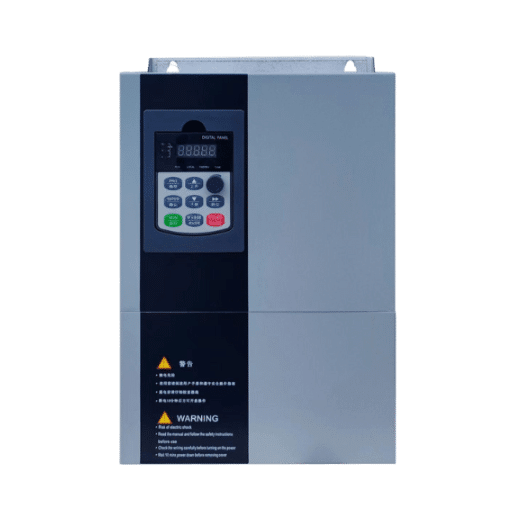
Ready to Get Your VFD Solution?
Whether you need a single drive or a complete system, we have the VFD products and engineering support to ensure your project's success.


You should use a VFD when your motor needs variable speed, when load demand fluctuates enough to make speed reduction worthwhile, or when uncontrolled starting is damaging your equipment. If the motor runs at one fixed speed against a tolerant load, a simpler and cheaper starter is the better choice.
Here is why that decision matters more than most buyers realize. According to the U.S. Department of Energy, motor-driven systems consume roughly 70% of all industrial electricity. Yet a large share of those motors run at full speed all day, throttled by valves and dampers that waste the energy the motor just consumed.
The result is two expensive mistakes happening in plants everywhere. Some facilities skip a variable frequency drive (VFD) where it would pay for itself in months. Others install VFDs on constant-speed loads where a soft starter would do the same job for half the cost. Both errors come from the same root cause: no clear framework for deciding when to use a VFD in the first place.
This guide gives you that framework. You will get four questions that settle the decision, the applications where a VFD almost always wins, the cases where you should skip it, and honest energy savings math backed by DOE data.
Key Takeaways
- Use a VFD when you need variable speed, when demand fluctuates, when starting stress damages equipment, or when the motor runs 8+ hours per day.
- Centrifugal pumps and fans see the biggest savings: 30–60% on pumps and 40–70% on fans, per DOE data.
- A 20% speed reduction cuts power draw by roughly 49%, thanks to the cube relationship in the affinity laws.
- Skip the VFD on constant-speed, full-load applications, small motors with infrequent starts, and high static head systems where savings are overstated.
- Typical VFD payback runs 6–18 months on variable-torque loads with long runtimes.
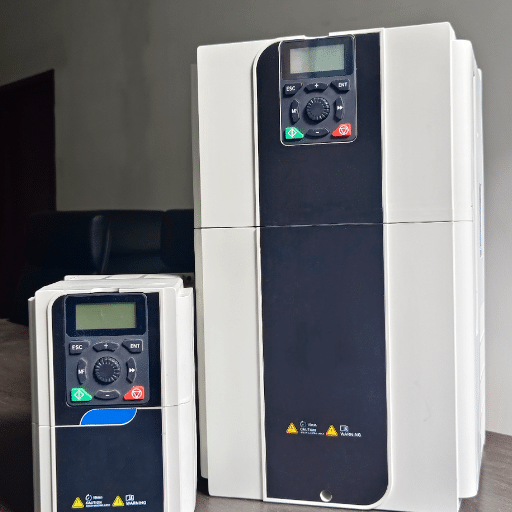
A variable frequency drive controls an AC motor’s speed by adjusting the frequency and voltage of the power it supplies. Instead of running locked to line frequency (50 or 60 Hz), the motor can operate anywhere from near zero to full speed, matching its output to what the process actually needs.
This single capability unlocks three benefits at once: precise process control, soft starting and stopping, and major energy savings on variable loads.For a fully quantified rundown of these gains and more, our guide to the advantages of VFD puts hard numbers to the energy, control, and protection benefits behind each one.
The rest of this guide focuses on the decision itself: when a VFD earns its cost, and when it does not.
A VFD is the right choice when your application requires variable motor speed, your load demand fluctuates over time, uncontrolled starting causes mechanical or electrical stress, or the motor runs long enough hours for energy savings to repay the investment. If none of these apply, choose a soft starter or across-the-line starter instead.
Let’s break each question down.
This is the non-negotiable question. If your process needs the motor to run at different speeds at different times, only a VFD can do that. No soft starter, star-delta arrangement, or across-the-line starter offers running speed control.
Common examples include conveyor lines that sync to upstream production, mixers that need different speeds for different batches, and machine tools that adjust feed rates by material. If your answer here is yes, stop evaluating and specify a VFD.
For centrifugal loads like pumps, fans, and blowers, power consumption scales with the cube of speed. This is the affinity law relationship, and it makes even modest speed reductions extremely valuable:
| Speed Reduction | Power Reduction |
|---|---|
| 10% slower | ~27% less power |
| 20% slower | ~49% less power |
| 30% slower | ~66% less power |
| 50% slower | ~87% less power |
If your pump or fan currently runs full speed while a valve or damper burns off the excess output, you’re paying for energy you throw away. A VFD eliminates that waste by slowing the motor instead.
One important caveat: the affinity laws assume little or no static head. The DOE explicitly warns that in systems with high static head, such as deep well pumps or tall building risers, real savings fall well below the table above. We will come back to this in the savings section.
A motor started across the line draws 6–8 times its full load current and delivers full torque almost instantly. That shock stresses windings, belts, gearboxes, couplings, and the driven load itself.
Consider Maria, a plant engineer at an aggregate facility running a 30-meter conveyor. Every across-the-line start snapped the belt tight with a jolt, and the belt splice failed three times in one year. Each failure meant a half-day of downtime and a re-splicing crew. After switching to a VFD with a 15-second ramp, starts became smooth, splice failures stopped entirely, and the saved downtime paid for the drive in under a year.
If you see frequent belt failures, water hammer in piping, tripped breakers at startup, or voltage dips that disturb other equipment, a VFD’s controlled acceleration (starting current around 1–1.5 times full load) solves the problem at the source.For the mechanics behind that smooth ramp, including how the drive raises voltage and frequency together to hold inrush near full-load current, see our guide to VFD soft start.
Energy savings only accumulate while the motor runs. A VFD on a motor that runs one hour per week will never repay its cost, no matter how good the efficiency math looks.
As a rule of thumb, motors operating 8 or more hours per day on variable loads deliver the strongest returns. DOE Industrial Assessment Center data puts typical VFD payback at 6–18 months for qualifying pump and fan applications. Below roughly 2,000 operating hours per year, look hard at the numbers before committing.To turn these rules of thumb into real figures for your own motor, our guide to the VFD payback period walks through the calculation step by step using energy rates, run hours, and installed cost.
Want a fast answer for your specific application? Browse our VFD product range or send your motor specs to our engineering team for a selection recommendation.

These seven VFD applications match drive capabilities so well that the decision is nearly automatic:
If your application sits on this list, the question is rarely whether to use a VFD. It is which one.
Honest selection guidance has to include the negative cases. A VFD costs 2–3 times more than a soft starter installed, introduces harmonics that may require filters, and adds commissioning complexity. For a full accounting of these trade-offs, including harmonics, drive losses, and the mitigation hardware they demand, see our guide to the disadvantages of VFD.Here is where that investment does not pay back:
Choosing the cheaper starter in these cases is not cutting corners. It is correct engineering.
Most motor control decisions come down to three options. This table summarizes the trade-offs:
| Feature | DOL (Across-the-Line) | Soft Starter | VFD |
|---|---|---|---|
| Starting current | 6–8× full load | 2–4× full load | ~1–1.5× full load |
| Speed control | None | None | Full range |
| Energy savings | None | None | 20–50% on variable loads |
| Mechanical stress | High | Medium | Low |
| Harmonics | None | Minimal | Significant (may need filters) |
| Relative cost | Lowest | Medium | Highest |
The decision logic is simple. Do you need variable speed or energy savings from speed variation? Choose a VFD. Do you only need a gentler start on a fixed-speed motor? Choose a soft starter. Is the motor small, starts rarely, and drives a tolerant load? A DOL starter is all you need.
For most industrial motors below 690V on pumps, fans, and process machinery, our low voltage VFD systems cover the full power range with vector and V/F control options.
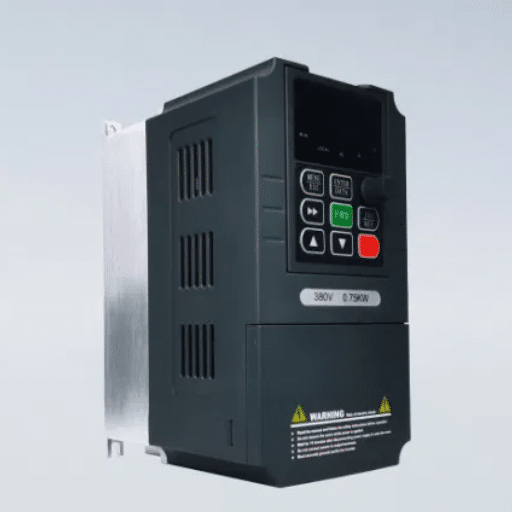
Let’s ground the savings claims in published data rather than marketing ranges.
The U.S. Department of Energy’s motor system guidelines put typical VFD savings at 30–60% on pumps and 40–70% on fans when replacing throttling or damper control on variable-demand systems. The DOE has also estimated that applying adjustable speed drives to suitable pump and fan systems could save roughly 9.5% of total electricity consumption. On a global scale, the IEA’s 4E EMSA initiative reports that motor systems account for over half of all electricity use, which is why drive efficiency keeps attracting regulatory attention.
To keep your own estimate honest, apply three corrections:
Here is what that looks like in practice. Tom, a facilities manager at a cold-storage warehouse, ran two 15 kW evaporator fans at full speed around the clock. After retrofitting VFDs and cutting average fan speed by 25% during low-demand hours, his metered consumption on those fans dropped 48%. Even after accounting for drive losses and installation, the project paid back in 11 months.
Once you have decided a VFD belongs in your system, selection comes down to four factors:
Getting these four factors right at the specification stage costs nothing. Retrofitting the wrong drive mid-project is where budgets get hurt.
You need a VFD if your process requires speed changes, your load demand fluctuates (especially pumps and fans), or hard starting is stressing your equipment. If the motor runs at one fixed speed against a steady load, you do not need a VFD; an across-the-line or soft starter is the better value.
Yes. A single-phase-input VFD rectifies the incoming supply and outputs three-phase power to the motor, within its rated capacity. This is a common solution for workshops and rural sites without three-phase service.
No. Meaningful savings require a variable-torque load with fluctuating demand and enough operating hours. On constant-speed, constant-load applications, a VFD actually adds 2–5% in losses.
A soft starter only controls voltage during starting and stopping. Once the motor reaches full speed, it bypasses and provides no further control. A VFD controls speed continuously during operation, which enables both process control and energy savings.
A quality industrial VFD typically delivers 10+ years of service. Cooling fans usually need replacement every 3–5 years and DC bus capacitors every 8–12 years as preventive maintenance.
Deciding when to use a VFD does not require guesswork. Work through the four questions in order:
If none of these apply, a soft starter or DOL starter is the honest, cost-effective answer, and specifying one will serve your operation better than an oversized drive.
When the answers point to a VFD, selection quality determines whether you capture the full return. Shandong Electric engineers work with you from load analysis through commissioning to match the drive to your application, from compact low voltage units to megawatt-scale high voltage systems.
Ready to specify the right drive for your motor? Explore our VFD product range or contact our engineering team with your motor nameplate data and load profile. You will get a selection recommendation built on your actual operating conditions, not a generic catalog pick.