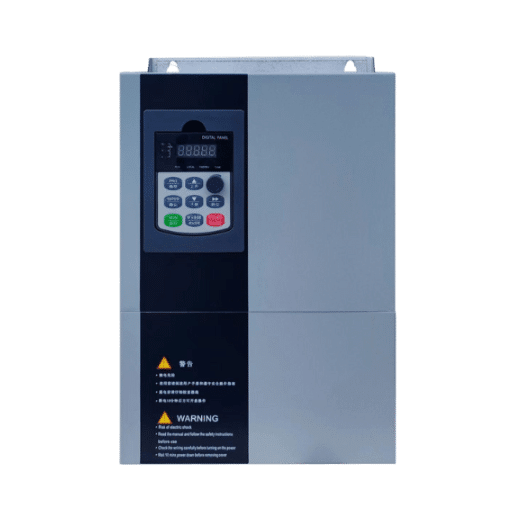
Ready to Get Your VFD Solution?
Whether you need a single drive or a complete system, we have the VFD products and engineering support to ensure your project's success.

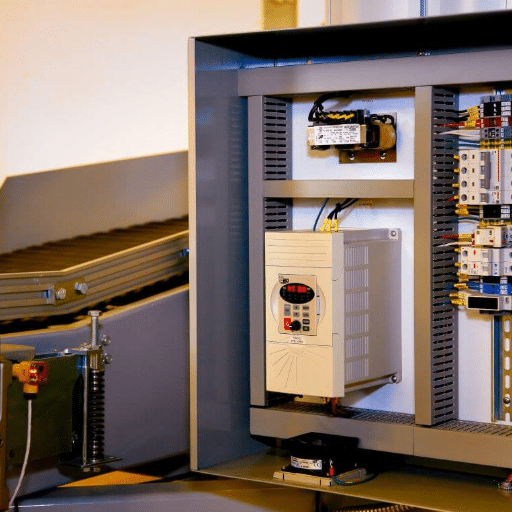
To choose a VFD correctly, you need to match the drive’s current rating and control mode to your motor’s full load amps and load profile — not just match horsepower. A proper VFD selection guide follows seven steps: read the motor nameplate, identify the load type, size by current with safety margins, select the right control mode, verify motor compatibility, account for the installation environment, and plan for power quality and harmonics. Skip any one of these steps and you risk premature failure, energy waste, or regulatory penalties.
Marcus Chen, a maintenance supervisor at a mid-sized packaging plant in Ohio, learned this the hard way. In March 2025, he sized a VFD for a 75 HP refrigeration compressor by matching horsepower alone. The drive arrived, got wired in, and ran fine — until Monday morning startup, when the compressor’s 150% breakaway torque demand tripped the VFD’s overload protection three times in a row. By Thursday, Marcus had spent $2,400 on emergency service calls, lost 18 hours of production, and ordered a second, correctly oversized drive. The original VFD was not defective. It was simply the wrong choice for the application.
Most online guides stop at “match HP to VFD size.” That advice works for basic pump and fan applications, but it fails for compressors, conveyors, hoists, and any load with high starting torque or dynamic speed requirements. If you want a drive that lasts 10+ years, saves 15-35% on energy, and never trips at the wrong moment, you need a systematic approach to variable frequency drive selection.
This guide gives you that system. By the end, you will have a complete 7-step framework for selecting, sizing, specifying, installing, and commissioning a VFD — with application-specific matrices, real nameplate data, and formulas you can use today.
Key Takeaways
- How to choose a VFD starts with the motor nameplate — FLA matters more than horsepower for accurate sizing
- Constant torque loads (conveyors, compressors) need 150-200% overload capacity; variable torque loads (pumps, fans) need 110%
- V/f control works for simple speed regulation; sensorless vector control is required for high-starting-torque or low-speed applications
- Standard induction motors rated for 40°C can overheat on VFDs without inverter-duty insulation (Class F or higher)
- Altitude above 1,000m requires 1% derating per 100m; temperature above 40°C also demands capacity reduction
- IEEE 519 mandates total harmonic distortion below 5% voltage and 8% current at the point of common coupling

A Variable Frequency Drive (VFD) is an electronic controller that varies the frequency and voltage supplied to an AC motor, allowing precise speed and torque control. By matching motor output to actual demand instead of running at full speed regardless of load, a VFD reduces energy consumption by 15-35% in typical applications. Learn more about the fundamentals in our guide on what a variable frequency drive is. For a comprehensive technical reference, the AutomationDirect VFD eBook covers drive theory, wiring, and applications in depth.
The problem is not whether you need a VFD. For any motor that runs at partial load for significant hours, the answer is yes. The problem is choosing the right one. Industry data suggests roughly 30% of VFD failures in the field stem from incorrect selection or specification — not manufacturing defects, not installation errors, but simply the wrong drive for the wrong motor under the wrong conditions.
When you choose correctly, the benefits compound. Energy savings drop straight to the bottom line. Soft starting eliminates mechanical shock that wears bearings, couplings, and belts. Precise speed control improves product consistency. When you choose poorly, the costs compound just as fast: premature drive failure, motor overheating, harmonic distortion that corrupts nearby equipment, and in some jurisdictions, utility penalties for excessive power quality problems.
Think of VFD selection as a decision chain. Each link depends on the one before it. You cannot size the drive until you know the load type. You cannot choose the control mode until you know the sizing. You cannot plan harmonics until you know the electrical environment. The seven steps are:
This framework applies whether you are selecting a compact 2.2 kW drive for a small workshop pump or a 500 kW drive for a heavy-duty conveyor system. The principles do not change. Only the numbers do.
The motor nameplate is the single most important document in VFD selection. Every number stamped on it matters, but four matter most for how to select a VFD:
Here is the contrarian truth that most guides bury: the motor horsepower rating is the least useful number on the nameplate for VFD selection. Horsepower is a mechanical output rating. It tells you what the motor can do. It does not tell you what the VFD must supply.
A 50 HP motor running at 460V three-phase might draw 65A at full load. A different 50 HP motor at the same voltage might draw 61A or 69A depending on efficiency, power factor, and design. The VFD must be sized for the amps, not the horsepower.
The practical rule: always size your VFD using the motor’s FLA as the starting point. Apply your safety margin to the amps, then confirm the resulting VFD current rating also covers the horsepower range. For a deeper walkthrough, see our single-motor sizing guide.
If your motor has a 1.15 service factor, you must account for it. A motor rated 50 HP with 1.15 SF can run at 57.5 HP continuously. The VFD must handle that load without tripping.
The conservative approach: size the VFD for motor FLA x 1.15. If your motor FLA is 65A and the service factor is 1.15, your effective sizing current is 74.75A. Round up to the next standard VFD rating, which is typically 75A or 80A depending on manufacturer.
VFDs switch power at high frequency, creating voltage spikes at the motor terminals. Standard motors with Class B insulation can degrade rapidly under these conditions. If your motor is not labeled “inverter duty” or “inverter rated,” check the insulation class. Class F or H gives you the thermal headroom to handle VFD voltage stress. If the motor has Class B insulation and you are running long cable runs (over 50 meters), add an output reactor or dv/dt filter to protect the windings.
Load type is one of the most important VFD selection criteria. Get it wrong and you either overspend on an oversized drive or undersize one that trips on every startup.Because this choice shapes every decision that follows, it is worth studying how torque demand differs across applications in our guide to VFD selection based on load type.
Constant torque loads demand the same torque regardless of speed. A conveyor belt needs roughly the same pull at 10% speed as it does at 100% speed. The power requirement increases linearly with speed.
For constant torque applications, you need a VFD with:
Common constant torque applications: conveyors, extruders, positive displacement pumps, hoists, cranes, reciprocating compressors.
Variable torque loads follow the affinity laws: torque varies with the square of speed, and power varies with the cube. At 50% speed, a centrifugal pump needs only 25% of rated torque and 12.5% of rated power. This is why pumps and fans deliver the highest energy savings with VFDs — often 30-50%.
For variable torque applications, you need:
Common variable torque applications: centrifugal pumps, axial and centrifugal fans, blowers, mixers at low viscosity.
Constant power loads require the same power across a speed range, which means torque must decrease as speed increases. This is the opposite of constant torque. Machine tools and winders operate in this regime.
For constant power applications, you need:
Some loads need extra torque to get moving. A reciprocating compressor might need 150-200% of rated torque at startup. A loaded conveyor on an incline might need 175% breakaway torque. If you do not size for this peak demand, the VFD will fault on overload every morning.
Always check the application for:

The fundamental sizing formula is straightforward:
VFD rated current >= Motor FLA x Application safety margin x Derating factor
Application safety margins:
For example, a 30 HP motor with 40A FLA driving a centrifugal pump needs: 40A x 1.10 = 44A VFD minimum. A 45A or 50A drive is the practical choice.
The same motor driving a reciprocating compressor with 150% starting torque needs: 40A x 1.50 = 60A VFD minimum. You would select a 60A or 75A drive.To see how these inputs combine into kW, kVA, and final current figures, our VFD power calculation guide breaks down the math with worked examples.
| Application | Load Type | Overload Margin | Control Mode |
|---|---|---|---|
| Centrifugal pump | Variable torque | 110% | V/f or SVC |
| Centrifugal fan | Variable torque | 110% | V/f |
| Conveyor (horizontal) | Constant torque | 115% | SVC |
| Conveyor (incline) | Constant torque | 125-150% | SVC or CLV |
| Reciprocating compressor | Constant torque | 150-200% | SVC or CLV |
| Rotary screw compressor | Constant torque | 115-125% | SVC |
| Hoist / crane | Constant torque | 150-200% | CLV |
| Machine tool spindle | Constant power | 110-125% | CLV |
| Extruder | Constant torque | 125-150% | SVC |
| HVAC fan | Variable torque | 110% | V/f |
VFDs are rated at sea level and 40°C ambient. Conditions above either limit reduce effective capacity.
Altitude derating: Reduce VFD current rating by 1% for every 100m above 1,000m. At 2,000m elevation, derate by 10%. A 100A drive effectively becomes a 90A drive.
Temperature derating: Most manufacturers require derating above 40°C. Check the specific drive’s derating curve. A common rule: derate 2.5% per °C above 40°C. At 50°C ambient, derate 25%.
Combined derating: Multiply the factors. At 2,000m and 50°C: 0.90 x 0.75 = 0.675 effective capacity. A 100A drive becomes a 67.5A drive.
Three-phase VFDs with three-phase output are the industrial standard. They provide smoother torque, better efficiency, and higher power density.
Single-phase input to three-phase output VFDs exist for locations without three-phase power. They are limited to lower power (typically under 5 HP) and have higher input current requirements. The input current is approximately 1.73x the three-phase equivalent.
The control mode of a variable frequency drive determines how it manipulates voltage and current to control motor behavior. Choosing the wrong mode leads to poor performance, unnecessary expense, or both.For a fuller comparison of how each method behaves under different conditions, see our breakdown of VFD control modes explained.
Volts-per-Hertz (V/f) control is the simplest and most common VFD control method. The drive maintains a fixed ratio between voltage and frequency, keeping the motor’s magnetic flux constant. It is inexpensive, reliable, and perfectly adequate for many applications.
Use V/f control when:
Limitations: poor torque at low speeds (below 10 Hz), no automatic slip compensation, limited dynamic response.
Sensorless vector control (SVC) estimates motor flux and torque using mathematical models rather than physical sensors. It delivers much better low-speed torque and faster dynamic response than V/f control.
Use SVC when:
Most modern industrial VFDs include SVC as a standard or easily configurable option. For high-performance applications, explore our coverage of sensorless vector control VFD technology.
Closed-loop vector control (CLV) uses a physical encoder or resolver on the motor shaft to provide precise position and speed feedback. This delivers the highest level of performance.
Use CLV when:
CLV requires encoder wiring, encoder compatibility, and more complex commissioning. It is the most expensive control option but essential for precision applications.
Direct Torque Control is a proprietary high-performance method used by some manufacturers (ABB, for example). It controls motor flux and torque directly without modulation, delivering extremely fast response. DTC is typically found in high-end drives for demanding applications like steel mills, paper machines, and test stands.
| Application | Recommended Control | Alternative | Avoid |
|---|---|---|---|
| Centrifugal pump | V/f | SVC | CLV (overkill) |
| Centrifugal fan | V/f | SVC | CLV |
| Conveyor | SVC | CLV (if positioning) | V/f (slip issues) |
| Compressor | SVC | CLV | V/f (torque limit) |
| Hoist / crane | CLV | SVC (light duty) | V/f |
| Machine tool | CLV | SVC | V/f |
| Extruder | SVC | CLV | V/f |
| HVAC | V/f | SVC | CLV |

Most standard squirrel-cage induction motors will run on a VFD, but not all run well. NEMA MG1 standards define the baseline requirements for motor-inverter compatibility. For a complete checklist covering insulation, bearings, cooling, and cable effects, review our guide to motor compatibility with VFD. Key compatibility checks:
Permanent magnet (PM) synchronous motors require VFDs with PM motor control algorithms. The VFD must be able to identify rotor position (using high-frequency injection or encoder feedback) and control current appropriately.
If you are retrofitting a standard induction motor with a PM motor, the VFD must be reconfigured or replaced. PM motors cannot run on standard V/f drives.
Synchronous reluctance (SynRM) motors are gaining popularity for VFD applications due to high efficiency and no rare-earth materials. Like PM motors, they require VFDs with specific control algorithms. Most modern high-efficiency VFDs support SynRM control.
Motors built before 1990 may have Class B insulation and outdated winding designs. They can run on VFDs, but with restrictions:
Inverter-duty motors are designed specifically for VFD operation. They feature:
If you are buying new motors for VFD applications, specify inverter-duty. The cost premium (typically 10-20%) is recovered quickly through longer motor life and fewer problems.
The Ingress Protection (IP) rating tells you what the VFD enclosure can withstand:
Match the IP rating to your environment. An IP20 drive in a dusty cement plant will fail within months. An IP69K drive in a clean office is unnecessary expense.
Standard VFDs are rated for 40°C ambient without derating. Above this:
For extremely hot environments, explore high voltage VFD options with advanced cooling.
Air density decreases with altitude, reducing the cooling effectiveness of air-cooled VFDs. The standard rule: derate 1% per 100m above 1,000m.
Above 2,000m, consider water-cooled drives or drives with forced-air cooling rated for high altitude.
VFD output cables carry high-frequency switching noise. Keep input power cables, output motor cables, and control/signal cables in separate conduits. Minimum separation: 300mm (12 inches) between power and signal conduits.
Grounding is critical. Use a single-point ground strategy. Bond the VFD chassis, motor frame, and conduit to a dedicated equipment ground. Never use conduit as the sole ground path.
For a detailed installation walkthrough, see our low voltage VFD installation guide. You can also follow our broader VFD installation best practices for cabinet layout, cable management, and grounding strategies that keep noise and faults to a minimum.
VFDs draw non-sinusoidal current from the power line, creating harmonic distortion. Total Harmonic Distortion (THD) is the measure of this distortion.
IEEE 519 sets limits for harmonic distortion at the Point of Common Coupling (PCC):
If your facility has multiple VFDs, the combined harmonics can exceed these limits. When that happens, you face utility penalties, transformer overheating, neutral conductor overload, and malfunction of sensitive equipment. The IEC 61800 series provides international standards for adjustable speed drive systems, including harmonic emission limits and test methods. For a practical look at line reactors, AFE drives, passive and active filters, and when to use each, see our guide to harmonic mitigation VFD strategies.
A line reactor (input reactor) is an inductor placed between the power line and the VFD. It reduces current harmonics by 30-50% and protects the VFD from voltage spikes.
You need a line reactor when:
Line reactors are the most cost-effective harmonic mitigation method.
Standard VFDs use diode rectifiers, which draw current in pulses and create harmonics. Active Front-End (AFE) drives use active IGBT rectifiers that draw sinusoidal current, reducing harmonics to under 5% without additional filters.
Use AFE drives when:
AFE drives cost 30-50% more than standard drives but eliminate the need for line reactors, harmonic filters, and sometimes transformer upsizing.
Electromagnetic Compatibility (EMC) filters reduce radio-frequency emissions from the VFD. They are required for CE compliance and recommended for installations near sensitive equipment (PLCs, sensors, communication cables).
Use shielded motor cables with the shield bonded at both ends for runs over 10m. Unguided high-frequency noise from unshielded cables can interfere with nearby equipment.
When a motor decelerates faster than load friction allows, it becomes a generator, pumping energy back into the VFD. Two methods handle this:
Use regenerative braking for applications with frequent, rapid deceleration (cranes, hoists, centrifuges). Use dynamic braking resistors for occasional braking needs.
In 2024, a metal stamping plant in Michigan installed six 75-horsepower frequency converters on its stamping flywheels without performing harmonic analysis. Within three months, electricity meters showed a total harmonic distortion (THD) of 18%, far exceeding the IEEE 519 standard limit. The plant was subsequently charged a penalty of 4,200 harmonics and was forced to install line reactors on all six converters. The total cost of these reactors was $1,800. If reactors had been specified during the initial selection process, no additional installation labor costs would have been incurred.

The table below summarizes the key VFD selection criteria for common applications. Think of it as a quick-reference VFD buying guide by application type. Use it as a starting point, then verify with the detailed steps above.
| Application | Load Type | Control Mode | Overload | Braking | IP Rating | Typical Savings |
|---|---|---|---|---|---|---|
| Centrifugal pump | Variable torque | V/f or SVC | 110% | Resistor (rarely) | IP54 | 20-40% |
| Centrifugal fan | Variable torque | V/f | 110% | Resistor (rarely) | IP54 | 30-50% |
| HVAC fan | Variable torque | V/f | 110% | Resistor (rarely) | IP54 | 25-35% |
| Conveyor (horizontal) | Constant torque | SVC | 115% | Resistor | IP54 | 10-15% |
| Conveyor (incline) | Constant torque | SVC | 150% | Resistor or Regen | IP54/IP65 | 10-15% |
| Rotary screw compressor | Constant torque | SVC | 115% | Resistor | IP54 | 15-25% |
| Reciprocating compressor | Constant torque | SVC | 150-200% | Resistor | IP54 | 15-25% |
| Refrigeration compressor | Constant torque | SVC | 115% | Resistor | IP54 | 20-30% |
| Hoist / crane | Constant torque | CLV | 150-200% | Regenerative | IP54/IP65 | 10-20% |
| Machine tool spindle | Constant power | CLV | 110% | Resistor | IP54 | 10-15% |
| Extruder | Constant torque | SVC | 125-150% | Resistor | IP54 | 10-15% |
| Mixer (high viscosity) | Constant torque | SVC | 150% | Resistor | IP65/IP66 | 10-15% |
| Winder / unwinder | Constant power | CLV | 125% | Regenerative | IP54 | 15-20% |
After the VFD is physically installed, you must configure these essential parameters before the first run:
Before connecting the mechanical load:
With the mechanical load connected:
Before handing the system over to operations:
For a detailed commissioning walkthrough, see our VFD commissioning steps guide.

This is the most common and most expensive mistake. A 50 HP motor might draw anywhere from 58A to 68A depending on efficiency and voltage. Always size by FLA, then verify the HP rating is compatible. The VFD current rating is what protects the drive and the motor.
A pump and a compressor are both “motor applications,” but their torque demands are completely different. A VFD sized for a pump will fail on a compressor. Always identify the load type before selecting the duty rating and overload margin.
Using V/f control for a crane or hoist leads to poor low-speed torque and dangerous load droop. Using closed-loop vector control for a simple fan is unnecessary expense. Match the control mode to the precision and torque requirements.
A 100A drive at 3,000m elevation and 50°C ambient is effectively a 70A drive. If you size for 100A and install in those conditions, you will have chronic overload trips. Always apply altitude and temperature derating before finalizing the model.
Multiple VFDs on one transformer can create harmonic distortion that exceeds IEEE 519 limits. The penalties, transformer overheating, and equipment interference cost far more than a line reactor or AFE drive. Calculate harmonics during selection, not after the utility bill arrives.
Standard Class B motors on VFDs with long cable runs suffer insulation breakdown within 2-5 years. If you cannot upgrade to an inverter-duty motor, add output reactors, limit cable length, and reduce carrier frequency. These measures add cost but protect your motor investment.
For more on avoiding pitfalls, read our VFD troubleshooting common issues guide.
Follow the seven-step framework: read the motor nameplate (FLA, voltage, insulation class), match the load type to the duty rating, size by current with appropriate overload margin, choose the control mode, verify motor compatibility, account for environment, and plan for harmonics. For most pump and fan applications, a standard-duty VFD with V/f control and 110% overload is sufficient. For compressors, conveyors, and cranes, use heavy-duty drives with sensorless vector control and 150% overload.
A 10 HP, 460V three-phase motor typically draws 14A at full load. For a centrifugal pump or fan (variable torque), size for 14A x 1.10 = 15.4A minimum — a 17A or 20A VFD. For a conveyor or compressor (constant torque), size for 14A x 1.50 = 21A minimum — a 21A or 25A VFD. Always check the actual motor nameplate FLA, as efficiency varies.
Most standard AC induction motors can run on a VFD, but performance and longevity depend on compatibility. Motors need Class F or H insulation for best results, and inverter-duty motors are strongly recommended for continuous VFD operation. Very old motors (pre-1990) with Class B insulation may need output reactors or shorter cable runs. PM motors and synchronous reluctance motors require VFDs with specific control algorithms and cannot run on standard V/f drives.
Normal duty (also called light duty or variable torque duty) is rated for 110% overload for 60 seconds. It is designed for pumps, fans, and blowers where torque increases with the square of speed. Heavy duty (also called constant torque duty) is rated for 150% overload for 60 seconds and is designed for conveyors, compressors, hoists, and extruders where torque is constant regardless of speed. A heavy-duty drive can always handle normal-duty applications, but the reverse is not true.
For a standard low-voltage VFD (under 50 HP), equipment costs range from 200to200to800 depending on brand, features, and enclosure rating. Installation costs add 300to300to1,500 depending on conduit runs, disconnect requirements, and labor rates. For a 25 HP pump application, total installed cost is typically 1,500to1,500to3,000, with energy savings paying back the investment in 12-24 months. Use our VFD energy saving calculation tool to estimate payback for your application.
You need a line reactor if the VFD is over 50 HP, shares a transformer with other drives, or operates on a utility with strict power quality requirements. Line reactors reduce harmonics by 30-50% and protect against voltage spikes. For small, isolated drives under 20 HP on a dedicated circuit, a reactor is optional but still beneficial.
Yes, but only for small motors (typically under 5 HP) and with the understanding that single-phase input VFDs have higher input current requirements and are less efficient than three-phase units. The input current is approximately 1.73 times the three-phase equivalent. For motors over 5 HP or continuous industrial operation, three-phase input is strongly recommended.
For clean indoor environments (offices, control rooms), IP20 is sufficient. For general industrial floors (manufacturing, warehouses), IP54 protects against dust and water splashes. For washdown environments (food processing, pharmaceuticals), IP65 or IP66 is required. For high-pressure washdown, specify IP69K. Overspecifying IP rating adds cost without benefit; underspecifying leads to premature failure.
Learning how to choose a VFD is not about making a single decision. It is a chain of seven decisions, each building on the one before. Start with the motor nameplate and work through load type, sizing, control mode, motor compatibility, environment, and power quality. Skip a step and the chain breaks.
When Lin Wei, a project engineer at a textile plant in Jiangsu, replaced four fixed-speed pumps with VFDs in 2024, she followed this exact framework. She read every nameplate, identified the variable torque load profile, sized by FLA with 110% margin, selected V/f control, verified Class F insulation on existing motors, specified IP54 enclosures for the humid mill environment, and added line reactors because all four drives shared one transformer. The installation ran for 14 months without a single fault. Energy consumption dropped 32%. Pump maintenance intervals extended from 6 months to 14 months because soft starting eliminated water hammer. Total project cost: 8,200.Annualsavings:8,200.Annualsavings:6,400. Payback: 15 months.
That is what happens when you choose correctly.
The key points to remember:
Need help selecting the right VFD for your application? Contact Shandong Electric’s engineering team for a free application review, sizing recommendation, and product specification. We support you from selection through commissioning.