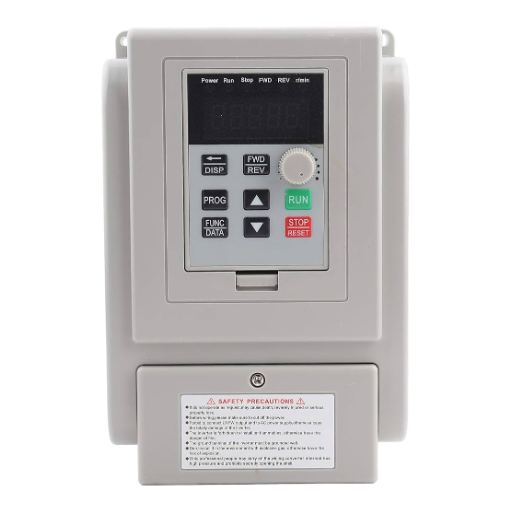
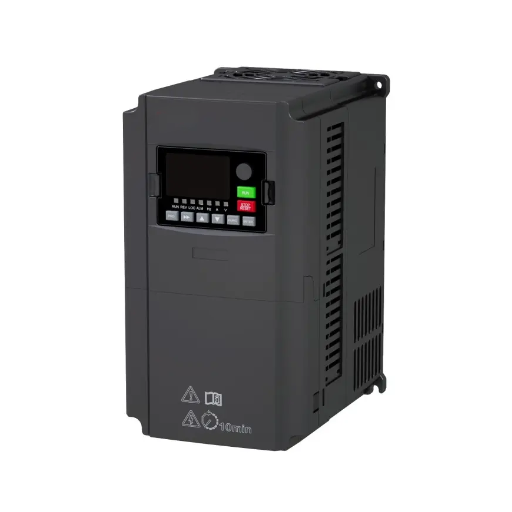
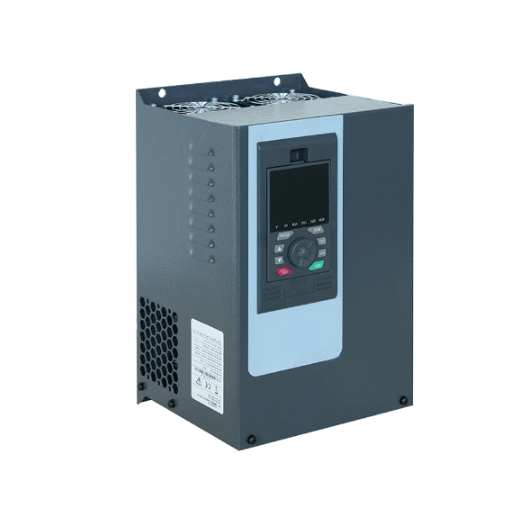
Ready to Get Your VFD Solution?
Whether you need a single drive or a complete system, we have the VFD products and engineering support to ensure your project's success.

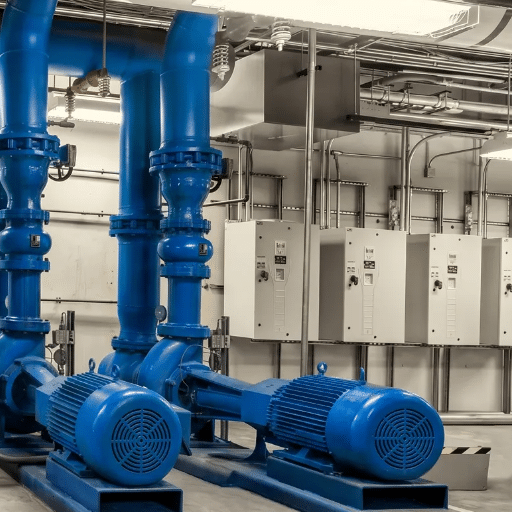
A VFD in water treatment controls pump and blower speed to match actual flow and aeration demand, reducing energy use by 20-50% on centrifugal pumps and 15-30% on aeration blowers. For water utility engineers and wastewater plant operators, the key to capturing these savings is matching the Variable Frequency Drive to the right pump type and control strategy, because not every motor in a water plant benefits equally from variable speed control.
Water and wastewater treatment plants are among the most energy-intensive municipal facilities in the world. According to the U.S. Environmental Protection Agency, water and wastewater systems account for 30-40% of municipal energy consumption in the United States. Pumping alone consumes 25-40% of total plant energy, and aeration blowers in wastewater plants can account for 40-60% of total electricity use. Many of these motors run at full speed around the clock, throttling flow with valves or simply recirculating excess water through bypass loops. That is energy and money wasted every hour of operation.
The good news is that VFD retrofits in water treatment typically deliver payback in 12-24 months, while simultaneously improving water treatment pump control, reducing pump cycling, and extending mechanical seal life. The challenge is knowing which applications to target first and which pump types will actually deliver the savings you expect.
What you will learn in this guide:
Key Takeaways
- VFDs in water treatment save 20-50% energy on centrifugal pumps with variable demand, but deliver minimal savings on positive-displacement pumps.
- Aeration blower VFDs with dissolved oxygen (DO) based control cut aeration energy by 15-30%, the single largest energy saving opportunity in wastewater treatment.
- Wet-well level control with VFDs reduces pump cycling by 60-80%, extending seal and bearing life significantly.
- NEMA 4X or IP65 enclosures are mandatory in corrosive wastewater environments where standard drives fail within months.
- Affinity law calculations (power drops with the cube of speed) determine whether a VFD retrofit will deliver the expected payback.

A Variable Frequency Drive (VFD) in a water treatment application is an electronic controller that varies the speed of AC motors driving pumps, blowers, and mixers. Motor speed control via VFD matches system capacity to actual demand rather than running at full speed and wasting energy. Learn more about what a VFD is and how it works.
Traditional water treatment systems use constant-speed motors and control output by restricting flow with throttle valves or by recirculating water through bypass loops. A throttle valve does not reduce motor power; it simply converts excess energy into heat, noise, and vibration. A VFD, by contrast, reduces the motor’s actual speed and power consumption proportionally. For centrifugal pumps and blowers, power drops with the cube of speed reduction. Slowing a pump by just 20% cuts its energy use by nearly 50%.
In water treatment facilities, VFDs control virtually every type of motorized equipment: raw water intake pumps, lift station pumps, distribution booster pumps, filtration feed and backwash pumps, aeration blowers, sludge pumps, and chemical feed pumps. See the complete guide to VFD applications across all industries.
Not every pump in a water treatment plant is a good candidate for VFD in water treatment energy savings. The #1 source of specification errors in water treatment VFD projects is mismatching the drive to the pump type. Understanding the difference between centrifugal and positive displacement pump curves is essential.
| Pump Type | VFD Suitability | Typical Energy Savings | Why |
|---|---|---|---|
| Centrifugal (raw water, clearwell, booster) | Excellent | 20-40% | Affinity laws apply: power drops with cube of speed |
| Multi-stage booster | Good | 15-30% | Variable head systems benefit; constant head systems less so |
| Aeration blowers | Excellent | 15-30% | DO-based control replaces throttling or on/off cycling |
| Positive displacement (sludge, metering) | Limited | 0-10% | Linear torque curve; VFD adds control but not significant energy savings |
| Peristaltic (chemical feed) | Poor | Negligible | Flow is mechanically fixed; speed reduction does not save energy |
| Submersible (lift station) | Good | 20-35% | Subject to long cable run and dV/dt considerations |
For a deeper technical breakdown of pump affinity laws, PID tuning parameters, and minimum speed limits for centrifugal pumps, see our complete guide to VFD for pumps and fans.
Centrifugal pumps account for roughly 80% of all pumps used in water and wastewater treatment, according to the Hydraulic Institute. These pumps follow a quadratic torque curve, which means power consumption drops with the cube of speed reduction. When a centrifugal pump slows down, both flow and head drop, and the motor uses dramatically less energy.
Common centrifugal pump applications in water treatment include raw water intake pumps, clearwell transfer pumps, distribution booster pumps, and filter feed pumps. A VFD for water pumps in these centrifugal applications delivers the highest energy savings because demand varies with time of day, season, and plant load.
Sludge pumps, chemical metering pumps, and peristaltic pumps follow a linear torque curve. Slowing the motor reduces flow proportionally, but power drops only linearly. This means a VFD on a positive displacement pump may add soft starting and precise flow control (valuable benefits), but the energy payback is typically negligible.
The honest assessment is that some water treatment VFD projects fail to meet savings expectations because engineers applied centrifugal pump math to positive displacement pumps. The VFD is not at fault; the payback calculation was wrong. Read our guide to VFD energy savings by load type for a deeper breakdown.
Aeration blowers represent the single largest energy saving opportunity in wastewater treatment. In a typical activated sludge plant, aeration consumes 40-60% of total plant energy. Fixed-speed blowers running at full capacity and throttled with diffuser valves or cycled on and off are wasting enormous amounts of electricity.
A VFD on an aeration blower modulates speed based on dissolved oxygen (DO) sensor feedback. When DO levels are high, the VFD slows the blower. When oxygen demand increases, the VFD speeds it up. This precise control eliminates the energy waste of over-aeration and reduces mechanical stress from on/off cycling. Energy savings of 15-30% are typical.
The pump affinity laws describe the mathematical relationship between pump speed, flow, head, and power. For water treatment engineers evaluating VFD retrofits, these laws are the foundation of accurate payback calculations.
The affinity law relationships:
Consider a 30 kW centrifugal lift station pump in a VFD for wastewater treatment application, running 4,000 hours per year at an average 80% of full speed (a typical duty cycle for a wet-well pump).
At full speed: Power = 30 kW
At 80% speed: Power = 30 kW x (0.8)^3 = 30 kW x 0.512 = 15.36 kW
Power reduction = 30 – 15.36 = 14.64 kW
Annual savings = 14.64 kW x 4,000 hours = 58,560 kWh
At 0.10perkWh:Annualsavings=0.10perkWh:Annualsavings=5,856
For a typical VFD installation cost of $3,500, the payback period is approximately 7 months.
A 50 kW centrifugal booster pump running 5,000 hours per year with an average speed reduction of 25% (75% of full speed):
At 75% speed: Power = 50 kW x (0.75)^3 = 50 kW x 0.422 = 21.1 kW
Power reduction = 50 – 21.1 = 28.9 kW
Annual savings = 28.9 kW x 5,000 hours = 144,500 kWh
At 0.12perkWh:Annualsavings=0.12perkWh:Annualsavings=17,340
This is why distribution booster stations with high run hours are among the fastest-payback VFD applications in water treatment.

Lift stations are the workhorses of wastewater collection systems, moving sewage from low-lying areas to treatment plants. A VFD for wastewater treatment lift stations offers two major benefits: energy savings and reduced pump cycling.
Wet-well level control with VFDs uses ultrasonic level transmitters or pressure transducers to modulate pump speed as the wet-well level changes. Instead of cycling pumps on and off at full speed, the VFD maintains a nearly constant level by running the pump at precisely the speed needed to match inflow. This is the most common form of water treatment pump control in wastewater facilities. This approach reduces pump cycling by 60-80%, which dramatically extends mechanical seal and bearing life.
PID tuning is critical for wet-well applications. The VFD receives a 4-20 mA signal from the level sensor and adjusts pump speed to maintain the setpoint. Most modern VFDs include built-in PID controllers. The key tuning parameters are proportional gain (to avoid oscillation) and integral time (to eliminate steady-state offset). An aggressive proportional setting will cause the pump to hunt; a slow integral setting will allow level drift.
Multi-pump staging adds another layer of control. In lead-lag configurations, the VFD controls the lead pump while fixed-speed lag pumps start when the lead pump reaches maximum speed. Advanced systems use alternating logic to equalize runtime across all pumps, extending maintenance intervals.
Booster pump stations maintain pressure in water distribution networks. A VFD for water pumps in booster applications uses pressure feedback to maintain a constant discharge pressure regardless of demand.
When morning demand spikes as residents wake up and shower, the VFD speeds the pump to maintain pressure. When demand drops during midday, the VFD slows the pump. Without a VFD, the pump runs at full speed and a pressure-reducing valve wastes the excess energy as heat. With a VFD, the motor consumes only the power actually needed.
Constant pressure pump control is the most common VFD strategy for distribution networks. The drive maintains discharge pressure within a tight band regardless of how many homes or businesses are drawing water.
For multi-pump booster stations, VFDs can coordinate pump staging to ensure the most efficient combination of pumps is running at any given demand level. This load-balancing logic prevents the common problem of running more pumps than necessary at inefficient partial loads.
Water treatment filters require variable flow during the filtration cycle and high flow during backwash. A VFD on the filter feed pump maintains constant flow during filtration, improving water quality consistency. During backwash, the VFD ramps to full speed to provide the high flow needed to clean the filter media.
Backwash pumps often justify VFDs on process control grounds rather than energy savings alone. The ability to precisely control backwash flow rate extends filter media life and ensures complete cleaning without over-fluidizing the bed.
In wastewater treatment, aeration blowers supply oxygen to the activated sludge process. A VFD for aeration blowers modulates speed based on dissolved oxygen (DO) sensor feedback, replacing the energy-wasting practice of throttling blowers with diffuser control valves or cycling blowers on and off.
Fixed-speed blowers are typically sized for peak oxygen demand, which occurs only a few hours per day. For the remaining 20+ hours, the plant over-aerates, wasting energy and sometimes creating foaming or odor problems from excessive air stripping. A VFD slows the blower during low-demand periods, cutting energy use proportionally while maintaining the target DO setpoint.
Aeration blowers in wastewater treatment and AHU fans in commercial buildings are structurally similar applications: both are high-run-hour centrifugal machines controlled by variable-demand feedback loops. The control strategies differ — DO sensors versus duct static pressure — but the affinity law savings are identical. See how VFDs reduce HVAC fan energy by 25–50% for a parallel case study in building automation.
Energy savings of 15-30% are typical for VFD for aeration blowers retrofits. In a 15 MGD wastewater plant, this can represent 50,000to50,000to100,000 in annual electricity savings, making it one of the highest-ROI upgrades available.
When the engineering team at a Midwest municipal water utility retrofitted 12 distribution booster pumps with VFDs and pressure feedback controls, energy consumption dropped 28% in the first year, saving $47,000 annually. The payback period was 14 months. More importantly, pump cycling was reduced by 70%, and maintenance calls for seal replacements dropped from quarterly to annually. The utility’s maintenance supervisor noted that the reduced mechanical stress had extended pump life beyond what even the manufacturer had predicted. This case is one of many covered in our complete guide to VFD applications across all industries.

Sizing a VFD for water treatment applications requires attention to details that general VFD sizing guides often overlook.
Many engineers size the VFD to the motor nameplate horsepower. In water treatment, this can be a mistake. Pumps rarely run at their best efficiency point (BEP) in actual plant conditions. Operating point sizing, which considers the actual flow and head where the pump runs most of the time, often reveals that a smaller VFD is sufficient or that a larger VFD is needed for high-torque starting.
Small rural water systems may have only single-phase power available. Single-phase input VFDs are available but require derating, typically by 30-50%. For example, a 5 hp single-phase input VFD may only reliably drive a 3 hp three-phase motor. Explore compact VFD systems designed for small water treatment applications.
Submersible pumps in wet wells present unique challenges. Long cable runs (over 50 meters) can create voltage drop and dV/dt reflected waves that stress motor insulation. For submersible applications, specify a VFD with:
Water treatment facilities are hostile environments for electronic equipment. Humidity, corrosive gases, and temperature extremes can destroy a standard VFD in months.
For critical pumps such as lift stations and potable water boosters, a manual or automatic bypass is mandatory. If the VFD fails, the bypass allows the motor to run across-the-line, ensuring continuous flow. Three-contactor bypass configurations (VFD contactor, bypass contactor, and input contactor) are the standard approach for water treatment applications.
Wastewater wet wells generate corrosive gases including hydrogen sulfide (H2S) and chlorine. Standard NEMA 1 enclosures will corrode and fail within six months in these environments. NEMA 4X stainless steel or IP65 enclosures are mandatory. NEMA 4X provides corrosion resistance and protection against direct water spray. IP65 is the IEC equivalent, offering dust-tight and water-jet protection.
Heat dissipation is a challenge in sealed enclosures. Specify VFDs with external heatsinks or forced-air cooling systems that can maintain safe operating temperatures without drawing corrosive air through the electronics.
Most municipal and industrial water treatment VFDs operate in the low voltage range (220V–690V), which covers the majority of pump and blower motors up to several hundred horsepower. Learn about low voltage VFD system selection, including voltage class trade-offs and when to consider medium voltage alternatives for very large aeration blowers.
VFDs generate harmonic currents that can distort the power supply and interfere with sensitive SCADA and PLC equipment. IEEE 519 recommends total harmonic distortion (THD) below 5% for general power systems. Water treatment plants with sensitive control systems may need active harmonic filters to achieve this level. Proper SCADA integration requires clean power; when VFDs and SCADA systems share a transformer, harmonic currents can induce noise in 4-20 mA sensor loops and disrupt PLC communications.
Practical mitigation strategies include:
Even a properly sized and protected VFD can underperform if not commissioned correctly.
After installation, verify that the VFD frequency corresponds to the expected flow and head points on the published pump curve. Use a temporary flow meter and pressure gauge to map actual performance against theoretical. If the operating point is significantly different from the design point, revisit the VFD sizing and PID parameters.
Water hammer in long discharge lines is a real risk with VFD-controlled pumps. Set acceleration ramps long enough to avoid pressure surges (typically 3-10 seconds depending on line length and diameter). Deceleration ramps are equally important; rapid pump shutdown can create negative pressure waves that collapse when they reflect back from downstream fittings.
Centrifugal pumps can overheat at very low flow because the liquid moving through the pump carries away heat. Set a minimum speed that maintains adequate flow for cooling. For most water treatment pumps, a minimum of 20-30% of full speed is sufficient. Also program a dead-head protection feature that shuts the pump down if discharge pressure drops to near-zero, indicating a broken line or closed valve.

Understanding the savings potential by system type helps prioritize which VFD investments to make first. Across all municipal and industrial facilities, VFD energy savings water systems achieve typically range from 15% to 50%, depending on pump type and duty cycle.
| Water Treatment System | Typical Energy Savings | Payback Period | Key Driver |
|---|---|---|---|
| Lift station pumps (wet-well control) | 20-35% | 1-2 years | Affinity laws + reduced cycling |
| Distribution booster pumps | 20-40% | 1-2 years | Constant pressure replaces valve throttling |
| Raw water intake pumps | 15-30% | 2-3 years | Seasonal demand variation |
| Filtration feed pumps | 10-20% | 2-4 years | Process control benefits add to energy savings |
| Aeration blowers (DO control) | 15-30% | 1-2 years | Eliminates over-aeration, largest energy user |
| Backwash pumps | 5-15% | 3-5 years | Process control primary benefit |
VFD payback is strongest on centrifugal pumps with variable demand and high run hours. VFD for wastewater treatment lift stations running 4,000+ hours per year, distribution boosters in growing service areas, and VFD for aeration blowers in activated sludge plants all deliver payback in 12-24 months. According to the U.S. Department of Energy, motor systems with variable load profiles are among the most cost-effective VFD retrofit candidates in industrial and municipal facilities.
VFD payback is weak on positive displacement pumps, constant-flow systems, and intermittent-duty pumps. Do not install a VFD on a sludge pump expecting 30% energy savings. Install it for soft starting and flow control, and budget the project accordingly.
When a water district in Thailand retrofitted three 22 kW lift station pumps with VFDs, they expected 30% energy savings based on a vendor proposal. After six months, the savings were only 8%. The district engineer was frustrated, convinced the drives were underperforming. The real issue: two of the three pumps were positive-displacement sludge pumps moving thickened solids to digesters. Positive displacement pumps follow a linear torque curve, not the quadratic curve of centrifugal pumps. The third pump, a centrifugal raw-water intake pump, did hit 34% savings. The district restructured its ROI presentation with honest pump-type assessments and secured funding for the remaining centrifugal pumps. The lesson: the affinity law is not a promise. It only applies to centrifugal pumps with variable system head.
Even experienced engineers make these mistakes when specifying VFD in water treatment systems.
Oversizing for the nameplate instead of the operating point: Size the VFD for where the pump actually runs, not where the nameplate says it runs. Operating point sizing prevents both underperformance and unnecessary cost.
Installing standard NEMA 1 drives in corrosive environments: A standard VFD in a wastewater wet well will corrode and fail within six months. Always specify NEMA 4X or IP65 enclosures for humid, corrosive environments.
Ignoring bypass requirements for critical pumps: A lift station without a VFD bypass is a flooding risk waiting to happen. Specify manual or automatic bypass for every critical pump.
Not accounting for submersible motor insulation: Long cable runs to submersible pumps create dV/dt reflected waves that damage motor insulation. Specify output reactors or sine wave filters for cable runs over 50 meters.
Forgetting harmonic mitigation when VFDs share a bus with SCADA: VFD harmonics can disrupt PLC and SCADA communications. Isolate power supplies and specify line reactors or active filters.
No. VFDs deliver significant energy savings on centrifugal pumps with variable demand, but minimal savings on positive-displacement pumps where flow is mechanically fixed. The key is matching the VFD to the pump type and curve.
Energy savings on centrifugal water pumps typically range from 20% to 40%, depending on the duty cycle and system head characteristics. A pump running at 80% of full speed consumes approximately 51% of full-load power, according to the affinity laws.
Yes. For critical water infrastructure such as lift stations and potable water boosters, a manual or automatic bypass is mandatory. If the VFD fails, the bypass ensures continuous flow and prevents flooding or service disruption.
NEMA 4X or IP65 is the minimum recommended rating for wastewater environments. Standard NEMA 1 enclosures will corrode from hydrogen sulfide and chlorine gases within months. NEMA 4X provides corrosion resistance and protection against direct water spray.
Yes. VFDs generate harmonic currents that can distort power supplies and disrupt sensitive SCADA and PLC equipment. Mitigation strategies include line reactors, DC link chokes, active harmonic filters, and isolating VFD power from control system power.
Size the VFD for 110% of the motor’s full load amperes, not just horsepower. For cable runs over 50 meters, add an output reactor or sine wave filter to protect submersible motor insulation from dV/dt reflected waves. Specify a NEMA 4X or IP65 enclosure for the wet-well environment.
Wet-well level control and DO-based aeration blower control typically deliver the highest VFD energy savings water treatment plants can achieve. Both strategies replace energy-wasting on/off cycling with precise variable speed operation, cutting energy use 20-50% while improving process stability.
VFD in water treatment delivers measurable energy savings, improved process control, and extended equipment life, but only when applied to the right applications with the right expectations. A VFD for water pumps in centrifugal applications and a VFD for aeration blowers in activated sludge plants are the primary targets, delivering 20-50% energy savings with payback periods of 12-24 months. For VFD for wastewater treatment applications like lift stations, the benefits extend beyond VFD energy savings water utilities count on to include reduced pump cycling and longer seal life.
Effective water treatment pump control requires three things: matching the VFD to the pump type and curve, sizing for the operating point rather than the nameplate, and protecting the drive for the corrosive, humid environment where it will operate. Follow these rules, and the affinity laws will deliver the savings they promise.
For facility managers and engineers evaluating water treatment efficiency upgrades, the priority sequence is clear: start with aeration blowers (the largest energy user in wastewater), then distribution booster pumps and lift stations (the highest-run-hour systems), and finally filtration feed pumps. Each system type has proven savings data, established control strategies, and straightforward integration paths.
Ready to upgrade your water treatment system with VFD technology? Contact our application engineering team for a free pump system compatibility audit and energy savings assessment, or browse our water-treatment-configured VFD systems designed for municipal and industrial facilities worldwide.
See our food processing VFD guide for hygienic drive selection criteria.