Ready to Get Your VFD Solution?
Whether you need a single drive or a complete system, we have the VFD products and engineering support to ensure your project's success.


Servo drives are vital to the contemporary motion control systems since they are capable of controlling motor speed, position, and torque with great precision. The selection of the right servo drive solution ultimately revolves around two main options—BLDC (Brushless DC) motors and stepper motors. Both methods are characterized by their own merits, performance, and demerits; apart from that, the process of selection has become increasingly delicate. This guide is developed to be the most complete reference and aid for those people in the industry who include engineers, system designers, and high-level decision-makers, and who are trying to understand the differences among these technologies, their connection with servo drives, and the major aspects that affect their performance in various use cases.
Servo motors are a unique type of motor designed to provide precise, accurate control of position, speed, and torque in many applications. In contrast to servo motors, the common motors operate via a feedback system, which the sensors like encoders send continuous data in order for the motor to do the task as it should. They are mostly seen in the industrial area that needs very high accuracy, for instance, robotics, automotive manufacturing, and CNC machinery. The usual practice is to connect servo motors with servo drives, wherein the latter in addition to regulating the power supplied to the motor, also accepts the integration of control signals from a controller according to the performance requirements. The distinctive factor in this case is the ability of servo motors to guarantee accuracy and quick response, thus, essential anytime tasks cannot be handled without closely controlled motion.
A servo motor is a sophisticated electromechanical tool that is manufactured with the purpose of giving an accurate control of angular or linear position, velocity, and acceleration. They work by the use of closed-loop feedback systems. This means that they get their control signals from sensors and provide a continuous performance output that keeps up with the desired parameters. At present, servo motors come with a very advanced type of encoders that boost the positional accuracy to the extent of sub-micron levels. The servo motors are mainly classified according to their application into AC, DC, and brushless types, each type having the best fit in particular sectors of industry, with respect to efficiency, torque, and speed. It is very important for the servo motors to be utilized in high-tech machinery, as they are the main part of them and they provide the necessary movement control. Such machines are: automation systems, robotics, medical equipment, and high-precision industrial tools, where the servo motors are suitable.
| Type | Power Source | Efficiency | Torque | Speed Range | Applications |
|---|---|---|---|---|---|
| AC Servo Motor | AC Current | High | High | Wide | Automation, robotics |
| DC Servo Motor | DC Current | Moderate | Moderate | Variable | Toys, small devices |
| Brushless Servo | AC/DC Current | Very high | High | Broad and efficient | Precision tools, medical |
| Brushed Servo | DC Current | Low | Moderate | Limited | Basic mechanical tasks |
| Linear Servo | AC/DC Current | Customizable | Very high linear output | Specific applications | Actuators, CNC machines |
| Stepper Motor** | DC Current | Moderate | Controlled, incremental | Limited/Discrete | Positioning systems, printing |

Brushless DC (BLDC) motors function using an electronic control system that does the job of the brushes and commutator in the old-fashioned motors. These motors are operated by the permanent magnets that are mounted on both the rotor and stator windings, which are energized by the sequence that is controlled. This entire process produces a magnetic field that is rotating, which in return interacts with the magnets on the rotor to create the torque. The brushless operation results in less mechanical wear and consequently, enhances both efficiency and life span. Another reason for the AC motor to be the most efficient in its application is that it can be operated with high reliability if its magnetic fields are most accurately controlled.
| Component | Description |
|---|---|
| Rotor | Contains permanent magnets for generating magnetic force. |
| Stator | Houses windings to produce the rotating magnetic field. |
| Windings | Copper coils energized to create electromagnetic interaction. |
| Permanent Magnets | Attached to rotor for consistent magnetic properties. |
| Controller | Regulates current flow and ensures precise operation. |
| Sensors | Detect rotor position for accurate commutation timing. |
| Bearings | Minimize friction for smooth rotational motion. |
| Shaft | Transfers mechanical energy to connected load. |
| Housing | Encloses and protects motor components from damage. |
| Cooling System | Dissipates heat for enhanced motor efficiency. |

Stepper motors are devices that convert electrical pulses to discrete mechanical movements while electromechanical. Stepper motors are unusual since they move in defined steps, which is perfect for applications that need very accurate positioning like 3D printers, CNC machines, and robotics. A step of the motor corresponds to an angle of rotation, meaning that the movement can be controlled without the need of any feedback systems. Stepper motors can efficiently be divided into two groups: permanent magnet and variable reluctance; the former is better at torque, and the latter ranks high in efficiency. Stepper motors are the most loved devices because of their reliability, simplicity, and the ability to be operated in open-loop control systems that helps to avoid the complexity and cost of additional sensors, and to provide consistent motion.
Stepper motors are brushless motors that are synchronous and that convert electrical pulses into mechanical rotation. The design of a stepper motor is that it divides a full rotation into equal steps making it possible to control motion and positioning very precisely. This is brought about through the rotor that consists of permanent magnets or soft iron and electromagnets that are part of the multiple winding phases.
The Best stepper-motor operates on an electromagnetic induction theme. The motor’s windings, by carrying electric current, will generate magnetic fields, which in turn attracts the rotor to the prevailing stator poles. The rotor will move in a stepwise manner when the stator windings are turned on/off one by one in a specific sequence thereby creating controlled, definite, and continuous motion. The step size is one of the specifications that can be used to describe the motor’s design and is usually the value of degrees per step, i.e., 1.8° or 0.9°, as in the case of a motor with 200 or 400 steps per revolution, respectively.
These stepper motors find extensive use in applications where precision is a must such as 3D printers, CNC machines, and surveillance systems. Their staying at a position without any additional sensors such as encoders, makes them very cost-effective and suitable for open-loop systems. But, how good the performance of stepper motors gets mostly remains a function of torque load, speed, and microstepping settings, which are undeniably important factors for the modern engineering in which the motors work.
| Type | Characteristics | Common Applications | Phase Configuration |
|---|---|---|---|
| Permanent Magnet (PM) | Low resolution, high torque | Printers, basic automation | 2-phase |
| Variable Reluctance (VR) | High speed, lower torque | Low-cost automation, positioning | Multi-phase |
| Hybrid | High precision, efficient operation | Robotics, medical devices, CNC machines | 2-phase or 5-phase |
| Unipolar | Simplified driving circuitry | Entry-level stepper applications | 4 or 6 wires |
| Bipolar | Higher torque than unipolar | 3D printers, robotics | 4 wires |
| Closed-Loop | Integrates feedback systems | High-efficiency precision tasks | Variable |
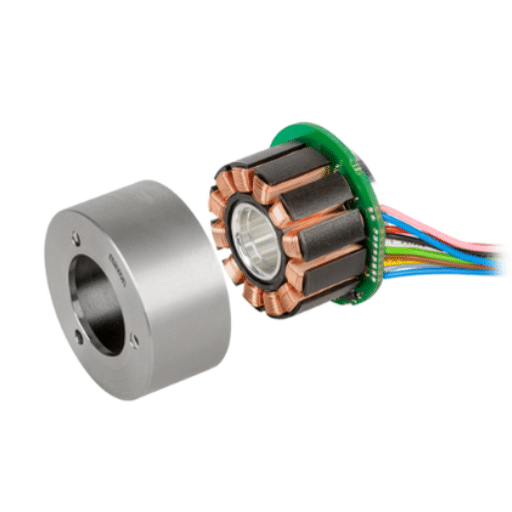
The need for a certain application is what makes people choose between brushless DC (BLDC) motors and stepper motors. High efficiency and speed are the main features of BLDC motors, so that they can be used with electric vehicles, fans, and drones, where they will be continuously rotating. They will give the work done accurately, torque consistently, and be less noisy, this is because of the motor controlling the commutation in a very electronic way. On the other hand, the stepper motors can be considered the best for precise positioning and incremental movement as their main tasks. They can be found in the applications like 3D printers, CNC machines, and robotic arms. The stepper motors do not require feedback systems for the angular steps, just for one example, but at higher speeds, they can decrease the torque loads experienced by BLDC motors.
When it comes to BLDC and stepper motors, the two types share some positive and negative characteristics, which are diverse in their strengths and limitations, and several criteria are the same for each. However, BLDC motors have a major advantage: high efficiency and excellent speed control. Especially in the application areas of electric vehicles and fans, where motors need to provide either continuous or variable speed rotations, this feature is a great one. On the other hand, they usually have a higher power density, hence, their size and weight are outputting more in space-restricted systems.
Stepper motors are excellent at precise positional control because they have a built-in design. This means they are very suitable for tasks that need precision or when you need to make very small steps to work and for which accuracy must be the same every time. Still, stepper motors may offer less torque at high speeds, which happens when the torque is directly proportional to the stepping frequency. Motors being different, one-of-a-kind, are the deciding factor in which type of motor to use; this all is a matter of balancing out efficiency, torque, precision, and cost.
In many different application scenarios, the control of motors, specifically stepper motors and servo motors, can be seen as an investment towards the accuracy, stability, and agility of the system. Stepper motors depend on the pulse signals from a driver circuit to control their position and speed. The said pulse signals are usually produced by a microcontroller or a pulse generator and the timing has to be very accurate so as not to lose precision. The more advanced the systems are, the more they employ the closed-loop control, in which feedback sensors are used to adjust the position and efficiency of the motor automatically, especially when it is running fast.
However, servo motors leverage intricate interactions between encoders or resolvers and an inner feedback loop to realize precise motion control. The feedback loop monitors the motors’ positions continuously and manipulates the input signal so that the power is applied correctly which ensures high accuracy even in different motion situations or dynamic environments. Besides, the servo systems are often provided with programmable logic controllers (PLCs) or digital signal processors (DSPs) that are capable of real-time adjustments which consequently will help to make them adaptive to the most complex of processes. The two systems are in this way proving that the use of state-of-the-art control strategies is of the highest importance in sync with the operational needs as well as performances and energy saving.
There are a number of important things to take into account when evaluating the possible options for motion control systems, such as the cost and efficiency of servo systems against stepper systems. Whilst the cost of servo systems is generally much higher at the start due to their sophisticated components and features, they provide a substantial improvement in efficiency over the long term by increasing the precision and adaptability in delicate operations. They work well with high-speed applications, dynamic load changing, and the constant necessity of feedback, and this can eventually translate into lower operational costs owing to fewer errors and less downtime (a waypoint between two events).
On the other hand, stepper systems are usually less cost-effective when it comes to initial investment, and thus they are appropriate for such simple applications with few or no adjustments or less accuracy requirements. Nonetheless, their not having feedback loops and being non-efficient at high speeds can result in the consumption of more power and parts wear. Still, the motor technology has made obvious progress – the energy part is now more efficient, and the controls are smarter, but still, the motor is not ultimately the most energy-efficient stop in the system.

Considering the alternatives to BLDC (Brushless DC) and stepper motors, the most common ones will be:
Every option needs to be checked against the operational needs, the monetary aspect, and the performance of the purpose of the application. The proper motor technology is to be chosen so that the system provides the right mix of energy, dependability, and utility.
DC servo motors are extremely accurate motors that are widely used in applications where position, speed, and torque must be precisely controlled. They are powered by a direct current source and have a feedback system such as a rotary encoder or a potentiometer that continuously tracks and changes their performance to a predefined setpoint. Moreover, the major advantages of using these motors are the quick time reaction and the high efficiency. Because of these reasons, they are widely used in robotics, CNC machinery, and automation systems.
One of the major benefits brought by the advancement of semiconductor technology is that the modern DC servo motors have been equipped with much-improved control algorithms and power electronics leading to much better dynamic performance and less energy consumed. It is now quite common for the torque-to-mass ratio and speed accuracy of the newer models to be higher than the previous versions as well as the latter are used in various industries especially in high-precision applications. For a DC servo motor to work effectively and be long-lived, it is necessary to take into account its compatibility with the loads, the hierarchical structure of the control system, and the heat transfer techniques.
The brushed DC motors are usually the most often used type of electric motors because they are very simple, and therefore cheap and efficient. The motors are working on the basis of the principle of commutation and the brushes assist it by a reversing of the direction of current in the armature windings which will keep the rotation continuous. Nevertheless, the mechanical commutator that has this type of operating way is connected with wear and servicing of the motor. Besides this, the last ones have been improved in their function and longevity by up-to-date designs. The use of brushed DC motors as starters gives a numerous advantage other than very high starting torques. It also provides a very simple way of adjusting the motor speed by changing the voltage supplied and the motor will still perform very well even it is working at the most extreme conditions of a load that is very far from the rated one.
Permanent magnetic motors (PMMs), the magnet of these is round in the rotor are the main place to lead to the power, they do not need the separate field winding again, and then energy losses are reduced. This unique design is responsible for increased efficiency, smaller sizes, and less maintenance necessary relatively to motor types of the past. PMMs have greatly been used in applications where it is all about precise control and assured performance like in electric vehicles, robotics, HVAC systems, and industrial automation.
The development of magnet materials has made a huge impact on the power density and energy efficiency of these motors. In one way, neodymium magnets have an exceptional magnetic strength, which makes it possible for engineers to create smaller and yet powerful motors with higher torque and output efficiency. Also, the cooperation of advanced electronic controls with PMMs results in the motor running more smoothly, having a better dynamic response, and making the speed regulation more superior.
But the use of rare earth materials has its downfalls, concerning the cost and the supply chain. It is a continuous process of lightening up this problem by coming up with different solutions such as the use of hybrid motor designs and the provision of manufacturing techniques that have been well-optimized so that the benefits from the use of permanent magnet technology can still be enjoyed even without or with very little rare earth content.
A servo motor is a kind of motor that is created for both the motor’s position and speed control in a very accurate way moreover it is put mainly in applications demanding instant reaction of a motor to provide the movement of the piece. It is just one component of a servo motor drive system with the drive and controller as the other main units of the system that may be used to control the position feedback and the electric energy that is generated. When compared to a regular motor or stepper motors, for example, servo motors are a much better choice with the higher engine strength and the smoother motor operation that they provide.
Stepper motors also give precise step-by-step motor rotation without the necessity for constant feedback. This is the main reason why stepper motors are much simpler and cheaper for open-loop applications. By contrast, servo drive and motor configurations represent the opposite. They supply feedback along with the superior capacity of a servo for dynamic loads. This results in better motor position holding and a faster motor shaft response in comparison with the other motor types. In plenty of cases, the selection is determined by the motor’s specification such as the torque it has, steady rotation servo, and the need for a servo amplifier for the drive motors.
In many cases, a DC servo motor is used for its simple design and the fact of existing windings, so that the main goal is to have a cheap motor. The other motors, like brushless DC and brushless motors, though, have more efficiency and a lower failure rate due to the lack of brushes and commutators. Motor characteristics, motor life of the system, and the choice between modern servo drives or DC drives being the favorites for the drive circuit will be some of the factors that support the decision-making process. In the case of frequent use, it is very likely to the brushless servo motor, or other integrated servo motor options have been recommended.
The controller is the heart of the machine that is responsible for interpreting position commands and feedback, as well as sending the guided process back to the controller-and-then-motor controller or drive circuit. It makes a huge impact on motor control strategies, motor position accuracy, and how the motor reacts to any load changes, thus affecting a servo’s performance. A variety of control and drive schemes are configured with a servo amplifier, feedback sensor, and communication interface connected to the controller. The correct setup of the controller, motor drive, and motor guide documentation is required for good motor operation.