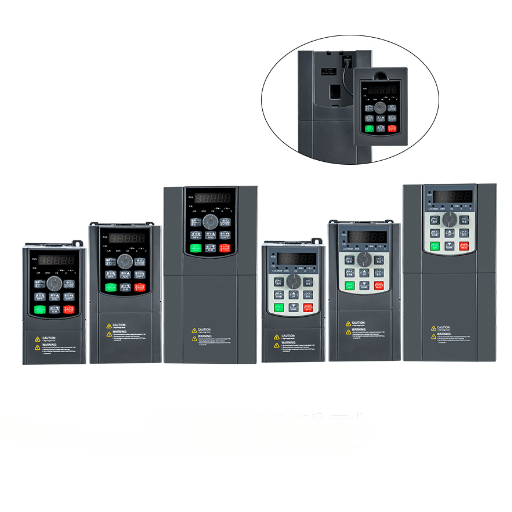
Ready to Get Your VFD Solution?
Whether you need a single drive or a complete system, we have the VFD products and engineering support to ensure your project's success.


Variable frequency drives (VFDs) are revolutionary components in today’s HVAC as they offer fine-speed control over motors, making it much easier to save energy. With HVAC (Heating, Ventilation, and Air Conditioning) professionals and plant managers looking to break down operating costs, each of them must become articulate with what VFDs really are, how they function, and their importance to the HVAC system. For instance, this guide really aims to inject knowledge into the readers. That knowledge can guide intelligent decisions in pursuing the installation of VFDs as part of building infrastructure in terms of such things as reducing energy consumption and increasing equipment longevity. We will further delve into the technical insights, practical applications, and other benefits of VFD technology.
Variable Frequency Drive (VFD) is an electrical device that may govern turning the speed and power in the motors, by setting the frequency and voltage of the supplied power frequency to the motor. By doing this, the operational performance of the motor is matched exactly to that of the load and with minimum destruction the Energy is used more efficiently. VFDs are used in HVAC systems to switch and control fans, pumps, and compressors, where their main role is to apportion the motor output according to the needs of the system, reducing energy usage and operational cost.
A Variable Frequency Drive (VFD) is an electronic component that has the ability to change the operating speed of an alternating current electric motor by changing the motor’s frequency and voltage at its input. By and large, the power modulated to the motor by a VFD is a result of the use of advanced semiconductor technology to provide precise torque and speed control. As much as the VFDs are known for their adaptability (to fluoroscope a series of applications that will occasionally require dynamic regulation in motor operations)-motors, conveyor belts, industrial machinery, ventilation systems, or pumps- their impact on the motor operation saves energy and ensures less repair.
Among the characteristics of modern VFDs is that they execute predictive maintenance alerts and online diagnostics, some of the cooperative innovative features that will enhance their performance and reliability while also checking on the low level of energy consumed to reduce the impact of the load on wear and tear, plus align with global attempts at energy conservation and sustainability.
VFDs play a key role in enhancing the efficiency and control of HVAC systems. They modulate the speed and torque of electric motors by regulating the frequency and voltage of the supply to the motor. This comes in handy for systems such as fans, compressors, and pumps, where adjusting motor speeds according to system demand can yield significant savings on energy.
For example, by using VFDs, HVAC systems can operate at varying speeds other than using the full capacity all the time. Thus, dynamic control ensures that the system delivers only the right amount of heating, cooling, or airflow required in order to maintain the contracted conditions for less power needed. Little research might mention just a small saving from reducing motor speeds by around 20%, but a huge saving can be observed up to 50%, which gives a measure of the extensive deployment of VFDs.
Another great advantage to the application of VFDs is that they extend the life of the system. By ramping up motor starts, they ease the wear and tear of being assaulted by sudden current surges. Advanced features with respect to assessing the operation of motors and the detection of discrepancies add support to predictive maintenance strategies, so as to minimize downtime and repair costs. This ability to manipulate and control energy innovations and dependability makes VFDs a pre-requisite application of any modern HVAC equipment, which conforms well with the demands of the HVAC industry for environmental and cost-effective solutions.
| Component | Function |
|---|---|
| Rectifier | Converts AC input power to DC power. |
| DC Bus | Stores and smooths converted DC power. |
| Inverter | Converts DC back to controlled AC for the motor. |
| Control Panel | Interfaces for programming and system diagnostics. |
| Microprocessor/Controller | Executes control algorithms and manages system operations. |
| Input Filter | Reduces electrical noise and improves power quality. |
| Output Filter | Protects motor from voltage spikes and harmonics. |
| Cooling System | Maintains optimal operating temperatures for reliability. |
| Feedback System | Monitors motor speed, torque, and performance. |
| Protection Circuits | Safeguards VFD from overloads and faults. |
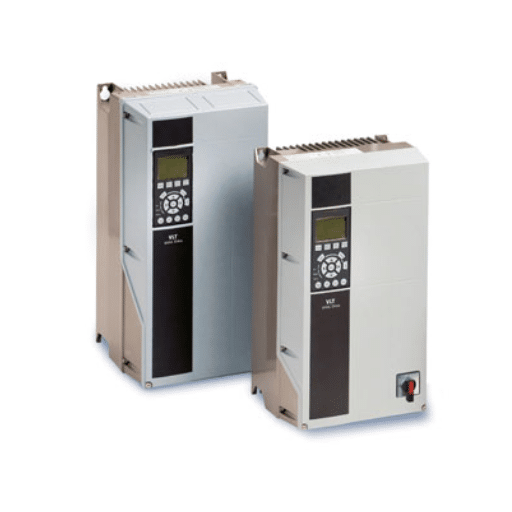
The Variable Frequency Drives (VFDs) modulate the speed of the motor to correspond to the load requirement, hence causing a significant reduction in energy consumption versus fixed-speed systems. This therefore also reduces waste of energy in heating, cooling, and ventilation processes.
It directly reduces operational costs by reducing energy consumption. In actuality, exact control of the working environment may reduce maintenance expenses for equipment perpetuation.
The smart construction of VFDs helps in giving a precise marching order to airflow, temperature, and pressure, making sure that there is comfort and that the indoor environment is forever set at a slow hum.
By slow-start and stop control of motors, VFDs prevent sudden jerks giving rise to possible mechanical wear and tear, leading to increased reliability and shorter downtime.
High efficiency, in terms of energy economics, implies lower carbon-polluting emissions, bringing the systems in line with modern eco-efficiency.
The implementation of Variable Frequency Drives (VFDs) in HVAC systems significantly boosts energy efficiency while shaving off on operational costs. Reports claim that energy conservation levels up to 50% can be obtained in VFD systems over fixed-speed motor systems. This effect is more pronounced with variable-speed motor control because VFDs could be signaled to adjust the speed of operation to the minute, which will reduce energy waste to the minimum possible.
Energy savings are only the beginning. Reduced energy demands also mean a reduction in utility bills, thus extending equipment life and reducing maintenance and replacement costs. For large commercial applications, these savings can effectively reduce annual operating costs for major cost savings, giving VFD a privileged set of tools for achieving economic and environmental sustainability in state-of-the-art building management systems.
Usage of VFDs enables a highly accurate control on the speed and torque of a motor to further configure for the specific needs of their workload. VFDs also allow the utility of pumping output to adjust as per the need in real-time, dynamic optimization rather than to run continuously at a fixed speed, thus acting favorably for the least consumption of energy while maintaining comfort levels in the HVAC systems. Furthermore, using VFD technology with enhanced balance of feedback mechanisms and programmable features has adapted extremely well to the changing operational needs across varying applications such as manufacturing, water treatment, and automation, ensuring that in a system, if necessary, it can respond better through a sensor and respond with full reliability.
HVAC systems in the modern era are marked with VFDs and hence give immeasurable performance enhancements through accuracy in their operation and much higher savings on power consumption. For every large system that works with variable loads, a 35–50% energy saving can be granted to HVAC using VFDs, as per various studies conducted. An advantage with VFDs would be applications where fans, pumps and compressors can dynamically adjust and attend to the needs of a given area without over-performance.
Even more, advances in Building Management Systems (BMS) have enhanced the efficient functions of HVAC. These systems make use of algorithms derived from machine learning, along with the application of sensors with IoT, to predict thermal loads and occupancy schedules for better regulation of the temperature. The intermixing of these technologies with HVAC will lead to less power usage, while prolonging the lifespan of primary components by keeping mechanical wear from the start-stop cycles at bay. The result is a highly sustainable and cost-effective solution that aligns with the shift towards green building standards and energy codes.

The Variable Frequency Drives (VFDs) are widely used in HVACs to maximize power efficiency and increase operational efficacy. Some of the key HVAC application areas include:
All the said applications will assist in enhanced system performance by saving energy, reducing wear on associated components, and increasing equipment lifespan.
Variable Frequency Drives are critically important for efficiency optimization in pump operations across a multitude of applications, including HVAC systems, water treatment plants, and industrial processes. Such VFDs allow for precise control of flow as well as pressure rates by varying the speed of the pump motor depending on the system requirements with every dip, thus saving a huge quantum compared to outdated fixed speed systems in terms of conservation of energy.
The inclusion of VFDs into the systems, thus acting like a mechanical adjustment device, minimizes hydraulic losses as well as prevents throttling and bypass. Such controls are more inefficient than efficient when compared to VFDs in the studies reviewed. Pump systems with VFDs are shown to save energy to an extent of 30-50%, depending on the working conditions. VFDs also help in extending pump life cycles and lowering maintenance costs over time by reducing startups and cutting down on the opposite wear and tear that fixed-speed motors bring. This makes VFDs an essential component for both sustainability and operational efficiency in modern pump systems.
Variable Frequency Drives (VFDs) are essential for enhancing compressor performance through an important aspect; energy-saving across various industrial applications will be brought about. VFDs have the feature of giving the option of an exact amount of motor speed to fulfill such as a hike or a lower operating demand. This regulation will culminate in a high amount of electrical energy saved, and reduce demand, resulting in a significant highly so that it works towards the air compressors in constant load variations. Studies have shown that, coupled together in modo function, these two elements can save up to 35% energy; thus, when working together, they will depend on the ambient conditions and load profile.
VFDs also help improve the system as they help in preventing issues related to pressure instability in air compression systems. Consequently, this stabilization improves quality governance and operational reliability in products that use direct airflow. Furthermore, the soft starting capability of VFDs reduces mechanical stress on compressor components and actually diminishes maintenance needs and extends the life of affected machinery. The adoption of VFD technology has been more of an unwritten obligation in an industry to help in levels of energy efficiency, lowering operational costs, and helping in creating a sustainable business for operation.
VFDs must be available as a part of any kind of cutting-edge commercial HVAC system for precision control over fans, pumps, and compressors. By appropriately speeding up or slowing down motor operation in line with real-time demand, VFDs help improve the operation of both AHU systems and greatly help cut energy consumption of as much as 30-50% in some applications. Full capacity is not needed in various cases, such as off-peak hours, and VFDs deliver effective energy efficiency by running equipment at minimum output.
In addition, the smooth operation of environmental conditions within the buildings also helps to increase comfort levels. Temperature and humidity control are better with more gradual changes and adjustments, allowing the occupants to feel more comfortable without any sudden switch-offs. Consequently, building occupants are satisfactorily served while the guidelines provided by ASHRAE and other regulatory benchmarks are fulfilled. Also, many VFD-based systems now arise with advanced diagnostic capabilities, which are efficient and consequently allow predictive maintenance and condition monitoring to mitigate operational downtimes and increase HVAC equipment life-cycle.
Due to their versatility and lower costs, VFDs are seen as a very significant innovation in the alignment of commercial HVAC operations with the vital standards of energy management and sustainable building practice.
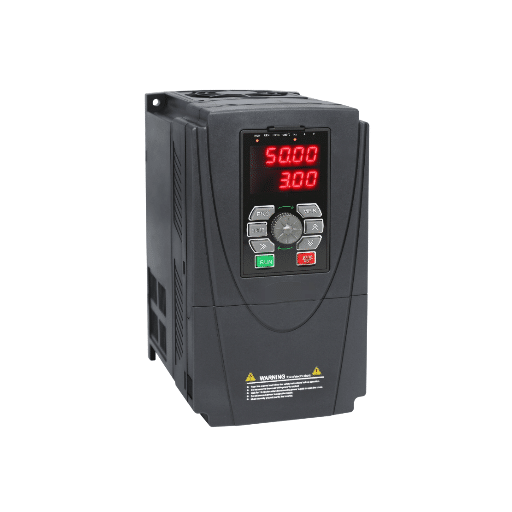
When calculating the energy savings provided by VFD, start by finding out the power consumed by the motor under normal circumstances while not using a VFD. This is basically calculated with the formula:
Power (kW) = Voltage (V) × Current (I) × Power Factor × √3
Afterward, apply the affinity laws to calculate the decrease in power when speed is controlled by VFDs. These laws suggest that motor power goes down as the cube of motor speed. For instance, a 20% reduction in a motor’s speed can provide about 50% of the saved energy.
And finally, calculate the annual cost savings measured as the difference in power consumption multiplied by the motor’s operational hours of a local energy cost that relates to the cost of VFDs and their benefits displayed in a particular application in a very simple manner.
In businesses from a range of sectors, there are giant energy savings recorded from the proper incorporation of variable frequency drives (VFDs). For instance, one food-processing unit had VFDs hooked up to its refrigeration compressors. By varying compressor speed in relation to the demand, the energy consumption was significantly reduced by 35%, thereby saving about $120,000 per annum. The energy saved also served an environmental purpose in achieving more than 500 metric tons of CO2 reduction for the plant according to its sustainability criteria.
From another case study, VFDs were also used in the retrofitting of a municipal wastewater treatment plant’s aeration pumps. A substantial energy saving of more than 40% has been achieved by the prompt matching of pump speed to variable oxygenation demands. The subsequent annual decline in operation costs amounted to $80,000, accounting for the realization of the project return within a span of just two years.
VFDs have shown remarkable energy efficiency in the case of HVAC systems in commercial buildings. A high-rise office building was further in the treadmill economy as well when air handling and the back-up cooling systems were up to speed with VFDs. This resulted in a 25% energy reduction. This has resulted in annual savings of $50,000 in electricity and improved air quality within the building, and enhanced system reliability.
This means that, from rising indoor temperatures to energy-saving VFDs, this configuration has given out efficiency gains both in practice and as a result in consistent practice. For instance, based on observations made on mid-size commercial buildings, energy conservation has been estimated solely on pumps and fans by 20%-30%, which greatly depends on the system design and operational conditions. The gradual enhancements on buildings are mainly effected in response to the wider ranges of power settings of VFDs with respect to motor speed and energy consumption, adjusted optimally to the changing requirements imposed by the load.
According to figures from ASHRAE (American Society of Heating, Refrigerating and Air-Conditioning Engineers), widening the usage of cutting-edge building optimization techniques, like those with advanced analytics, variable frequency drives for demand-driven ventilation, and such dynamic controls for indoor environmental quality, can accrue energy cost savings up to 40%. This high degree of dependency upon traditionally planned space demand means its overly inflated demand for energy input bears witness to an unoccupied and climatically non-charged area. Eventually, hitting on these details implies that the invariable strategy that concludes in a VFD proportional energy saving in HVAC proves to be a basis for sustainable building rules.
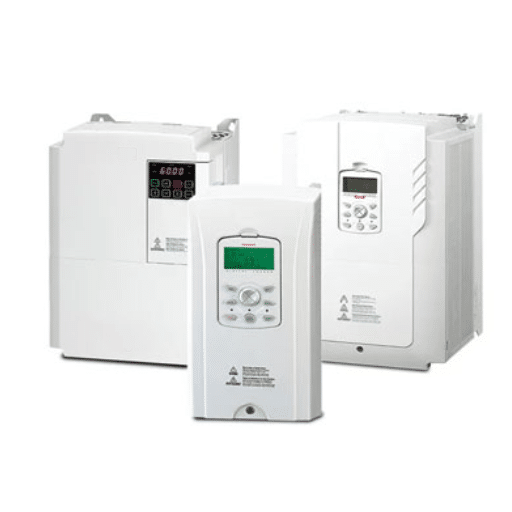
A careful examination of the compatibility of the motor, the load the system presents, and the particulars of the given applications will guide the selection of an appropriate Variable Frequency Drive (VFD). After choosing a VFD with voltage and current ratings within the motor’s limits, the dismal condition of its suitability for the variable torque and speed control under the circumstances and environment (temperature, humidity, etc.) needs to be verified.
During installation, adhere to the manufacturer’s instructions when installing the equipment. Installation parameters are dependent on proper bonding and wiring, and ordinary observance of safety to prevent grounding and the intrusion of electrical noise- hence, installing the VFD in a well-ventilated place to avoid overheating will enhance its durability.
Routine maintenance activities include inspection for any loose connections, vacuuming accumulated dust or dirt from cooling fins and fan rings, and listening to the VFD for anything out of the norm, like abnormal noise and vibration, including other factors. The VFD version updates should be done together with consistent monitoring of VFD performance in an attempt to transform efficiency and reliability even better. Through putting implications of these practices into action, prolonged life and uptime of the VFD are guaranteed, enabling it to deliver ultimate capacity under different applications.
Proper selection of the Variable Frequency Drive (VFD) is fundamental for the successful and efficient operation of the specific application you have. The decision concerning your motor requirements is most important, regarding the highest in voltage, current, and frequency that the motor may operate under, so as to ensure your VFD can operate the load as well as to have the biggest chance for compatibility. The next thing to do is to take a look at control strategies that are applicable in the VFD that would suit your system according to the degree of precision and performance required; that may include Volts per Hertz (V/f) control, sensorless vector control, or closed-loop vector control.
On the technical front, the tools, besides the environmental conditions like temperature, humidity, and potential dust levels, come into play. Look for ingress protection (IP) ratings on the VFD for abusive environment specifications or completely sealed enclosures. By far the best available features are harmonic reduction, integrated braking resistors, and communication capabilities (e.g., support for protocols such as Modbus or Ethernet/IP), which improve system integration and efficiency.
Considering any time that may be required for the manufacturer to attend to your technical support, warranty, or supply of spare parts, these elements can certainly help in the long-term reliability and maintenance of the system. By examining the above criteria, you are apt to zero in on a VFD that can support your application’s operational demands while gaining efficiency and durability.
It is proper to perform the Variable Frequency Drive in the right way so that the drive functions properly and does not result in equipment failure in the future. Initially, it is important to evaluate and adhere to the installation considerations of the equipment manufacturer in terms of the environment and where part placement is concerned. The VFDs must be installed in clean, well-ventilated areas with controlled ambient temperatures to minimize the remote possibility of dust/moisture contamination and overheating. Indeed, all drive components in the cabinet should have free-flow paths to allow for air to flow and cool them.
Next, we strongly suggest using grounding and shielding techniques to reduce electrical noise and electromagnetic interference (EMI). Proper grounding should comply with local electrical codes and standards in order to lower the risk of faults or damage caused to their associated equipment. For cable shielding, only one end of the shield should be attached to the ground so that no ground loops arise.
Also, we would recommend the use of proper input and output filter harnessing to minimize harmonics and mitigate the possibility of electrical disturbance within the system. Filters provide much-needed protection to sensitive equipment and also make sure that the harmonic distortion levels do not exceed the IEEE-519 standard. Cable routing, thus separating the power cabling from control and communication wiring, should be carefully looked after to eliminate noise issues.
In HVAC, VFD stands for a Variable Frequency Drive, which is a certain type of electronic system that controls the speed of motor controllers by altering their frequencies and voltages. Thus, a VFD differs in frequency and voltage in supplying power to system components, such as fans and pumps, therefore changing the speeds at which they operate and thus providing protection against stress, mechanical and electrical, while at the same time improving HVAC performance. VFDs give HVAC systems precise control, allowing the systems to be run at a lower speed and, therefore, consume less energy compared to when running at full speed. By operating below the full-speed range, HVAC fan and pump efficiencies improve while at the same time typically reducing maintenance requirements.
A variable frequency drive administers motor speed by voltage and frequency adjustment, making it a mode where the motor runs at the necessary speed rather than at constant or full speed. Variable frequency drives tune frequency and voltage using an inverter stage; this alters the frequency of voltage depending on load requirements, hence decreasing the speed of the equipment, like fans, when full capacity is not required. The frequency and voltage deviation display the positive impact on HVAC power operation and electrical savings with respect to a full-speed motor. The VFD hertz setting allows technicians to set motor speed to achieve the best fit during variable frequency drive installation.
Deciding to use variable speed avoids full-speed operation, which will lengthen the life of the motor by reducing load and power consumption. A fan or pump running at a slow speed consumes a lot less power. A motor without a VFD is forever at full speed for many hours, regardless of demand, increasing wear and tear on both electrical and mechanical components, and elevating HVAC maintenance frequency. A typical VFD system for variable starting and stopping dimensions, HVAC system capabilities, with only building usage, and improving HVAC system efficiency. In multiple places, enabling the HVAC to operate at full load for energy-saving comparisons can further reduce energy use and extend asset life beyond running the motor at full speed.
A Variable Frequency Drive converts incoming AC to DC, then inverts it to AC at a variable frequency and voltage so that the speed of a motor may be controlled accurately. By altering the VFD frequency, the controller can retard the process of hvac fans, and their tasks are tuned for a more efficient operation at less than full speed. The VFDs manipulate frequency and voltage, allowing the motor speed to be lowered by, for instance, decreasing the VFD hertz setting in order to lower the RPMs and the power used. This control helps in making the modern hvac system dynamically responsive to dynamic changes and implements good hvac performance even under specific conditions.