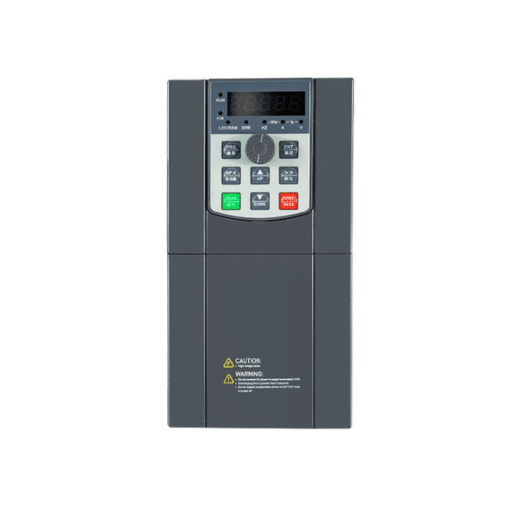
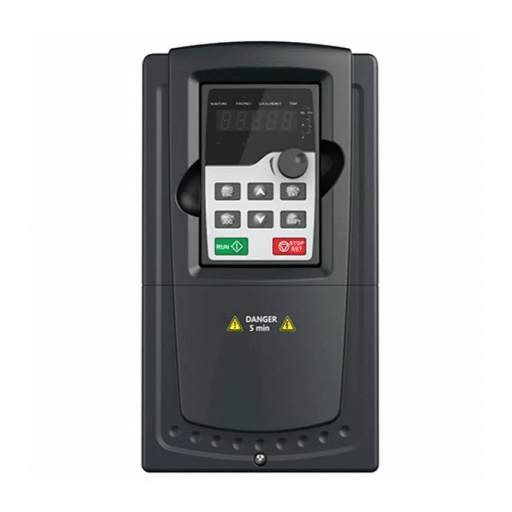
Ready to Get Your VFD Solution?
Whether you need a single drive or a complete system, we have the VFD products and engineering support to ensure your project's success.


A VFD ground fault trips when output current leaks from a motor phase to the motor frame or earth instead of returning through the phase conductors. The drive senses the imbalance and shuts down to protect people and equipment. The usual causes are motor winding insulation breakdown, a damaged or wet motor cable, and leakage on long or shielded cable runs.
Grace learned this on a washdown-area pump that ground-faulted every single Monday. The motor tested fine on Friday, but after a humid weekend the drive would not run ten minutes without tripping. The problem was not the drive and not a short. Moisture had crept into the motor terminations and dragged the insulation reading down until the drive saw current leaking to the frame.
You already know a ground fault can hide in the motor, the cable, or the drive itself. This guide gives you a repeatable way to find which one, confirm it with a megger, and fix it for good. We will isolate the drive, cable, and motor in order, then cover the false trips that waste the most time. If you want a second set of eyes on the readings, the Shandong Electric engineering team can help you isolate it.
Key Takeaways
- A VFD ground fault means current is leaking to the motor frame or earth, usually from motor insulation, a wet or damaged cable, or long-cable leakage.
- Isolate the drive, then the cable, then the motor, and confirm with a megger before you replace anything.
- Megger a low-voltage motor at 500 V DC: above 5 MΩ is healthy and below 1 MΩ means damaged insulation.
- Long or shielded cables and a high carrier frequency cause leakage that trips drives with perfectly good motors.
- Most repeat ground faults trace to the motor or cable, not the drive electronics.

A ground fault is current returning to earth through the motor frame instead of the phase conductors. In a healthy system the three output currents sum to zero. When one phase leaks to the frame, that balance breaks, and the drive’s ground-current detector trips.
This is different from an overcurrent fault. Overcurrent is too much current flowing to the motor through the normal path, usually from a jam, an overload, or an aggressive ramp. A ground fault is current escaping that path entirely. If you are not sure which one you are seeing, our complete VFD troubleshooting guide maps every fault, and the VFD overcurrent fault guide covers the overload side in detail.
Before you touch the output wiring, lock out and tag out the supply and let the DC bus discharge fully. A drive can hold lethal voltage on its bus and output terminals for several minutes after power-down. Verify zero energy with a meter before you open the motor terminal box.
Capture the fault before you reset it. Record the fault code, the output frequency, and the current at the moment of the trip. Note whether the drive trips on start, at speed, or only after rain, washdown, or a humid weekend. That timing pattern is your first clue, and it is free.
Do not replace the motor first. Isolate the drive, the cable, and the motor in order so you fix the part that is actually bad. This sequence is the core of the whole job, and guides such as AmiKong’s isolation walkthrough use the same logic.
Iris ran this exact sequence on a brand-new motor that kept ground-faulting on a packaging line. Everyone assumed the new motor was defective. Step two showed the fault appeared with the motor disconnected, which meant the motor was innocent. The real cause was a tray cable crushed during installation, and one replacement cable ended weeks of repeat trips.
A megohmmeter, or megger, is how you confirm motor insulation. This motor insulation test VFD technicians rely on applies a high DC voltage between the windings and the frame and reads the resistance in megohms. The golden rule is simple: never megger a motor while the drive is connected, because the test voltage can destroy the drive’s output stage.
For a low-voltage motor, megger test VFD motor windings to the frame at 500 V DC. Disconnect the cable, clip one lead to a winding terminal and the other to the clean motor frame, and read the value after it stabilizes.
| Megger reading (500 V DC) | Condition | Action |
|---|---|---|
| Above 5 MΩ | Healthy | Return to service |
| 1 to 5 MΩ | Marginal, likely moisture | Dry out and re-test |
| Below 1 MΩ | Damaged insulation | Rewind or replace the motor |
Grace’s washdown pump read 1.8 MΩ cold on a Monday morning, which is the marginal band. A dry-out and re-sealed terminations brought it back above 20 MΩ, and the Monday trips stopped. When a reading stays low after drying, the insulation is physically damaged and the motor needs a rewind or replacement.

A VFD cable ground fault is one of the most common and most misdiagnosed causes. Tray cables get crushed, abraded, or pinched. Glands fail. Moisture wicks along the conductors. Any of these lets a phase find its way to the cable shield or the tray, and the drive trips.
Moisture is the quiet killer in washdown, food, marine, and outdoor plants. Relative humidity above about 85%, condensation, and direct washdown all push insulation resistance down over time. Re-sealing terminations, replacing failed glands, and improving cable routing and drainage fix the root cause instead of just resetting the drive.
When you inspect the cable, look for flat spots, cracks, green corrosion at the terminations, and any place the jacket touches a sharp edge. Replace a cable that fails the isolation test rather than taping it, because a damaged jacket will keep leaking.
Not every ground fault is a real insulation failure. VFD leakage current flows through the capacitance of the motor cable to earth, and it grows with cable length and with the drive’s carrier frequency. On a long or shielded run, that leakage alone can exceed the trip threshold and cause a VFD ground fault false trip with a perfectly healthy motor.
Noah fought this on an exhaust fan fed by 180 meters of shielded cable. The motor meggered over 50 MΩ, yet the drive tripped intermittently at full speed. The cable capacitance and a high carrier setting were the cause, not the insulation. Fitting a filter and lowering the carrier frequency ended the false trips without touching the motor.
Three settings and practices stop most false trips. Lower the carrier frequency within the drive’s allowed range. Keep cable runs as short as practical and use a single-point ground with the shield terminated correctly at the drive end. Check that line reactors, EMI filters, and any upstream RCD are rated for drive duty, because a mismatched RCD will nuisance-trip on normal drive leakage. Confirm these values against the drive manual and your VFD parameter settings.
A VFD output reactor or dv/dt filter sits between the drive and the motor and smooths the fast voltage edges the drive produces. Those edges cause voltage spikes at the motor and drive leakage through the cable, both of which stress insulation and can trigger ground faults. Adding the right filter reduces the spikes and the leakage at the same time.
The common rule of thumb is cable length. Once a long motor cable exceeds roughly 100 to 150 meters, fit a load reactor or a dv/dt filter, and use a sine filter for very long runs. Confirm the exact limit and filter type against the drive manual, because it varies by voltage class and cable type. Wiring and reactor guidance such as LEADTIME’s VFD ground-fault notes make the same point.
Choose by run length and goal. A simple output reactor suits moderate runs and mainly tames current. A dv/dt filter suits longer runs and limits the voltage rise time that damages insulation. A sine filter suits the longest runs and gives the motor a near-sinusoidal waveform. If you are also reviewing whether the drive itself is sized or rated correctly for the application, our guide on how to choose the right VFD covers that decision.
Brand codes differ, but they all mean the drive saw current leaking to earth. Match your display to the table, then confirm the exact code and any related parameters in the drive manual.
| Brand | Typical ground-fault code | Meaning |
|---|---|---|
| Schneider Altivar | SCF3 | Ground fault |
| ABB | Earth fault / ground fault code | Current to earth |
| Yaskawa | GndF / GF | Ground fault |
| Siemens | F0001-class ground fault | Earth fault |
| Inovance | Err23 | Output ground fault |
| Danfoss VLT | Ground fault alarm | Current to earth |
The Inovance Err23 analysis from Longi is a good example of how one manufacturer breaks a single ground-fault code into causes and prevention. Use the code to find the fault family, then run the isolation method to find the part.
Match the fix to what the isolation test found. Rewind or replace a motor that reads below the megger threshold after drying. Re-terminate or replace a cable that fails the isolation test. Repair or replace the drive only when it faults with the motor fully isolated, because that is the one case where the drive is the cause.
Escalate when the fault is intermittent and passes every isolation step, or when it returns after a confirmed repair. Intermittent ground faults often need a thermal camera, a higher-voltage insulation test, or a closer look at grounding and the driven machine. For replacement drives, reactors, and filters sized to your cable length and load, visit our Shandong Electric VFD product range page.

Most repeat ground faults are preventable. Megger critical motors on a schedule and always after washdown, flooding, or long downtime, so you catch moisture before it becomes a trip. Fold that check into your regular VFD preventive maintenance so it actually happens.
Control the environment around the motor and cable. Seal terminations, replace tired glands, keep cable trays drained and covered, and manage condensation in humid or washdown areas. Finally, confirm the installation matches the drive manual: cable length within limits, the right reactor or filter fitted, the carrier frequency set sensibly, and a clean single-point ground. Get those four right and ground faults become rare instead of routine.
The most common VFD ground fault causes are motor winding insulation breakdown, a damaged or wet motor cable, and leakage current on long or shielded cable runs. High carrier frequency and poor grounding cause false trips on healthy systems.
Isolate the drive, then the cable, then the motor, in that order. A fault that persists with the motor disconnected points to the cable or drive, and a fault that only appears with the motor connected points to the motor. Confirm the motor with a megger.
At 500 V DC, a reading below 1 MΩ means damaged insulation that needs drying, a rewind, or replacement. Between 1 and 5 MΩ is marginal and usually moisture. Above 5 MΩ is healthy.
A new motor rarely causes a ground fault. Isolate first, because the cause is usually a damaged cable, a wet termination, or leakage on a long run. Condemning a good new motor wastes time and money.
Yes. Cable capacitance lets leakage current flow to earth, and it grows with length and carrier frequency. Above roughly 100 to 150 meters, fit an output reactor or dv/dt filter to stop false trips and protect the insulation.
No. Overcurrent is too much current flowing to the motor through the normal path. A ground fault is current escaping to the frame or earth. They have different causes and different fixes.
Lower the carrier frequency, shorten or re-route the cable, use a single-point ground with correct shield termination, and make sure any line reactor, EMI filter, or RCD is rated for drive duty.
Only if the drive manual allows no-load operation. Many drives permit a brief no-motor start to check the output stage, but confirm in the manual first, because some drives fault or are damaged by running with no load.
A VFD ground fault is almost always a motor, a cable, or a leakage problem, not a failed drive. Isolate the drive, cable, and motor in order, confirm the motor with a megger, and fix the part that is actually bad. Then stop the false trips with the right carrier frequency, cable length, filter, and grounding.
If a fault keeps coming back after a confirmed repair, the cause is environmental or in the driven machine, and we can help you isolate it. Contact the Shandong Electric engineering team for help reading the trip pattern, or browse our VFD product range for drives, reactors, and filters matched to your installation. For the full fault map, start with our complete VFD troubleshooting guide.