Ready to Get Your VFD Solution?
Whether you need a single drive or a complete system, we have the VFD products and engineering support to ensure your project's success.

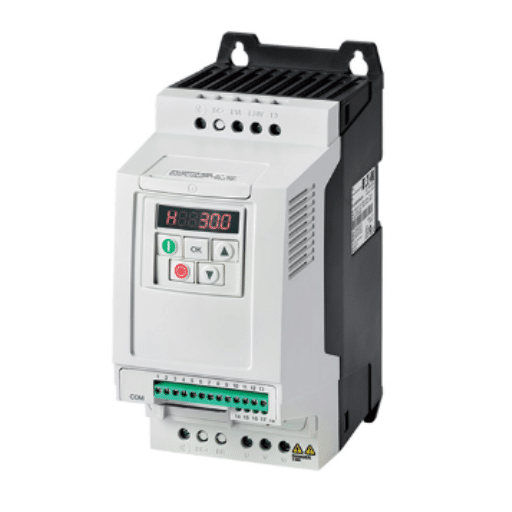
Variable Frequency Drives (VFDs) are an integral part of today’s industrial and commercial installations due to their having the capability to control precisely the motor speed, thus achieving both energy-saving and system performance simultaneously. Still, troubleshooting a VFD that has broken down can become a difficult and time-consuming task. This document brings forth a systematic troubleshooting decision tree that could be very helpful to the people of technology, engineering, and maintenance. In the situations where you are either dealing with fault codes, shutdowns that are not foreseen, or an unusual performance of the machine, then you are covered with the information in this article that will guide you step by step to the root cause and the solution that follows. We suggest you read the article to the end to continue with the process and to stay up-to-date with the latest insights that you can apply to keep your systems up and running without hassle.
Variable Frequency Drives (VFDs) are machines which are used to manage the velocity and torque of electric motors adjusting the motor’s input frequency and voltage. Typically used in HVAC systems, conveyor belts, and industrial machinery, VFDs promote energy savings, increase system operation, and lead to the longevity of components. The fact that they have this feature of precise control over the motor allows the VFDs to work towards process optimization and adapt the equipment operations to changes in the load demand. In the present-day industrial world where the major goals are to increase operational efficiency and to decrease the energy consumption, their application is a must.
The working principle of a Variable Frequency Drive (VFD) is based on the concept of converting the fixed-frequency AC power into variable-frequency and variable-voltage power. The first step is the rectification stage, which normally consists of diodes or thyristors to be used in order to change incoming AC power into DC. From there, the DC power goes through a nominal smoothing process by way of a DC bus system, which is dependent on capacitors or inductors to reduce the ripples. Eventually, the converter section is responsible for taking the DC supply and returning it to AC power, with the frequency and voltage kept under control. This is all performed by the latest in semiconductor components such as insulated-gate bipolar transistors (IGBTs) that can switch at high speed to achieve an accurate waveform.
The velocity of an AC motor is directly proportional to the frequency of the power provided. VFDs provide precise motor speed, torque, and direction control by varying the input frequency and voltage to the motor, as the technology allows the same time to meet various operational demands through these controlled operations. Moreover, one can find that many contemporary VFDs come with built-in microprocessors and the latest algorithms for facilities like overcurrent protection, fault diagnostics, as well as energy monitoring. So the VFDs are essential where motor control needs to be done flexibly and efficiently.
It is important to mention that VFDs help in enhancing the entire industrial system’s operations with efficiency and productivity as the main considerations. By controlling the motor at precise levels, the energy consumption is significantly reduced by the VFDs, besides it also being the global industrial power consumption that is accounted for at least 70% by the industrial electric motors. The cost savings with regard to energy efficiency would be great if industrially used, which in turn would keep operational expenses low and also enable strict compliance with energy regulations.
Besides power saving, VFDs also provide certain mechanical equipment protection by easing their startup process, controlling their acceleration, and smoothly and gradually stopping them. This, in turn, reduces mechanical stress and extends the operational life of the equipment. For example, in the case of conveyors or pumps, VFDs guarantee a more stable operation and prevent any damage or injury from occurring suddenly because of the starts or stops happening without warning. Moreover, the communication VFDs have with programmable logic controllers (PLCs) and supervision systems facilitates a hassle-free connection with Industry 4.0 and IoT-capable environments. As a result, such a connection gives data analytics and diagnostic tools with the power of many yet fast analyses altogether, thus, the industries’ equipment gets a great advantage because predictive maintenance methods and frequent and quick error rectification are always at hand.
In a wide variety of industries, VFDs are commonly used to give a smooth motor control, save energy and give systems more security. The HVAC market is an incredibly large user of these devices, as they are the ones that can save the most money by these means, providing better energy control and therefore lower consumption. Correspondingly, in the case of the factories, they are mostly users of the devices in question when the use of conveyor belts is an unavoidable side of production.
Water and wastewater treatment facilities exploit the use of VFDs for controlling pumps and blowers, and due to that, they can reduce energy consumption. In many oil and gas installations, VFDs play a crucial role in driving drilling rigs, compressors, and similar machinery, thereby lessening mechanical wear and elevating operational efficiency at the same time. Agriculture is another sector in which VFDs have a positive impact, especially in the irrigation systems where they are used for water flow control with a great degree of precision, thus increasing sustainability and saving resources.
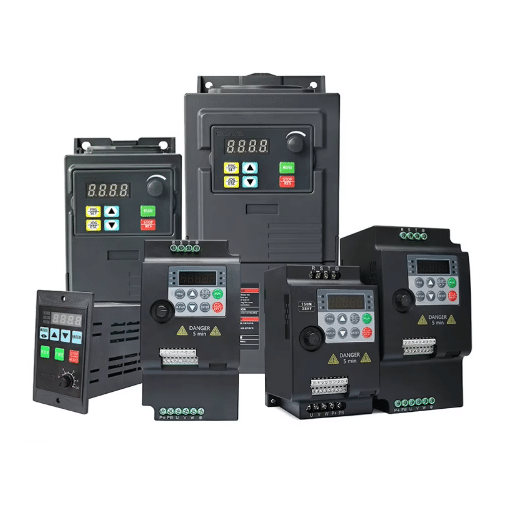
Voltage fluctuations are a more significant source of VFD failures. Problems could stem from overvoltage during a thunderstorm or a mains power shortage, or from undervoltage caused by an erratic power distribution grid or giant users. Both conditions alter the VFD’s operational modes and can result in a shutdown. This can be overcome by the use of voltage stabilizers or power conditioners, which help in the supply of power. Moreover, the implementation of monitoring equipment enables a timely response to voltage deviations in addition to their detection.
The excessive use of the motor, mechanical blockages of a sudden nature, and incorrect parameters of the VFD typically lead to overcurrent conditions. In the absence of proper protection, an overcurrent that is not corrected will harm the drive and the motor as well. Conversely, short circuits may result from insulation breakdowns, cable breaks, and defective parts. In the prevention of short circuits, the use of circuit breakers and fuses with the appropriate Ampere ratings, as well as the incorporation of overcurrent detection motor control settings, results in fast fault localization and minimal damage.
Too much heat gathering remains a strong concern, mainly in the severe industrial settings. Being short of cooling capabilities, having ventilation blocked, or having the VFD rated lower than the motor load cause the thermal overload hazards to grow. Thorough cooling system plans, the regular inspection of fan coolers, and ensuring that the VFD operates within the set limits are crucially important preventive actions. The latest versions of VFDs are additionally equipped with thermal sensors that are able to automatically shut down the unit if it is getting too hot.
VFD operations may be interfered with by noise introduced into control signals from high-frequency devices located nearby or inappropriate use of cable shielding that allows electromagnetic interference (EMI) to seep in. Inadequate grounding measures, employment of inferior quality shielded cables, and unsuitable EMI filters for VFD disturbances are disastrous for VFD operations. The proper location of the VFD, with regard to the sources of noise, is one of the ways in which the risk can be further minimized.
VFD (Variable Frequency Drive) failures identification calls for a strict way of diagnosing performance hitches, besides anomalies and the like. One usual consequence is the unusual operation of motors that can range from abrupt changes in speed to the erratic fluctuation of torque or to the sudden stopping of the motor, even if it is the quickest one. These can be traced back to several causes, like the supply network, component aging, or faults in the drive software. Also, there are sound vibrations which result in unusual humming, buzzing, or clicking, which point out capacitor, inductor, or VFD’s unusual fan problems.
Moreover, the second most important issue would be the presence of fault codes on the VFD’s display or control panel. This and other measurements generally represent the unique malfunction of the root problem, such as the overvoltages, under-voltages, or over-currents. Causes and effects of heating can sometimes be seen when a VFD has been placed, possibly through building up a set pattern of high levels at the de.
Additionally, the fluctuations in the current and voltage signals are a common issue in VFD usage and can be the first indicator of a malfunction in the entire system. By consciously focusing on the actual values of the main parameters and performing preventive maintenance on a regular basis, the VFD’s life expectancy and performance, among others, can be significantly elevated.
In terms of temperature and humidity, it is the former that has an even greater impact on the VFD’s well-being since the drive is a source of heat. It is common for the device to have trouble with its power-handling capability and eventually fail when the surrounding air is too hot. High temperature usually triggers these issues. It is necessary to have the installation area properly cooled and ventilated according to the specified temperature ranges of the manufacturer to make VFDs work at their best efficiency.
Dust and dirt are among the prime threats due to the chances for particles to settle on internal parts, block the air supply, and damage insulation. The most important thing to do when protecting the VFD from dirty and moist environments is selecting enclosures with appropriate ingress protection (IP) ratings. One area where the reliability of VFDs (variable frequency drives) can be heavily influenced is humidity and condensation, which can cause the corrosion of the circuit boards and connections. The use of anti-condensation heaters or dehumidifiers installed inside the enclosure will be the most efficient way to overcome this threat.
Vibration is another environmental impact that has a significant effect. Machines that are vibrating excessively or for too long a time can affect the electronic circuits in the equipment or even reduce the lifespan of the drives. The issue can be managed by using vibration isolation means such as rubber mounts or vibration-dampening enclosures.
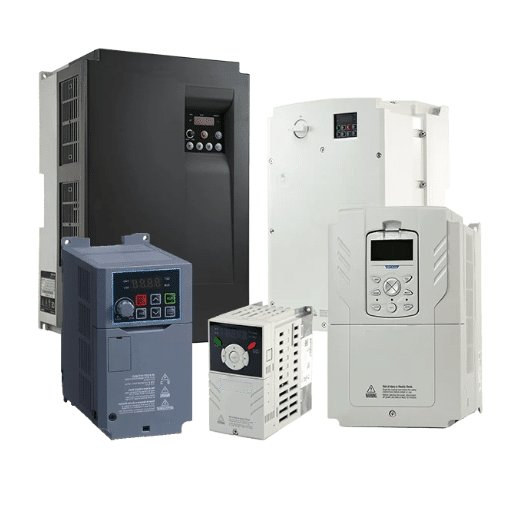
When doing the first inspection and diagnostics, using sophisticated data analysis tools can truly increase the accuracy of the fault detection and system assessments. Make sure to use diagnostic software that can communicate with the VFD to get the operating logs, error codes, and system performance metrics, these tools spontaneously provide you with very helpful information about problems like the voltage being in an abnormal condition, and irregular output frequency and even the flow of current being irregular. The comparison of data trends at different points, such as motor loads and error frequencies over time, can help to discover the real basis for the system being inefficient or in malfunction.
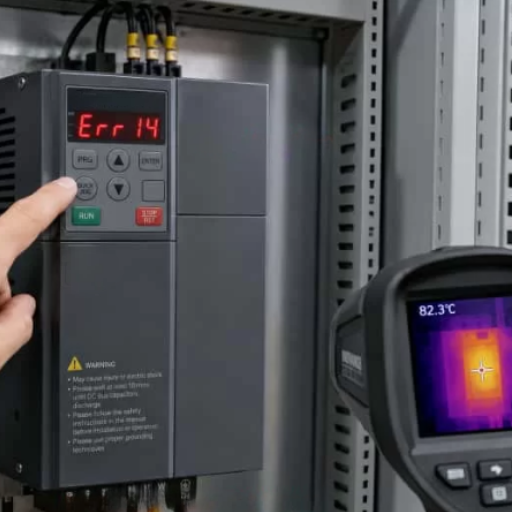
Moreover, the quantification of harmonics in the power supply is done with the help of a power quality analyzer to check if the IEEE 519 standards are met; these standards also help in protecting the drive and linked equipment from damage. Infra-red thermography, a technique that is a part of the process, is used to understand the heat dissipation issue and can also detect motors, drives, and VFDs that are overheating through the image forming process. The steps can be taken step by step, and inspections can also be done according to the protocols with great detail. The result will be better system optimization through a really long process of diagnostics that will find the exact problem and make sure that the right action is taken.
Using a multimeter for VFD (Variable Frequency Drive) troubleshooting is like gazing through a magnifying glass at the slightest of electrical parameters to detect discrepancies with great precision. Problems such as unbalance or distortion in the voltage supply are early signs of certain components that might fail, which can also be an aftermath of bad or corrupt network performance. Any fault in the former would inevitably lead to a situation where the overall operating system of the drive would be negatively affected, depending on the extent and significance of the imbalance or distortion. So regulators and rectifiers would eventually draw different currents from the battery system at certain points of the operations, which could readily result in imbalanced power distribution at the output end. Quite unfavorable scenarios because the effects are very much non-linear and system-dependent.
Testing with a multimeter is one of the essential steps. The insulation resistance between the motor windings and ground should be checked with the resistance measurement feature of the multimeter. A decrease in insulation resistance is often the first sign of either a cable or a motor winding degradation, which can eventually lead to operational failures. Besides, by monitoring the current draw of each phase during the load conditions, one can gain a lot of information about motor performance and the presence of issues like overloading or imbalance.
Last of all, select the multimeter to measure the frequency output that comes from the drive to make sure the device works within its prescribed range and facilitate the process of speed control. This fine-checking process is a must to guarantee synchronization between the drive and the motor. Following the mentioned detailed procedures will enable the multimeter to be an excellent tool in pinpointing performance deviations and providing reliable VFD operation.

The VFD fault codes are essential in knowing the system’s operational condition and the possible circumstances that could arise. These codes, if interpreted properly, will be beneficial in terms of a quick and adequate response to the faults, thereby avoiding unnecessary or prolonged downtimes. The common fault codes include various parameters such as overvoltage, undervoltage, overcurrent, and thermal overload. For example, an overvoltage fault error would possibly be an excessive input voltage or regenerative energy that returns to the drive and thus, voltage supply stability and braking resistors have to be checked. On the other hand, the reason for an overcurrent fault might be a sudden increase in the load or a short circuit in the motor or wiring, which needs a motor connection test and a load check to be verified.
Moreover, there are a number of drives which are up to date in terms of fault detection and troubleshooting, as they can monitor the parameters of interest, such as inverter outputs (DC Bus voltage), directly to motor windings (temperature). The continuous observation of these parameters might give a hint of a likely issue before it happens. To understand them correctly, one has to refer to the factory-furnished documents. They not only contain the most detailed and explicit list of faults and related causes but are also specific to the respective VFD model. The fault fixing procedure, which is applied consistently, will result in prolonging the life of both the drive and the machine’s parts.
Analyzing the problems related to the power supply within the Variable Frequency Drive (VFD) is a crucial factor, and the main thing your company should do is to focus on handling the quality of the power. The discrepancies in the voltage levels, asymmetries in the phases, or the frequency of the presence of the harmonics could result in instabilities in the operation or even damage to the system and the devices. A detailed study requires the measurement of the incoming voltage with the help of a trustworthy multimeter and checking that it is within the permissible range.
Further, the inspection for the sudden rises in the voltage line, voltage dips, or complete cutting of the power might uncover the external factors that are contributing to the can be seen through such inspection contributing to instability. Further, going to the total harmonic distortion (THD) in the power supply is a step towards implementing IOT, as high THD can degrade the performance of the equipment or even cause the equipment to wear out sooner than expected. Mitigation of these issues may very well require that corrective measures, such as reactors or filters, be installed at the power distribution points. The successful operation of the power supply quality is crucial to protect the VFD systems’ performance and reliability over the long term.

There should be uninterrupted updates for the VFD firmware to meet the highest functionality standards and to adopt the best suggestions or rectifications by the manufacturers. To make the updates easier, back up the VFD’s parameter settings to prevent data losses.
Frequent checking and maintaining the cooling system is important for good thermal heat management for VFD operation. Cleaning or changing air filters, verifying the functioning of the cooling fans, and managing the airflow around the heat sink are identified as ways to avoid thermal stress and give a long life to the device.
It is good practice to take insulation resistance tests at regular intervals to evaluate the integrity of the motor and cable insulation of the VFD. The test not only exposes such weaknesses caused by environmental factors and wear from the operation but also certifies that it is a reliable performance and minimizes the risk of the device’s failure.
Set up a regular process of checking and readjusting drive parameters to ensure that they are aligned with the required operational conditions. It is likely that settings come off track as a result of constant adjustments or system changes, and so regular checking is indispensable for the system’s accuracy and functionality.
The monitoring of the condition of the motor on load and the torque level, to observe any discrepancy between motor capacities and load current, indicating the presence of petrol and oil shortages in the VFD, which may lead to system dysfunctionality. A complete inspection assists in identifying the defects or problems in the mechanical part, which may cause the VFD and the attached systems to act improperly, so the check and repair are proactive as well.
Make sure to regularly check the VFD and other parts for signs of wear, overheating, or corrosion. Essential as well is a definite yearly maintenance that includes checking of electrical links, ensuring enclosure integrity, and changing the broken-down parts, such as cooler fans or condensers.
The VFD’s climate should be in a way that is equal to the manufacturer’s requirements regarding the temperature, humidity, and air quality. Overt heat, wet, or dust and oil mist as part of the airborne particles may result in the fast failure of sensitive electronic components. Therefore, the use of the right enclosures or climate control systems may not be an option but a necessity in hardworking places.
A major factor in the determination of VFD’s performance and reliability is poor power quality, which could involve occurrences in voltage levels and frequencies, as well as uneven distribution of the phases of supply. In order to eliminate the disturbance caused by poor power quality and to guarantee the steadiness of the operation, make use of three-phase isolation transformers, line reactors, and active harmonic filters.
Follow through this: nearly all of the annoying external factors that can have more impact on your VFD equipment than the power supply itself can be effectively and economically addressed. Always use grounding and shielding as the foundation before you take other complex troubleshooting actions.
The customer wants to get the motor and connected machinery to be always safe, reliable, and properly working. Matching the VFD protection settings to the motor and load’s real-time requirements is the consequent hard work after getting rid of the most pressing issues. It might look like a difficult job setting the right overload protection, current/ampere limits, and thermal protection for the respective states of the motor; however, when the system is up and running, the setup will.
Try to take advantage of present-day predictive maintenance tools like thermal imaging, vibration analysis, and motor current signature analysis (MCSA). These technologies will help in the identification of the first symptoms of either mechanical or electrical issues, thereby allowing corrective actions to be taken before major failures manifest themselves. By incorporating these tools with IoT-based monitoring, not only is real-time data acquisition guaranteed, but it also enables better decision-making through faster access to information.
The troubleshooting process can be started by visually investigating the drive for possible issues such as metallic connections coming loose, burned parts or signs of a bear, and potentially fried components. Be sure to test the incoming power (mostly with the DMM carrying voltage of 480V or 24VDC circuits for control, depending on the drive) to be on the safe side and prevent high voltage and low level DC problems on power supplies and bus DC from making the whole drive system go down. Go over the fault history or make a fault code appear on the VFD display to stop guessing and focus on the problematic part, and identify the timing control board and terminal labels.
Yes, being equipped with an oscilloscope will permit the examination of the output voltage waveforms as well as the electrical signal integrity coming from the VFD drive going to the motor, while you are doing the troubleshooting. The scope should be your instrument to stumble upon measures like distorted PWM, missing phases, or abnormal rms and peak voltages that may be indicative of either a control circuit or power output problem. Make a connection between the oscilloscope findings and the fault history and if there is any fault displayed on the screen, in order to know whether the issue is due to a control board fault, inverter module failure, or external interlock.
The initial step in troubleshooting is to validate the power coming in and to look for any dropping voltage or missing phases at the terminals using a multimeter or DMM. After this, you can also check the control circuit signals, such as 24VDC enable, analog signal speed reference, and any PLC interlocks that could stop the VFD operation. Furthermore, you should not ignore checking the fault history and displaying a fault code, and then switching to output voltage or DC link voltage faults, which can be checked using the voltmeter or oscilloscope for transient anomalies, if necessary. Make sure that you clamp up all loose connections at both line and motor terminals, and also make sure that the mechanical load does not hinder the rotation due to back-pressuring or seizing of the bearings.
Make a visual inspection of the region where the power is supplied and of the control board to see for any blown fuses, bulging capacitors, or burned traces that reveal overheating or a previous VFD failure. Take the reading of the AC voltage at the power input and the DC voltage at the bus with the help of a reliable multimeter in order to match the rated power output and also to validate 480V or other specified ratings. Do check and double-check the tightness of terminal connections and visualize, along with accepting the 24VDC auxiliary power supply and analog signal inputs, that they are up to the specified levels.