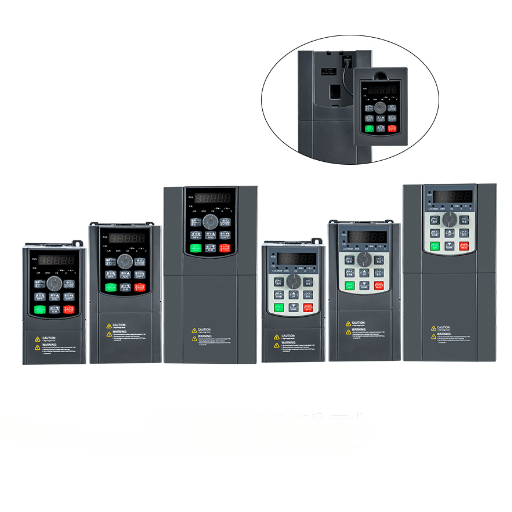
Ready to Get Your VFD Solution?
Whether you need a single drive or a complete system, we have the VFD products and engineering support to ensure your project's success.

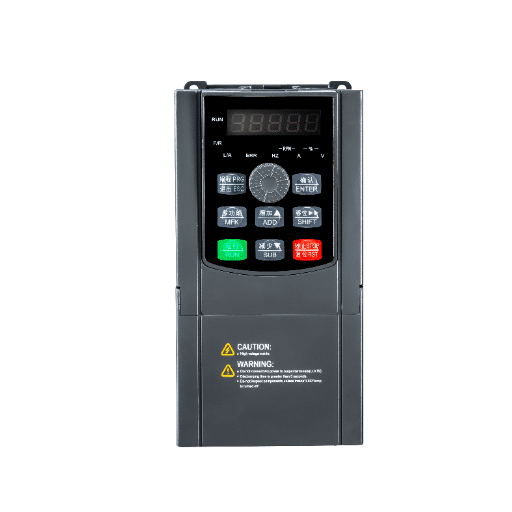
A single phase to 3 phase VFD lets you run three-phase lathes, mills, and table saws on standard residential or small-shop single-phase power. The VFD converts your 220V single-phase input into 220V three-phase output through an internal rectifier and inverter, giving you variable speed, soft start, and reverse control in one device.
Your dream lathe is three-phase. Your garage has single-phase. That gap stops more hobby machinists than any other single obstacle. Used three-phase machines are everywhere — cheaper, more robust, and more available than their single-phase equivalents. But most homes and small shops only have 240V single-phase service. Many hobbyists ask how to run 3 phase motor on single phase power. Without a VFD or phase converter, it is impossible. This Single Phase to 3 Phase VFD for Workshop guide gives you the exact wiring, parameter settings, and machine-specific guidance for lathes, mills, table saws, and routers. We’ll cover the 2x derating rule, step-by-step wiring diagrams, a parameter cheat sheet for common VFD brands, real shop budgets, and the honest warnings no manufacturer brochure includes.
For a deeper dive on single-phase input configurations, see our guide to single phase vfd guide
Key Takeaways
- A single-phase input VFD can run most 3-phase workshop motors up to ~10 HP by synthesizing 3-phase output from 220V single-phase input.
- Always oversize the VFD by 2x the motor HP when using single-phase input (e.g., 5 HP VFD for a 3 HP motor).
- Wire the motor in Delta (low voltage) configuration for 220V three-phase output.
- The VFD output must go directly to the motor — no contactors, drum switches, or power distribution between them.
- A VFD gives you variable speed, soft start, and reverse. A phase converter does not.

Three-phase industrial machines dominate the used market. A Bridgeport mill, a Clausing lathe, or a cabinet table saw with a three-phase motor is typically 30-50% cheaper than the single-phase equivalent. They are also more reliable. Three-phase motors have no starting capacitors to fail, no centrifugal switches to stick, and simpler windings that run cooler.
The problem is power. Utility three-phase service costs 20,000to20,000to150,000 or more to install, depending on your location and transformer distance. For a home garage or basement shop, that is impossible. A single phase to three phase converter VFD is functionally different from a rotary phase converter, which solves the power problem but costs 1,500to1,500to15,000 and gives you fixed speed. A motor swap to single-phase is possible on some machines but sacrifices torque, requires expensive replacement motors, and eliminates any speed control.
The single phase to 3 phase VFD is the cheapest, most capable path. Entry-level drives start around $300 for small motors. You get true three-phase power, infinite speed control, soft start, and programmable acceleration. For one machine, nothing else comes close.
For a broader overview of phase conversion methods, see our complete single phase to 3 phase VFD guide.
A Variable Frequency Drive is an electronic inverter. It takes your single-phase AC power, converts it to DC through a rectifier, stores that energy on a DC bus, then uses an inverter stage to synthesize three-phase AC output through Pulse-Width Modulation (PWM). The result is three-phase power at variable voltage and frequency.
On three-phase input, the rectifier draws current from all three lines in sequence. On single-phase input, it draws from only two lines. The same DC bus must be maintained with half the input paths. This increases current draw and heat generation in the input rectifier and DC bus capacitors. Manufacturers address this by derating the drive — you must use a larger VFD than the motor’s nameplate HP.
Most single-phase shop power in North America is 240V split-phase. A single phase to 3 phase VFD outputs approximately 220-240V three-phase. If your motor is dual-voltage (230/460V), you must wire it for the low voltage (Delta) configuration. If your motor is 460V only, you cannot run it directly on a 220V-output VFD without a step-up transformer.
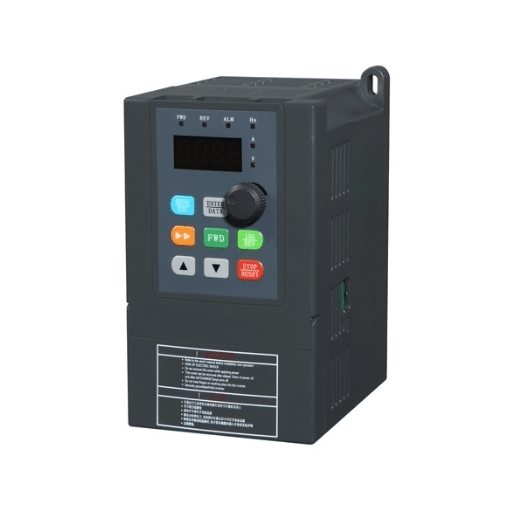
For a complete overview of available drives, browse our single phase to 3 phase VFD product range to find the right input voltage, HP rating, and protection features for your machine.
Check your motor nameplate wiring diagram. For 220V three-phase operation:
Most dual-voltage motors arrive from the factory wired in Star for 460V. You must open the motor junction box and rewire the jumpers to Delta before connecting to a 220V-output VFD.
The most common mistake in single phase to 3 phase VFD installation is undersizing. When the input is single-phase, size the VFD at 2x the motor HP or 2x the motor FLA (whichever is larger).
| Motor HP | Motor FLA (typical) | Minimum VFD HP (single-phase input) | Minimum VFD Current Rating |
|---|---|---|---|
| 1/2 HP | 2.5A | 1 HP | 5A |
| 1 HP | 4.8A | 2 HP | 10A |
| 2 HP | 7.5A | 3-4 HP | 15A |
| 3 HP | 10.6A | 5-7.5 HP | 22A |
| 5 HP | 15.2A | 10 HP | 30A |
| 7.5 HP | 22A | 15 HP | 44A |
| 10 HP | 28A | 20 HP | 56A |
Why FLA matters more than HP: A high-torque motor, an old motor with degraded windings, or a motor with a high service factor may draw more current than the HP rating suggests. Always check the motor nameplate FLA and verify the VFD’s output current rating exceeds that number by at least 50%.
120V vs 240V input: If you only have a 120V outlet, purpose-built 120V-input VFDs exist for motors up to about 1-1.5 HP. For 240V single-phase, many more options open up. Most serious shop machines need 240V.
The ceiling: Single-phase-input VFDs are practical up to about 10-15 HP motor load (meaning a 20-30 HP VFD). Beyond that, input current becomes excessive and breaker sizing impractical for residential service.
If you need help matching a drive to your motor, our VFD sizing guide walks through FLA matching, Normal Duty vs Heavy Duty selection, and overload settings.
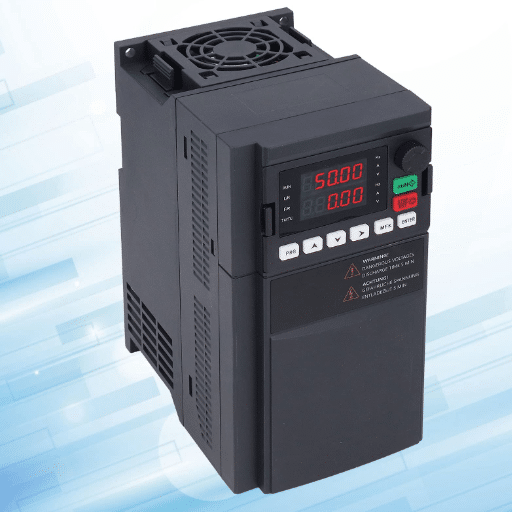
This is the section most generic articles skip. Here is the exact wiring for a typical workshop VFD installation.
| From | To VFD Terminal | Notes |
|---|---|---|
| Hot (L1) | R or L1 | Main hot wire |
| Hot (L2) | S or L2 | Second hot wire |
| Ground | E or PE | Earth ground |
| Neutral | Not used | Leave unconnected |
| Third input (T or L3) | Leave empty | Do not jumper |
Critical: Leave the third input terminal empty. Never jumper L1 or L2 to the unused input. The VFD’s rectifier is designed for two-wire operation on single-phase models.
| VFD Terminal | To Motor Lead | Notes |
|---|---|---|
| U | T1 | Phase 1 |
| V | T2 | Phase 2 |
| W | T3 | Phase 3 |
| E / PE | Motor ground | Earth ground |
Critical rule: The VFD output must go directly to the motor terminals. Do not install contactors, drum switches, magnetic starters, or disconnect switches between the VFD and the motor. The VFD controls voltage and frequency in real time. Any interruption causes fault codes, component damage, or arcing.
| Function | VFD Terminal | Connection |
|---|---|---|
| Forward Run | FWD | Switch to COM |
| Reverse Run | REV | Switch to COM |
| Common | COM | Switch common |
| Speed Pot +10V | +10V or VCC | Potentiometer side |
| Speed Pot Signal | VI or AI1 | Potentiometer wiper |
| Speed Pot Ground | GND or ACM | Potentiometer side |
If you want to reuse your machine’s original Forward/Off/Reverse drum switch, you must rewire it to these low-voltage control terminals. The drum switch can no longer carry motor power. It becomes a low-voltage signal switch only.
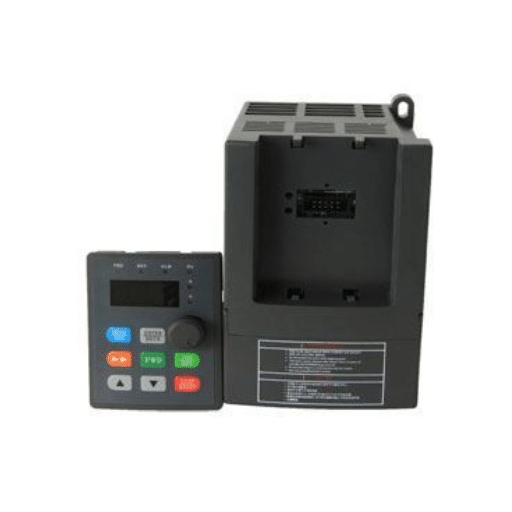
Every VFD must be programmed with your motor’s nameplate data before first run. Here are the essential parameters for common import VFD brands used in workshops.
| Parameter | Setting Value | Where to Find It |
|---|---|---|
| Motor Rated Voltage | 220V or 230V | Motor nameplate |
| Motor Rated Frequency | 60 Hz (or 50 Hz) | Motor nameplate |
| Motor Rated Current (FLA) | Nameplate amps | Motor nameplate |
| Motor Rated RPM | Nameplate speed | Motor nameplate |
| Motor Poles | 4 (most common) | Calculate from RPM: 1800 RPM = 4 pole |
| Command Source | External terminals | Set to terminal control |
| Frequency Source | Analog potentiometer | Set to AI1/VI input |
| Function | Parameter | Typical Value |
|---|---|---|
| Motor Voltage | PD005 | 220 |
| Motor Frequency | PD004 | 60 |
| Motor Current | PD006 | Nameplate FLA |
| Motor RPM | PD007 | Nameplate RPM |
| Acceleration Time | PD014 | 5-10 seconds |
| Deceleration Time | PD015 | 5-10 seconds |
| Command Source | PD001 | 1 (external terminals) |
| Frequency Source | PD002 | 1 (external pot) |
| Max Frequency | PD003 | 60 or 120 |
| Function | Parameter | Typical Value |
|---|---|---|
| Motor Voltage | F_01 | 220 |
| Motor Frequency | F_02 | 60 |
| Motor Current | F_03 | Nameplate FLA |
| Motor RPM | F_04 | Nameplate RPM |
| Acceleration | F_10 | 5-10 seconds |
| Deceleration | F_11 | 5-10 seconds |
| Control Mode | F_00 | 0 (V/F) or 1 (SVC) |
This is where this single phase to 3 phase VFD guide differs from every generic article online. Each machine type has specific requirements.
A VFD for lathe single phase setups is the most popular workshop application. A VFD transforms lathe work. You can dial exact spindle RPM on the fly to maintain constant surface speed as workpiece diameter decreases. Surface finish improves immediately. Facing from center to edge becomes effortless — just increase RPM as you cut outward.
Chuck unscrewing warning: If your lathe has a threaded spindle nose (most engine lathes do), rapid deceleration can unscrew a heavy chuck. Set deceleration time to 10-15 seconds minimum. Never use dynamic braking on a threaded spindle unless you install a spindle lock.
Low-speed cooling fan retrofit: At low RPM (common for large-diameter turning), the motor’s shaft-mounted cooling fan moves too little air. The motor overheats. Install a separate constant-speed auxiliary cooling fan (25−25−60) blowing across the motor case. Remove the stock fan blade if it interferes.
Parameter tip: Set max frequency to 90-120 Hz if you want higher speeds for small work. Most induction motors tolerate up to 2x base frequency briefly. Monitor motor temperature.
On a manual mill, a VFD lets you optimize RPM for cutter diameter and material without changing belts. Tapping becomes easier — set low RPM with high torque, then use instant reverse (if your VFD supports it) to back out.
CNC mill warning: If your CNC mill has servo drives, VFDs, or control electronics that require clean three-phase power, a single VFD feeding the whole machine may introduce electrical noise. Servo drives can fault from PWM harmonics. For CNC machines, a rotary phase converter producing true sine-wave three-phase power is often safer than a VFD.
Drum switch reuse: Bridgeport mills have a Forward/Off/Reverse drum switch. You can reuse it by rewiring to the VFD’s low-voltage control terminals. Remove all power wiring from the drum switch first. Run new low-voltage wire from FWD/REV/COM to the switch contacts.
High-inertia blades need gentle acceleration. A 10-inch table saw blade spinning to 4,000 RPM stores significant kinetic energy. Set acceleration to 5-8 seconds to avoid tripping the VFD on overcurrent.
Braking resistor: For safety, some woodworkers want rapid blade stop. A dynamic braking resistor connected to the VFD’s braking terminals can stop a blade in 3-5 seconds instead of 30+ seconds coasting. The resistor costs 40−40−100. Ensure your VFD has braking transistor capability.
Dust collector integration: If your dust collector also has a 3-phase motor, you can run it from a separate VFD. See our VFD for pumps and fans guide for blower-specific setup and energy savings.
These are constant-speed applications where the VFD’s primary benefit is phase conversion, not speed control. Set the VFD to run at 60 Hz fixed frequency. The soft-start feature reduces inrush current, which is kind to your shop’s electrical service.
For air compressors, integrate the pressure switch with the VFD’s run command. When tank pressure drops, the switch closes and the VFD starts the motor softly. When pressure reaches the cutoff, the switch opens and the VFD decelerates to stop.
Mike bought a 2-HP Clausing lathe for $800 at an estate sale. The motor was three-phase. He priced three options:
| Solution | Upfront Cost | Speed Control | Multi-Machine | Power Quality | Best For |
|---|---|---|---|---|---|
| Single phase to 3 phase VFD | 300−300−600 | Variable | One motor | PWM waveform | Lathe, mill, router with variable speed needs |
| Rotary Phase Converter | 1,500−1,500−3,000 | Fixed | Whole shop panel | True sine wave | CNC, multiple machines, sensitive electronics |
| Static Phase Converter | 100−100−300 | Fixed | One motor | Rough/imbalanced | Temporary or budget stopgap |
| Swap to single-phase motor | 200−200−600 | Fixed | N/A | Utility power | Simple machines where speed control doesn’t matter |
When to choose a VFD: You have one or two machines that benefit from variable speed (lathe, mill, router). You want the lowest cost per machine. You don’t mind programming parameters.
When to choose a rotary phase converter: You have three or more machines. You run CNC with servo drives. You want one power source for the whole shop. You don’t need variable speed on every machine.
The hybrid path: Many growing shops start with VFDs on variable-speed machines, then add a rotary phase converter later for fixed-speed machines. The VFDs stay in place. The RPC feeds the sub-panel. This is the path David took in our third shop scenario below.
For the full technical comparison, read our VFD vs phase converter guide.
Mike’s garage has a 30A 240V breaker. He bought a 2-HP Clausing lathe for $800.
| Item | Cost |
|---|---|
| Used lathe | $800 |
| 4 HP single-phase input VFD | $340 |
| 5% line reactor | $45 |
| External speed pot and switch | $20 |
| Wire and conduit | $30 |
| Auxiliary cooling fan | $35 |
| Total | $1,270 |
Installation took one Saturday. He wired the motor in Delta, set the Huanyang parameters in 10 minutes, and tested with no load. His first test cut at variable speed produced a noticeably better surface finish. A new single-phase lathe of similar quality would have cost $3,200.
Sarah found a Bridgeport Series 1 with a 3-HP motor for $1,200. Her basement shop has 50A 240V service.
| Item | Cost |
|---|---|
| Used Bridgeport mill | $1,200 |
| 7.5 HP single-phase input VFD | $520 |
| Braking resistor | $65 |
| Line reactor | $60 |
| Rewired drum switch to low-voltage control | $0 (DIY) |
| Wire, conduit, disconnect | $55 |
| Total | $1,900 |
Sarah’s first attempt failed. She wired the VFD output through the original drum switch, which was still carrying line voltage. Every direction change caused a VFD fault. After rewiring the drum switch to the VFD’s FWD/REV/COM terminals (low voltage only), it worked perfectly. The mill now has variable speed from 30 Hz to 90 Hz, soft start, and instant reverse for tapping.
David started with one VFD on his lathe. Then he added a second for his mill. By the third machine (a 3-HP table saw), he did the math:
| Path | Cost for 3 machines |
|---|---|
| Three separate VFDs | $1,200 + panel space + wiring |
| 15 HP rotary phase converter | $2,800 + installation |
David chose the rotary phase converter. It fed a three-phase sub-panel in his shop. The lathe and mill kept their VFDs (now powered by clean three-phase input, so no more 2x derating needed). The table saw and future dust collector ran directly from the three-phase panel. The VFDs taught him what variable speed was worth. The RPC powered everything else.
1. Putting a contactor or drum switch between VFD and motor
This is the #1 mistake. The VFD controls voltage and frequency continuously. Any switch in the output path interrupts this control and causes fault codes, voltage spikes, or drive damage. Always wire VFD output directly to motor terminals. Repurpose old switches as low-voltage control inputs only.
2. Forgetting to wire the motor in Delta
If your motor arrived wired for 460V (Star/Wye), it will run at half voltage on a 220V VFD. Torque drops to 25%. The motor overheats. Always check the junction box and rewire to Delta for 220-240V operation.
3. Using a three-phase-input VFD without derating
Some VFDs are labeled “three-phase input only.” You can use them on single-phase if you double the motor HP rating, but the manufacturer may void warranty. Use a VFD explicitly rated for single-phase input when possible.
4. Overlooking input current for breaker sizing
A 5 HP motor on single-phase input draws roughly 40-45A at the VFD input, not the 15A the motor nameplate suggests. Your 30A shop breaker may not be enough. Check the VFD input current rating and upgrade your breaker if needed.
5. Running low RPM without auxiliary cooling
At 20 Hz (1/3 base speed), the motor’s internal fan moves 1/3 the air. Extended low-speed operation overheats the windings. Add a constant-speed external fan for any application where you run below 30 Hz for more than a few minutes at a time.
Ready to compare drives by price tier and application? See our buyer’s guide to 3-phase VFDs for budget, mid-range, and premium recommendations.
Yes. A VFD rectifies single-phase AC to DC, then uses an inverter to synthesize three-phase AC output through Pulse-Width Modulation. This is one of the most common methods hobby machinists use to run three-phase workshop equipment in single-phase shops.
Not practically. A VFD is designed to control one motor with precise voltage and frequency matching. Running multiple motors causes imbalance, overload faults, and poor speed regulation. If you have multiple machines, buy multiple VFDs or invest in a rotary phase converter.
PWM output contains high-frequency voltage spikes that can stress motor insulation and cause bearing currents over years of operation. For workshop use on standard induction motors, this risk is low. For extra protection, add an output reactor or dV/dt filter. For maximum protection, use a shaft grounding brush.
Yes, for motors up to about 1-1.5 HP. Purpose-built 120V-input VFDs output 220V three-phase. You will need a 20A or 30A 120V circuit. For anything larger, 240V single-phase service is required.
If you are nice with wires, motor connections, and parameters, it is possible to install a VFD by yourself. In case you are set to a 240V circuit, upgrade a breaker panel, or are uncomfortable about grounding issues, then do find a certified electrician. Security should always come first.
A normal 220V output VFD cannot run a 460V only motor without an additional step-up transformer. Transformers add on the cost, complexity, and losses. It is most probably cheaper to locate a dual-voltage motor or a 230/460V motor and rewire it for 230V Delta operation.
It’s sufficient that it have a cam-lock spindle, or a spindle with a reliable lock, then. Dynamic braking slams on the brakes to stop the motor quickly. A threaded spindle with a heavy chuck can unscrew itself with smooth braking too. Run long brake times (10-15 seconds) or use a braking resistor with soft parameters.
A variable frequency drive (VFD) is mostly silent, interrupted only by the wash of cooling air through a tiny fan. More likely, the motor will emit some carrier-frequency whine, which is audible to many as a high-pitch sound. Generally, one can easily adjust the carrier frequency in modern VFDs (usually from 2 to 16 kHz). Increasing the carrier frequency lowers the noise but increases VFD heating. Normally, a carrier frequency greater than 10 kHz doesn’t bother most adults.
Size wire for the VFD input current, not the motor FLA. A 3-HP motor with a 7.5 HP VFD on single-phase input may draw 35-40A. Use 8 AWG wire for runs under 50 feet. Consult the VFD manual and local electrical code. When in doubt, go one gauge larger.
Single-phase to three-phase VFD is the most capable and cost-effective way to run three-phase machines in a single-phase shop. You acquire phase transformation, variable speed, soft start, and programmable control all in one box. No other solution from this kind provides good value for one or two pieces of machinery.
The process is simple: oversize VFD 2x motor HP, wire motor in Delta, connect VFD output to motor terminals directly, set your parameters, and add an auxiliary fan if you plan to run at low RPM. Every machinist who has made the change wonders why they waited so long.
Start with your most-used machine. If the motor is under 5 HP and you have 240V single-phase service, a VFD is almost certainly the right choice. Browse our single-phase input VFD range to compare specifications, protection features, and pricing. If you need help matching a drive to your lathe, mill, or table saw, contact our engineering team for a recommendation.
Ready to compare drives by price tier and application? See our buyer’s guide to 3-phase VFDs for budget, mid-range, and premium recommendations.