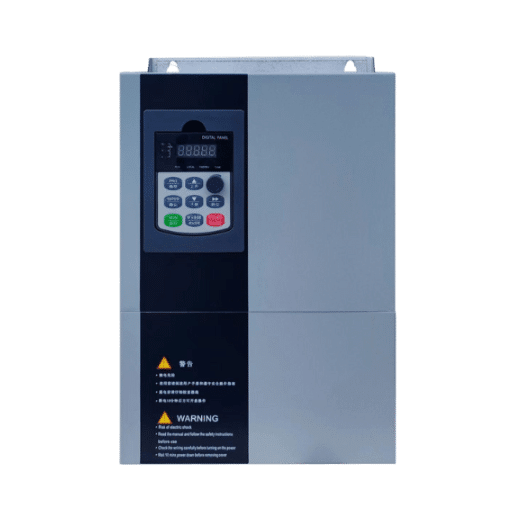
Ready to Get Your VFD Solution?
Whether you need a single drive or a complete system, we have the VFD products and engineering support to ensure your project's success.


The best way to do harmonic mitigation for VFDs is to match the solution to the real power-quality problem: use line reactors or DC chokes for simple cost reduction, passive filters for targeted harmonic orders, active harmonic filters or 18-pulse drives for strict IEEE 519 compliance, and active front-end drives when regeneration is also needed. Start with a harmonic audit at the point of common coupling, then select, size, and verify the mitigation method under real load conditions.
A variable frequency drive saves energy and improves process control. It also draws non-sinusoidal current from the supply. Those current pulses create harmonic distortion. That distortion can overheat transformers, overload neutral conductors, trip breakers, and attract utility penalties. The wrong mitigation wastes money. The missing mitigation creates failures that look like drive faults but are actually power-quality problems.
This guide explains how VFDs generate harmonics, what the standards require, and how to choose the right harmonic mitigation technique for your application. You will get comparison tables, a selection flowchart, a worked active-filter sizing example, and real-world cases that show what works. If you are still selecting the drive itself, our guide on how to choose a VFD covers voltage, power, and topology decisions first.
Key Takeaways
- Harmonics are a system problem, not a drive problem. The distortion matters at the point of common coupling, not just at the VFD terminals.
- IEEE 519 uses TDD, not THDi, for current compliance. A drive with high THDi at light load can still be compliant if its TDD at the PCC is low.
- Line reactors and DC chokes are the cheapest first step. They reduce harmonic current by 30-50% and protect the rectifier from transients.
- Active harmonic filters and 18-pulse drives meet strict limits. They are the right choice when utility penalties or sensitive equipment are involved.
- Active front-end drives solve harmonics and regeneration together. They cost more but return braking energy to the supply.

VFDs are now standard in pumps, fans, compressors, conveyors, and HVAC systems. They cut energy use by matching motor speed to load demand. However, the same rectifier front end that makes variable speed possible also draws current in short pulses. Those pulses contain harmonic frequencies that travel back into the electrical distribution system.
The effects show up slowly or suddenly. A packaging plant in Poland added twelve 75 kW VFDs to a single 1000 kVA transformer. Within eighteen months, the transformer temperature rose 25°C above nameplate limits during summer peaks. The maintenance team first blamed blocked ventilation. The real cause was harmonic-induced eddy-current and stray losses. Adding 3% line reactors and one active harmonic filter dropped the transformer temperature and extended its insulation life.
Harmonics also cause:
Harmonic mitigation for VFDs is not optional luxury. It is part of designing a reliable, efficient, and standards-compliant motor control system.
The characteristic harmonic orders produced by a six-pulse rectifier are given by h = 6k ± 1. Here k is any integer. This gives the 5th, 7th, 11th, 13th, 17th, 19th, and higher odd harmonics. The 5th and 7th usually dominate in amplitude.
A standard six-pulse VFD with no mitigation typically produces 35-50% current total harmonic distortion (THDi). In weak systems it can exceed 100%. The magnitude of harmonic current depends on the drive rating and how heavily it is loaded. For guidance on matching drive capacity to motor load, see our guide on how to size a VFD for a motor.
It is important to separate two different effects:
Our VFD installation best practices guide covers output-side filtering. This article focuses on input-side harmonic mitigation.
IEEE 519 sets limits for voltage and current harmonic distortion at the point of common coupling (PCC), where the customer connects to the utility grid. It is a system-level standard, not a product standard. The VFD itself does not have to meet IEEE 519; the installation does.
Voltage distortion limits (THDv):
| Bus Voltage at PCC | Individual Harmonic (%) | Total Harmonic Distortion (%) |
|---|---|---|
| V ≤ 1.0 kV | 5.0 | 8.0 |
| 1 kV < V ≤ 69 kV | 3.0 | 5.0 |
| 69 kV < V ≤ 161 kV | 1.5 | 2.5 |
| V > 161 kV | 1.0 | 1.5 |
Current distortion limits (TDD): These depend on the ratio of short-circuit current to maximum demand load current (Isc/IL). The lower the ratio, the stricter the limit.
| Isc/IL | TDD Limit (%) |
|---|---|
| < 20 | 5.0 |
| 20-50 | 8.0 |
| 50-100 | 12.0 |
| 100-1000 | 15.0 |
| > 1000 | 20.0 |
At light load, a VFD can show 80% THDi but still contribute very little TDD because the total current is small. IEEE 519 compliance is assessed with TDD measured at the PCC, not THDi at the drive. For more on measurement, see Industrial Monitor Direct’s VFD harmonic measurement guide.
Outside North America, harmonics are governed by IEC and EN standards:
A global project may need to reference both IEEE 519 and IEC/EN standards in its specification.
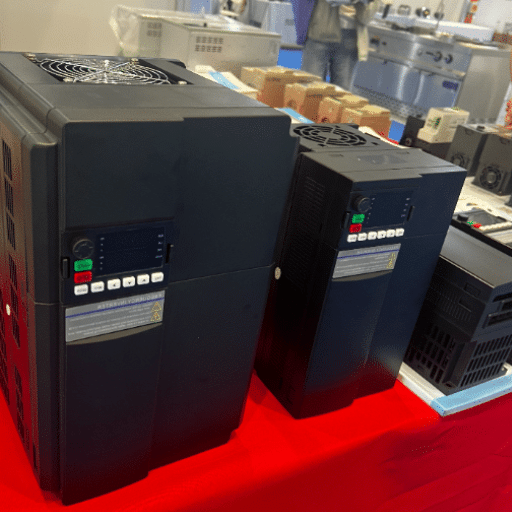
A line reactor is an inductor wired in series with the VFD input. A DC choke is an inductor on the DC bus between the rectifier and capacitor. Both add impedance. That smooths the current pulses and reduces harmonic injection.
Line reactors are the cheapest and most common first step in harmonic mitigation for VFDs. They are enough when the local utility limit is not strict and the source is relatively strong. For many single-drive installations, a line reactor VFD combination is the most cost-effective starting point.
Passive filters are tuned LC circuits that provide a low-impedance path for specific harmonic orders. A VFD harmonic filter tuned to the 5th order, for example, diverts 5th harmonic current away from the supply.
The risks include resonance with the system impedance and a leading power factor at light load. Passive filters work best when the load is stable and the dominant harmonics are known.
An active harmonic filter (AHF) is a power-electronics device. It measures the load current, calculates the harmonic components, and injects equal-and-opposite currents to cancel them.
AHFs are more expensive than reactors. They solve problems that passive devices cannot. For facilities with many VFDs or strict utility limits, an active harmonic filter VFD installation is often the most flexible solution. YT Electric’s active harmonic filter sizing steps provide a useful starting point for sizing calculations.
Multi-pulse drives use phase-shifting transformers and multiple rectifier bridges to cancel certain harmonic orders.
They are robust and do not require active electronics, but they are large, heavy, and sensitive to voltage imbalance. They are most cost-effective for single large drives, typically above 50 hp or 37 kW.
An active front-end (AFE) drive replaces the diode rectifier with an IGBT-based active rectifier. The rectifier controls input current to draw a near-sinusoidal waveform.
AFE drives are the right choice when space is limited, the supply is weak or unbalanced, or regeneration is valuable. Control Engineering’s comparison of 18-pulse and AFE drives explains the trade-offs in detail.
These are supporting measures, not replacements for proper harmonic mitigation.
The correct choice depends on more than just harmonic level. It depends on compliance target, source stiffness, load variability, footprint, budget, and whether regeneration matters.
Need IEEE 519 compliance?
├── No → Add 3-5% line reactor or DC choke for basic reduction
└── Yes → Measure or estimate Isc/IL at PCC
 ├── Isc/IL < 20 → Use AFE, 18-pulse, or active harmonic filter
 ├── Isc/IL 20-50 → Use 5% reactor + harmonic filter
 └── Isc/IL > 50 → Use 5% line reactor (verify with measurement)
Once you have selected the mitigation approach, the next step is to choose the drive itself. Explore our VFD drives to find standard, AFE, and harmonic-mitigated models with full specifications.

The table below summarizes the major harmonic mitigation options. Costs are relative to a standard six-pulse VFD with no mitigation.
| Mitigation Method | Typical THDi/TDD | Relative Cost | Footprint | Best For |
|---|---|---|---|---|
| No mitigation | 35-50% THDi | Baseline | Small | Short cable runs, strong supply, no utility limits |
| 3% line reactor | 25-40% THDi | Low | Small | Single drives, basic protection, modest reduction |
| 5% reactor or DC choke | 20-35% THDi | Low | Small | Better reduction, compact installs |
| Passive harmonic filter | 5-15% THDi | Moderate | Medium | Stable loads with known harmonic orders |
| Active harmonic filter | <5% THDi | High | Medium | Multiple drives, variable loads, strict compliance |
| 12-pulse drive | 8-15% THDi | High | Large | Large single drives, robust environments |
| 18-pulse drive | 5-8% THDi | High | Large | Large single drives, IEEE 519 compliance |
| Active front-end drive | <5% THDi | High | Medium | Regeneration, weak grid, space constraints |
A data center in Singapore compared an 18-pulse solution against an AFE drive for a 500 kW chiller application. The 18-pulse option needed an additional floor slot for the phase-shifting transformer. The AFE drive fit in the same footprint as a standard VFD but cost 40% more upfront. The project chose AFE because the recovered braking energy from the chiller’s cyclic load paid back the premium in under four years.
Sizing an active harmonic filter starts with the harmonic current that must be cancelled.
Given:
Step 1: Calculate harmonic current.
Ih=400×0.25=100 AIh=400×0.25=100 A
Step 2: Estimate required compensation current.
For a target of 5%, the filter must cancel most of the original harmonic current. A practical estimate is:
Icomp=100×1.25=125 AIcomp=100×1.25=125 A
Step 3: Select the next standard AHF rating.
Choose a 150 A three-phase active harmonic filter rated for the system voltage.
Accurate harmonic sizing starts with accurate load current estimation. Our VFD power calculation guide explains how to determine input current, power factor, and demand for sizing both the drive and the mitigation equipment.
For a more rigorous calculation, some manufacturers use a formula that accounts for existing THDi, target THDi, and a correction factor for compensation accuracy. Always verify the manufacturer-specific sizing method and include future load growth.

A sewage treatment plant in Gothenburg added seventeen VFD-controlled pumps. Harmonic overcurrents melted UPS fuses. The distortion also limited the plant’s usable electrical capacity. The utility required compliance with Swedish standard SS 421 1811.
The plant installed two 600 kVA active harmonic filters at the main switchboard. Harmonic distortion fell below the standard. Capacity increased by 30%, and energy losses dropped. The filters paid for themselves through avoided upgrades to the utility connection.
At Xinjiang Zhongtai Chemical Shengxiong Calcium Carbide Plant, inverter-driven equipment produced severe harmonic distortion. Transformer safety and power quality were at risk. CoEpower active harmonic filters reduced harmonic distortion from 35% to below 6%, protecting the transformers and improving long-term reliability.
A U. S. oilfield operation experienced motor failures on saltwater disposal pumps controlled by VFDs. Load-side harmonic filters were added to reduce reflected waveform distortion. Motor failure rates dropped from 25% to 2%, and pump control issues that had caused tank overflows were eliminated.
The main techniques are line reactors, DC chokes, passive VFD harmonic filters, active harmonic filters, 12-pulse and 18-pulse drives, and active front-end drives. The right choice depends on the harmonic target, source stiffness, load variability, and budget.
Measure the load current and THDi, calculate the harmonic current, multiply by a safety margin of 20-25%, and select the next standard AHF rating. For example, a 400 A load with 25% THDi needs roughly 125 A of compensation, so a 150 A filter would be selected.
Usually not by itself. A 3-5% line reactor reduces THDi by 30-50%, but strict IEEE 519 compliance often requires passive filters, active filters, 18-pulse drives, or AFE drives.
THD is the harmonic current divided by the instantaneous fundamental current. TDD is the harmonic current divided by the maximum demand load current. IEEE 519 uses TDD for current compliance because it reflects the actual impact on the utility system.
Use an 18-pulse drive for a rugged, large, single-drive installation with a balanced supply. Use an AFE when space is limited, the grid is weak or unbalanced, regeneration is needed, or the lowest possible harmonics are required.
Standard capacitors can resonate with VFD harmonics and worsen distortion. Use detuned power factor correction capacitors designed for non-linear loads, or use an active harmonic filter that also corrects power factor.
Relative to a standard six-pulse VFD, line reactors add 10-30%, passive filters add 30-70%, active filters and 18-pulse drives add 70-120%, and AFE drives add 50-100%. Total cost of ownership includes footprint, cooling, efficiency losses, and maintenance.
Harmonic mitigation for VFDs turns a power-quality liability into a controlled, measurable outcome. The process is straightforward: measure harmonics at the point of common coupling, set the target based on IEEE 519 or local standards, choose the harmonic mitigation VFD solution that matches the source stiffness and load profile, and verify performance after installation.
Line reactors and DC chokes remain the practical starting point for most drives. When compliance or sensitive equipment demands more, active harmonic filters, 18-pulse drives, and active front-end drives provide the needed performance.
If you need help selecting harmonic mitigation for a specific VFD system, our engineering team can review your harmonic audit, recommend the right VFD harmonic filter or drive topology, and support commissioning. Explore our VFD drives or contact us to discuss your application.