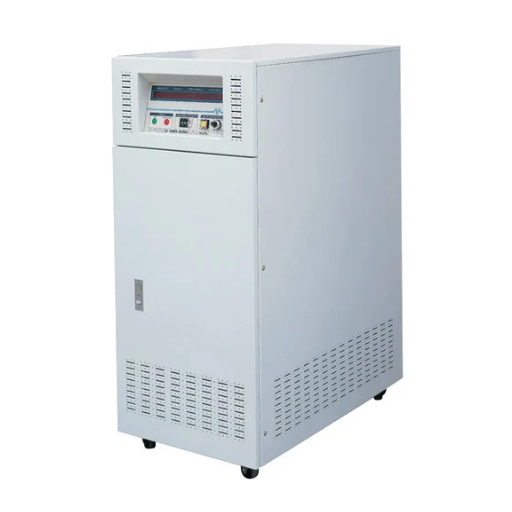
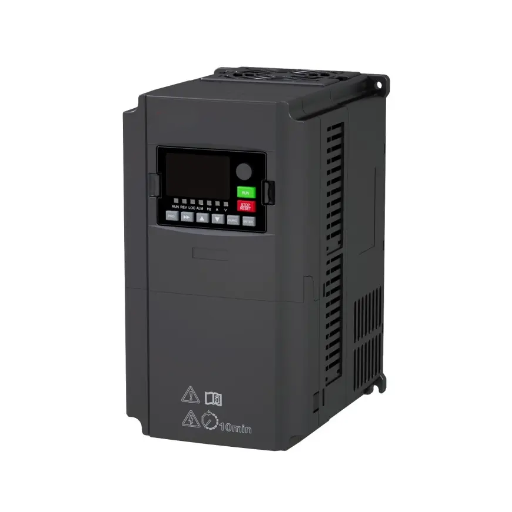
Ready to Get Your VFD Solution?
Whether you need a single drive or a complete system, we have the VFD products and engineering support to ensure your project's success.

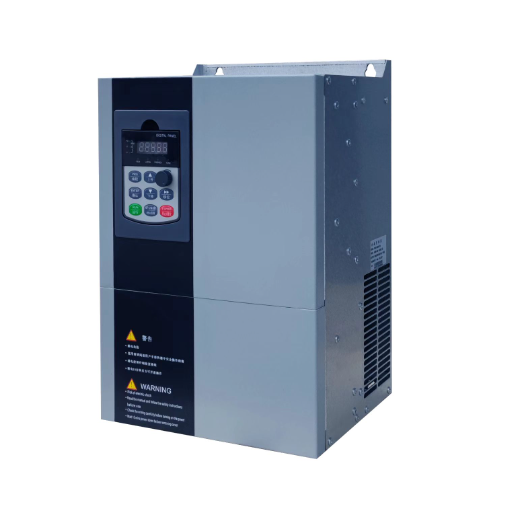
A 50Hz to 60Hz frequency converter changes the supply frequency from one grid standard to another so equipment built for one runs correctly on the other. There are two families: static frequency converters, which are solid-state, and rotary converters, which use a motor-generator set. The right choice depends on your load, your budget and how much maintenance you want to do.
Get that decision wrong and you either overspend on a machine you did not need or inherit a maintenance schedule you did not expect.
Consider a packaging firm in Ohio that relocated a line to a plant in South America. The machines were built for 60 Hz and the new site supplied 50 Hz. Someone suggested a transformer, on the reasonable assumption that a device that changes voltage might change frequency too.
It does not. The motors would have run 20 percent slow, and the control electronics would have drifted. Working that out before the equipment shipped saved the project from a retrofit in a foreign country.
You already know your equipment and your supply do not match. The problem is working out what actually happens to your machines, and then choosing between technologies that are described in very different ways by very different vendors. This guide answers the equipment question with the arithmetic, corrects the transformer misconception, and gives you a selection path for both converter families. For the broader device landscape, our guide to AC frequency converter types covers where these fit.
Key Takeaways
- A transformer cannot change frequency. Frequency conversion requires an active device: a static frequency converter or a rotary motor generator set.
- A 60 Hz motor on a 50 Hz supply runs about 20 percent slower and draws roughly 20 percent more current, with reduced cooling.
- The fix for motors is the V/f ratio: reduce voltage in proportion to frequency. A 60 Hz 460 V motor needs about 383 V at 50 Hz.
- Static frequency converters are about 96 percent efficient and need roughly annual service. Rotary sets run below 85 percent and need more attention.
- Rotary converters are often cheaper per kW above about 5 kVA. Static units win on footprint, noise and running cost.
Relocating a machine between regions? The next section covers exactly what changes on your equipment, so you can judge whether you need a converter at all.
The answer depends entirely on what the equipment contains. A motor behaves differently from a control panel, and a digital clock behaves differently from both.
A 60 Hz motor on a 50 Hz supply runs about 20 percent slower, because speed follows supply frequency. At the same voltage it also draws roughly 20 percent more current, and its cooling fan turns more slowly at exactly the moment it is producing more heat.
The combination is what damages motors. Slower cooling plus higher current means the winding temperature climbs, and insulation fails long before the bearing does.
The standard fix is to hold the motor’s original voltage-to-frequency ratio. A motor is designed around a relationship between voltage and frequency, and preserving that ratio prevents over-excitation.
Take a 60 Hz, 460 V motor. Its ratio is 7.67 volts per hertz. Run it at 50 Hz and the matching voltage is about 383 V. Dropping the voltage by that proportion keeps the magnetic flux at its designed level.
Worked example: 460 V ÷ 60 Hz = 7.67 V/Hz. At 50 Hz, 7.67 × 50 = 383 V. A transformer set to 383 V, or a converter with a programmable output, keeps the motor within its design envelope.
Horsepower still falls, because power depends on both speed and torque. A motor rated for a given output at 60 Hz will deliver less at 50 Hz, and machinery sized to the original rating may need pulley changes or a larger motor.
Some loads have no acceptable derating. Line-frequency clocks and timers keep time from the supply itself, so a 60 Hz clock on a 50 Hz supply runs slow and cannot be corrected with voltage. Certain electronic power supplies are also built around a specific input frequency and cannot simply be adjusted.
This matters for planning. If a machine contains frequency-referenced control electronics, you need a converter that delivers the correct frequency, not a transformer that delivers a corrected voltage.
A transformer is a passive device. It changes voltage through magnetic coupling, and whatever frequency enters leaves unchanged. There is no mechanism inside it to generate a new frequency.
Frequency conversion requires active switching, which means semiconductors or a rotating machine. That is why the transformer suggestion, however intuitive, leads to a dead end.
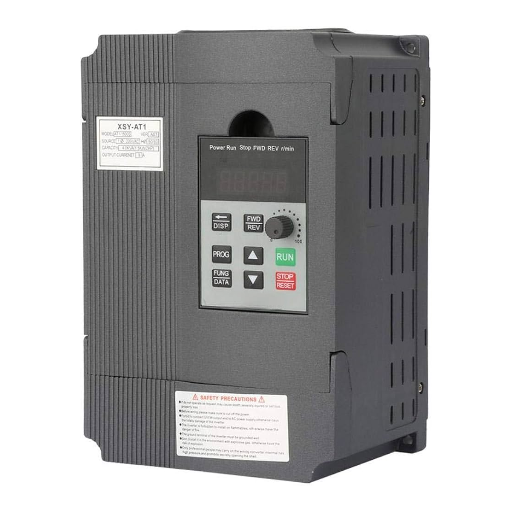
Two technologies do the job, and they behave very differently over a twenty-year service life. The table below sets them side by side.
| Attribute | Static frequency converter | Rotary (motor-generator set) |
|---|---|---|
| Technology | Rectifier, DC link, inverter | Motor driving an alternator |
| Efficiency | About 96% | Below 85% |
| Output distortion | Very low, well under 1% | A few percent |
| Maintenance | Roughly annual service | Regular, with fixed losses |
| Start-up | Seconds, with auto-synchronization | Runs continuously once started |
| Noise | Low | Noticeably louder |
| Footprint | Compact, can be containerised | Large, needs floor space |
| Short-term overload | Lower | Can supply a multiple of rated load briefly |
| Spare parts | Standard electronic assemblies | Can be hard to source on older units |
A static frequency converter rectifies incoming AC to DC, then inverts it back to AC at the target frequency. Modern designs use a rectifier, power factor correction stage, DC link and inverter, often with a crystal oscillator holding the output frequency stable.
The advantages are efficiency, footprint and predictability. There are no rotating parts to wear, service intervals are long, and the unit comes online in seconds. For most industrial applications, this is the default choice.
A rotary frequency converter couples an AC motor to an alternator. The motor turns at one speed and the generator produces the target frequency, set by its pole count or gearing. Older installations often used a gearbox to make up a ratio that pole counts alone could not achieve.
The technology is rugged and forgiving. A rotary set can absorb a large short-term overload, which suits loads with heavy inrush such as large motor starting or transformer energisation. It also produces an output that some sensitive loads tolerate better than early inverter designs did.
The costs are real. Efficiency is lower, maintenance is higher, spares for older units can be difficult to find, and a motor-generator set frequency converter is loud and takes up floor space. For a modern installation, the running-cost case is hard to make.
Start with the load. If it draws a heavy inrush or needs a large short-term overload, a rotary set may still earn its place. If it is a normal industrial load running continuously, a static converter will almost certainly cost less to own across its life, even at a higher purchase price.
Then weigh the practical constraints. If floor space is tight, noise matters, or the unit needs to be moved or containerised, static wins on all three. If the site already runs rotary plant and the maintenance team knows it, that familiarity has value too.
Need help with the equipment side of a frequency mismatch? Our engineers work on motor and drive applications daily and can review your load profile. Talk to our team before you specify.
Frequency conversion is rarely needed on its own. Regions that differ on frequency usually differ on voltage as well, so the two problems arrive together.
The common pairing is 400 V at 50 Hz against 480 V at 60 Hz. A machine rated for one will need both values corrected for the other, and that changes the specification from a frequency question into a power-supply question.
The two devices do different jobs, and some installations need both.
Where the voltage difference is modest and the frequency is correct, a transformer alone is the cheapest fix. Where frequency must change, a converter is unavoidable. Where both change, a converter with a programmable output voltage often handles the whole problem in one unit, which is simpler and usually cheaper than a transformer and converter in series.
Equipment intended for more than one region is sometimes designed as a dual-voltage system, accepting both 380 V/50 Hz and 480 V/60 Hz. This is a design decision made at the machine level, and it avoids conversion entirely for the components it covers.
It is worth asking whether a new machine can be specified this way before committing to site-side conversion. Retrofitting dual-voltage capability into existing equipment is rarely practical, but specifying it on new plant removes the problem for its whole service life.
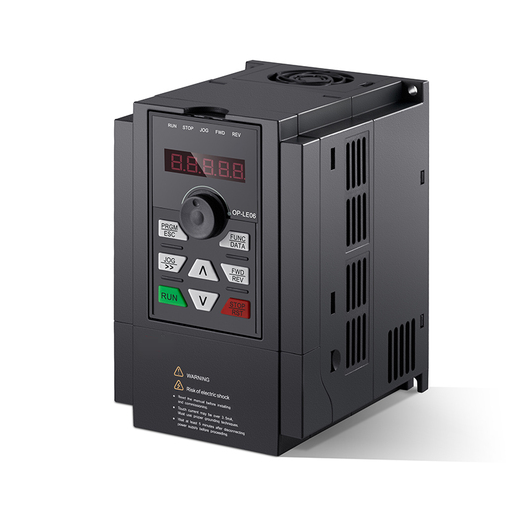
Sizing a 50 Hz to 60 Hz converter follows a sequence. Work through it in order, because each step narrows the field.
Walk the equipment list and identify what genuinely needs converted frequency. Motors and frequency-referenced controls do. Resistive heaters, most lighting and switch-mode power supplies usually do not.
This step often shrinks the converter requirement substantially. Converting a whole panel is more expensive than converting the three loads that actually care.
Add the converted loads into a kVA figure, then size for the highest simultaneous demand rather than the average. Include inrush where the load contains motors or transformers, because starting current can be several times running current.
Ambient temperature above the rated figure, altitude above roughly 1,000 metres, and high switching frequencies all reduce usable capacity. A converter sized at nameplate for a hot, high-altitude plant room will run at its limit and fail early.
Most modern loads are happy with a good static converter output. Some legacy or sensitive equipment is more particular. If the machine came with a specification naming a maximum distortion figure, check the converter against it before ordering.
Whatever you choose, confirm you can get it serviced locally and that wear parts are available. This is where older rotary units become a liability and where a static converter’s standard electronic assemblies are an advantage.
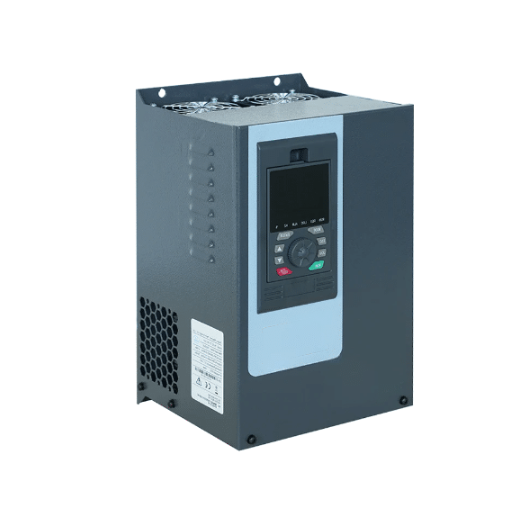
Moving machinery between regions is the most common trigger for a 50Hz to 60Hz frequency converter. Equipment built for a 60 Hz grid and installed on a 50 Hz supply, or the reverse, will not perform as designed without conversion.
The economics usually favour conversion over replacement. Where a single panel feeds the affected machines, one correctly sized converter serves the whole group.
A ship built for a 60 Hz grid calling at a port supplying 50 Hz faces the same mismatch. Ports therefore install shore power frequency converter systems so vessels can shut down their generators alongside, cutting fuel burn and emissions at the berth.
This is one of the largest markets for static conversion, because the loads are substantial, the duty is predictable, and the units are often containerised for flexible deployment.
A workshop that services equipment from multiple regions needs both frequencies on tap. A bidirectional 60Hz to 50Hz frequency converter, or a pair of units, lets one bench test 50 Hz and 60 Hz equipment without rewiring.
A repair shop in Singapore that serviced both European and American machine tools ran two dedicated benches for years, with duplicated instruments and separate documentation. Consolidating onto one converter-fed bench cut the floor space in half and removed the risk of a tool being tested on the wrong supply. The saving was less about the equipment cost than about the errors it prevented.
Vessels and naval installations frequently operate equipment from multiple supply standards, and onboard conversion is common where the ship must accept power from ports worldwide. The requirements here are closer to the shore power case than to a factory floor, with a strong emphasis on reliability and service access.
No. A transformer changes voltage but not frequency. Whatever frequency enters a transformer leaves it unchanged. Converting frequency requires an active device, either a static frequency converter or a rotary motor-generator set.
It runs about 20 percent slower and draws roughly 20 percent more current at the same voltage, while its cooling fan also runs slower. The motor overheats over time. The standard remedy is to reduce the supply voltage in proportion to the frequency, preserving the motor’s original V/f ratio.
Sometimes. A variable frequency drive can produce a 60 Hz output from a 50 Hz supply for a single motor.
It is not designed to hold a fixed frequency for a whole panel of mixed loads, and most drives are specified for motor control rather than as a fixed-frequency supply. For a single motor, a drive is often the simpler answer, and it is worth knowing how a VFD differs from a phase converter before you compare devices. For a panel, use a converter.
A static converter uses semiconductors to rectify and then invert the supply, with no moving parts. A rotary converter uses a motor driving an alternator. Static units are roughly 96 percent efficient with low maintenance. Rotary units run below 85 percent but tolerate heavy short-term overloads.
Static frequency converters are typically around 96 percent efficient. Rotary motor-generator sets generally run below 85 percent. The gap matters most on continuous-duty installations, where it becomes a permanent running cost.
Identify which loads genuinely need converted frequency, total them into kVA, and size for peak simultaneous demand including inrush. Then derate for ambient temperature, altitude and switching frequency, and confirm the output waveform meets the most sensitive load’s specification.
Conversion is usually cheaper, particularly where one converter can serve a group of machines. Replacement becomes competitive only when the affected equipment is old, inefficient, or needs upgrading anyway. Compare the converter’s purchase and running cost against the full cost of replacement, including installation and downtime.
Rotary motor-generator sets. They were the standard solution for decades and many remain in service, particularly where heavy overload tolerance matters. They are gradually being replaced by static units as the efficiency and maintenance advantages accumulate.
A 50Hz to 60Hz frequency converter solves a specific problem: your equipment expects a frequency your supply does not provide. Getting it right comes down to five things.
Work through those five points and the specification almost writes itself. The expensive mistakes in this field come from skipping the motor arithmetic or assuming a voltage device can change frequency.
If your project involves motors running on a converted supply, the drive side matters as much as the converter, and it is worth understanding motor control using a frequency inverter before you finalise the specification. Shandong Electric builds variable frequency drives across the full range, from compact low voltage units to high voltage systems for heavy industry, and our engineers can review your load profile alongside your frequency requirements. Tell us about your application and we will help you match the right equipment to the job.