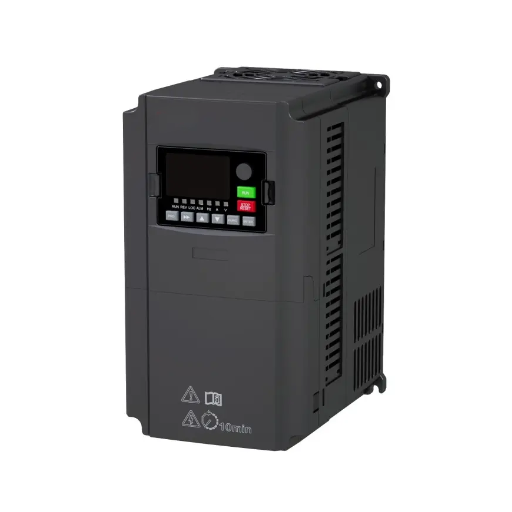
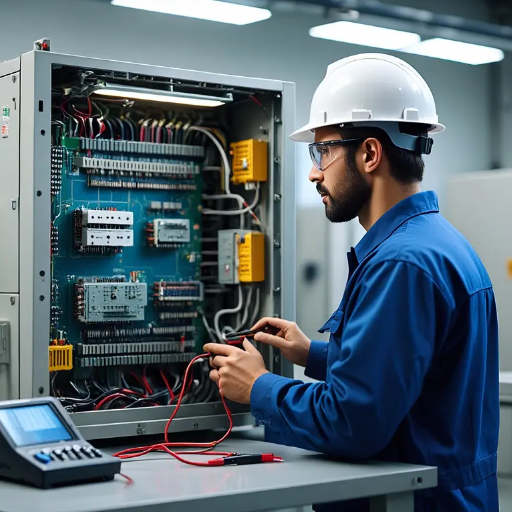
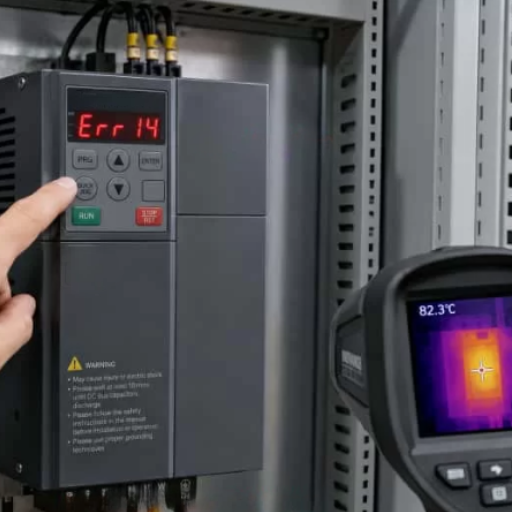
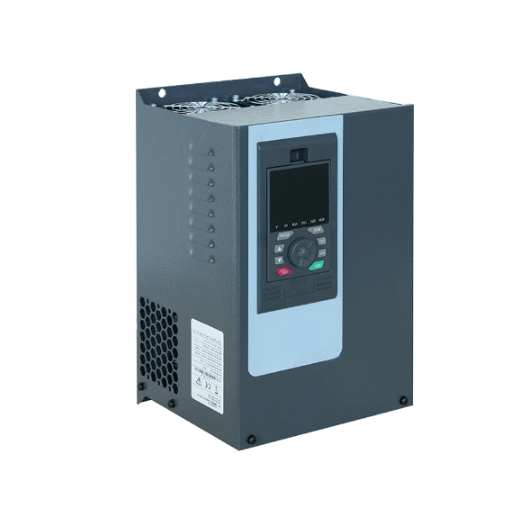
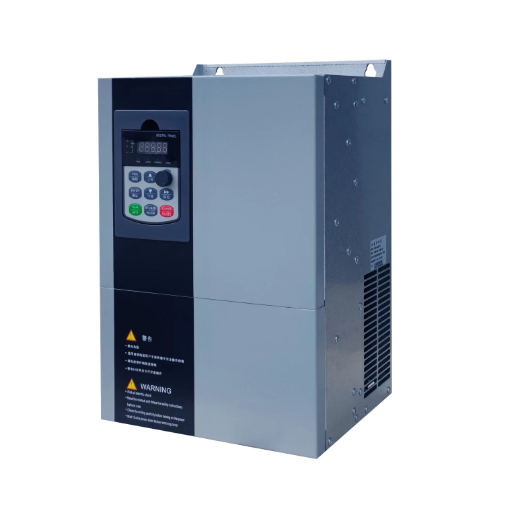
Ready to Get Your VFD Solution?
Whether you need a single drive or a complete system, we have the VFD products and engineering support to ensure your project's success.


A VFD for packaging machinery does three jobs that matter more than saving power: it ramps the machine through millions of controlled cycles a year, it keeps fillers, sealers, and labelers phase-locked so product never jams or misaligns, and it swaps between package formats in seconds instead of minutes.
A labeler drifting three millimeters out of registration can scrap every third bottle, while the motor driving it runs perfectly at full speed. On a packaging machine, the problem a drive solves isn’t wasted kilowatts. It’s a misaligned product, jammed transfer points, and a format changeover that eats an hour of a shift.
If you came here expecting a story about 30% energy savings, you’re looking at the wrong frame, and that’s exactly the point. Packaging machines run intermittently, so a VFD for packaging lines earns its keep through speed, synchronization, and changeover, not the power bill. By the end, you’ll be able to look at any filling, capping, labeling, wrapping, or palletizing line and say which axes need a drive, what it should be doing there, and where a servo is the better call.
Key Takeaways
- A VFD on a packaging machine is a motion-control device first and an energy saver second: packaging machines run intermittently, so realistic savings are 5-15%, not 20-35%
- The three jobs that matter are indexing speed control, phase-locked synchronization, and recipe-based format changeover
- Seven machine types (filler, capper, labeler, wrapper, cartoner, palletizer, form-fill-seal) each lean on the drive for a different control function
- The highest-precision positioning axes are servo territory; a VFD is the right, cost-effective tool for continuous, speed-matching, and torque-control axes
- Serve both audiences: OEM machine builders who spec drives at design time, and plant engineers retrofitting an existing line

At its core, a variable frequency drive changes the speed and torque of an AC motor by varying the frequency and voltage it supplies. On a packaging line, that one capability maps onto five jobs:
Notice what’s missing from that list: saving energy. The honest reason is physics. Industrial motors consume roughly half of the world’s industrial electricity, according to the International Energy Agency. Most of that spins fans and pumps at continuous partial load, where the affinity laws dramatically cut power. A packaging machine cycles on and off and runs near its process speed, so its energy case is far smaller, typically 5-15%. That’s worth having, but it’s not why you buy the drive.
Want the full map across every machine type in a plant? Our guide to VFDs in manufacturing matches drives to fillers, mixers, spindles, and more, so you can see where packaging fits in the bigger picture.
Every packaging machine asks the drive for something slightly different. Here are the seven types and the control function each one leans on hardest.
Filling machines move liquid, powder, or granules into containers. A piston or net-weight filler needs a stable speed reference so every dose comes out the same, and gentle accel/decel so the product doesn’t splash or aerate.
Capping machines must stay phase-locked to the filler. If the capper runs even slightly fast or slow, the cap threads cross or miss. Torque limiting is the quiet hero here, stopping over-torqued caps from cracking the neck.
Labeling machines are registration machines. A labeler reads a mark or a bottle edge and trims its speed so the label lands in the same spot every single cycle.
Wrapping and shrink-wrap machines pull film off a roll that shrinks as it runs. The drive holds constant tension so the film doesn’t wrinkle or tear, often running in torque mode rather than speed mode.
Cartoners and case packers index product through forming, filling, and sealing stations with hard acceleration and braking. The drive’s ramp control and jam protection do the real work.
Palletizers coordinate multiple axes at once, a mix of continuous conveyor motion and high-precision placement. This is where the VFD-versus-servo split gets most visible.
Form-fill-seal (FFS) machines make the package from a roll of film, fill it, and seal it in one continuous run. They combine film tension, registration, and speed matching in a single machine.
| Packaging Machine | Control Function | Key VFD Requirement |
|---|---|---|
| Filler | Speed matching | Stable speed reference, gentle ramps to prevent splash |
| Capper | Synchronization + torque limit | Phase-lock to filler, torque limiting to protect caps |
| Labeler | Registration | Speed trim from mark detection for repeat placement |
| Wrapper / shrink | Film tension | Torque mode for constant web tension |
| Cartoner / case packer | Intermittent motion | Fast accel/decel, jam protection |
| Palletizer | Multi-axis coordination | VFD/servo split across axes |
| Form-fill-seal | Combined | Tension + registration + speed matching |

Packaging lines rarely run at one speed for long. They speed up for a run, slow for a format change, and stop and start with every jam, shift, and changeover. That constant matching of motor speed to the line’s needs is the essence of packaging line speed control. A drive turns those constant changes into smooth ramps instead of abrupt starts and stops.
A direct-on-line start slams a motor with six to eight times full-load current in an instant, a spike the U. S. Department of Energy flags in its motor-systems guidance. On a packaging line that shock travels through gearboxes, chains, and timing belts as a mechanical hammer blow, which is how parts fatigue and fail. A VFD ramps the motor up over the seconds you choose, so the whole machine accelerates as one.
Consider a cartoner in a personal-care plant in Ohio. Priya, the line supervisor, was fighting a machine that indexed product through forming, filling, and closing stations with a hard mechanical clutch every cycle. The shock kept shearing drive pins, and every failure meant a stalled line.
The retrofit put the cartoner’s drive axis on a VFD with a controlled accel/decel profile. The pins stopped shearing, and the line’s start-stop cycles went from a weekly maintenance event to a non-issue. The change wasn’t about energy; it was about not breaking the machine a little bit every cycle.
The same ramp logic protects the product. Fragile containers, thin glass, and soft pouches survive acceleration that’s applied over a second far better than one applied in a blink.
The hardest problem on a packaging line isn’t speed. It’s a phase. A filler, capper, and labeler each have their own motor, and if their speeds drift even slightly apart, the whole line falls out of step.
The fix for packaging line synchronization is a master-follower speed reference. One drive acts as the master, setting the line speed, and the others follow its reference through an analog signal or a fieldbus. The followers hold their speed to within a fraction of a percent of the master, which is what keeps product flowing between machines without piling up or stretching apart.
Registration adds a feedback loop. A labeler reads a registration mark on the film or a feature on the bottle, and if it’s running ahead or behind, the drive trims speed by a tiny amount to bring the label back into position. That closed-loop correction is the difference between labels landing in the same spot and labels wandering over the course of a shift.
Take a beverage capper on a bottling line in Jalisco, Mexico. Tomás, the plant’s automation lead, watched his capper slowly drift out of phase with the filler over a ten-hour run. By mid-shift, every third cap was cross-threading, and the rework pile was growing faster than the finished pallet.
The fix was a master-follower link between the filler and capper drives, so the capper tracked the filler’s speed continuously instead of running open-loop. Cross-threaded caps dropped to near zero, and the rework station went quiet.
On a 300-bottle-per-minute line, a 0.5% speed error between two machines is a jam waiting to happen at the transfer point. Phase-locked drives close that gap.
Wrapping and form-fill-seal machines have a problem no other packaging machine does: the film roll is always shrinking. As a roll of wrap or pouch film unwinds, its diameter drops, and if the motor just spins at a constant speed, the film comes off faster and faster, then tears.
The answer is tension control. Instead of commanding a speed, the drive is commanded to hold a constant tension on the web, and it adjusts motor speed continuously to do so. In torque mode, the drive delivers whatever speed is needed to keep the film at the right pull, measured by a dancer arm or a load cell.
In a pharmaceutical plant near Basel, Switzerland, Elena, the packaging maintenance engineer, was losing blister packs to a foil feed that drifted as the roll emptied. Tablets were misaligned in every third blister, and the line kept stopping for rejects.
The fix moved the foil unwind axis to a VFD running in torque mode with dancer-arm feedback. The tension stayed flat from a full roll to an empty core, the tablets registered correctly, and the reject rate fell back to normal.
Film control matters beyond pharma. The same principle keeps shrink film tight, pouch film registered, and label rolls feeding cleanly on any wrapping line.
Need the washdown-duty version for food and beverage packaging? Our VFD for food processing guide covers IP-rated drives and hygiene requirements for wet, clean-in-place environments.

The single biggest hidden cost on a packaging line is changeover. When a line switches from one package format to another, every machine’s speed, torque, and timing has to change with it. Done mechanically, that’s a long sequence of manual adjustments. Done with drives, it’s a parameter set.
Modern VFDs store multiple parameter sets, each a complete snapshot of the drive’s settings for one product or format. Changeover becomes selecting the right recipe, and every drive on the line loads its new setpoints at once. The line returns to production in minutes instead of tens of minutes.
A contract packer running three pouch sizes on one form-fill-seal machine makes the point. Each size needs a different seal temperature, a different film speed, and different registration settings. With the three recipes stored in the drives, an operator selects the next size from a screen, the line reconfigures itself, and the changeover that used to stop production for most of an hour now takes a few minutes.
The savings here aren’t energy. They’re the throughput you stop losing every time the line changes over. For a line that runs half a dozen SKUs a shift, that’s the difference between a line that produces and a line that’s perpetually being reset.
The clearest way to understand a VFD’s place on a packaging machine is to understand what it’s not: a servo.
A servo drive controls position with tight precision, closing the loop on an encoder many times a second. It’s the right tool for axes that must land in an exact spot, like a pick-and-place arm, a registration-critical indexing station, or a rotary table that must stop at a precise angle.
A VFD controls speed and torque, which makes it the cost-effective tool for axes that run continuously or match a speed reference, like conveyors, pumps, fans, rotary fillers, and film unwind rolls.
The economics are simple. A servo drive and motor cost roughly two to three times as much as a comparable VFD for the same power. Putting a servo on every axis of a packaging line over-engineers it and wastes budget. Putting a VFD on an axis that needs true positioning gets you misaligned product and scrap.
The decision rule: if the axis needs to stop at an exact position, it’s servo territory; if it needs to run, match speed, or hold torque, it’s VFD territory. Most packaging lines use both, with servos on the precise placement axes and VFDs everywhere else. That’s the split that keeps a line both accurate and affordable.

Sizing a VFD for packaging is different from sizing one for a pump. A pump runs at near-constant load; a packaging machine cycles, accelerates, and brakes. The drive has to be rated for the motor’s full-load current, but the selection also has to account for that cyclic duty.
Two things matter most. First, rapid deceleration needs somewhere to put the braking energy. A machine that stops a high-inertia load fast will generate power back into the drive, and a braking resistor is what absorbs it. Skip the resistor and the drive trips on overvoltage at every stop.
Second, use an inverter-duty motor. The fast switching inside a VFD stresses motor insulation, and a motor rated for inverter duty has the insulation and the cooling to take it.
For OEM machine builders, the calculation shifts to the whole line, not one axis. Standardizing on a single drive platform across every machine in the catalog pays off in three ways: one set of spares, one commissioning routine, and one fieldbus configuration to master. For builders aligning machines with the OMAC PackML packaging automation standard, a drive that exposes a consistent state model makes that standardization faster still.
An OEM in Milan building filling and capping equipment did exactly that. The company standardized its thirty-odd machine models on one drive family, talking Modbus and EtherNet/IP to the line controller. Spares inventory dropped, commissioning time fell, and the service team stopped carrying a manual for every machine they’d ever shipped.
That’s the machine-builder argument in one line: fewer drive platforms mean fewer things to stock, wire, and troubleshoot.
Not sure whether your axes need a VFD or a servo? Our engineers spec both every day. Tell us your machine, and we’ll tell you what each axis needs.
It varies the speed and torque of the machine’s motors so fillers, cappers, sealers, and labelers run at the same speed, stay phase-locked, and hold constant film tension. It also ramps the machine smoothly and stores recipe settings for fast format changeover.
Less than fans and pumps do. Because packaging machines run intermittently, realistic savings are around 5-15%, not the 20-35% you see on continuous loads. The bigger payoff is throughput, changeover speed, and reduced scrap.
A servo controls position precisely and suits axes that must stop at an exact spot, like pick-and-place arms. A VFD controls speed and torque and suits axes that run continuously or match a speed reference, like conveyors and rotary fillers. Most lines use both.
Fillers, cappers, labelers, wrappers, cartoners, palletizers, and form-fill-seal machines all benefit, but for different reasons: speed matching, synchronization, registration, film tension, and changeover respectively.
Through a master-follower speed reference. One drive sets the line speed as the master, and the capper drive follows that reference so the two stay phase-locked within a fraction of a percent, preventing cross-threaded caps and jams.
It’s possible when several identical motors run at the same speed, but each motor still needs its own overload protection, and independent speed control requires one drive per axis. On a packaging line, per-axis control is almost always the better choice.
A VFD for packaging machinery is a motion-control tool first and an energy saver a distant second. It keeps a line running at one speed, keeps fillers, cappers and labelers in phase, holds film tension constant from a full roll to an empty core, and turns a format changeover from an hour of fiddling into a parameter set.
The mental model is simple. Ask not “will a drive save us power on this machine?” but “what would the drive do on this axis?” If the answer is match speed, hold phase, control tension, or speed a changeover, you’ve found your application. If the answer is stop at an exact position, that’s a servo’s job.
Packaging machinery is where our full VFD range meets its most demanding motion challenge, from small drives on a single filler to coordinated multi-drive lines.
Our low voltage VFD systems cover the 0.1 kW to 1,000 kW band that packaging equipment lives in, and our guide to VFD applications shows how the same drives show up in conveyors, pumps, and every other part of the plant.