Ready to Get Your VFD Solution?
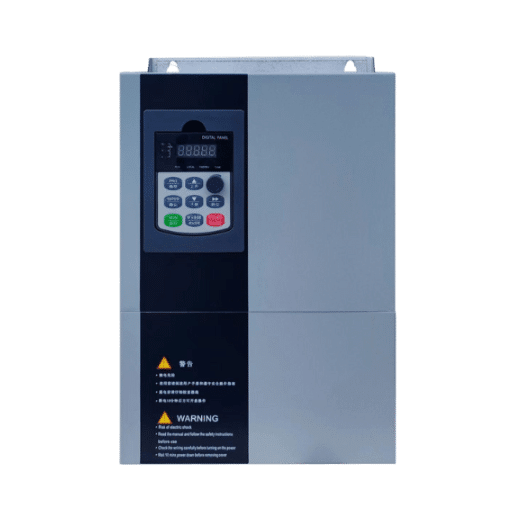
Whether you need a single drive or a complete system, we have the VFD products and engineering support to ensure your project's success.

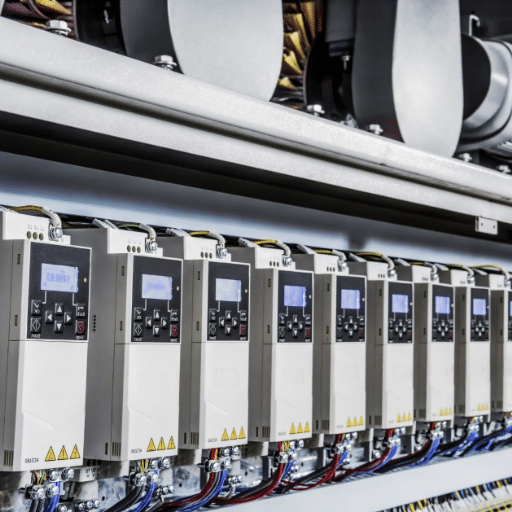
A VFD for conveyor belt systems controls motor speed and torque so the belt accelerates smoothly, runs at the pace your process needs, and stops without shock loading. It is one of the most effective upgrades you can make to a conveyor, but only if the drive is sized for constant torque. That last part is where most installations go wrong.
The most expensive sound in a plant is a conveyor motor slamming across the line. Every direct-on-line start hits the belt, splices, and gearbox with full torque instantly, and draws six to eight times rated current doing it. Multiply that by every start, every shift, every year.
If you have priced a VFD retrofit and wondered whether it actually pays back on a conveyor, you are asking the right question. Fan and pump marketing has trained buyers to expect 30 to 60% energy savings. Conveyors play by different rules. This guide covers what a VFD really does on a belt system, how to size one correctly, and where the honest ROI comes from.
Key Takeaways
- Conveyors are constant torque loads. Size the VFD by motor full load amps (FLA) times 1.2 to 1.3, not by horsepower, and specify a Heavy Duty drive rated for 150% overload for 60 seconds.
- Soft starting cuts inrush current from 600 to 800% of FLA down to 100 to 150%, which is the single biggest factor in belt and splice life.
- Honest energy savings on conveyors run 10 to 30%, not the 30 to 60% quoted for fans and pumps. The bigger ROI is mechanical life and avoided downtime.
- Decline conveyors need braking resistors or regenerative drives to handle overhauling loads.
- Sensorless vector control is the right default for loaded starts; basic V/f control often stalls under load.

Yes. A VFD is one of the best control methods for conveyor belts. It ramps the motor up gradually instead of starting it across the line, adjusts belt speed to match production flow, and provides controlled stopping. The main requirement is correct sizing: conveyors are constant torque loads, so the drive must be selected by motor current with a Heavy Duty overload rating.
On a conveyor, the VFD manages three things. First, speed: belt velocity follows motor frequency, so the drive sets exactly how fast material moves. Second, torque: the drive limits and shapes torque during acceleration, which protects the mechanics. Third, ramp profiles: programmable acceleration and deceleration times replace the violent on/off behavior of contactors.
That third point matters more than most buyers realize. A conveyor does not just need to reach speed. It needs to get there without snapping the belt, and stop without piling product into a heap. Conveyor component manufacturers such as Rulmeca recommend VFD control for exactly these reasons.
Here is the physics that most VFD marketing skips. Fans and pumps are variable torque loads: slow them down 20%, and power draw drops by roughly half. Conveyors are constant torque loads. The torque required to move a loaded belt is essentially the same at low speed as at full speed, and power falls only in direct proportion to speed.
| Factor | Conveyor (Constant Torque) | Fan/Pump (Variable Torque) |
|---|---|---|
| Torque vs. speed | Roughly constant | Falls with square of speed |
| Power vs. speed | Falls linearly | Falls with cube of speed |
| Typical energy savings | 10–30% | 30–60% |
| Overload requirement | 150% for 60s (Heavy Duty) | 110% for 60s (Normal Duty) |
| Starting challenge | Breakaway torque under load | Minimal |
Be skeptical of any vendor quoting fan-and-pump savings figures for a conveyor. Realistic conveyor savings come from three places: running slower when throughput allows, eliminating across-the-line starting waste, and avoiding empty-belt running between batches. Together these typically deliver 10 to 30%.
The bigger financial win is mechanical. Belts, splices, gearboxes, and bearings all last longer when they stop absorbing full-voltage starting shock. For most plants, avoided downtime and maintenance outweigh the energy line item, which is exactly the opposite of the HVAC story.

Here is what each benefit looks like in practice.
A direct-on-line start subjects the drive train to 600 to 800% of rated current and near-instant torque. A VFD ramps up over a programmed time, holding starting current to 100 to 150% of FLA. The belt stretches into motion instead of snapping into it.
When Tomas, a maintenance manager at an aggregates plant in Poland, reviewed his failure logs in 2024, one pattern stood out: the main incline conveyor had gone through three belt splices in 18 months, each failure costing roughly $4,000 in parts and lost production. The conveyor started loaded, across the line, 30 to 40 times per shift. After retrofitting a Heavy Duty VFD with an 8-second acceleration ramp, splice failures stopped entirely. The drive paid for itself in 11 months on avoided repairs alone, before counting energy savings.
A belt running faster than the process downstream can absorb material creates pileups, spillage, and jammed transfer points. With a VFD, belt speed follows production demand, either from a manual setpoint or automatically from a PLC signal tied to downstream sensors. Packaging lines use this constantly: conveyor speed adjusts to match the filler, labeler, or case packer, and product gapping stays consistent.
Stopping matters as much as starting. An uncontrolled stop on an incline conveyor lets product slide and pile at the tail. A VFD decelerates the belt along a programmed ramp. For decline conveyors, where the load tries to drive the motor, the drive must dissipate that overhauling energy through a braking resistor, or return it to the line with a regenerative drive. Skip this, and you get overvoltage trips every time the belt stops.
Modern drives monitor motor current continuously and trip on overload, phase loss, or stall conditions far faster than a thermal relay. Some drives can even detect a jam signature and automatically attempt a brief reverse pulse to clear it before tripping. That turns a 20-minute manual jam-clearing job into a non-event.
As covered above, expect 10 to 30% on the energy line, depending on how much of the day the belt can run below full speed. There is a second, quieter win: soft starting eliminates the demand spikes from across-the-line starts, which can reduce peak demand charges on facilities with frequent start-stop cycles.
Specifying a conveyor retrofit now? Our conveyor VFD control solutions page covers system-level configurations, and the sections below will help you walk into that conversation with the right numbers.

This is the section that separates a reliable installation from a nuisance-tripping one. Four decisions matter.
Motor horsepower on the nameplate is a rough proxy. What actually determines drive size is current. Take the motor’s full load amps from the nameplate, multiply by 1.2 to 1.3 to cover conveyor service conditions, and select a drive whose rated output current meets or exceeds that figure. Sizing by horsepower alone is the most common cause of undersized drives on conveyors.
Drives come in two overload classes. Normal Duty handles 110% overload for 60 seconds and suits fans and pumps. Heavy Duty handles 150% overload for 60 seconds and is the correct class for conveyors, which must break away loaded belts and ride through momentary surges when material drops onto the line. A Normal Duty drive on a conveyor will work in the showroom and trip in the quarry.
| Conveyor Scenario | Recommended Control Mode | Why |
|---|---|---|
| Light loads, gradual starts, single speed bands | V/f (volts-per-hertz) | Simple, inexpensive, adequate for easy duty |
| Loaded starts, inclines, varying material weight | Sensorless vector control (SVC) | Full torque at low speed without an encoder |
| Precise positioning, indexing, very low speeds | Closed-loop vector (FVC) with encoder | Exact speed and torque regulation near zero speed |
| Multiple motors on one belt | SVC with master/follower load sharing | Balances torque between drive points |
For most industrial conveyors, a sensorless vector control VFD is the right default. V/f control frequently cannot produce enough breakaway torque for a loaded start.
Published drive ratings assume standard conditions. Derate roughly 1% per 100 meters of altitude above 1,000 meters, and 2 to 3% per degree Celsius above a 40°C ambient. Dusty environments like cement plants and grain handling call for higher IP-rated enclosures or panel-mounted drives with filtered ventilation. Ignore derating, and the drive you sized correctly on paper becomes undersized in the field.

Inclines need sustained torque at every speed, which reinforces the Heavy Duty sizing case. Declines are the trickier case: the load overhauls the motor and turns it into a generator. That energy has to go somewhere. Options are a braking resistor (dissipates energy as heat, fine for intermittent duty) or a regenerative drive (returns energy to the supply, worth it on continuous downhill duty such as mine overland conveyors).
Conveyors over a few hundred meters often use two or more drive pulleys. The drives must share load evenly, or one motor works while the other loiters. Modern drives handle this with master/follower torque control over a fieldbus link: the master sets speed, followers match torque. This is standard practice in mining and worth specifying at the design stage, because retrofitting load sharing is far more painful.
Sorting systems and packaging lines may start and stop hundreds of times per hour. This duty eliminates soft starters from consideration (they only manage starting, not running) and pushes you toward closed-loop vector control with an encoder for accurate, repeatable positioning. Check the drive’s permissible starts-per-hour rating as well as its continuous rating.
Not sure which control mode and duty class your application needs? Send the Shandong Electric engineering team your motor nameplate data, belt length, incline angle, and duty cycle. We size conveyor drives every week and will come back with a specific recommendation from our heavy duty VFD range, rated at 150% overload for exactly this kind of work.
Yes, with two checks. First, use sensorless or closed-loop vector control, because V/f control loses torque at low speed. Second, watch motor cooling: standard motors rely on a shaft-mounted fan, so sustained low-speed running under load may need an inverter-duty motor or forced ventilation.
Yes, but less than on fans and pumps. Conveyors are constant torque loads, so realistic savings are 10 to 30%, mainly from running below full speed when throughput allows and eliminating empty-belt running. The larger financial benefit is usually reduced mechanical wear and downtime.
Size by current, not horsepower. Take the motor nameplate full load amps, multiply by 1.2 to 1.3, and choose a Heavy Duty drive (150% overload for 60 seconds) whose output current rating meets or exceeds that figure. Then apply altitude and temperature derating if your site conditions require it.
Use a soft starter only if the belt runs at one fixed speed and you need nothing but gentler starts. Choose a VFD if you want speed adjustment, controlled stopping, jam protection, or energy savings. In practice, the price gap has narrowed enough that VFDs win most conveyor decisions, as drive comparison guides from suppliers like Nesans also conclude.
It can run several motors in parallel if they all start and run together at the same speed, but each motor needs its own overload protection, and you lose independent control. For conveyors with multiple drive pulleys, the correct architecture is one drive per motor with master/follower load sharing.
The use of a VFD for conveyor belt systems succeeds or fails on one decision: respecting the constant torque nature of the load. Get that right, and everything else follows.
To recap:
Conveyors are unforgiving equipment, but they reward thoughtful engineering. If you’re planning a new line or retrofitting an existing belt, start with the load profile and duty cycle, then match the drive to it. The Shandong Electric team supplies low voltage VFD systems with the overload capacity and vector control conveyor duty demands, backed by engineers who will check your sizing before you commit. Talk to our team about your application, and explore our conveyor VFD control solutions to see complete system configurations.