Ready to Get Your VFD Solution?
Whether you need a single drive or a complete system, we have the VFD products and engineering support to ensure your project's success.

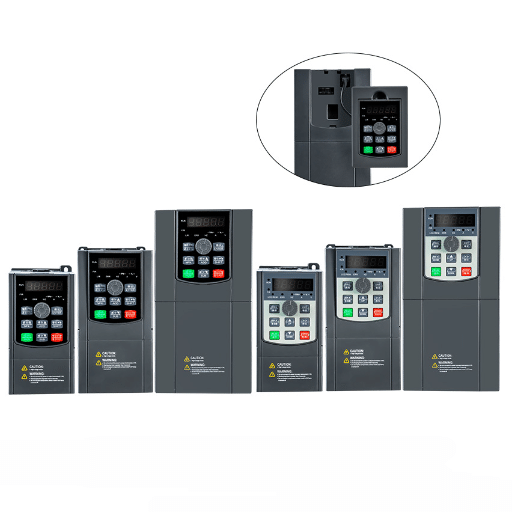
A Variable Frequency Drive (VFD) undervoltage fault indicates that the internal DC bus voltage has dropped below a minimum threshold, causing the drive to shut down to protect itself and the motor. The root cause rarely lies within the motor itself; instead, it typically originates from one of three areas: the input power supply, the wiring connecting the power source to the drive, or aging internal components.
At a plastics plant in Ohio, maintenance supervisor Dana noticed that an extruder VFD consistently tripped around 2:00 PM each day. The drive was only two years old, and all bench tests showed it was functioning correctly. Eventually, the pattern of the faults revealed the problem: the tripping coincided exactly with the startup of a 200-horsepower (HP) compressor sharing the same distribution transformer. The VFD itself was not faulty; it was simply reacting to a voltage dip on an undersized, shared feeder line. After the team used a power quality analyzer to confirm the voltage dip and adjusted the “ride-through” settings, the tripping issue was resolved.
This guide walks you through the troubleshooting logic Dana employed. You will learn what a VFD undervoltage fault actually means, how to troubleshoot systematically from the power source inward, and which corrective measures are effective. We will analyze the causes of VFD undervoltage faults in order of likelihood, discuss critical DC bus voltage thresholds, and explain “ride-through” settings that help maintain operation during actual voltage dips.
Key Takeaways
- A VFD undervoltage fault means the DC bus voltage fell below the drive’s trip threshold, roughly 60% of nominal. Look at the supply, the connections, and the drive internals in that order.
- The most common root cause in an aging drive is VFD DC bus capacitor failure. Rising ESR lets the bus droop under load.
- A drive that trips only under load or above a certain speed points to a VFD phase loss fault or weak capacitors, not a random glitch.
- Voltage sags from shared transformers and large motor starts are a leading external cause. Confirm them with a power quality analyzer before you touch the drive.
- Never disable the undervoltage protection to stop nuisance trips. Fix the cause or tune ride-through settings instead.

A VFD undervoltage fault is a protective trip that fires when the drive’s DC bus voltage drops below its minimum threshold. The rectifier converts incoming AC to DC and stores it on the bus. If the bus falls too low, the drive can no longer control the motor safely, so it shuts down and displays an undervoltage code.
Every VFD runs on a DC bus. The input rectifier charges that bus to a level set by your line voltage, and the inverter draws from it to run the motor. When the bus sags below the trip point, the fault fires. Technicians often search this as a VFD DC bus undervoltage, since the bus is where the fault originates.
| Drive input class | Nominal DC bus | Typical undervoltage trip |
| 220-240 V | ~310-340 VDC | ~200 VDC |
| 380-400 V | ~520-540 VDC | ~312 VDC |
| 460-480 V | ~650-680 VDC | ~380-420 VDC |
This is the mirror image of an overvoltage fault. Overvoltage means the DC bus climbed too high, usually from regenerative energy during fast deceleration. Undervoltage means the bus fell too low, usually from a weak supply or a tired component. If you are seeing the high side instead, our VFD overvoltage fault guide covers it. For the full map of every fault, start with the complete VFD troubleshooting guide.
Before you open the cabinet or touch a terminal, make the drive safe.
A charged DC bus can hold hundreds of volts for minutes. Treat every drive as live until your meter proves otherwise.

Use this three-step flow to find the cause before you replace any parts.
This simple order keeps you from replacing a healthy drive when the real problem is a loose lug or a weak utility feeder. If the symptoms are unclear, our engineering team can help you decide whether the issue is the supply or the drive. Get VFD support from Shandong Electric →
The fastest wins in undervoltage troubleshooting come from the supply side. Most VFD undervoltage fault trips trace back to incoming power, not the drive. Industry guidance notes that up to 60% of VFD downtime comes from external factors rather than internal drive failure.
A static voltage check is not enough. Measure all three phases at the drive terminals while the motor is running. You want a reading within plus or minus 10% of the nameplate. If a VFD input voltage too low shows up only under load, the problem is upstream capacity or a high-resistance connection, not the drive.
A voltage sag is a short dip in the supply, often from a large motor starting on the same transformer or a weak utility feeder. A brownout is a longer, deeper drop. Both pull the DC bus down faster than the rectifier can recover. Confirm sags with a power quality analyzer that logs the event, not a handheld meter that only shows the moment you look.
Dana’s extruder line is the textbook case. Her analyzer logged a 15% sag lasting 80 milliseconds every time the compressor kicked in. The fix had two parts: her utility agreed to move the compressor to a stiffer feeder, and she enabled the drive’s ride-through so a brief dip no longer caused a trip. The key was proving the sag before assuming the drive was at fault.
A VFD phase loss fault happens when one input phase goes missing, usually from a blown fuse, a failing contactor, or a broken conductor. With one phase gone, the rectifier cannot keep the bus charged, and ripple climbs.
The telltale sign is a drive that runs fine at low speed but trips as the load or frequency rises. At light load the DC bus capacitors can bridge the gap. Above a certain point the demand exceeds what the capacitors can supply and the bus collapses. If your VFD low voltage trip only shows up under load or above a certain speed, suspect a missing phase first.
A water treatment tech named Priya chased this exact pattern for a week. Her 30 HP pump drive ran perfectly at 20 Hz but tripped on undervoltage every time it ramped past 40 Hz. The supply meter read normal at idle. Under load, one phase sagged hard. The culprit was a blown fast-blow fuse in the disconnect and a corroded fuse holder that added resistance. She replaced the fuse, cleaned the holder, verified phase-to-phase voltage within 10%, and the trips stopped. She now checks input current balance during every inspection.
A loose or corroded terminal adds resistance, and resistance drops voltage under load. Retorque every input terminal to spec. For a stubborn case, a micro-ohmmeter across busbar splices and branch connections will find the high-resistance joint that a visual check misses. Guidance on the PowerFlex 700 undervoltage fault stresses retorquing connections before condemning the drive.

If the supply checks out clean, move inside the drive to find the VFD undervoltage fault source. Three components cause most internal undervoltage trips.
A failed diode or SCR in the input rectifier starves the bus. With the drive locked out and the bus discharged below 5 VDC, diode-test each AC input terminal to the positive and negative bus. A healthy bridge reads about 0.4 to 0.7 volts forward and open line in reverse. A near-zero reading both ways means a shorted diode. Open line forward means an open diode.
The pre-charge resistor and relay limit inrush when the bus first charges. If the pre-charge fails, the bus may never reach its working level, or it charges so slowly the drive trips. A chattering input contactor can cause the same symptom. Listen for a contactor clicking on and off every few seconds.
This is the number one cause in an aging drive. The electrolytic capacitors on the DC bus smooth the rectified voltage. As they age, their equivalent series resistance rises, and the bus droops under load. An ESR above 50 milliohms signals end of life. Capacitor life also halves for every 10 degrees Celsius above 40, so a hot cabinet ages them fast. As a rule, plan to replace the capacitor bank every 5 to 7 years. Reference data on the ABB DC link undervoltage fault ranks tired capacitors as the cause in the large majority of aged-drive cases.
Marco runs a machine shop with a lathe drive that was eight years old. It started tripping on undervoltage, but only during heavy cuts, never at idle. The supply was clean and the rectifier tested fine. An ESR meter told the story: the bus capacitors were reading well above 50 milliohms. He replaced the capacitor bank, and the bus held steady under full load. A 200capacitorkitbeata200capacitorkitbeata3,000 drive replacement.
Less often, the DC bus voltage sensing circuit drifts and reports a low bus that is not really low. The result is a VFD undervoltage nuisance trip on a healthy drive. If every component tests good and the supply is clean, have the sensing circuit checked before you replace parts.
When the sag is real and you cannot eliminate it, VFD voltage sag ride-through lets the drive coast through a brief dip instead of tripping.
Here is the hard rule. Never disable the undervoltage fault to stop trips. Running with a degraded DC bus causes excess motor current, overcurrent faults, and single-phasing damage to the motor. Ride-through manages a brief, genuine sag. It is not a way to ignore a real supply problem. If you need help tuning these and the related protection values, our VFD parameter settings guide maps each setting to the fault it prevents.
The code on the display varies by manufacturer, but the meaning is the same: DC bus voltage fell too low. Use this table to match the code, then follow the diagnostic flow above.
| Brand | Undervoltage code | Notes |
| Schneider Altivar | USF | Undervoltage fault |
| Yaskawa | Uv / Uv1 | DC bus undervoltage |
| Siemens Micromaster | F0003 | Undervoltage |
| Danfoss VLT | AL12 | DC link undervoltage |
| ABB ACS | F603 | DC link undervoltage |
| Allen-Bradley PowerFlex | F4 / F003 | Undervoltage |
| Inovance | Err09 | Bus undervoltage |
| Generic drives | E-09 / Err09 | Undervoltage |

Repair makes sense when the drive is otherwise healthy. Replace the rectifier, the pre-charge components, or the capacitor bank, retorque the connections, and the drive returns to service. These are inexpensive, well-understood fixes.
Replace the drive when it is past its service life, when it has suffered repeated thermal events, or when the control board or power section is physically damaged. At that point repair costs climb toward replacement cost, and reliability suffers. A broad look at DC under voltage in VFDs makes the same call: fix the root cause, and replace rather than repair a drive that keeps failing.
Most VFD undervoltage fault trips are preventable with a short routine.
Fold these into your VFD preventive maintenance routine and you will see far fewer low voltage trips. If a drive does trip and you are not sure whether it is a real fault or a startup issue, the VFD not running checklist helps you separate the two.
The most common VFD undervoltage fault causes are a weak or sagging supply, a missing input phase, loose or corroded connections, and aging DC bus capacitors. Less often the rectifier, pre-charge circuit, or voltage sensing circuit is at fault. Start at the supply and work inward.
A VFD DC bus undervoltage means the internal DC bus dropped below the drive’s minimum threshold. The bus stores rectified energy for the inverter. When it falls too low, the drive cannot control the motor safely and trips to protect the system.
A trip that only appears under load or above a certain speed points to a missing input phase or weak DC bus capacitors. At light load the capacitors can bridge the gap. Under heavier demand the bus collapses. Check phase balance and capacitor ESR first.
Yes. VFD DC bus capacitor failure is the leading cause in older drives. As the electrolytic capacitors age, their ESR rises and the bus droops under load. An ESR above 50 milliohms means it is time to replace the bank, usually every 5 to 7 years.
A VFD low voltage trip often means VFD input voltage too low under load. Measure the input while the motor runs and confirm all three phases are within 10% of nameplate. Retorque connections, check for a blown fuse or missing phase, and test the rectifier and bus capacitors. If the sag is real and brief, enable ride-through. Fix the cause rather than defeating the protection.
Yes. A sag from a large motor starting on a shared transformer or a weak utility feeder can pull the DC bus below the trip point. Confirm it with a power quality analyzer, then address the supply or use VFD voltage sag ride-through settings to coast through brief dips.
No. Disabling the protection lets the drive run on a degraded bus, which causes overcurrent faults, excess motor current, and single-phasing damage. If you get a VFD undervoltage nuisance trip on a healthy drive, find the sensing or supply issue instead of turning the fault off.
Ride-through tells the drive to keep running through a brief voltage sag instead of tripping. Use it for genuine, short dips on a weak feeder or shared transformer. It manages a real sag. It is not a fix for a failing supply or worn components.
A VFD undervoltage fault is the drive telling you the DC bus ran out of energy. The cause sits in the supply, the connections, or the drive’s own aging parts, and you find it fastest by working from the supply inward.
Most undervoltage trips come down to a handful of fixable causes, and catching them early keeps a $200 capacitor kit from becoming a full drive replacement. If your drive is aging out or you want a unit built for a weak or unstable supply, the Shandong Electric VFD product range covers low and high voltage applications with full engineering support. Our team can help you size the drive, tune ride-through, and set a maintenance plan that stops these trips for good.