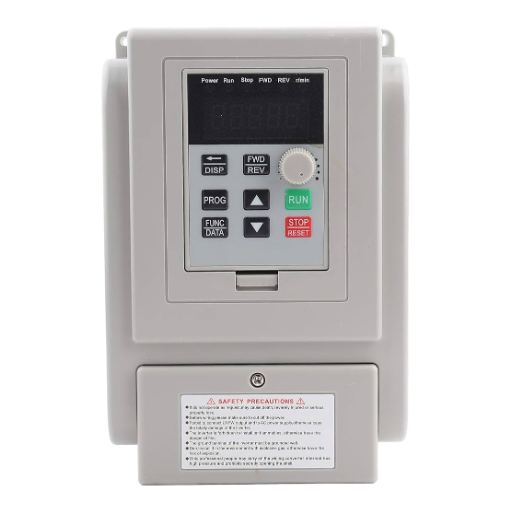
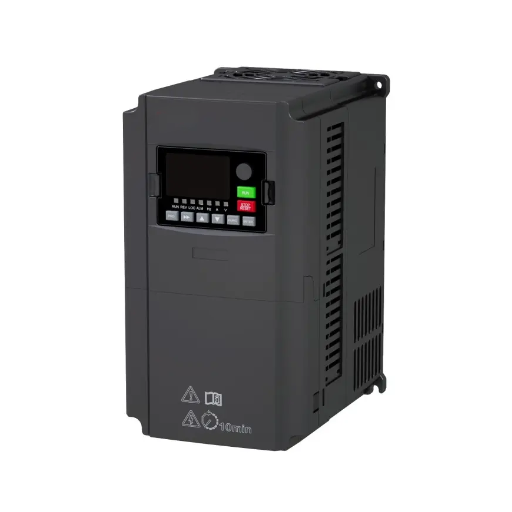
Ready to Get Your VFD Solution?
Whether you need a single drive or a complete system, we have the VFD products and engineering support to ensure your project's success.


If you need to know how to select a VFD, start with six decisions in this order: voltage class, input power type, control mode, enclosure rating, communication protocol, and then sizing. Most buyers skip the first five and jump straight to horsepower matching. That is why so many drives work on paper but fail in the field.
You already know that variable frequency drives reduce energy consumption and improve process control. What you might not realize is that selection errors — choosing the wrong voltage class, control mode, or enclosure — are harder to fix than sizing errors. An oversized drive costs extra money. A drive with the wrong control mode ruins product quality. A drive with the wrong enclosure rating fails in months.
This guide gives you a repeatable framework for VFD selection. By the end, you will know which voltage class, control mode, enclosure, and communication protocol your application demands — before you ever calculate a current rating. Whether you are specifying one drive for a pump upgrade or dozens for a production line, this VFD selection guide will help you narrow from thousands of models to the right one.
Key Takeaways
- Voltage class is your first filter: LV (220-690V) for motors under 500 kW, MV (1-3.3kV) for 500-2,000 kW, HV (6-10kV) above 2,000 kW.
- Control mode determines performance: V/f for pumps and fans, sensorless vector for conveyors and mixers, closed-loop vector for machine tools, DTC for cranes and hoists.
- Enclosure rating must match the environment: IP20 for clean rooms, IP54 for dusty floors, IP55/IP66 for washdown and outdoor installations.
- Communication protocol must match your automation architecture: Modbus RTU for simple systems, Profinet or EtherNet/IP for integrated factories.
- Selection comes before sizing. Once you know the drive type, use our detailed guide on how to size a VFD for motor current matching and derating.
Want to see how VFDs fit into a complete motor control strategy? Explore our complete guide to variable frequency drives for a deeper technical overview.

Selection and sizing are related but distinct phases of specifying a drive. Selection answers the question: “What type of drive do I need?” Sizing answers: “What capacity must that drive have?”
Selection covers voltage class, input type, control mode, enclosure rating, and communication protocol. These decisions are architectural. They determine whether the drive will function in your environment and integrate with your control system.
Sizing covers current rating, overload capacity, and derating factors. These decisions are mathematical. They determine whether the drive can deliver enough power to start and run your motor under actual conditions.
Most engineering guides jump straight to sizing. They explain Full Load Amps, service factors, and altitude derating — all critical, but all useless if you have already selected the wrong voltage class or control mode. For a deep dive into current matching and derating after you complete this VFD selection framework, see our step-by-step guide on VFD sizing calculations.
Voltage class is the most fundamental VFD selection decision. It narrows the field from thousands of models to a manageable subset before you consider any other parameter.
Low voltage VFDs dominate the market, accounting for roughly 70% of global unit sales. They cover motor power from fractional horsepower up to approximately 1,000 kW (1,350 HP) at 690V. For a comprehensive overview of low voltage options, see our low voltage VFD systems guide.
Choose low voltage when:
Common applications: Pumps, fans, HVAC, small conveyors, machine tools, packaging lines. For a sector-by-sector breakdown of where drives deliver the highest ROI, see our survey of common VFD applications in industry.
Medium voltage VFDs bridge the gap where low voltage becomes impractical. At power levels above 500 kW, low voltage drives require enormous current — a 1,000 kW motor at 400V draws over 1,700 amps. Cable size, switchgear rating, and installation cost all become prohibitive.
Choose medium voltage when:
High voltage VFDs serve the heaviest industrial loads: mining hoists, ball mills, pipeline pumps, and large ventilation fans. Shandong Electric’s high voltage range extends to 53,000 kW.
Choose high voltage when:
In 2023, an engineering contractor in Chile specified a 690V low-voltage drive for a 1,800 kW overland mining conveyor. The motor FLA would have been 1,850 amps — requiring 400 mm² cables, massive contactors, and specialized switchgear. After reviewing the full system cost, the contractor switched to a 3.3kV medium voltage VFD. Cable size dropped to 95 mm², switchgear cost fell by 40%, and total installed cost decreased by 25% despite the higher drive price.
| Voltage Class | Range | Typical Motor Power | Best For |
|---|---|---|---|
| Low Voltage (LV) | 220V–690V | 0.1 kW – 1,000 kW | Pumps, fans, HVAC, conveyors, machine tools |
| Medium Voltage (MV) | 1kV–3.3kV | 500 kW – 2,000 kW | Large pumps, compressors, fans, heavy conveyors |
| High Voltage (HV) | 6kV–10kV | 2,000 kW – 53,000 kW | Mining, oil & gas, power generation, large mills |

After voltage class, the next filter in how to select a VFD is your available supply: three-phase or single-phase.
Three-phase power is the industrial standard. It delivers more power per conductor, produces less ripple on the DC bus, and allows smaller, more efficient VFD designs. If your facility has three-phase supply, use it.
Single-phase power is common in workshops, small commercial buildings, and rural locations. Single-phase input VFDs are available, but they carry limitations:
When to use a phase converter instead: If you have single-phase supply but need to run a motor above 3.7 kW, a rotary or static phase converter may be more cost-effective than an oversized single-phase VFD. However, a variable frequency drive with single-phase input and three-phase output is generally preferred for motors under 3.7 kW because it provides speed control, soft start, and energy savings that a phase converter cannot.
Control mode is where many VFD selections go wrong. Buyers often default to the cheapest option — V/f control — without considering whether their application needs torque precision, speed accuracy, or dynamic response. For a complete explanation of how each control mode works, see our article on VFD control modes for motor control.
V/f control maintains a constant ratio between voltage and frequency. It is simple, reliable, and cost-effective for applications where precise torque control is unnecessary.
Best for: Centrifugal pumps, HVAC fans, cooling tower blowers, simple material handling where speed variation is the only requirement.
Limitation: At low speeds, V/f control cannot maintain full torque. If your load needs high starting torque or precise speed holding, V/f will underperform.
Sensorless vector control estimates motor rotor position using current and voltage measurements, without an encoder. It provides significantly better low-speed torque and speed accuracy than V/f.
Best for: Conveyors, extruders, mixers, positive-displacement pumps, rotary screw compressors — any application needing 150-200% starting torque or reasonable speed accuracy.
Limitation: Speed accuracy is typically ±0.5%, adequate for most industrial applications but not sufficient for precision winding or machining.
Closed-loop vector control uses an encoder on the motor shaft to measure actual rotor position. This feedback loop enables precise torque control, tight speed regulation, and fast dynamic response.
Best for: Machine tool spindles, wire winding, paper machines, textile lines, and any application requiring ±0.01% speed accuracy or precise tension control.
Requirement: An encoder must be mounted on the motor shaft and wired to the VFD. This adds cost and installation complexity.
DTC controls motor flux and torque directly, without separating them into d-axis and q-axis components like vector control. It delivers the fastest torque response of any control mode — typically under 2 milliseconds.
Best for: Overhead cranes, mine hoists, port handling equipment, dynamometer test stands, and any application needing instantaneous torque reversal or zero-speed holding.
In 2024, a plastics manufacturer in Indiana installed a V/f drive on a 75-HP extruder to save money. Within two weeks, operators noticed speed droop during startup, causing inconsistent melt pressure and visible product defects. Scrap rates climbed to 8%. After switching to a sensorless vector drive with torque boost, startup torque improved from 80% to 180% at 0.3 Hz. Scrap dropped below 1%, and the line speed stabilized within ±0.2%.
| Control Mode | Speed Accuracy | Torque Response | Best For | Relative Cost |
|---|---|---|---|---|
| V/f | ±2-3% | 100-200 ms | Pumps, fans, simple conveyors | Base |
| Sensorless vector | ±0.5% | 10-50 ms | Conveyors, mixers, compressors | +10-20% |
| Closed-loop vector | ±0.01% | 5-10 ms | Machine tools, winding, paper | +25-40% |
| DTC | ±0.01% | <2 ms | Cranes, hoists, test stands | +30-50% |

A VFD rated for a clean electrical room will fail within months on a cement mill floor. Enclosure selection is environmental matching, not an afterthought.
IP20 drives have no protection against dust or moisture. They are designed for installation in clean, climate-controlled electrical enclosures or rooms. They are the most compact and cost-effective option when the environment permits.
IP54 enclosures protect against dust ingress and water splashing from any direction. They are suitable for most factory floors, warehouses, and manufacturing areas where dust and occasional liquid exposure occur.
IP55 protects against dust and low-pressure water jets. IP66 protects against powerful water jets and heavy seas. These ratings are essential for food processing, outdoor installations, marine applications, and high-pressure washdown environments.
Temperature and cooling: Standard VFDs are rated for full output up to 40°C ambient. Above this threshold, output current derates by 2-3% per degree. Water-cooled VFDs extend this limit to 45°C or higher and are preferred in hot climates or confined spaces.
Altitude: Above 1,000 meters, air density reduces cooling effectiveness. Standard derating is 1% output current reduction per 100 meters of altitude. NEMA MG-1 and IEC 61800-2 both address altitude derating for motor and drive systems.
For more on how environment shapes complete drive system design, see our guide to industrial VFD system architecture.
A VFD isolated from your control system is a motor controller. A VFD integrated with your PLC or SCADA system is part of an automation architecture. Communication protocol selection determines how the drive fits into your broader system.
Modbus RTU over RS-485 is the most widely supported industrial communication protocol. Virtually every VFD supports it. It is simple to wire, easy to troubleshoot, and requires no special network infrastructure.
Best for: Standalone drives, small systems, retrofit projects, and applications where only basic start/stop/speed commands are needed.
Profinet is the Ethernet-based successor to Profibus and is the standard in Siemens-automated facilities. It offers real-time communication, device diagnosis, and seamless integration with Siemens PLCs and HMI panels.
Best for: Facilities already standardized on Siemens control architecture.
EtherNet/IP is the dominant protocol in North American manufacturing, particularly in Allen-Bradley (Rockwell Automation) ecosystems. It runs on standard Ethernet hardware and integrates directly with ControlLogix and CompactLogix PLCs.
Best for: North American manufacturing facilities, automotive plants, and any site using Allen-Bradley control systems.
CANopen is common in mobile equipment, agricultural machinery, and embedded systems where compact wiring and robust noise immunity matter more than high data throughput.
Best for: Mobile crushers, agricultural conveyors, and specialized OEM equipment.
By this point, you should have narrowed your selection to:
With these five decisions made, you are ready for sizing. Sizing is the mathematical phase: matching the drive’s continuous output current to your motor’s Full Load Amps, applying overload margins, and derating for temperature and altitude.

Mistake one: choosing the wrong voltage class. Specifying low voltage for a multi-megawatt application drives up cable and switchgear costs. Specifying medium voltage for a small pump wastes capital. Match voltage class to motor power first, before any other VFD selection criteria.
Mistake two: selecting V/f for high-torque applications. V/f control cannot deliver the starting torque that conveyors, extruders, and crushers demand. The drive will trip on overcurrent or produce poor process results.
Mistake three: ignoring communication protocol requirements. Ordering a drive with Modbus in a Profinet factory forces you to add protocol converters, adding cost, latency, and failure points.
Mistake four: specifying IP20 for harsh environments. Dust blocks heat sinks. Moisture corrodes circuit boards. Both reduce current capacity and shorten drive life. Match the IP rating to the actual environment.
Mistake five: overlooking future scalability. A drive that barely meets today’s requirements leaves no room for production increases. When possible, select a control mode and communication platform that supports expansion.
Follow this decision tree from top to bottom. At each level, one choice narrows the field:
START: What is your motor power?
│
├─ < 500 kW ──→ Low Voltage (220-690V)
│   │
│   ├─ Single-phase supply available? ──→ Single-phase input VFD (≤3.7 kW)
│   └─ Three-phase supply? ──→ Three-phase input VFD
│
├─ 500-2,000 kW ──→ Medium Voltage (1-3.3 kV)
│
└─ > 2,000 kW ──→ High Voltage (6-10 kV)

NEXT: What is your load type?
│
├─ Pump, fan, simple conveyor ──→ V/f control
├─ Conveyor, mixer, compressor ──→ Sensorless vector
├─ Machine tool, winder ──→ Closed-loop vector
└─ Crane, hoist, test stand ──→ DTC

NEXT: What is your environment?
│
├─ Clean electrical room ──→ IP20
├─ Dusty factory floor ──→ IP54
└─ Washdown / outdoor ──→ IP55/IP66

NEXT: What is your control system?
│
├─ Simple / standalone ──→ Modbus RTU
├─ Siemens ecosystem ──→ Profinet
├─ Allen-Bradley ecosystem ──→ EtherNet/IP
└─ Mobile / embedded ──→ CANopen

FINAL: Size the drive
│
└─ Match current, apply derating, select accessories
(See: How to Size a VFD for Your Motor)Voltage class is the most important first filter. It determines whether you are looking at low voltage, medium voltage, or high voltage drives — three entirely different product categories with different pricing, installation requirements, and application ranges. After voltage class, control mode is the second most critical decision because it directly affects torque performance and process quality.
Choose V/f control for variable-torque loads like centrifugal pumps and fans where precise torque control is unnecessary. Choose sensorless vector control for constant-torque loads like conveyors, mixers, and compressors that need high starting torque or moderate speed accuracy. For precision applications like machine tools or winding, closed-loop vector control with encoder feedback is required.
Yes, within limits. Many modern VFDs support multiple control modes selectable via parameter settings. A single drive can run in V/f mode for a pump today and be reconfigured to sensorless vector for a conveyor tomorrow. However, voltage class, power rating, and enclosure rating are hardware-fixed. Select those for the most demanding application you anticipate.
The drive will likely run, but performance will suffer. V/f control on a high-torque application produces speed droop, inconsistent torque, and potential overcurrent trips. Vector control on a simple fan is unnecessary and adds cost without benefit. The wrong control mode rarely causes immediate failure, but it degrades process quality and efficiency.
For integrated automation systems, yes. Ethernet-based protocols like Profinet and EtherNet/IP enable real-time monitoring, remote parameter adjustment, and predictive maintenance data collection. For standalone drives with manual control, basic Modbus RTU is sufficient. The protocol decision should match your control architecture, not your budget.
Add a line reactor when the supply transformer capacity exceeds 10 times the VFD kVA rating, when voltage is unstable, when multiple drives share a bus, or when IEEE 519 harmonic limits apply. Size a braking resistor when decelerating high-inertia loads (cranes, centrifuges, large fans) where regenerative energy would otherwise overvoltage the DC bus.
Selecting a VFD is not about finding the cheapest model that matches your motor horsepower. It is about matching the drive architecture to your application, environment, and control system. Voltage class, control mode, enclosure rating, and communication protocol are decisions that affect performance, reliability, and total cost of ownership for years.
The framework is straightforward: choose voltage class first, then input type, then control mode, then enclosure, then communication protocol. Only after those five decisions are made should you move to current matching and derating calculations.
Here are five takeaways to bring back to your team:
If you are evaluating VFDs for a specific project and need help with voltage class selection, control mode matching, or integration planning, contact our application engineers. We will review your motor specifications, load characteristics, control architecture, and environmental conditions, then recommend the VFD configuration that delivers the performance your process demands.
Ready to explore VFDs configured for your application? Browse Shandong Electric VFD drives engineered for every voltage class, control mode, and enclosure rating from 0.1 kW to 53,000 kW.