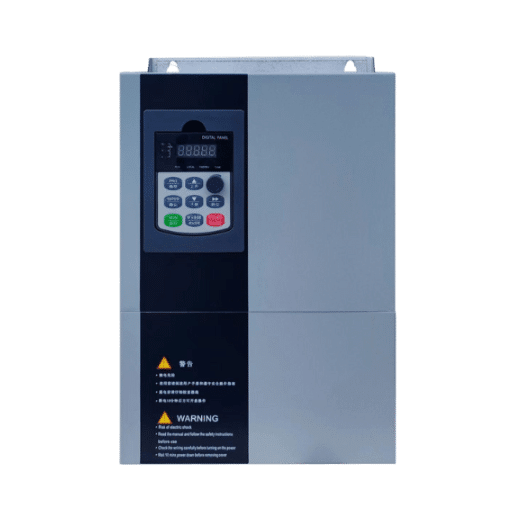
Ready to Get Your VFD Solution?
Whether you need a single drive or a complete system, we have the VFD products and engineering support to ensure your project's success.


Precision, efficiency, and control are the pillars upon which the industrial automation industry is built. The control part is very much related to motor-driven systems. The two key technologies in this field that are often weighed up against each other are servo drives and variable frequency drives (VFDs). Being crucial for motion control and power regulation, both are pertinent components while serving separate functions, and that too with different operational needs. This text is dedicated to showing the distinctive and similar characteristics of servo drives and VFDs by comparing the two in terms of their functionalities, performance, and application areas. If you are an engineer, system integrator, or a business decision-maker, knowing these differences will help you make the right choice.
A servo drive is a component part of an electric system that prevents mechanical damage by fine-controlling the machine’s state of motion or shaft and holding it continuously. It is triggered by commands from a computer-based device and feeds back information acquired by sensors. It is like a caretaker that keeps the motor healthy and functioning. Servo drives are widely used in very demanding tasks like robot movements, where precision throughout the motion is a must. Their usage in various systems like servo-driven CNC machinery is a very clear option.
A variable frequency drive (VFD) is a device that controls the speed and torque of standard AC motors by changing the frequency and voltage supplied to the motor. While the VFDs are for the wide-ranging motor applications and their principal purpose is to make energy efficiency and constant speed control their main features, the servo drives are mostly applied to the high-precision applications and the VFDs are especially known for being the controllers.
A servo drive is a highly advanced electronic device that is intended for very precise control of electric motors, which is the case for most applications that require very high accuracy and dynamic motion control. It is the same as receiving commands from a controller, in which it is the one who mentions the desired position, velocity, or torque, and then subsequently modifies the current or voltage on the motor according to it. It is a closed-loop system that is dependent on the feedback mechanisms, such as encoders or resolvers, that consistently observe the motor’s position and the operational conditions in general, so as to maintain tight precision and response requirements. The typical and major uses of servo drives are in robotics, CNC machinery, and numerous automation processes that involve cases where one needs very precise and advanced motion profiles and positionings.
A Variable Frequency Drive (VFD), also known as an adjustable frequency drive, is a type of power control device that regulates and adjusts the frequency and voltage supplied to the motor in order to manage speed and torque. It is mostly noticed in heavy industries and commercial applications where it is considered an essential component for motor performance improvement and energy saving. Variable frequency drives save energy by optimizing the speed of the motor so that the process requires less power to run, thus translating into less energy consumed, lower costs in wear and tear, and decreasing operational costs.
Sophisticated power electronics and microcontrollers have become the norm in current-day variable frequency drives. The use of sophisticated technologies has enabled VFDs to achieve perfect control over AC motors. Programmable logic control, built-in diagnostics, and the ability to communicate with industrial protocols such as Ethernet/IP, Modbus, and Profinet are some of the features common to these drives. In addition, VFDs also assist in the motor start-up process by providing less inrush current, thus minimizing mechanical stress and extending the motor’s life at the same time.
| Feature | Servo Drives | VFDs |
|---|---|---|
| Control Type | Precise position, speed, and torque control | Primarily speed control |
| Feedback System | Closed-loop with encoders or resolvers | Open-loop or closed-loop with sensors |
| Accuracy | High precision movement | General precision for motor speed |
| Dynamic Response | Fast response to load changes | Moderate response capability |
| Motor Type Compatibility | Servomotors | Standard AC induction motors |
| Applications | Robotics, CNC, packaging machines | HVAC, conveyors, pumping systems |
| Efficiency | High for dynamic processes | High for steady-state operations |
| Cost | Higher due to advanced features | Lower for basic motor control |
| Communication Protocols | EtherCAT, CANopen, Modbus | Ethernet/IP, Profinet, Modbus |
| Energy Usage | Optimized for variable loads | Optimized for steady loads |

Servo drives are mostly used for positioning, speed, and precise torque applications, but VFDs work with standard AC motors where a constant and stable operation is required.
Servo drives excel at handling dynamic processes and are effective accelerators, enabling the machine to stop quickly and start from zero. VFDs, on the other hand, are made for companies that require steady-state operations at a “good enough” degree of precision.
The working of the servo systems highly depends on the feedback from the encoders and resolvers which make it possible for them to have exact positioning and speed control. And for the VFDs, a lack of an extensive feedback system is generally the case because the regulation of motor speed is their main purpose.
Servo drives have gained popularity in robotics, CNC machines, and other high-performance installations. VFDs are being used on a large scale in the conveyors, HVAC systems and pumps, where variable speed regulation is enough for the application.
There is a significant difference in the cost of the servo drives as compared to VFDs, due to the advanced technology in them. But the VFDs are still the better option when it comes to the basic speed control needs due to their economic nature.
Sophisticated feedback loops are used by today’s motion control systems to ensure increased precision and reliability. Closed-loop control is a common feature in servo drives where feedback from encoders or resolvers as sensors is incorporated. The sensors gather real-time data on position, velocity, and torque, which is thereafter processed by the system to dynamically adjust the motor output. This way, the system’s response is constantly adapting to the ambient conditions and disturbances and the system is performing at its full potential.
On the contrary, variable frequency drives (VFDs) primarily apply the open-loop control method for a wide range of applications, whereas they can also be adapted into the closed-loop setup when exact control is necessary. The feedback loop in closed-loop VFDs is usually done by tachometers or encoders, so that the motion control system becomes capable of maintaining a more accurate speed and torque. Although compared to servo drives, closed-loop systems in VFD applications are rarely seen among the users, the coming of digital signal processing has brought them to a point of being more user-friendly for the high-demand performance.
It is a known fact that Servo drives and VFDs use different methods of controlling torque which are designed to meet the requirements of their respective applications. Servo drives are the leaders in precision and dynamic capabilities, using closed-loop feedback from the high-definition encoders to provide the precise control of the torque in a wide range of speeds. As a result of that, servo systems are able to deliver a constant torque irrespective of any changes in the load, hence they are very well suited to rapid acceleration, deceleration, and position control type applications such as robots or CNC machines.
On the other hand, the main point of an ESC is to control torque through the motor voltage and frequency adjustment in either open-loop or closed-loop processes. Although they might not be as precise as servo drives due to the lack of vector control, some modern VFDs with the feature can still manage to enhance torque performance to a certain level. The provided solution by the VFDs will always be cheaper and more energy-efficient for industrial processes like pumps, fans, and conveyors, since the control is not precise, but the energy efficiency is essential.
The speed control methods used in today’s motor control systems are created to gain the most from efficiency, precision, and operational performance in many fields. The most preferred way so far is Pulse Width Modulation (PWM), which consists of changing the duty cycle of the power fed to the motor. This allows for a very precise speed setting and is a part of both Variable Frequency Drives (VFDs) and Servo drives. Through feedback provided by the encoders or tachometers, along with the control system, the closed-loop (negative) feedback, speed variations will be minimized under any conditions of the load.
Furthermore, the drive or control may also have add-on options that use newer and more advanced control methods. Field-oriented control (FOC), better known as vector control, is one of the most effective control methods. In an AC motor system, the method controls the magnetic flux and the torque-producing current component separately. Thus, highly accurate speed and torque regulation are possible with the help of FOC, which is perfect for high-performance applications. Simultaneously, sensorless control algorithms based on the motor’s mathematical models have been gaining acceptance as they simplify motor control, require less physical infrastructure, and, most importantly, reduce and maintenance costs.

Servo drives and VFDs (Variable Frequency Drives) are two of the most significant components in plenty of industrial applications because of their precision and energy-saving features in terms of controlling motion. Servo drives are mostly present in robots, CNC machines, and automated production, where their skills in precise positioning, speed, and torque control are usually needed. They are the champions for applications where accuracy and dynamic response are critical.
On the contrary, the broad application of VFDs in HVAC systems, conveyor belts, pumps, and fans is a known fact that they save energy as well as increase efficiency through the control of the motor speed according to demand. They are also very popular in the case of process industries, such as the oil and gas, the water treatment, and the material handling, where the speed of a motor needs to be controlled for greater efficiency, thereby reducing mechanical stress. The said drives result in higher system performance and reliability in a number of industrial sectors.
Servo drives and variable frequency drives (VFDs) have unique but, at the same time, basic and interconnected applications in the industry manufacturing, which constitute the main productive force in process automation and optimization. Servo drives are frequently the most appropriate choice for high-precision applications, such as robotics, CNC machines, and automatic assembly lines. They are such a great help because they can control the motor to run at the right position and speed, which is exactly what is required, with little to no error. Therefore, they are an absolute requirement for operations where a high level of movement coordination and ability to repeat is needed. In one instance, servo drives are the reason why fine-tuning of the robot arms is even possible, hence making it easy for one to perform such operations as welding or product assembly.
VFDs, however, are the speed and torque control devices in the manufacturing sector where energy efficiency is the primary issue. They are the most common devices used in the manufacturing industry to make conveyor systems, compressors, and fans work like their power is optimized and operational costs are lowered. The wear and tear on equipment is also reduced, thus prolonging machinery life. On the other hand, the VFDs jointly drive the motor so that it operates at the desired load, which, in a way, helps to reduce the resultant fatigue by motor action.
Servo drives and VFDs, forming the core of two crucial fields in robotics, that is, the automation using machines and the motion control technology field, which requires these elements to be in motion while at the same time minimizing the power consumption in terms of energy. Among the applications of servo motors are milling, cutting, filling, drilling, and a lot of others on the one hand, and welding, a considerable energy application, on the other. They use synchronous and direct drives, which are fast and intelligent, as well as record data and give feedback.
Alternatively, Variable Frequency Drives (VFDs) are a significant contributor to the automation of operations in the field of robotics, especially in the case of automated conveyors and robotic systems which do not have a fixed speed but have multi-speed motors. VFDs, by way of matching the motor speed to the requirements of the process, reduce energy utilization effectively, which paves the way for the robots to perform even under the condition of a constantly changing load, and further, it is worth noting that they improve their operation.
The combination of servo drives and VFDs is capable of executing movement with the highest accuracy while also making the best use of available power. Thereby, it will be a very organic solution, harmonizing between performance and efficiency. The blending of these technological advances forms the basis for robotic applications in modern manufacturing, distribution, and even healthcare sectors, where the automation of robotic processes stimulates the development of new technological solutions.
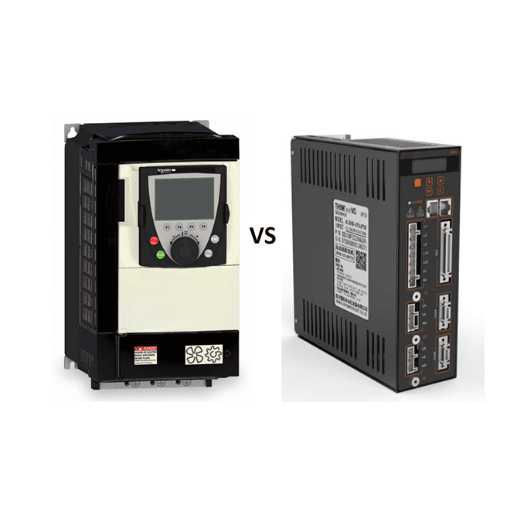
Cost is a major factor in deciding between Variable Frequency Drives (VFDs) and Servo Drives, but the choice varies highly based on the operational conditions of the application. The VFDs are typically cheaper options at the outset, which makes them the perfect fit for controlling simple motors that operate at a steady or easy to accelerate and decelerate speed. In addition, they are less complicated in circuitry, hence space costs and power consumption are lower as well.
In a similar light, Servo Drives are associated with the highest initial costs partly because of high-level features like the ability to provide feedback about the exact position of the motor, high-resolution speed control, and programming of custom acceleration/deceleration profiles. It is true that Servo Drives are not only more expensive but also one of the integral products in the industries or applications that require very accurate position, speed, and dynamic performance control, like in robotics or CNC machines.
When we compare the cost of Variable Frequency Drives (VFDs) and Servo Drives, it is clear that there is a wide difference in price. VFDs are typically the cheaper option, bringing them under the budget and making them a very attractive choice for motor control applications, the basics of which are where their strengths lie. On the other hand, Servo Drives, being highly advanced in terms of their build and capable of handling even the most demanding tasks, are among the more expensive drives available. Moreover, the initial cost that comes with installing both systems differs. The installation of VFDs tends to be much easier, thanks to their simple setup; it also requires less time and workforce, so, as a result, there are lower installation and labor costs. By contrast, installation of Servo Drives includes several tasks, such as the precise adjustment of the control system and the implementation of feedback systems such as encoders or resolvers, which make it quite complex and tedious.
When we talk about variable frequency drives (VFDs) and servo drives, one of the major considerations is the cost and the maintenance factor. Papers of the VFD type are usually known to have less cost at the beginning, along with simpler maintenance procedures because of their comparatively plain design. They are mainly used for operations where precision and speed control are not that important, with this requirement being the cause of the two other drawbacks, i.e., the need for frequent adjustments and the need for component replacements.
On the other hand, Servo drives are often more expensive to operate compared to VFDs owing to their intricate systems, which comprise sophisticated feedback loops and high-precision control mechanisms. However, the additional cost of their purchase and maintenance may prove to be less than that of the power consumed when running at the full rating every time in the case of VFDs. In the long run, they will surpass the VFDs in terms of energy savings. Particularly, they will be more energy-saving and therefore a good energy-saving-potential-holding choice for high-performance applications like those requiring precise motion control.
VFDs usually only require maintenance in the form of regular checks, capacitor substitution, and the identification of overheating or electrical issues. The maintenance of servo drives, on the other hand, includes more delicate processes such as the recalibration of feedback systems, changing the encoders, and checking the motor winding insulation. Nonetheless, the prolonged lifetime and the superior performance of servo systems are often worth the effort involved in servicing, in cases where the main targets are accuracy, less downtime, and better process control.

Both servo drives and VFDs can make power usage more environmentally friendly, but they each work in their own way to optimize energy use for particular applications. The specific area for servo drives to reach the peak is definitely the one requiring exactness in motion control, but they can also be compared with their continuous adaptation of torque and speed, which helps to save energy during the load change. On the other hand, VFDs are most helpful in the efficient control of constant motor speed in pumps and fans, where energy power lost is caused by unsolicited motor speed. Despite the fact that servo drives use a bit more power because of their continuous feedback systems, the greater efficiency they gain in the high-precision jobs still outweighs this disadvantage most of the time. VFDs, in general, make it possible for one to save process energy in applications that are less demanding, where precision is not a determining factor.
It’s crucial to take into account the particular needs of a given application when it comes to a comparison of energy use between Variable Frequency Drives (VFDs) and servo drives. In situations where the need arises for the control of variable speeds and, in particular, in HVAC or water distribution networks, VFDs are the best fit with a potential energy-saving rate of somewhere between 30% and 50% due to load conditions. In other words, because of their ability to make the motor highly manageable at different speeds, they require less power, especially in the case of partial load.
However, servo drives surpass other machines in terms of the meticulous control they provide over the energy exchange in the process, even when the initial movement and the final positioning are extremely distant in time or with almost absolute positioning. Although it is true that they normally consume energy continuously due to the presence of feedback devices, the utilization of rare earth magnets and finely adjusted control algorithms in the servo motor has had a massive impact on their energy efficiency. The need for extreme precision and high productivity in industrial processes, such as robotics and CNC machining, allows manufacturers to absorb the marginal cost it takes to power servos. The truth is that the constant energy power mode through the feedback devices is counteracted a multitude of times by their enormous energy-saving features mainly due to the rare earth magnets that are incorporated as well as the smart control algorithms and electronics. This is by far the greatest advantage over the various other technologies for the mentioned applications of these outstanding servo-engineered drives.
The integration of Variable Frequency Drives (VFD) and servo drives enhances the efficiency of the system itself by optimizing energy use and performance in a very significant way. Servo drives are responsible for the amount of torque of the machine and its speed, while VFDs adjust their characteristics by changing the frequency of the power supply. This makes these drives save energy very much, especially during the off-peak times. In the same way, the advanced servo drives are top-rated in the area of extremely high precision motion control, which is most often required in such applications as robotics, semiconductor manufacturing, and CNC machining.
The latest drivers have been developed to the point where powerful systems are built utilizing the results of the regenerative braking process that captures the energy produced by deceleration and then re-utilizes it, and the delivery of a real-time, fine-tuned performance, i.e., through adaptive control algorithms. According to the research, systems with the matched drives will result in as much as 30% of the energy being saved, thus the equipment will need less power, maintenance will be reduced along with it, and the working life of the equipment will be prolonged. When employed in a smart automation system, the combination of VFDs and servo drives with sensors and real-time monitoring is powerful enough to provide predictive analytics. This innovation would preclude instances of equipment malfunction that could potentially slow down the whole production process. Collectively, these technologies contribute to substantial power savings in the entire system, lessening the time when there is no production, and increasing the accuracy of the operations. Therefore, they are a major component of contemporary industrial energy management practices.
The main distinction between VFD and servo is centered on feedback and control; VFDs are mainly designed for speed control, while servo drives perform more precise position and torque control. Variable Frequency Drives (VFDs) are mostly employed in cases of a moderate level of demand for speed and correctness, like in blower or pump control, etc., while servo technology is put to use in high precision applications such as pick-and-place systems. The inertia and low inertia of the load are the things that decide whether a Permanent Magnet or an Induction Motor is going to be used and the servo drives usually are connected to Permanent Magnet Motors or Internal Permanent Magnet Designs for rapid acceleration and deceleration.
Servo drives and variable frequency drives show distinct performances when one looks for highly precise applications: servos exploit feedback and control systems to reach tight position mode and velocity control, while VFDs guarantee good speed regulation but offer a very limited positional accuracy to the users. One of the parallel modes between servo drive and VFD setups is the use of encoders or resolvers on the rotor to achieve control loop closure, which turns low-inertia systems capable of quick and precise acceleration and deceleration profiles. In order to choose either VFDs or Servos, one should, besides the motor type, also take into consideration whether the permanent magnet motors or the internal permanent magnet designs are preferred in terms of torque density.
Opt to utilize a servo drive in applications that require exact position regulation with fine tolerance or when quick speeding up and slowing down are necessary for duties like positioning and synchronized motion; go with a VFD in case the primary demand of the system is a steady speed control throughout the conveyor. The two components-the VFD and the Servo Drive- are used differently. One manages the speed of an AC motor while the other is applied to transmit the exact position and speed in operations like camming or pick-and-place. The designer should consider the interconnected motor and mechanical shafts, rotor inertia, and whether the static load conditions must be met with the help of feedback from the drive to maintain the desired accuracy.
Variable frequency drives can frequently take the place of hydraulic pumps in many cases by regulating the speed of the electric motor in order to cause the flow and pressure intermediate to be the same; hence, the former has an uplift in efficiency compared to the latter. The realities of hydraulic systems, however, are that they will still perform very well where not only extremely powerful and intricate processes are the case but also the weight of the loads mandates hydraulic actuation. Thus, the replacement process of pumps should have the drive type, motor selection, and the need for accurate torque control as the main areas to consider at first; in some situations, a servo drive might be the best solution if precise force or position is required.