Ready to Get Your VFD Solution?
Whether you need a single drive or a complete system, we have the VFD products and engineering support to ensure your project's success.

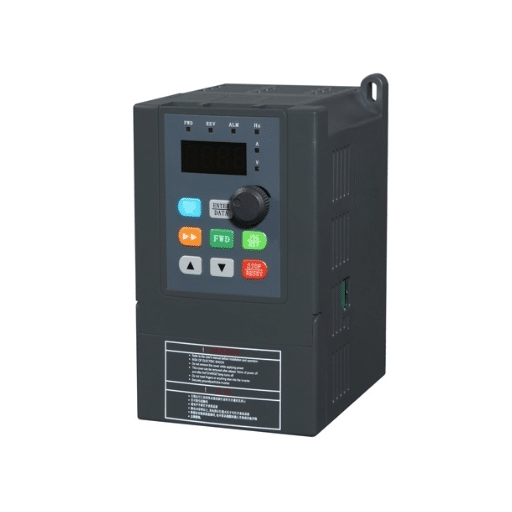
VFD (Variable Frequency Drives) play a critical role in modern industrial and commercial applications, as these devices provide precise motor control and save a significant amount of energy. Nonetheless, the VFDs, like any other progressive technology, may face operational drawbacks that are reflected in the fault codes. These fault codes are the best possible guides for getting the first-hand information on the nature of system errors and thus enabling further well-aimed troubleshooting. The complex issue of the VFDs is the fault codes, and this article will provide the whole industry with the knowledge of fault code interpretation as well as a set of policies for the resolution of the typical faults. You will find this detailed and comprehensive guide useful whether you are working as a technician or a facility manager.
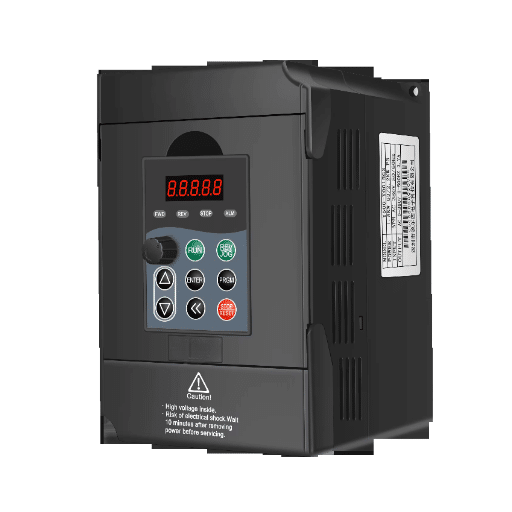
The fault occurs as a result of the DC bus voltage exceeding the drive’s maximum threshold or the connection of the maximum threshold. This can be a result of rapid deceleration, overall input voltage that is higher than the nominal, or regenerative energy from the motor that is not used in the system and hence returned to the drive input.
This error symbolizes a situation where the DC bus voltage is too low and is therefore below the limit of the voltage that can be accepted. One of the causes for this malfunction is possible fluctuations in the power supply, bad connections, or too large loads.
An overcurrent fault usually results from the motor being overloaded, a short circuit, or acceleration too fast. The drive most likely will shut down to protect the system and itself.
This alarm is the indication that the heat sink is no longer capable of cooling down the module, which is the root cause of the problem. It can be blocked ventilation, operating in high-temperature air, or other things like that.
It is clear that a ground fault occurs when there is a current flow to the ground which is above the allowed values. The occurrence of the ground fault might be a consequence of faulty insulation or wiring problems.
A crucial step in the effective diagnosis and dealing with the errors of VFD (Variable Frequency Drive) is a good understanding of the faults and the reasons behind them. The technologies that are built into most modern VFDs give them great diagnostic powers that result in the fault report being detailed and assisting in finding the fault. A fault like the DC Bus Overvoltage usually comes up when there is too much regenerative energy or the power supply is not stable, thus making it very important to scrutinize the braking resistors or filter capacitors.
In the case of a Phase Loss Fault, the shortcoming is because of a breakage in one or a number of the input or output power phases, usually happening through the cables being damaged, it has poor connections, or the power supplies being damaged. Therefore, at this fault, there must be a check that the wiring and the power supply are sound, lest major damage occur not only to the inverter but also to the motor.
Yet, various other critical faults, like the Undervoltage Faults, are indicative of an inadequate DC bus voltage situation, which may be due to momentary power cuts or harassment in the mains supply. The solution to this problem consists of checking the power quality provided or, as an alternative, installing uninterruptible power supplies (UPS) to ensure power stability.
VFDs depend on a steady and even voltage supply. Such problems as voltage spikes, drops, or differences between phases might interfere with the operation or even damage components. The way to handle this issue is to keep track of the voltage requirements and enforce them by all means.
The overheating, the dust, the humidity, or the movement can bring about a great deterioration in VFD components. Keep up the proper methods of cooling, the hermetic seal, and placing the VFD in an area that is free from particles in order to have the problem removed.
The consequences of poor grounding or lax shielding can be electrical noise or stray currents that will interfere with communication or damage components. The right installation techniques are paramount for risk reduction.
Failure to comply with this range could cause VFD to overheat or even the failure of the system, resulting in the system being shut down. Run some basic load calculations for the system that it can operate within its rated power and apply regular maintenance to prevent such issues.
Drive parameters that are wrongly set can cause the drive to malfunction. These parameters include speed limits, acceleration rates, or current ratings. It is necessary that these settings be carefully input and that their validity is checked from time to time.
The uneven distribution of voltages provided to the three phases from the grid can put excessive strain on a VFD, resulting in losses and inevitable failure. The most common causes of this issue are on the supply side, or it is due to the transmission line being faulty. The fault of having an unbalanced VFD supply voltage can be corrected by regular input inspection and phase monitoring devices.
Electrical harmonics produced by the loads that are not linear are another major factor in power supply distortion. The VFD not only becomes inefficient but is also more likely to overheat and have its components break down. By incorporating harmonic filters or reactors, one can significantly cut down the above-stated impacts and thus achieve stable VFD operation.
Voltage spikes that appear out of nowhere, typically triggered by either a lightning strike or a switching process, have the potential to wreak havoc on the VFD’s fragile parts. The installation of surge protection devices and the configuration of a sturdy grounding network are among the greatest possible remedies.
The presence of inadequate grounding or the absence of it may result in troubles such as circulating currents, electrical noise, and worst-case catastrophic failures. Good grounding techniques, for instance, making sure that the connections have low resistance and no ground loops are present, are mandatory for the perfect and trustworthy usage of VFD systems.
Once the insulation of a conductor breaks, there is an increased risk of short circuits, arcs appearing, and the operational efficiency decreasing over time. It is possible to reduce the impact of this problem considerably by conducting regular insulation resistance testing and using proper materials. This, in turn, will enhance the lifespan of the VFD and its interconnected equipment.
One of the most important reasons for the lower performance and life of Variable Frequency Drives (VFDs) is mechanical failure. Failure of bearings, very low vibration, and motor shaft misalignment are some of the major mechanical failures. The electrical discharge machining (EDM) is one of the factors that causes bearing damage. The EDM is mainly due to the shaft voltages that are always present in the VFD system. The discharges due to EDM can cause pitting or fluting over time in the bearing surface, thereby compromising alignment and motor performance gradually. The use of non-conductive (insulated) bearings or common ring-type shaft grounding devices can be a very effective way of preventing such occurrences that, in turn, may be responsible for the long-term reliability of the motor system.
An additional key point is excessive vibration, which may be a result of unbalanced loads, inappropriate installation of a unit, or some of its parts being loose. Using vibration analysis on a regular basis is a standard procedure to follow so that any changes in the operational parameters are addressed. Moreover, any misalignment, whether similar or perpendicular, can have a further negative impact on the motor and the equipment it is connected to. The use of advanced laser alignment devices is the solution to the problem of alignment; there will be no more mechanical stress on the coupling and, thus, the operating life of the VFDs will be extended the most. The condition-based maintenance method and keeping within the limits manufacturers advise are essential ways to prevent these mechanical errors from happening.

The operations manuals and other resources provided by the manufacturer play a major role, as they are among the first things that should be referred to when there are VFD problems. These manuals contain instructions on how to operate the device, the wiring schema, and the faultfinding procedures. Also, during the faultfinding process, the documents may have a systematic approach, like flowcharts, to reduce all the possible causes of the fault.
Being able to browse through resources like firmware updates, compatibility charts, technical advisories, and frequently asked questions through online support portals, provided and maintained by manufacturers, is a quick and efficient way to pinpoint and fix problems. It ensures that troubleshooting is carried out according to the most current recommendations for peak performance and to be trouble-free.
Moreover, those dedicated to the effective operation mainly get access to the customer support hotlines and the expert assistance the manufacturers provide for resolving the more complicated operational problems. When the collected data from the software diagnostic tools is combined with resources and expertise, the overall understanding of fault patterns is deepened, with each correction made more effectively and easily implemented.

Fault finding step should be methodical, have fault, and be very quick for high performance. The steps of effective fault diagnosis include:
Obtain and store extensive information about machine operation from diagnostic software and hardware sensors. This will give a true picture of the system’s behavior and will help to anticipate any changes in the system’s performance that might indicate weaknesses.
Use trend analysis and fault-tolerant algorithms among others to automatically identify recurring anomalies, cross-reference with the manufacturer guidelines, etc., to enhance the accuracy thus enabling more confident decisions.
The personnel should use various methods, i.e., Ishikawa diagrams, simply called fishbone diagrams, and the “5 Whys” method, among others, for a more transparent and clear understanding of the processes of the anomalies of the system.
In the case of an identified likely fault, methods should be applied by the team and controlled tests conducted to confirm the diagnosis. Also, the monitoring of all variables throughout the tests is quite necessary to avoid the secondary issues from the really discovered issue.
Key Takeaway: This permits fault diagnosis to be a process that can be counted on to come up the same way it was solved to begin with, thereby minimizing system downtime and operational disruptions.
Diagnostic tool incorporation in fault analysis has become more obligatory mainly because of the precision and efficiency. Up-to-date systems utilize advanced software and hardware-based tools such as oscilloscopes, spectrum analyzers, and diagnostic software suites for system performance monitoring and anomaly detection. These tools have become adept at relying on high-powered algorithms to handle the vast amount of data coming in by processing it and then letting the engineers know where the errors are with a high degree of accuracy.
Machine learning and artificial intelligence (AI) have also improved diagnostic tools significantly. As an example, AI models in predictive maintenance platforms evaluate the state of machinery and spot potential faults that might happen before they turn out to be big failures. Along with the real-time data gathering, the tools give a deep understanding of the system’s health, with which the dependability and availability of the operation are greatly increased. The implementation of that kind of advanced diagnostics and intelligent analysis makes sure the management of faults is at the same time preemptive and systematic, agreeing with the demands of the modern data-driven industry.
A systematic method is necessary to interpret diagnostic data in such a way that actionable insights are generated from complex data sets. When you utilize pattern recognition algorithms, historical performance statistics cross-referencing and predictive analytics, you get a possibility to look at patterns and outliers in the operational systems. Key performance indicators (KPIs) are the results of this process and they are further used to identify potential inefficiencies or warnings by correlating them with environmental and operational variables. This process is made faster with access to real-time information feeds; the feeds, together with the internal diagnostics information, make a more comprehensive analysis. The methods enable maintenance strategies that are directly targeted and they are also raising the bar of any industrial operation to become a place of continuous improvement through modern technologies.
A big factory installed new instruments for detecting faults, which were causing frequent interruptions in the production line. The factory was able to identify small defects in the production tools thanks to the sensor data and AI algorithms. In a lot of cases, these defects pointed to the coming of a major problem so that preventive maintenance could be planned. For instance, the data analyzed reflected that the conveyor systems had a vibration pattern that was not normal, so an early reaction was necessary.
Results: The new approach reduced the breakdown by 30% and increased the longevity of the equipment by around 20% therefore indicating that predictive analytics are very effective in keeping the operations going.
One of the ways a power generation company made its turbine operations more reliable was by using sophisticated methods in fault detection. By matching the system’s key performance indicators, such as temperature, pressure, and rotational speed, to the climate, the company found the real reasons for the declines in efficiency. The engines had unaccounted for manufacturer’s attributes, evident through their wrong functioning, while the company was mindful of the impacts. Consequently, detailed studies were conducted, and also scenarios were proposed until emergencies would have cropped up. They did a manual check of the injectors being used and this was when they found out the truth.
Results: The whole project ended up with great results, as they now had a 15% increase in fuel efficiency and at the same time significantly lessened carbon emissions, and so it proved that comprehensive diagnostic frameworks are very useful in attaining not only the economic but also the environmental goal.
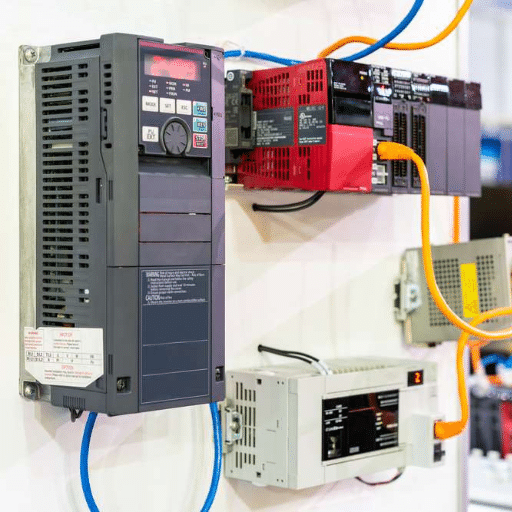
It is vital that timely maintenance is made the rule for keeping Variable Frequency Drives (VFDs) up and running. Regularly occurring dust and debris on the cooling fans and heat sinks must be removed as a part of the periodic inspections to avoid overheating, the electric connection should be the right one and it should be checked, and the input/output terminal tightness ought to be examined.
It is important to install the correct way to reduce possible malfunctions in Variable Frequency Drive (VFD) systems. Doing a good job of this means following the cable lengths, grounding, and the shielded cabling as the manufacturer indicated, to lower the chance of electromagnetic interference (EMI). Using the correct enclosures when working with extremely hot, wet, or corrosive substances is the demand of the long-term reliability of the system.
Sophisticated VFDs have diagnostic tools already built in, and condition monitoring features that allow for real-time tracking of key performance indicators. The use of these tools by operators can assist in a way so as to find and correct issues related to overcurrent, overvoltage, or harmonic distortion even before they become serious troubles. Actually, the VFD external monitoring system connection might be presented as a way to get a better view of the system’s health, therefore, be able to predict the maintenance and decrease the non-scheduled downtime.
Conducting efficient monitoring and analysis necessitates the fusion of cutting-edge data collection systems with the most recent technological advances. Monitoring systems with incorporated machine learning algorithms and real-time data analytics enable operators to make more accurate predictions. Such systems can analyze historical data trends and real-time operational metrics to detect not-so-noticable sudden outliers that might suggest a component degradation or a future failure. Additionally, using cloud-based storage and processing increases the scalability and accessibility of the systems, as teams can analyze and take action on the same data and insights from different locations. The continuous process of monitoring and upgrading the operations with the help of analytics enables organizations to schedule maintenance proactively, thus increasing operational efficiency and the life of the main assets.