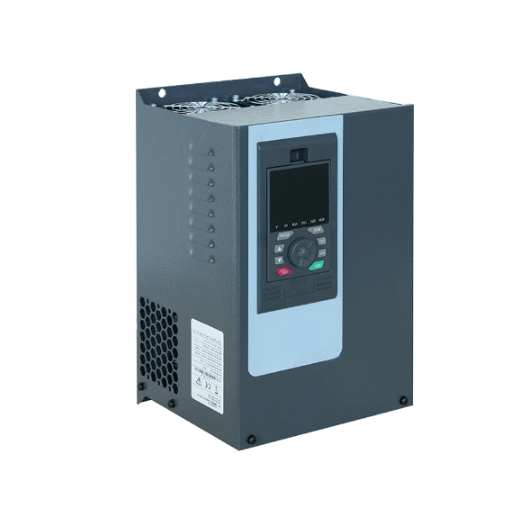
Ready to Get Your VFD Solution?
Whether you need a single drive or a complete system, we have the VFD products and engineering support to ensure your project's success.


Modern industrial and commercial operations can not do without Variable Frequency Drives (VFDs). VFDs make the control of motor speed and efficiency very delicate. This means that the minimum power is consumed. Also, the quality control is improved and the lifetime of the equipment is lengthened. How could that be so? A good grasp of the working rules of VFDs is one big appreciation of their benefits and the fact that their application is not confined to a specific field. In this paper, the author elucidates the mechanism through which Variable Frequency Drives are able to function. Doing so, he or she describes the technology that lies beneath it and the steps that are essential for implementing it so as to control motor speed through frequency and voltage settings. Are you an engineer, a technician, or simply an inquisitive person about the newest automation systems? This all-inclusive guide will give you the right perspective to understand the issue of VFDs and their critical role in the present-day technological world.
Variable Frequency Drives (VFDs) are used for motor speed and torque control by adjusting the electric motor’s frequency and voltage supplied to it. Especially in the industrial, commercial, and residential sectors, high-performance motor control is achieved by VFDs. Thus, buildings, data centers, commercial buildings, factories, and homes use VFDs to control individual motor speeds. Automated VFDs are saving energy and offering more operating flexibility because they are widely used in the HVAC unit, belt conveyor, and pump operations sectors. Automated VFDs end up being a major factor in energy savings and operational flexibility in a great deal of the industry.
A Variable Frequency Drive (VFD) is a device that modifies the frequency and the voltage of the electrical power that is supplied to an AC motor. This can be achieved by changing these parameters, where the VFD can have the motor run at a speed and torque that are quite identical to the needs of the applied load. Rectifier, DC bus, and inverter are the basic outlines of a VFD. The rectifier changes the incoming AC power to DC which is then made smooth and regulated by the DC bus. Later on, the inverter, using the state-of-the-art semiconductor technology, changes the DC back to the AC at the desired frequency and voltage. Consequently, this practice leads to an effective, controllable, and less wasteful motor control process.
Modern VFDs come with numerous notable functionalities like PL, diagnostics for faults, and real-time monitoring, giving them the advantage of wide industry applicability. They can also help with the communication protocols like Modbus and Ethernet/IP and so make it straightforward to introduce them to any industrial automation system. Among the recent, improved, and up-to-date VFD technology developments, the main emphasis has been on energy efficiency enhancement, harmonic distortion reduction, and motor protection improvement so as to be able to fulfil the strict requirements of the current energy management standards.
Variable Frequency Drives (VFDs) are a necessary part of motor control by making the motor speed and torque more accurate. Throughout the continuous regulation of the motor’s frequency and voltage, VFDs give the motor its best performance, the lowest energy consumption, and the longest life. Although the use of highly modernized VFDs takes a significantly important place in process controls in various industrial and commercial areas, it is still possible for strict functional separation to exist in applications like those of food manufacturing, HVAC, and wastewater. There is a report that VFDs can save up to 50% of energy in motorized systems, thereby bringing about big expense cuts and consequently compliance with energy standardization certificates such as IEC 61800-9-2. Also, the breakthroughs in VFD technology have resulted in the inclusion of the prognostic maintenance feature, which was not there before, and at the same time, the quality of the filtering harmonics has been improved, which ultimately makes the machine very reliable, and the operations do not come to a halt very often.
The speed of the pumps in water supply systems, wastewater treatment plants, and industrial processes is controlled to a great extent by VFDs. Energy consumption can be lowered by as much as 30% to 50% through VFDs’ effect on the energy used in pumps and ventilation fans, like VFDs having been associated with savings of 6% and 8% in systems that adjust for five and ten-dollar demand, respectively, through their method of pump and fan speed control.
VFDs, considered and turned up for the job and therefore saving to the max, are the heart of the HVAC system. It is by the use of VFDs that the cooling and heating plant system fan speed, for instance, can be easily, efficiently, and economically controlled. The reports of experiments indicate that a 10% decrease in motor speed can reduce fan energy consumption by about 15%, which corresponds to the energy efficiency benchmarks of ASHRAE 90.1 standards being 100%.
Materials handling is greatly aided by the use of VFDs, as they facilitate the integration of the process by enabling precision speed control and preventing mechanical wear through a soft and safe start-up and stopping of the application. The mining industry, in particular, has used this technology to achieve significant energy savings, improved control of processes, and greater production output from the machinery.
Compressors with VFDs maintain the pressure at a constant level while responding to the variable needs. Not only does this improve energy efficiency, but it also leads to less wear and tear, which in turn results in a major reduction in maintenance costs—up to 20-30% in many cases.
VFDs also offer the benefit of controlled speeds in the case of elevators and escalators, resulting in a more versatile and more energy-efficient system, especially at times of low demand. The most recent developments in the systems integrate the regenerative braking method, whereby the released kinetic energy is returned to the building’s grid in the form of electrical power.
When it comes to the proper functioning of a company, the precision control needed in the machining of components is done by VFDs with an accuracy level that is very high. This means the company gets an advantage in the automotive and aerospace industries. This not only gives a superior product quality but also material waste reduction and cycle time improvement.
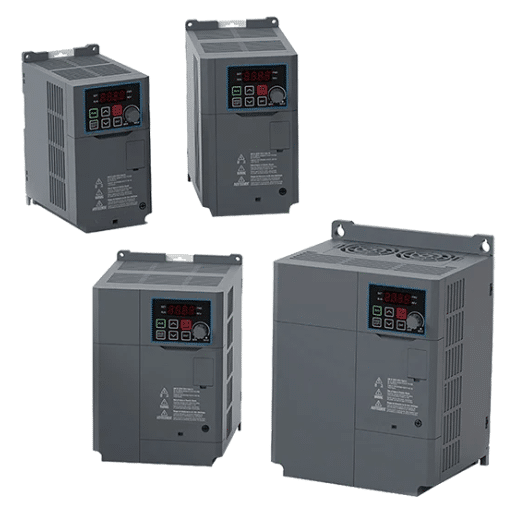
Variable Frequency Drives (VFDs) work by changing the frequency and voltage that is supplied to an electric motor with high precision. The primary principle of operation consists of converting the input power, usually fixed-frequency AC, into a variable-frequency AC output. This is done in three key steps:
AC power is changed to DC through a diode bridge or a similar rectifier circuit. The entire process leads to the production of a continuous and stable DC voltage.
The rectified DC is switched to a constant voltage and then stored in a DC bus. Capacitors are generally the means of achieving this and they are also the means of filtering ripples and keeping the power delivery to the motor steady.
By using insulated-gate bipolar transistors (IGBTs) or switches that are similar to power electronic ones, the regulated DC is inverted back to AC. The VFD is able to control the motor speed and torque with great precision thanks to the fact it varies both the switching frequency and voltage of the output.
Variable frequency drives can reduce the usage of energy, improve the performance of motors significantly, and operate smoothly with changes in loads.
VFDs’ task is to control the motor speed by changing the frequency of the AC voltage that is supplied to a motor. This frequency is directly related to the motor’s speed, as per εη, the synchronous speed equation:
Synchronous Speed (RPM) = (120 × Frequency) / Number of Poles
Data are the frequency as VFDs can adjust the motor’s speed so as to perfectly fit the application’s demands. Look at the constant voltage-to-frequency (V/f) ratio if you want to see the correct operation of the torque output and to prevent the motor from overheating or losing efficiency. Then and now, the modern VFD systems are using advanced algorithms and pulse-width modulation (PWM) techniques to accurately regulate the output waveform, thus minimizing harmonic distortion and improving overall performance metrics.
Moreover, feedback systems, like encoders or resolvers, are commonly used together with VFDs to observe and regulate the motor operation. The feedback system allows for a closed-loop control loop which guarantees that the speed is very accurate and the energy consumed is less. Also, it facilitates the load handling in a much better way, even in unstable circumstances. All these aspects of the latest technology mean that VFDs are very important for high-level industrial automation and that they contribute significantly to the efficiency of motor control that is less energy-demanding.
VFDs control the speed of the motor to fit the load requirements; thus, the energy usage is lessened remarkably. Energy consumption can be cut by 20-30%, according to the various applications where VFDs are used, among which are pump, fan and compressor systems. Energy cost savings and the sustainability goals will be the long-term accomplishments of VFDs by eliminating the inefficiencies of the systems and the energy cost in the process of operations.
Soft start capabilities allow motors to gradually start which ultimately results in the reduction of mechanical stress and generation of heat during startup. This significantly reduces the wear and tear of electrical and mechanical parts, consequently extending the operating life of motor systems and associated equipment.
The most pronounced advantage of using VFDs is their ability to deliver precise control of the motor speed and torque. This, in turn, results in a more consistent product quality, especially in the manufacturing industry where the quality and operational precision are of great importance. The ability to control the motor performance with precision not only ensures a better product but also minimizes the waste produced.
VFD minimizes wear and tear due to the operation of the motor, which results in infrequent maintenance being needed. Parts like belts, bearings, and mechanical drive systems suffer less stress due to the smoother operation, and it means the sudden failures of parts or maintenance downtimes will be much less frequent.
Current variable frequency drives (VFDs) smoothly link up with sophisticated industrial automation platforms, such as SCADA systems and programmable logic controllers (PLCs). This means that the difference between VFDs and the rest of the system is lost and the operation becomes supreme – a mere one-touch button from going on the net.
VFDs control the voltage and current input of motor systems, thereby elevating the power factor and decreasing the reactive power demand. Consequently, the system becomes more economical, and the utility fees are also reduced because of the demand penalties dropping.

The inverter plays a central role in the Variable Frequency Drive (VFD) system as it is the one that is tasked with the conversion of the DC power supplied from the rectifier into AC power with a frequency and voltage that are under control. The accurate control of the inverter means that the motor operates at the right speed and with the appropriate torque, which, in turn, leads to an energy-efficient motor operation under different loads. Modern inverters use complex pulse-width modulation (PWM) techniques, producing an almost-sinusoidal AC waveform that reduces harmonic distortion and improves overall system efficiency.
The recent innovations in inverter technology include additional functions like the monitoring of the machine in real-time, more efficient fault recognition, and an optimal energy distribution by means of automated algorithms. Thanks to these cutting-edge methods, the inverter system not only gives better response to motor control but is also the reason for longer life for both the motor and VFD. Besides, the reduction of power consumption and enhancement of the performance of minimizing mistakes in the process of operating plants with inverters are reasons that electric drives are now becoming one of the main sources of realizing one of the goals of system reliability, as well as one of the requirements of aligning with industrial energy efficiency standards.
The rectifier is the most important part of a Variable Frequency Drive (VFD). It changes the alternating current (AC) from the power supply to direct current (DC), and this becomes the main source of power. The whole process is very crucial for the next stages of energy processing in the VFD. Modern rectifiers apply diode or thyristor configurations that are efficient for power conversion in combination with low energy waste.
Advanced rectifier systems usually integrate active front-end (AFE) technology, a wise step indeed. It makes it possible to correct the power factor more precisely and decrease the harmonic distortion in the power system. This will result in higher total efficiency of the VFD, and at the same time, it will be possible to meet the strict criteria imposed by IEEE 519 in this regard. Also, the use of rectifiers with regenerative capacity can mean not only energy saving but also the reduction of the power grid’s burden with unused energy. At the same time, the company benefits from management and the reduction of power demand, which becomes another big issue. To put it another way, these technological trends point out the great importance of the rectifier in obtaining maximum performance and energy efficiency in industrial applications.
Filtering and control circuits are very important in making sure that electric systems are stable and precise, especially in environments where reliability is a priority. The main purpose of filtering circuits is to get rid of unwanted noise and harmonics from the system so as to preserve signal integrity and safeguard delicate components. In general, passive filters, namely LC (inductor-capacitor) configurations or active filters with operational amplifiers, are used to get certain frequency responses, thus guaranteeing that the unwanted signals are minimized and the required frequencies are allowed to go through.
In contrast, control circuits direct the operation of different system parts by controlling the voltage, current, and power levels to the required values. These circuits usually combine very advanced microprocessors together with programmable logic controllers (PLCs) for the purpose of real-time monitoring and responding. The control circuits make the system work at its best by modifying the system parameters whenever necessary, they prevent overloads, and in this manner, the system’s operational efficiency is further improved. It is then that the combination of filtering and control creates the precision, protection, and adaptability that are the key factors that modern industry and technology are looking for.
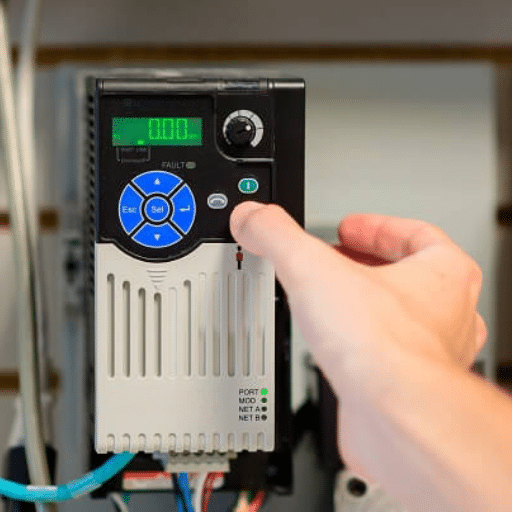
The Variable Frequency Drive (VFD) is the process of reducing the incoming AC power supply to DC power via a rectifier circuit. This initial step is important because it provides the system with a steady DC voltage for the next stages.
The DC power generated is treated and held in the DC bus, which includes capacitors and filters. This stage is very important as it helps to suppress any voltage fluctuations and also to get the power in a state ready for controlled modulation.
The inverter circuit then changes the DC back to AC at a variable frequency and voltage. The function is performed with the help of switching devices like insulated-gate bipolar transistors (IGBTs), and those devices are constantly controlled so that the desired output can be produced.
The connected motor’s requirements will be met by the precise modulation of the frequency and voltage of the AC output. This leads the VFD to have fine and correct operation in controlling both motor speed and torque, which in turn enhances the energy efficiency and system performance greatly.
The Drive constantly checks the state of the motor as well as the system with the feedback sensors that are connected. Consequently, the appliance adjusts in real-time, which could mean performance optimization, proper operating conditions, and the prevention of motor overloading or faults.
All in all, the alternating current power is subjected to control and goes to the motor and hence to the process. This step changes the system and makes it more open to the general market; there are benefits that will be found in each of the different sectors.
Changing power from one form to another is a major step in a frequency change that an inverter does requiring this power conversion to take place between the voltage supplied and the output of the drive it will always be efficiency and harmonics that will be taken the place of the digital and measured power harmonics and that is very unlikely that they should also be done using passive easy solutions. The first stage is to rectify the AC input power into DC by the diode bridge or the controlled rectifier. The role of the VFD in this operation is to make it smooth when the incoming current is AC and the load requires DC.
At present, variable frequency drives (VFDs) have become a crucial part of any large-scale industry as they significantly lower the energy loss associated with the process of conversion and one of the ways they achieve this is by implementing the active front-end (AFE) to prevent harmonics from the system. There are certain parts of the conversion process where the AFE is very beneficial, and at the same time, it is so effective to the point that the system is always in an energy-efficient state technically. Moreover, the filtering technology is used to reduce or eliminate network disturbances that degrade the operational stability of the system, especially when the latter is working with a highly variable power supply.
The regulation of the DC bus voltage is absolutely essential for the power electronics systems to provide consistent voltage levels on the DC side for the system to remain stable and perform well. The advanced control algorithms are utilized in the modern DC bus voltage regulation techniques to control and adjust the voltage in real-time, thereby compensating for perfectly the load variations and transient conditions. The use of the proportional-integral-derivative (PID) controllers or model predictive control (MPC) strategies in the DC bus voltage regulation successively improves the controller response and the accuracy.
Super capacitors or batteries are popularly used as the best options to store and release energy when there is a need that cannot be met immediately. Such energy storage solutions are quite often placed in the DC bus to provide additional buffering and thereby the resilience against sudden voltage fluctuations or surges. No less important for the voltage regulation is the role played by two kinds of power semiconductor devices, i.e., insulated gate bipolar transistors (IGBTs) and metal-oxide-semiconductor field-effect transistors (MOSFETs), as they increase the energy efficiency rate. These devices, in combination with very accurate feedback systems, make the energy transfer very easy and remove the power ripple, which is the main asset in every application, from industrial drives to solar PV systems adoption.
Frequency generation in the output is a very important part in power electronics and control systems, which is done by such methods as the pulse-width modulation (PWM) and the frequency synthesis. The PWM way is usually applied in inverters and motor drives, wherein the control of duty cycles with high accuracy is used to get a modulated effective output frequency and also voltage, hence making the connected load work optimally. In the latest systems, the purest frequency and sync signal is coordinated by applying the best of the digital signal processing (DSP) smart drifting approach to generate the frequency. Also, in the high-frequency range, quartz or crystals are mostly used to provide a clean and stable reference, hence the extremely low phase noise and high synchronization. The new technologies lead to higher efficiency, decreased harmonic pollution, and larger robustness of systems like variable frequency drives and communication networks.
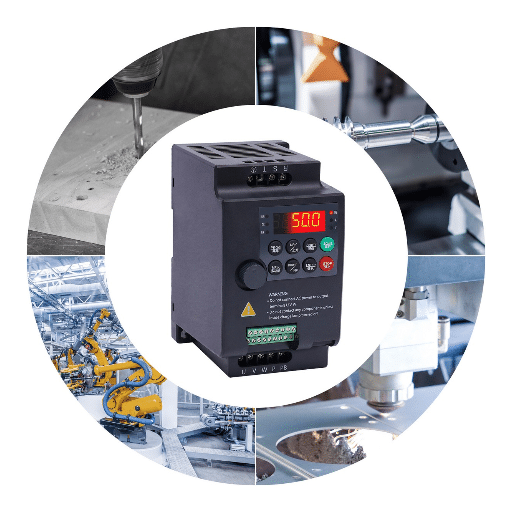
The Variable Frequency Drives (VFDs) have become one of the primary agents in many industrial set-ups for speed and torque control of motors, implying energy saving as well as operational ease.
VFDs adjust motor speed in the production sector, thereby allowing for very tight control only for conveyor belts, pumps, and process equipment.
Variable frequency drives fine-tune the functioning of fans, blowers, and compressors by altering the speed of the motor depending on the need, which in turn causes a decrease in the usage of energy and prolongs system life.
VFDs that are connected to water pumps provide a constant irrigation supply by matching the flow rates to specific requirements, hence diminishing water and energy waste.
VFDs help to modify motor speeds to the fluctuating energy inputs in wind and solar systems which in effect ensures the constant operation and grid compatibility.
This can be achieved by adjusting motor operations to gain both efficiency and reliability.
Variable Frequency Drives (VFDs) give pump operations new points of control and optimization, and they do it with a big leap in the efficiency and functionality of the whole system. The use of VFDs means the frequency or speed of the motor is constantly being balanced so that the energy and mechanical stress are lowered on the pumps, which in the long run makes them last longer and costs less to maintain. VFDs for centrifugal pumps have been proven to be the solution for up to 50% of the energy saving when compared with fixed-speed systems, especially in systems where the flow demand is interchanging over time.
VFDs are known to provide a better system by keeping the pressure and flow rate at a stable level all the time, regardless of the process demand changes. This is especially advantageous in the case of HVAC systems, city water supply, and industrial transfer of fluids, where very fine control is needed. Moreover, VFDs can stop problems like water hammer and cavitation by the power of the acceleration and deceleration of the pumps, so that they are smooth, thus making the whole operation more secure and minimizing the risk of system breakdown.
The advanced VFDs have been integrated with advanced features such as real-time monitoring, automated fault detection, and remote connectivity, which allow operators to easily take action. The mentioned characteristics enable early maintenance and fast treatment of the problem with a minimum waste of energy in the most complex systems. VFDs are gradually becoming crucial elements for the sustainable development of various industries by aiding the pump system operators in meeting the demands for more eco-friendly, safe, and profitable production.
The Variable Frequency Drives (VFDs) are the fundamental core that is responsible for the energy consumption reduction by adapting the motor speed according to the system’s necessity. Constant-speed motors that are used conventionally are the main cause for the waste of energy as they are kept running at full capacity around the clock, disregarding the actual system needs. The VFDs, however, allow for exact speed regulation, hence this is a step-by-step reduction in the energy usage. For instance, the Affinity Laws state that if the motor speed is lowered by only 20%, the energy consumed will be reduced by almost 50%; it is an example of the non-linear relationship between the speed control and the energy savings.
Moreover, the utilization of the most complicated control mechanisms in the current VFDs guarantees even more effective energy savings, thus making the load management quite intelligent. These systems will actively respond to the variety of demand sensors and this ensures that the motors are always at their best operating point, gradually reducing energy consumption. The impact of VFDs is weightier still in the changeable flow-related industries like the water pumping and HVAC systems, since the energy requirement is inherently varied, leading to higher operational costs. The consistency of industry data combined with impressive performance reports makes it very clear that when VFDs are used with the systems involved in the situation, the energy consumption rates can be lowered by as much as 30–50% which in sum will offer significant monetary gains, as well as reduce the carbon emissions market. This scenario happens since VFDs are critical to all energy-efficient and eco-friendly practices in industries and so have to be taken very seriously.
1. Cal Poly Digital Commons:
Variable Frequency Motor Drive Application – A research paper discussing the application and safety aspects of VFDs.
2. University of the Pacific Scholarly Commons:
Teaching AC Variable Speed Systems Using Simulation – A paper on teaching VFD principles using simulation-based methods.
A Variable Frequency Drive (VFD) is able to take the found frequency AC power and rectify it to DC power and then invert it back to the same power with controlled frequency and voltage to manage the motor speed. The operation of a VFD relies on pulse width modulation, and the utilization of the main drive controller to produce the waveform so that the voltage supplied to the motor is directly proportional to the frequency, hence the speed of the motor will match that of the load. It also allows the speed of an AC induction motor to be varied and contributes to the torque variations found in pumps and fans. The drive is there to protect the motor as well as to start and stop the motor smoothly while putting less mechanical stress on the motor shaft.
A variable frequency drive, also known as a VFD, is the elementary device for controlling an AC induction motor by synthesizing the motor power through the controlled frequency and voltage changes in the supply lines. After the power is converted, a synthesizing process will be accomplished by switching fields. The presented technique, in brief, is known as a variable frequency drive. The power and synchronous speed can also be made to match according to the process demands, and thus, for energy saving purposes, the implementation of a strategy for variable speed control is possible. Implemented in the modern VFD are different algorithms for motor control, which can monitor the motor in terms of current, torque, and speed fluctuations, and as a result, will support safe operation and enhance performance.
The inverter is the most important component in the Variable Frequency Drive (VFD) system. It regenerates the AC from the DC link and delivers the adjustable frequency and adjustable voltage to the motor through the switches of the semiconductor devices. This inverter uses pulse width modulation to synthesize a waveform whose effective frequency and voltage are proportional, letting the motor perform efficiently through a wide range of speeds as a result. As far as the synchronous speed of AC induction motors is concerned, the frequency of the applied power is the main controlling parameter, whereas the drive simultaneously adjusts the voltage so as to maintain the flux in the motor windings at the right level.
A Variable-frequency drive (VFD) can alleviate the inrush current, and it can grant a gentle start-up that the direct-on-line starters fail to provide due to the immediate full voltage application. Through the VFD’s ability to monitor and adjust the voltage and frequency supplied to the motor, it ensures that the ac motor characteristics get a gentle torque build-up and mechanical stress reduction. The variable-frequency drive operates by changing the frequency of the power supply to the motor, so the acceleration profiles can be perfectly controlled. This is simply a great benefit for the life of the equipment and maintenance cost in the case of applications like pumps and conveyors.