Ready to Get Your VFD Solution?
Whether you need a single drive or a complete system, we have the VFD products and engineering support to ensure your project's success.


Variable-frequency drives (VFDs) and soft starters are essential components of modern industrial and commercial motor control systems. The technologies have been intended to achieve optimal motor performance and to provide the necessary protection against electrical and mechanical stresses for equipment of various kinds. However, there are many differences between the two in terms of their applications and capabilities. This blog post will facilitate a thorough comparison of VFDs and soft starters, highlighting their different applications, advantages, and disadvantages. As a result, you will be much more capable of finding out which of the two technologies is the most appropriate for your system in terms of energy efficiency, smooth acceleration, and/or precise speed control. Please read on to learn more, as we will explain the technical side of things to help you make informed decisions based on the information available.
Soft starters were modeled to reduce the high current that occurs at startup while still managing the acceleration of an electric motor. They can gradually increase the motor’s voltage to minimize mechanical stress and wear on its components. Initially designed for use in industries where smooth start-up and stoppage of equipment are of great importance, such as conveyors, various types of fans, and pumps, among others, soft starters extend equipment life cycles. Also, they minimize maintenance costs. They differ from adjustable-speed or inverter drives, but can be used in the same applications. On the other hand, the efficiency of VFD is higher compared to soft starters or star-delta starters, but requires a lot of space compared to other schemes. The final use of an electric motor should be considered before selecting the starter type.
A soft starter adjusts the voltage supplied to an electric motor during the initialization period. The major components of a soft starter are thyristors, or silicon-controlled rectifiers (SCRs), which are solid-state semiconductor devices that control voltage. These components are paired to monitor each phase of the motor’s power supply. The soft starter ensures the motor has a gradual acceleration by gradually increasing the voltage. This, in turn, will prevent excessive torque surges and limit the electric inrush current.
The motor’s mechanical stress is well-regulated through this method, and the probability of electrical problems such as voltage drops is significantly reduced, thereby protecting other equipment on the same power grid from the effects of a single malfunction. The soft starters of the future may also come with self-diagnostic tools, built-in overload protection, programmable settings, and thus provide even more flexibility for industrial sites in terms of cost-effective performance.
A soft starter regulates the voltage supplied to an electric motor during the starting process. This is accomplished using solid-state devices, such as thyristors, that slowly ramp up the motor’s voltage over a predefined time span. As a result, the soft starter curtails the inrush current – a sudden flow of electric current at the moment of motor turn-on – and eases the torque that comes along with it. The managed speedup is a significant factor in reducing mechanical vibrations in the system, prolonging the motor’s life, and lessening the electrical ripple effects on the power grid.
Often, the latest soft starters feature a variety of excellent features, such as overload protection, phase-loss monitoring, and communication ports for interfacing with modern control systems. Their power supplies not only operate at 100% power but also place lower control/precision demands, typically for pump, compressor, and HVAC applications. In return, the soft starters offer an inexpensive and efficient way to avoid downtime due to operations and breakdowns, a good deal for industries and businesses.
One application of soft starters is to control the deceleration and acceleration of centrifugal pumps without causing problems such as pressure surges or water hammer, which can occur with an inverter. Besides, studies in the literature suggest that properly functioning soft starters can reduce pressure transients by up to 60%, thereby significantly reducing maintenance in pipelines and valves.
Soft starters are beneficial for compressors, especially in industrial applications, as they handle the torque and surge that often occur during start-up. In this way, mechanical stresses in components, such as bearings and couplings, are reduced, thereby extending their operational longevity.
In the heating, ventilation, and air conditioning (HVAC) industry, using soft starters is quite common, as they help reduce power grid disturbances caused by motor inrush current, smooth motor starts, and maintain energy efficiency.
The soft starters also help achieve product stability by reducing sudden jerks in conveyor systems and keeping speeds under control throughout the operation. This feature is highly commendable, especially in the material handling and packaging industries.
Soft starters are best for accelerating fans and blowers according to a predefined schedule, making it easier for the machines to handle mechanical stress, and the range of speeds will not become a problem as the operation continues. This capability is a must-have in areas with fluctuating airflow and installations that demand precise airflow control.
In industrial blending and mixing operations, the use of soft starters is practical for providing reliable, constant torque during motor start-up. This will help to control splashing and to facilitate the blending process by improving its quality.
When powered by heavy-duty equipment such as crushers, where the motor needs a gradual startup to avoid shock loading, it is necessary to have a controller that starts with low motor torque and increases it in controlled steps. The crusher is saved in the process.
Since excess pressure and flow rate changes due to abrupt openings and closures of flow control valves are often the causes of water hammer in the system, and hence the pump or pipeline may suffer damage, soft starters on the pumps are used in the irrigation system to avoid start-up stress.
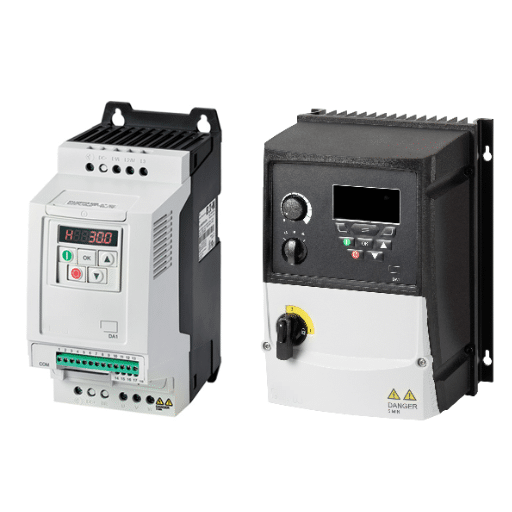
A Variable Frequency Drive (VFD) is an electronic device that controls the speed and load of an electric motor by modifying the frequency and voltage of the power supplied to the motor. It allows comfortable tuning of the motor’s workload to match oft-seen requirements, improving energy efficiency and reducing the dairy tear of the motors. VFDs are vital components in HVAC, manufacturing, and water treatment to minimize power consumption, ensure reliability, and reduce operational costs to the lowest level possible.
A Variable Frequency Drive (VFD) works by rectifying the fixed-frequency AC power input and converting it to an adjustable-frequency, adjustable-voltage output, enabling precise control of the motor’s speed and torque. This is done by converting the incoming AC power to DC power using a rectifier. The DC power is then directed to a DC bus, where it is smoothed and controlled. At the end, an inverter converts the DC power back into AC power at the desired frequency and voltage. A notable feature of the most recent VFDs is the use of microprocessors and control software, which offer features such as programmed speed profiles, motor sensor feedback, and dynamic load adjustment. As a result of this technology, not only is motor efficiency enhanced, but the equipment’s operational life is extended by alleviating mechanical stress during startups and load variations.
Variable Frequency Drives (VFDs) work by precisely adjusting the output voltage and frequency supplied to a motor running mainly on alternating current, allowing the system to control the speed and torque output. The whole thing starts with converting AC power at the input voltage level into DC power via a rectifying circuit. The smoothing and stabilization of this DC power are then provided by the DC bus capacitors to ensure a constant electrical output.
After the next critical phase, an inverter with Insulated Gate Bipolar Transistors (IGBTs) or equivalent power-switching devices will be necessary. This inverter, of course, will be the one that will be responsible for converting the DC power back into AC power. The inverter will supply the AC power at different frequencies and voltages as required by the motor. The VFD will generate a waveform similar to a sine wave using Pulse Width Modulation (PWM); therefore, the motor will operate at its best with minimal harmonic distortion.
State-of-the-art VFDs are equipped with advanced equipment and Integrated Field-Oriented Control (FOC) algorithms, thereby enabling precise torque regulation and dynamic speed changes in response to day-to-day loads. Moreover, these types of drives may become more intelligent and intuitively determine which communication protocols, such as Modbus or EtherNet/IP, are best to use. They can be connected to the Internet and the power source simultaneously, which goes unnoticed and is most convenient, allowing systems to be monitored and diagnosed remotely in the field of industrial automation and technology. In these ways, VFDs play a significant role in energy savings, effective operation, and system management, and can also reduce energy losses and the need for mechanical component repair.
Generally, VFDSs are integrated into HVAC systems to regulate fan and pump speeds, thereby ensuring optimized airflow and temperature control. Based on some studies, it is suggested that using VFDs in HVAC systems can result in energy savings of up to 40% by operating the motor at lower speeds during off-peak demand periods.
VFDs help maintain flow rates and pressure levels accurately by controlling the pump speed during fluid movement. It is the same function that avoids unnecessary power use, reduces the number of hammer effects, and uses the least energy. To illustrate, VFDs are a common feature in water treatment plants and are seen as a powerful tool that can cut energy bills by 25–45%.
VFDs are often used in conveyor systems, and their primary purpose is to make acceleration and deceleration, as well as overall operation, smooth and less straining on the machinery. This is most notable in fields such as manufacturing and the food industry, where materials have to be handled with the utmost precision.
VFDs play a critical role in controlling and operating variable loads in centrifugal compressors, especially in refrigeration and air-conditioning systems. The installation of VFDs in these systems can achieve up to 35% energy savings while still maintaining system reliability.
Heavy-duty applications in the mining industry are increasingly dependent on VFDs. These are the crushers, mills, and conveyors. What VFDs do is adjust motor speed to the material load, thereby improving, to a greater extent, the productivity and lifetime of the equipment in severe working conditions.
VFDs are indispensable for drilling, pumping, and gas compression activities as they are capable of being the most significant source of the precise torque and speed control which, in turn, is the key to the betterment of the operation’s efficiency and reduction of downtimes, leading to the minimization of the operational cost in the upstream, midstream, and downstream realms of processes.

Soft starters have the great advantage of providing the motor with an increasing voltage, which allows it to start gradually and reach full speed while limiting inrush current. On the contrary, variable frequency drives (VFDs) are controllers that can manage both the speed and torque of motors by changing the frequency and voltage supplied, so they provide complete operational control throughout motor operation, not only at start-up.
Soft starters, while lacking an ongoing speed control feature, only help by reducing motor stress at start-up. VFDs, on the other hand, support continuous speed change, making these devices optimal when variable speed requirements and precise motor control are present.
As for dynamic motor applications, VFDs are the go-to solution in terms of energy efficiency as they can regulate the energy consumption, based on the load, for the same reason that the other device only brings about a change in mechanical stress and energy demand at start-up without affecting anything regarding steady-state operation of the system.
Soft starters are best suited for constant speed applications and processes where the sole concern is an almost instantaneous, smooth startup. On the other hand, VFDs are preferred for applications that require dynamic speed control, e.g., conveyors, fans, and pumps.
Soft starters are typically less expensive and more straightforward to tie in with the most basic motor start-up requirements. On the other hand, VFDs are more costly but offer a wider range of applications and ultimately save more money for operations that demand accurate control and energy efficiency.
Table: Comprehensive comparison between Soft Starters and Variable Frequency Drives
The examination of both long-term operational expenses and initial investment is a crucial part of the cost evaluation. Online Direct (DOL) starters, though, have a lower upfront cost due to their simpler design and fewer components. Hence, these starters are an economical option for applications that prioritize simplicity and reliability over other parameters, such as smaller motors or less frequent use. Despite their basic functionalities, Direct Online (DOL) starters still have drawbacks, such as high power consumption and low efficiency.
Soft starters, meanwhile, tend to be more expensive initially because they have complex electronic components as well, but their high-performance circuitry and smooth control capabilities do not go unnoticed. As a result, reducing the inrush current and ensuring a smoother motor acceleration is the means to have a power-saving and less operational impact on the machine, with the expensive initial cost investment of a soft starter. Besides, the payback period of the soft starter for a motor is short, and maintenance and operational costs are reduced through efficiency gains – the lifetime costs of the equipment are similar. A detailed pay-off analysis would typically involve the specific application, the expected operational length, and the energy-saving metrics involved.
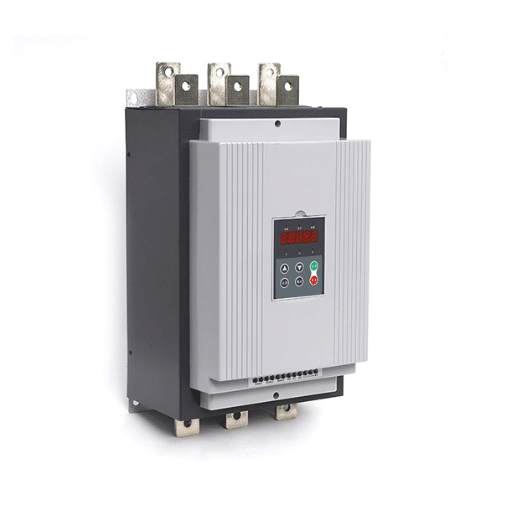
Integrated advanced motor control systems are critical for reducing the stress on motors and the equipment to which they are connected. This is because they might gradually start or stop the motor, so torque spikes due to Direct-On-Line (DOL) techniques are generated. Thanks to this reduction in mechanical distress, the working lifespan of the complete system, including bearings, gears, and couplings, is extended. Moreover, findings indicate that a decrease in the rate of wear-related parts failures due to controlled acceleration profiles may be as high as 50%, thereby enhancing the system’s overall reliability. Industrial applications with heavy loads and frequent starts would not work well without this technology, which is not only a reliable problem solver but also a time saver in the long run.
The introduction of soft start technology involves enhanced control capabilities during the motor initialization process by steadily improving the voltage supplied to the motor, which ultimately results in lower inrush currents and less effect on the connected components. The same ‘problem’ of controlling the immediate torque that occurs when going DOL is completely mitigated by soft starters, making the operation more precise and, at the same time, reducing the probability of premature wear. The study shows that soft starters can reduce peak current demand by as much as 70%, thereby consuming less energy and stabilizing the power grid more effectively in critical industrial settings. The same control not only helps prolong the equipment’s life but also minimizes maintenance requirements to a greater extent in high-load applications with smooth transitions. By including super-advanced digital monitoring and real-time tuning features, the soft start systems are not only energy efficient but also provide the ultimate in system optimization.
The advanced protection features are fully integrated into the soft starters to ensure the motor and the operating process are safely guarded. The protection features include overload protection, which continuously monitors current levels to prevent overheating by restricting excessive draw, and phase-loss detection, which recognizes and stops operation in the event of a phase imbalance or failure. Moreover, undervoltage and overvoltage protection is included in the soft starters to protect the equipment against voltage fluctuations that could affect its performance or cause damage.
Using self-diagnostic functions integrated into soft starters, faults that arise can be detected and corrective action taken quickly. Furthermore, in a state where the rotor is not rotating (locked by the shaft), modern techniques will safeguard the motor by providing safe torque during startup. In addition, fine-tuning the acceleration and deceleration times, as well as current-limiting options, gives the user greater control. Thus, it also relieves mechanical components and electrical systems from undue stress, allowing them to operate within their safe limits. The described safety aspects not only provide operational reliability and efficiency but also contribute positively to the equipment´s overall lifecycle.

A Variable Frequency Drive (VFD) is utilized to deliver accurate motor speed control throughout the motor’s operation. The best application for VFDs is changing the speed of conveyors, fans, and pumps without sacrificing performance or process quality. Besides, VFDs are the first choice when there is a great deal of energy to be saved, as they achieve this through the precise matching of motor speed to load requirements.
On the other hand, a Soft Starter is the most appropriate for processes that demand only the startup and shutdown of the motor to be controlled. Such situations are prevalent in systems with established process speeds, such as compressors and large pumps, where limiting the initial inrush current is critical to prevent undesirable effects and protect the equipment. Soft starters are the less expensive way of dealing with the lack of speed control in their entire usable life.
Soft starters are widely used across industrial and commercial sectors, where accurate control of motor acceleration and deceleration is of great importance. For example, in pump systems, soft starters act these units out by preventing water hammer — a phenomenon caused by rapid changes in fluid speed — through a gradual rise or fall in the motor’s speed. This process will, in the end, have fewer tasks, as the gradual step will be on the side of the piping infrastructure, and at the same time, the pump will have less stress, which will ensure the system’s longevity.
A similar phenomenon is observed with conveyor belts, where the start can be a physical duty that is too high, and the factors involved include breakage due to momentum, belt raveling, and production loss. Soft starters provide soft start and stop sequences, avoiding any event that could cause the entire mechanical chain to go off track and work, while maintaining safety.
Soft starters are also highly appreciated in HVAC systems, especially for large fans and compressors. They play a significant role in the start-up by bringing down the inrush current. Hence, they are a big help in protecting electrical components, reducing energy spikes, and ensuring power quality. Moreover, in sites with frequent start/stop operations, such as the approaches of material-handling equipment, soft starters make the system more reliable while lowering maintenance costs.
It is impossible to think of the industrial and commercial sectors without “Variable Frequency Drives” (VFDs), as they enable the adjustment of motor speed and, above all, reduce energy use. Among pump and fan systems, one of the most prominent examples is where VFD technology delivers substantial savings, depending on how much the system is reduced, particularly compared to plain constant-speed motors. For instance, centrifugal pumps and fans typically follow the affinity laws, where cutting the motor speed even a little bit will lead to substantial energy savings – up to 50% or more in some cases.
Variable-frequency drives are widely used in manufacturing processes where varying motor speeds are required at different production stages. Sectors like food and beverage, textiles, and pharmaceuticals make extensive use of these drives because they help optimize production rates and ensure consistent product quality. In the same way, conveyor systems rely on VFD technology to synchronize multi-motor speeds, which in turn results in a smooth material flow and prevents mechanical stress.
Furthermore, VFDs play a crucial role in alternative energy systems, particularly wind turbines. The VFDs used in wind turbines adjust the motor speed based on wind velocity, thereby enabling the turbines to be as energy efficient as possible and to operate in line with utility grid standards. Also, VFDs minimize power costs by providing accurate airflow and temperature control in the HVAC system, which results in better occupant comfort. All these VFD use cases present the modern systems where energy efficiency, precision, and reliability are the primary concerns.
Summary: This paper explores different methods for starting three-phase induction motors, including Direct On-Line (DOL), VFD, soft starting, and auto-transformer methods.
Summary: This research focuses on energy optimization in motor-driven systems using VFDs, soft starters, and machine learning forecasting.
A Variable Frequency Drive (VFD) is a device that can change voltage and frequency simultaneously, control motor speed, and provide accurate torque control. In contrast, a soft starter handles only current and voltage, limiting them only during motor activation to shield it from stress. The inefficiency of the soft starter in providing continuous speed control and closed-loop control is why the device is not considered for these functions. Besides, VFDs, with their regenerative or dynamic braking options, can continuously adjust speed to meet load demands, thereby enhancing process control. The VFD alternative is often considered the best basic motor protection mechanism for maintaining the motor speed at a nominal level after start.
If you need the motor to change speed, or want precise control of motor torque, or to save energy even at partial load, then you will be better off using a variable frequency drive (VFD). 100% of variable-frequency drives can modulate motor speed to meet process needs. Variable-frequency drives can be considered in cases where closed-loop control is needed (comfortable for the user) and where slow start and stop ramps are required. Furthermore, regenerative braking and increased power factor correction will be implemented. If the case is that the speed has to vary continuously, the process efficiency would have to be much better, and the strategy for harmonic mitigation, then definitely the VFD is the one to go with.
No, a soft starter does not allow continuous speed control, as it exclusively regulates voltage (and sometimes current) at the start and during the first part of the motor’s speed increase; after that, the soft starter is usually short-circuited, and the motor is run at line power. Soft starters are designed to limit starting current and reduce mechanical stress, but they cannot control the machine’s torque continuously, unlike a VFD. The need for VFDs arises when precise speed control is required or when a closed-loop feedback signal is to be transmitted. Soft starters, lacking torque control like VFDs, are more straightforward and more cost-effective alternatives for applications where only the basic running speed needs to be maintained.
Variable-frequency drives can cause harmonic distortion in the power system due to the pulse-width modulation switching they employ; this, in turn, may affect power quality and other connected equipment. Active harmonic filters, passive filters, multi-pulse rectifiers, or drives with built-in harmonic mitigation capabilities may be employed to mitigate the harmonic problems. Good earthing connections, phase-angle regulation, and the use of line reactors or DC chokes are further methods for reducing harmonic effects. Estimating the power factor and conducting a harmonic study before installation helps select the appropriate mitigation strategy.