Ready to Get Your VFD Solution?
Whether you need a single drive or a complete system, we have the VFD products and engineering support to ensure your project's success.

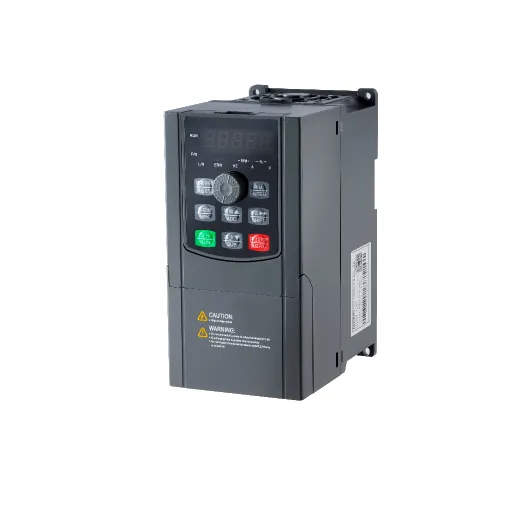
The choice of Variable Frequency Drive (VFD) plays an important role when improving the performance of motor-driven systems. Proper sizing of the variable-speed drive is advantageous not only from an energy perspective but also because equipment runs efficiently and effectively. However, when you consider the many options and technicalities involved, it is easy to see why buyers find it difficult. This article aims to eliminate this hassle by guiding users to the different levels of the VFD Power Rating and Sizing Guide to maximise efficiency. This may be more practical when modernizing existing equipments or constructing contemporary equipment. Still, this article will be valuable as it helps you understand the differences in motor drives and choose the one that meets your expectations.
When sizing a Variable Frequency Drive (VFD), understanding key terms is vital for accurate selection and operation. Below are some essential terms to know:
The most crucial factors to consider when specifying VFDs are the motor’s Full Load Amps (FLA) and Horsepower (HP). The current drawn by the motor and the full load and rated voltage is the FLA, while the HP relates to the power output of the speed-dependent centrifugal electric motor. A VFD Power Rating and Sizing Guide, every available drive and motor current HP and FLA must be substituted.
If a particular VFD is being considered, it may be essential to examine the interrelationships among the provided values. When determining possible VFD sizes, the motor FLA is often a priority, as some motors with similar HP may require different currents depending only on design or efficiency. Power, service factor, and duty cycle are equally essential considerations for determining whether the selected VFDs can meet a given load’s requirements at different phases of operation.
One of the best ways to assess reliability is to consider the service factor, which measures a motor’s ability to operate on a load beyond its rated load when certain conditions are met. Combine this with the correct voltages to ensure the motor can withstand momentary overloads without overheating or damaging itself. A service factor around or somewhat above the anticipated load is the best way to ensure technical efficiency and the longevity of plant equipment. Voltage stability is critical to prevent electrical inefficiency and equipment failures. By complying with these items regarding the application situation, we will achieve much better machinery uptime.
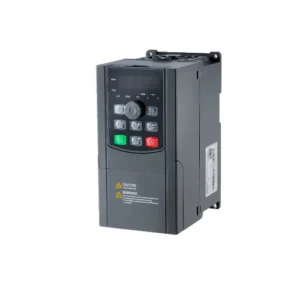
A suitable VFD size is required to ensure proper performance in terms of energy efficiency and machine protection. A sub-sized VFD will not provide sufficient power to meet motor and load requirements, leading to malfunctions such as underperformance, overheating, and excessive power consumption. Additionally, VFD size ensures machine stability, addressing voltage variations and the dynamic load requirements of the system. Oversizing, incorrect sizing, or overvoltage on a VFD can also damage the equipment, reducing operational life and increasing downtime costs. Properly sizing a VFD to site conditions can lead to greater reliability, lower energy costs, and reduced wear and tear on machinery.
To avoid equipment breakdown and heat buildup, regular maintenance checks have proven absolutely vital, given the limited ventilation space around the equipment. Various factors contribute to modifications, including accelerated heat buildup when dirt clogs equipment, when there is not enough coolant, or when there is not enough air to allow the equipment to breathe correctly. Develop a better-performing system by monitoring vibration levels, performing frequent cleaning, and operating within recommended temperature and load settings. Early detection and prevention of heating, enabled by real-time monitoring with temperature sensors and alarms, are of prime importance to prevent damage and costly downtime. Equipment can be effectively shielded against various failures through the proper selection of size and high-quality components, such as Variable Frequency Drives (VFDs), which manage energy consumption more effectively.
Maintenance with a strong background in reasoning can ensure optimal performance in productive scenarios. The logic of predictive maintenance for any piece of equipment is built on data-based analyses that reveal patterns indicating when an asset is more likely to fail. The application of predictive maintenance in real time will minimize downtime, reduce repair costs, and improve efficiency. If search engine problem detection can be part of the company’s regular business, it could be considered a strength for truly optimising plant life and performance.
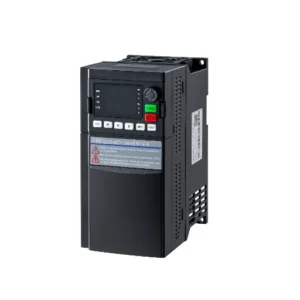
While out setting an appropriate size of Variable Frequency Drive for your application, consider following these guidelines:
A motor nameplate is a crucial tool in studying the requirements necessary for correct motor operation. It provides features such as RPM, horsepower, service factor, enclosure type, voltage, full-load amperage (FLA), frame type, and frame size. Therefore, based on the RPM information, one can determine the required speed match (and the pulley ratio on motor-driven devices, if required) where indicated, and then install the motor. The motor voltage specification on the nameplate provides information on the motor’s electrical supply requirements, while the FLA helps size circuit protection and select compatible VFDs. Then, too, the efficiency rating shows how efficiently the motor converts electrical energy into mechanical energy and provides the percentage of savings the user might achieve.
An engineer must always consider additional capacity in sizing a system to account for service factor and overload conditions. Take, for instance, that motors with a service factor of >1.0 are deemed appropriate, and operations below their rated nameplate can be carried out for brief periods. Operating a VFD under this increased demand without tripping or overheating permits an additional safety margin for a marginally oversized VFD. This helps ensure compatibility even under fluctuating or unpredictable load conditions.
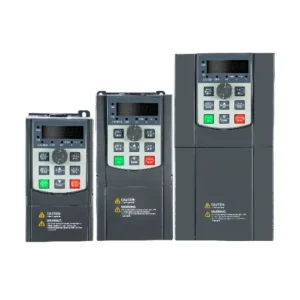
Knowing the type of load that requires greater power—constant torque or variable torque—is necessary while selecting a VFD for an application. Constant-torque loads handled by conveyors, hoists, or positive-displacement pumps require that normal torque be delivered at variable speeds during operation. These loads are best served by a VFD that maintains stable power and precise control at any control position.
On the other hand, variable-torque loads, such as fans and centrifugal pumps, exhibit torque characteristics that change with speed. A fan, for instance, would require significantly higher torque at full speed than at lower speeds. As such, energy efficiency is of paramount importance. By custom-tweaking the VFD functions for variable loads while maintaining high control functionality, the variable-load torque is optimized, resulting in more efficient operation and lower energy bills.
Indeed, altitude and temperature are significant factors in the performance and durability of Variable Frequency Drives (VFDs). Air density decreases with increasing altitude, thus reducing the cooling efficiency of VFDs. Thus, to sustain performance, the VFD’s power could be reduced, or the cooling mechanism could be carefully adjusted. Furthermore, drastic temperature fluctuations can affect the lifespan of electronic components mounted in the drive, ranging from low to high.
It is a device specifically made to work with the flux in the VFD environments. In contrast, the intention of inverter-duty motors is usually to withstand the design stress they will experience due to instantaneous voltage imbalances and harmonics resulting from VFD operation. The principal points of inverter-duty motors include robust insulation systems that avert early failure, lower operating temperatures for better durability, and the ability to operate at different speeds without overheating.
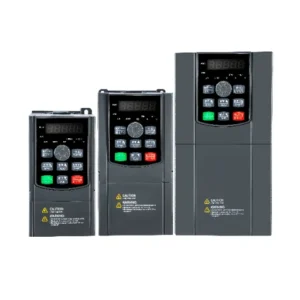
When selecting the right VFD, consider the following tips:
Ensure the VFD is compatible with the motor’s voltage, current, and horsepower ratings to prevent operational issues.
Determine the speed-control range, torque requirements, and operational environment to select a VFD suited to your specific application.
Look for VFDs with energy-saving features to reduce power consumption and lower operating costs.
Select a VFD with an appropriate enclosure rating, such as NEMA or IP, to protect it against dust, moisture, and other environmental contaminants.
Features like overload protection, fault diagnostics, and communication capabilities can enhance the VFD’s performance and usability.
When selecting a VFD for my application, I consider the specific needs of my system, including motor type, required loads, and operational targets. Identifying these will indeed help ensure that the VFD chosen is tailored to my particular needs: efficiency, reliability, and prime performance.
It’s also important to consider changes in your system and advances in technology. A scalable VFD should be able to accommodate increasing load demands, future integration of automation systems, and enhanced energy efficiencies. Remote monitoring systems and IoT capabilities are increasingly in focus for enterprises. These very features help ensure that a VFD can be useful even when operating needs change. When choosing a VFD, selecting the option and connectivity that enhance expandability and ensure compliance with a few standards can help emulate future growth while maintaining optimal efficiency.
Here are five professional and authoritative sources related to “VFD Power Rating and Sizing Guide” that you can use to verify the correctness of your article: