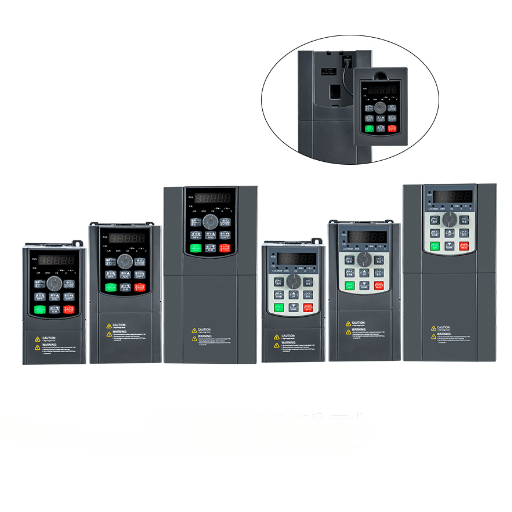
Ready to Get Your VFD Solution?
Whether you need a single drive or a complete system, we have the VFD products and engineering support to ensure your project's success.

Over the time, Variable Frequency Drives (VFDs) have become to necessity in modern industrial and commercial applications due to their ability to control motors with utmost precision and, at the same time, save a lot of energy. However, the very reason for their large-scale implementation is also giving rise to a major concern—harmonics and their power quality-related issues. These electrical anomalies, if not minimized, can cause problems with the equipment, waste energy, and even result in expensive downtime. The present article takes you inside the VFD harmonics and offers you effective ways to reduce them so that your system operates and is reliable at the highest level.
Variable Frequency Drives (VFDs) are vital parts in the modern electric systems offering the most accurate control over the speed and torque of the motors. VFDs are able to adjust the electric motors’ frequency as well as voltage to improve their performance, to consume less energy, and to last longer. This capability is what makes them a necessity in such different areas as manufacturing and HVAC systems, where the control of processes and energy efficiency are of great importance.
Key Fact: According to studies, VFDs can bring up to 50% energy savings in variable torque loads, e.g., pumps and fans, relating to the extraction of power. The U. S. Department of Energy provides an example where cutting a motor’s speed by 20% may almost equal cutting its energy consumption by 50%. This shows how much VFDs contribute to environmental sustainability and at the same time to reducing operating costs.
Variable Frequency Drives (VFDs) are at the forefront of energy-saving technologies and have an essential part in the industrial and commercial applications of the future. They are the one and only solution for the perfect adjustment of speed and torque in electric motors in the process of energy-efficient practices in the whole industry. As per the researches done, the VFDs can contribute a whopping 50% reduction in energy in specific applications. They are highly effective in their use in systems with load varying demands like pumps, fans, and HVAC.
Moreover, through advanced motor safeguarding and elongated equipment life, VFDs indirectly but prominently contribute to cost cutting apart from the main energy-saving benefit. This is because the VFD does the above through the gradual and smooth ramp-up of a motor instead of the sudden and rough start that results in high mechanical stress which in turn causes wear and tear and subsequently increased maintenance costs and reduced downtime. For instance, the US Department of Energy points out that the installation of VFDs in industrial motor systems can lead to remarkable energy savings, thus making it possible to prioritize overall efficiency of operation.
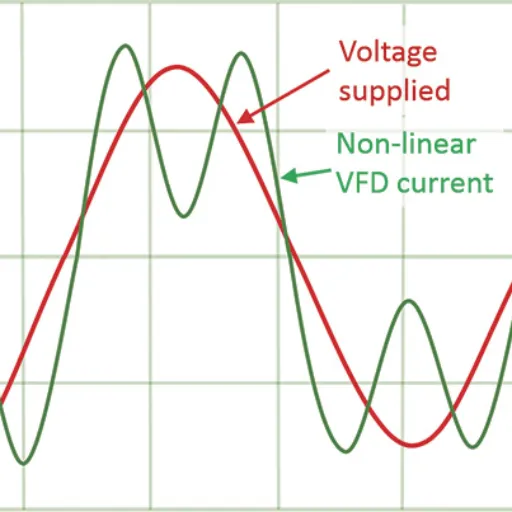
Harmonics are distorting elements in an electrical system, either as voltages or currents, which change the regular sinusoidal wave form into a different one. Often, when the noise comes from this source, it is due to the use of non-linear loads such as VFDs (variable frequency drives), power electronics, and other modern devices which create their current in flicks instead of a gentle, uninterrupted flow. Every harmonic is a whole number multiple of the basic frequency, which is around 60 Hz in the USA and 50 Hz in other parts of the world, and the occurrence of these harmonics can be a source of problems for electrical systems.
The consequences of harmonics will be so serious that one will need to consider them before making any decisions about the operation of electrical systems. To begin with, harmonics to equipment can be a source of extra heat, loss of power, malfunctioning of delicate devices, and even early system failure. The IEEE 519-2014 standards state a maximum of 5% total harmonic distortion (THD) for voltages at the common coupling point in industrial systems. High levels of harmonics could be a direct cause of the energy losses, overheating of transformers, and noise on the communication lines.
Harmonics in electrical systems not only cause minor inconveniences but have a lot wider effects. They could be a reason for not only equipment overheating but also increased losses, decreased efficiency and a bad heard around of life for transformers, motors and generators. An IEEE study has demonstrated the extent of this situation by attributing up to 20% energy losses due to harmonics in heavily loaded systems, thus pointing out the significant operational cost resulting from technical impact.
⚠️ Important: Uncontrolled harmonic distortion can lead to utility companies imposing financial penalties on industries for going over the limits set by regulations like the IEEE-519 or EN 50160 in Europe. In addition to that, the performance of sensitive equipment such as medical imaging devices and precision manufacturing tools can be affected by harmonic interference, which may eventually lead to costly downtime.
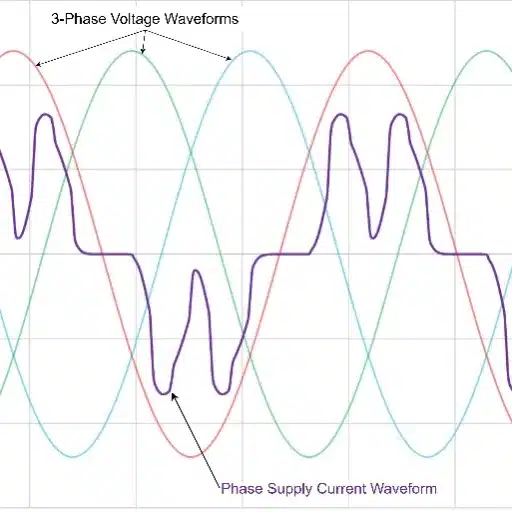
Currently, non-linear loads are considered the main factor for harmonic distortion in electric systems. Such loads, in most cases, require current that is pulsed in a very sharp way instead of a smooth sine wave, and thus, these loads are the causative agents of the harmonic currents. Among the usual non-linear loads, there are Variable Frequency Drives (VFDs), power electronics, and also equipment such as UPS systems, rectifiers, and even LED lighting, to name a few.
The network of electricity gets distorted with the voltage waveforms due to the harmonic currents generated by the non-linear loads. Non-linear loads in the industrial sector are said to be responsible for about 70%, which is a large amount, of the whole load and thereby, the presence of harmonic disturbances are facilitated to a great extent. A five-pulse rectifier circuit also known to be widely used in VFDs can produce total harmonic current distortion (THDi) of around 35–40% which is the case without any filtering. However, advanced harmonic filters can bring it down to less than 10%.
Variable Frequency Drives (VFDs) are very important in regulating the speed and torque of electric motors, which leads to significant energy saving and improved performance of the system. The problem is though that the switching frequencies of VFDs can produce electrical noise and harmonics which will harm the quality of power if not taken good care of. Commonly, the switching frequencies of VFDs vary from 2 kHz to 20 kHz, and the frequency chosen affects both performance and heat losses. The distortion of harmonics is usually less with lower switching frequencies but the cost is that more noise is heard and the efficiency declines because of the less accurate control of the motor. Conversely, with higher switching frequencies one gets smoother motor performance but at the expense of increased energy losses due to heat in the components of the drive.
✓ Best Practice: Multiple studies indicate that one of the ways to get rid of the harmonic distortion completely or at least to a minimal level, is by switching frequency optimization combined with harmonic filtering techniques. One source of information that is very trustworthy is the reports of the industry that say keeping the frequency around 8 kHz is often a good compromise between performance, motor noise, and thermal. The use of modern active filters along with these frequency adjustments is capable of bringing Total Harmonic Distortion (THD) down to below the 5% limit set by IEEE 519 standards that signifies compliance with both operational and regulatory requirements.
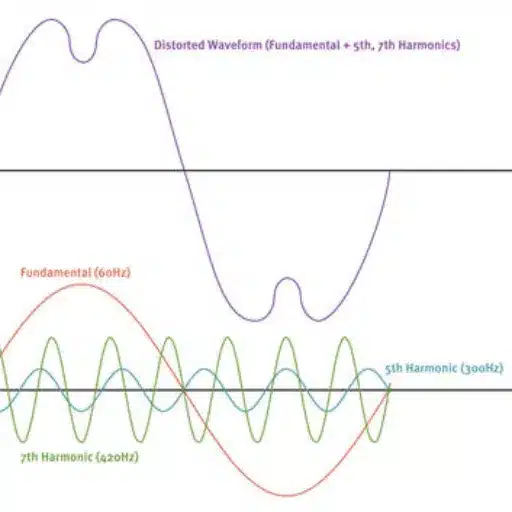
VFDs (Variable Frequency Drives) produce harmonics that interfere with the performance and lifespan of the connected devices a lot. The eddy currents in the system due to increased harmonic distortion in the electrical distribution results in more heating of the motors, transformers, and cables, thus lowering their efficiency and eventually leading to their premature failure. The increase in the harmonic currents can be in the order of 5% – 10% depending on the design and load conditions, thus the power losses escalate the maintenance costs and energy consumption as well.
Moreover, the opposite scenario occurs when the harmonic distortions are not managed properly and sensitive electronic devices behave erratically. As the level of Total Harmonic Distortion (THD) increases, it often crosses the 5% limit for commercial applications, and this leads to voltage instability, equipment malfunctions, and electrical insulation stress in the components. For example, the industrial setting with threshold levels of THD exceeding those standards can experience up to 20% more transformer heating, which consequently affects the reliability and life span of the transformer.
Harmonics produced by VFDs and other nonlinear devices can significantly affect power distribution networks. Power systems suffer from increased conductor, transformer, and other power equipment energy losses due to high harmonic distortion levels. Different studies done by the industry indicate that loss amplification due to distortion can go up to 15%, which is very costly in terms of utility bills and inefficient power across systems.
Aside from that, the harmonics are also a cause of voltage waveform distortion and consequently of voltage stability problems. The voltage instability can then lead to situations of load unbalance, flickering lights, or even the breaking down of sensitive electronic devices. If oxidative devices are subjected to excessive harmonics, they may overheat, which could result in the degradation of their insulation systems and, thus a reduction of their operational life by up to 50%. According to the IEEE study, the capacity of the transformer to function based on the amount of harmonic present has a -20% effect on the power system so overall power system efficiency is limited.
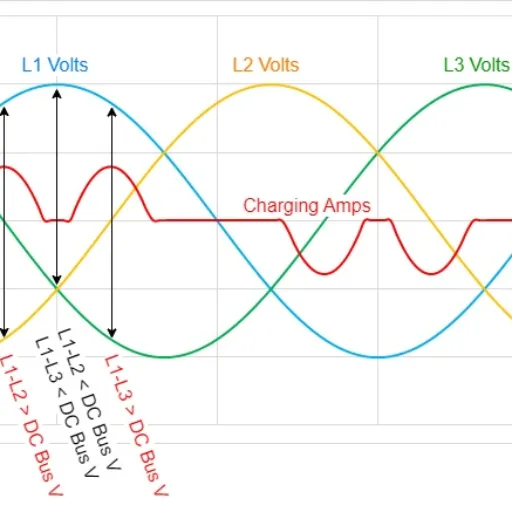
Active harmonic filters (AHFs) are revolutionary devices meant for harmonic elimination in the electrical grid and actively adapting to the changing harmonic load conditions. In contrast to the passive ones, AHFs are taking part in the electrical system by nutrient the harmonic distortion with a compensating current. Thus, the power electronics, e.g., insulated-gate bipolar transistors (IGBTs), are making it possible to have an accurate and changing over the time compensation with the help of these devices.
These filters use high-end sensors to determine the system’s current and voltage conditions. When the harmonic constituents are identified, the AHF produces a non-harmonic waveform that neutralizes the undesired harmonics, thereby producing extremely stable power quality. It can compensate for several harmonics at the same time and can also rectify the imbalance of reactive power and voltage flicker.
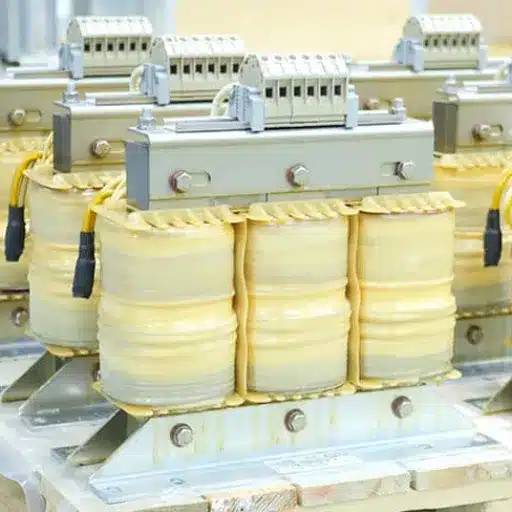
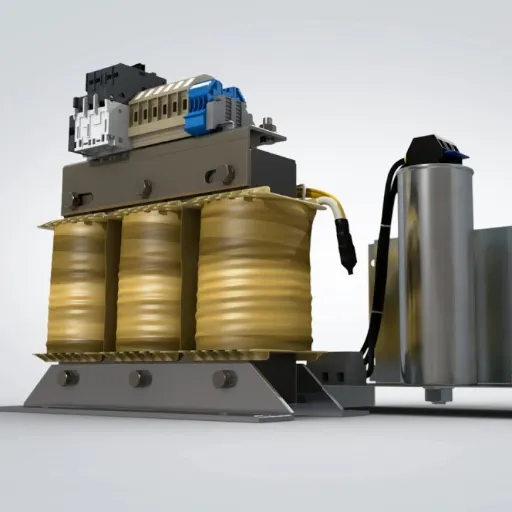
Reactor-based solutions are instrumental in harmonics control in electrical systems. Reactors used in the form of either line reactors or detuned reactor systems help in reducing the total harmonic distortion by raising the impedance in the circuit. The increased impedance lessens the non-linear load-caused current distortion that is responsible for electronic equipment malfunction and overall poor power quality.
Technical Insight: The latest findings support the application of detuned reactors alongside capacitors for enhancing the power factor correction systems. For example, literature mentions that detuned reactors set to the frequencies of 189 Hz or 210 Hz can achieve safe operation while preventing harmonic resonance in situations where the harmonic-generating devices like variable frequency drives (VFDs) or rectifiers are omnipresent. Moreover, the reduction of harmonic currents by up to 50% in many industrial applications is supported by industry case studies.
Variable Frequency Drive Harmonics and Mitigation
Variable Frequency Drive Harmonic Mitigation
Applying Harmonic Filters to VFDs to Meet IEEE 519 Specification
6-pulse VFDs’ harmonics can be mitigated through active solutions like harmonic filters. One of the most common ways is to install passive filters, which are tuned to the 5th and 7th harmonics or designed as inductors, along with multi-pulse drives or similar measures. As the source of harmonics, these filters can reduce both the voltage and current components.
Among the low harmonic solutions, 18-pulse drives, active front-end VFDs, and adding passive harmonic filters that are tailored to existing harmonics come first. As for existing systems, retrofits may include passive filters to target 5th and 7th order harmonics only, just as well as isolation transformers to attenuate harmonics, and active filtration for handling higher-order harmonics and variable loads.
The use of passive filters and correction filters can lead to a significant reduction of the main harmonic components (usually the 5th and 7th harmonics), but the situation of having no harmonics at all will not be the case, especially with the generation of higher-order harmonics by the switching of electronics. Passive harmonic filters work well at specific frequencies but have drawbacks in that they may influence other harmonics and are unable to adjust to load fluctuations.
The power quality in the electrical distribution system is adversely affected due to the overheating caused by the combined voltage and current harmonics that have tripped circuit breakers and distorted the bus voltage resulting in the shortening of the life span of the equipment. The mix of significant harmonic content that gets in and out causes the stress on circuit breakers and transformers resulting in the formation of voltage and current harmonics that are detrimental to sensitive loads.
Indeed, the presence of harmonics on the DC bus or during regenerative power flow creates a situation where mitigation gets complicated because the energy can flow back to the supply and mingle with the existing harmonics. The design of bi-directional power converters and VFDs with active front-end converters is such that they can manage regenerative power flow while at the same time reducing the formation of harmonics.