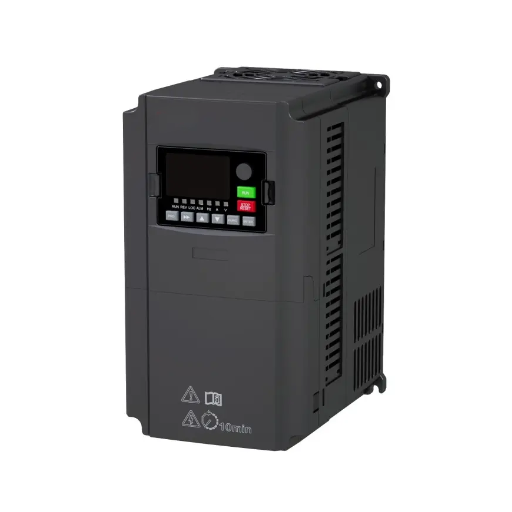
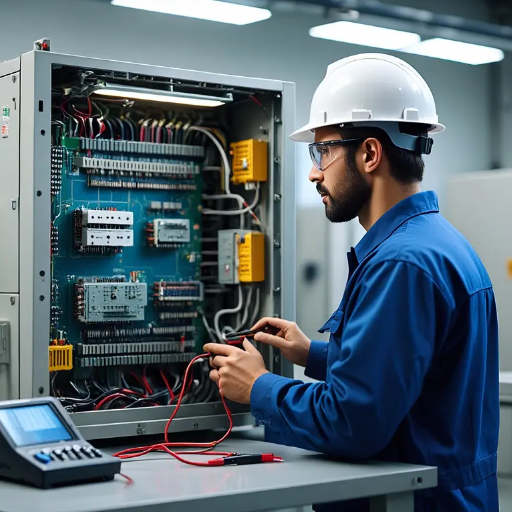
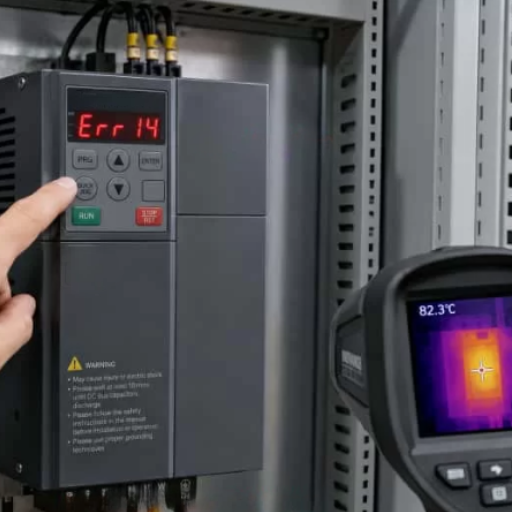
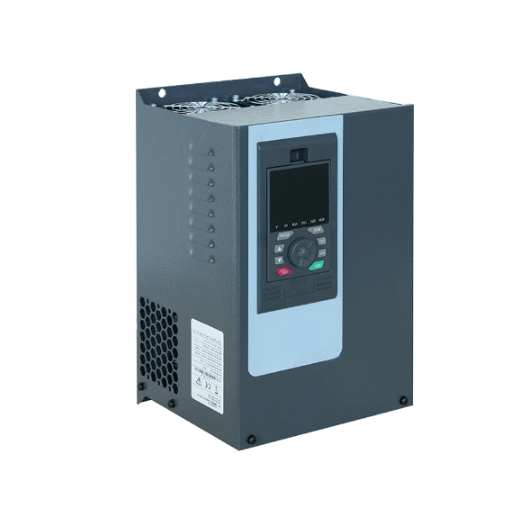
Ready to Get Your VFD Solution?
Whether you need a single drive or a complete system, we have the VFD products and engineering support to ensure your project's success.

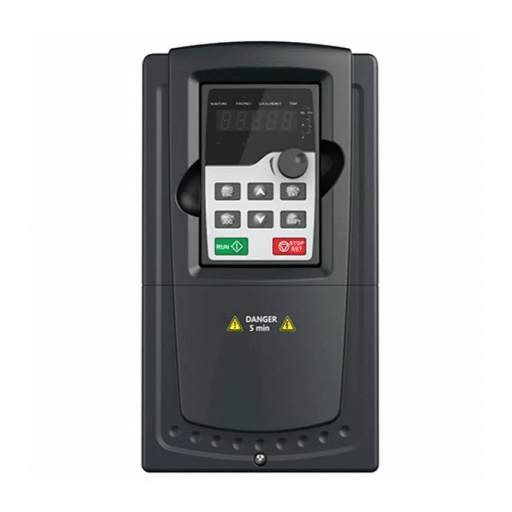
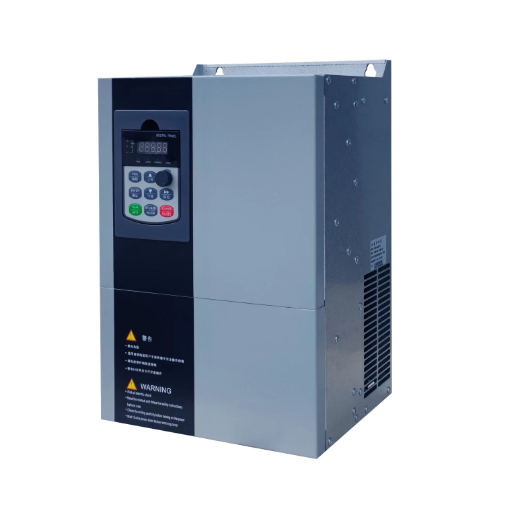
In the real world, a variable frequency drive (VFD) is the box mounted beside a motor that changes the motor’s speed to match what’s actually needed right now. That single job is the thread running through almost all real-world VFD applications, from a pump that slows down at night to a crusher that starts without a jolt.
Walk past a chiller plant at 3 a.m. and you’ll hear it: a faint, steady whir from a pump that has slowed to a crawl, holding pressure while the building sleeps. That pump isn’t throttling a valve. A drive is holding it exactly where it needs to be. If you’ve ever wondered what a VFD actually does, you’re far from alone, and the answer is simpler than most explanations make it sound.
By the end of this article you’ll be able to point at almost any motor in a plant or building and say whether a drive belongs there, and what it would be doing. We’ll walk through twelve machines, grouped by the job the drive performs, not by industry. That’s the distinction most guides miss. Here are the seven control functions we’ll walk through:
Key Takeaways
- A VFD does one thing: it varies a motor’s speed to match real-time demand, and that one job shows up in a dozen different forms
- Real world VFD applications fall into seven control functions: soft starting, speed matching, positioning, low-speed torque, flow/pressure holding, synchronization, and regeneration
- Soft starting is what protects crushers and conveyors from the 6-8x current slam of a direct-on-line start
- Speed matching is why fans and pumps are the most common VFD uses in everyday life, thanks to the cube-law relationship between speed and power
- A VFD is not always the answer: a constant-speed, full-load machine with no control need gains little from one

The first job a VFD does is also the most physical: it starts a heavy machine gently. A direct-on-line (DOL) start dumps six to eight times full-load current into a motor in an instant. That current spike isn’t just an electrical event. It travels straight through the shaft into belts, gearboxes, and couplings as a mechanical hammer blow.
A VFD replaces that hammer blow with a controlled ramp. Frequency and voltage rise together, torque builds smoothly, and the machine accelerates over the seconds you choose instead of all at once. The difference shows up first in the maintenance log, not the meter.
Consider a limestone quarry in southern Turkey. Mehmet, the maintenance lead, watched his primary crusher snap a coupling twice in one year, each time at the moment the motor slammed across the line at full torque. The retrofit didn’t change the crusher, the motor, or the process.
It only changed how the machine came up to speed: a 12-second ramp instead of an instant start. The couplings stopped failing, and the night-shift crews stopped dreading the sound of the line restarting.
The same logic protects distribution conveyors. A loaded belt has momentum, and a sudden start can make the load slip backward on the drive pulley or stretch the belt. A drive lets the belt come up to speed over ten or fifteen seconds, so a full load stays put. If your machines start hard and something keeps breaking at startup, this is the control function you’re missing.
Want the complete map by industry instead of by function? Our guide to VFD applications matches every machine here to the right drive, voltage class, and control mode.
The most common VFDs used in everyday life come down to one idea: most motors run at full speed even when full output isn’t needed. A fan or pump sized for the worst-case day spends most of its life pushing more air or water than the process wants. The drive fixes that by slowing the motor to match demand.
Here’s why this matters more for fans and pumps than for anything else. Industrial motors consume roughly half of the world’s industrial electricity, according to the International Energy Agency, and most of that spins fans and pumps at partial load.
The affinity laws say that power falls with the cube of speed. Run a fan at 80% speed and it draws only about half its rated power. A 20% slowdown, barely noticeable in airflow, cuts energy use nearly in half. That physics is the reason speed matching is the single most common application of variable frequency drives in industry, one the U. S. Department of Energy calls out as a primary motor-system efficiency measure.
Take a ventilation fan in a distribution warehouse. Fixed at full speed, it runs the same at noon in summer and at 3 a.m. in winter. On a VFD with a simple temperature or occupancy signal, it slows when the space is cool or empty and only spins up when it’s actually needed.
The fan is still the same fan. It just stops working harder than the building requires.
The same pattern shows up on municipal water pumps. A small town’s supply pump doesn’t need to move peak-hour volume at 4 a.m. Instead of throttling a valve, which burns energy while the motor runs flat out, a drive slows the pump itself. Flow drops to match demand, and the energy that used to be destroyed across the valve is never drawn from the grid in the first place.
Fans and pumps are where most retrofits start because they’re where the payoff is clearest. For the full engineering detail on sizing, PID, and minimum speed, our deep dive on VFD for pumps and fans covers it step by step.

Some machines don’t just need the right speed. They need the exact right speed, held steady while conditions change. That’s where the drive moves from a soft-starter or energy-saver into a precision instrument.
A CNC spindle is the cleanest example. To cut consistently, the spindle must hold a specific speed as the tool moves across the part, sometimes holding torque while slowing under a heavy cut. A fixed-speed motor can’t do that. A VFD with vector control reads the motor’s actual speed and adjusts output continuously to hold the setpoint, which is what keeps surface finish and tool life predictable.
A plastics extruder makes the point differently. Melt pressure inside the barrel drifts as viscosity changes with temperature and raw-material batches. If the screw runs at a fixed speed, pressure wanders and the product’s wall thickness varies. A drive on the screw motor lets the control system hold speed precisely or trim it to maintain constant pressure, so the finished profile stays within tolerance.
These are examples of variable frequency drives doing a job that has little to do with saving energy. They’re about repeatability, which is often worth more than the power bill. This is also where the difference between basic V/f control and sensorless vector control stops being academic and starts showing up as scrap.
Harder still is the machine that needs full torque while turning slowly or nearly stopped. Ordinary motors and basic drives can’t deliver much torque near zero speed. Vector-controlled drives can, and that unlocks a category of real-world VFD applications you see everywhere once you look.
In a food plant, Sofia runs a 30 kW dough mixer. The problem was never speed. It was starting a thick, sticky batch from a standstill: the motor stalled, the starter tripped, and the batch had to be dug out by hand.
A drive with vector control changed the story. It delivered full rated torque at just a few rpm, folding the dough from the first revolution instead of stalling on it.
Overhead cranes need the same thing in a different direction. Lowering a heavy load or inching it into position requires fine control at very low speed, without the load swinging or dropping. A drive gives the operator control by maintaining smooth torque across the full speed range, from a crawl to full hoist speed.
The common applications of VFD in this category share one requirement: torque at low speed. If a machine stalls at startup or can’t be positioned slowly, that’s a torque-control problem, and it’s exactly what vector control solves. Conveyors, crushers, cranes, and mixers in heavy-duty all lean on it.

In buildings and process plants, the drive is often invisible, doing the quiet work of holding a setpoint. A pump or fan has to keep flow, pressure, or temperature steady while demand swings. A fixed-speed motor can’t, so plants add dampers and valves that choke the output. A drive makes the motor itself the control valve.
An air handling unit (AHU) fan in a commercial building is the everyday version. Throughout the day, occupancy and heat load rise and fall. On a drive with a pressure or temperature signal, the fan speeds up when the floor fills and slows when it empties, holding comfort without a damper fighting the airflow.
The same principle runs a chilled-water pump in a data center. David, the facilities manager, needed the pump to hold a constant differential pressure across the cooling loop no matter how many servers were drawing heat.
A fixed-speed pump with a bypass valve wasted energy and responded slowly. A drive on the pump held the pressure setpoint precisely, trimming speed second by second as server load shifted. The pump became a self-adjusting valve.
These applications are where drives spend most of their service life in buildings. For a closer look at fans, chillers, and cooling towers specifically, see our guide to VFDs in HVAC systems.
Some real-world VFD applications involve not one motor but many, all working on the same product at once. When several motors pull the same material, their speeds have to stay matched, or the material stretches, tears, or piles up between sections.
A paper mill’s web line is the classic case. The web runs through successive rolls, each driven by its own motor. If a downstream section runs even slightly faster than the one before it, the paper stretches. Too slow, and it bags.
Drives on every section, talking to each other through a common speed reference, keeps the whole line in step so tension stays constant.
The same idea applies to a long multi-section conveyor carrying bulk material through a transfer. Each drive holds its section in sync with the next, so product doesn’t spill at the seams. Load sharing matters too: when two motors drive one shaft or one large conveyor, the drives split the torque evenly so neither motor does all the work and overheats.
This is the most complex of the common applications of VFD, but the principle is simple. Wherever several motors touch the same product, drives keep them coordinated instead of letting them drift.
The last control function is the one most people have never heard of, and it’s the most valuable in the right setting. Whenever a motor is driven by its load instead of by the grid, such as a hoist lowering a skip or a conveyor carrying ore downhill, the motor becomes a generator.
What happens to that generated energy depends on the drive. A conventional setup dumps it into resistor banks as heat: real energy, burned off in a glowing box. A regenerative VFD instead sends it back into the supply, where it offsets power drawn by other equipment on site. The drive is, in effect, breaking the machine and getting paid for it.
A mine hoist on a deep shaft lowers a loaded skip many times an hour. Each descent is a braking event, and each one is free energy if the drive can return it. Downhill conveyors, which move ore from a high pit to a lower crusher, run this way continuously, and the regeneration can cover a large share of the conveyor’s own uphill return run.
These applications are less common than fans and pumps, but they change the ROI calculation entirely for the sites that have them. They also remove the heat and fire risk that resistor banks bring into dusty environments. For how this plays out in heavy industry, our mining VFD guide covers the details.
Wondering what these machines actually save once installed? These examples show what drives do. For the measured, metered savings on real retrofits, see our VFD case studies.
Honesty matters in an engineering shop, so let’s say the quiet part. A VFD is not a universal upgrade. If a motor runs at full speed, at full load, all the time, with no process-control requirement and no starting problem, a drive adds cost without adding value.
That describes a surprising number of machines. A well-matched pump on a continuous duty with steady demand, a fan that runs flat out by design, or a motor already controlled by other means gains little from a VFD. You’ll still get a soft start and electrical protection, but you shouldn’t expect an energy case that isn’t there.
The right question is never “should we add a drive?” It’s “What would the drive actually change on this machine?” If the answer is nothing, the drive can wait. That discipline, applied honestly, is what separates an engineering recommendation from a sales pitch.

Here are all twelve VFD application examples at a glance, reduced to the job the drive is doing:
| Machine | Control Function | What the VFD Actually Does |
|---|---|---|
| Aggregate crusher | Soft starting | Ramps up over seconds to avoid coupling and gearbox shock |
| Distribution conveyor | Soft starting | Brings a loaded belt to speed without load slip |
| Ventilation fan | Speed matching | Slows when the space is cool or empty |
| Municipal supply pump | Speed matching | Matches flow to demand, no throttling valve |
| CNC spindle | Positioning | Holds exact speed under cutting load |
| Plastics extruder | Positioning | Holds speed or pressure for consistent wall thickness |
| Dough mixer | Low-speed torque | Delivers full torque at a few rpm, no stall |
| Overhead crane | Low-speed torque | Inches loads with smooth, controlled movement |
| AHU fan | Flow/pressure control | Holds comfort setpoint as occupancy changes |
| Chilled-water pump | Flow/pressure control | Holds loop pressure as load shifts |
| Paper web line | Synchronization | Keeps multiple sections in step to hold tension |
| Mine hoist | Regeneration | Returns braking energy to the supply on descent |
A municipal water pump is the clearest one. Instead of running at full speed against a half-closed valve, the pump’s motor is slowed by a VFD to match demand, cutting the energy that used to be wasted across the valve.
It varies the frequency and voltage supplied to the motor, which changes how fast the motor turns. Lower frequency means slower speed, and the drive adjusts both continuously to match the load.
In the HVAC systems of offices and malls, in the water pumps that supply buildings, in escalators and elevators, and in the refrigeration compressors behind supermarkets. Any fan, pump, or compressor that runs at part load is a candidate.
Because of the affinity laws: power falls with the cube of speed. A 20% speed reduction cuts power by roughly half, so slowing a fan or pump to match demand produces the largest savings of any application.
In some cases, yes, when several identical motors run at the same speed, a single drive can feed them. But each motor needs its own overload protection, and independent speed control requires one drive per motor.
Constant-speed, full-load machines with no control need and no starting problem gain little from a drive. The test is simple: ask what the drive would actually change on that machine.
Real-world VFD applications look different on every machine, but they all trace back to one idea: matching the motor to the moment. A crusher that starts gently, a fan that slows when the room is empty, a mixer that folds dough from the first turn, a hoist that returns energy on the way down. Same device, seven control functions, endless specific faces.
The useful mental model is to stop asking “does this machine need a VFD?” and start asking “what job would the drive do here?” Soft start, speed matching, positioning, low-speed torque, flow control, synchronization, or regeneration. If one of those answers is clear, you’ve found your application.
If you know your motors but aren’t sure which of these jobs apply, that’s a short conversation. Our low voltage VFD systems cover most of the machines here, and our full VFD range handles the rest, from small workshop drives to high-voltage systems for hoists and mills.