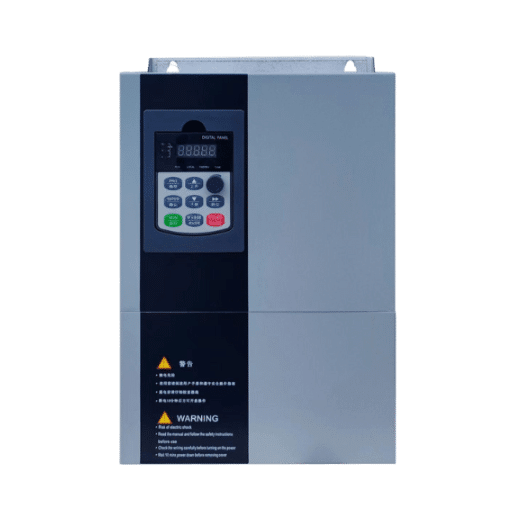
Ready to Get Your VFD Solution?
Whether you need a single drive or a complete system, we have the VFD products and engineering support to ensure your project's success.

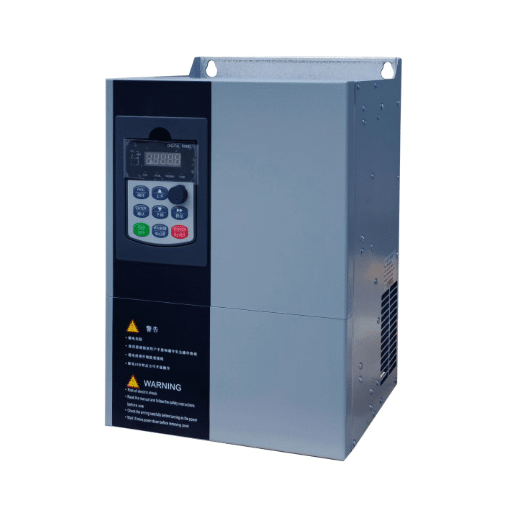
A VFD for small motors is practical when the application needs variable speed, soft starting, or energy savings on run hours over roughly 1,000 hours per year. The minimum practical motor size is typically 1/4 HP (0.18 kW) on a modern compact VFD with adjustable carrier frequency. For single-phase motors, the start capacitor must be removed and the motor rewired for two-phase operation. For three-phase small motors, the main risk is not motor size but protection settings. Most VFDs ship with overload defaults for 10 HP motors, so current limits, carrier frequency, and thermal curves must be reconfigured for the actual motor nameplate data.
A machine builder in Poland bought a 1.5 kW compact VFD for a 1 HP three-phase bench grinder. The motor ran for 20 minutes and then smelled hot. The builder called our support line convinced the drive was defective. The real issue was simpler than he thought. The VFD defaulted to 4 kHz carrier frequency and Class 10 overload protection sized for a 7.5 kW motor. After dropping the carrier frequency to 2 kHz, setting the motor rated current to 1.6 A, and switching overload class to Class 5 for the small motor thermal mass, the grinder ran cool for eight hours straight. Total fix time: four minutes on the keypad. The builder had been ready to scrap a 90driveandbuya90driveandbuya400 model he did not need.
That story is the core thesis of this guide. Small motor VFD problems are almost always protection-setting problems, not drive problems. This article walks through when a VFD makes sense for fractional-HP to 5 HP motors, how to wire single-phase motors correctly, which parameters to change from factory defaults, and when the energy payback justifies the investment.
Key Takeaways
- The minimum practical motor size for a VFD is about 1/4 HP; motors under 1/8 HP rarely justify the drive cost.
- Single-phase motors can run on VFDs after capacitor removal and two-phase rewiring, but they derate to about 70% of nameplate power.
- Factory VFD defaults are sized for much larger motors; you must enter the exact motor rated current, lower carrier frequency, and select the right overload class.
- Carrier frequency of 2 to 4 kHz prevents small motor overheating; higher frequencies run quieter but generate more heat.
- Energy payback on fractional-HP VFDs only works when the motor runs 1,000+ hours per year with a variable load.
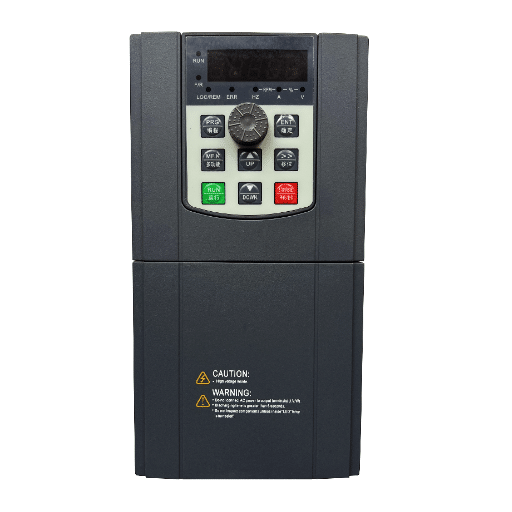
Not every small motor needs a VFD. In fact, putting a drive on the wrong application wastes money and creates maintenance headaches. A VFD for small motors makes sense only when variable speed, soft starting, or significant run-time energy savings are required. For a broader view of the low voltage VFD landscape, see our complete selection guide.
The practical lower limit for a VFD is about 1/4 HP (0.18 kW). Below that, the PWM waveform quality from most compact drives becomes rough relative to the motor winding inductance, which leads to excess heating and torque ripple. A 1/8 HP motor on a 0.4 kW drive will often run hotter than it would across-the-line, and the $80 drive cost cannot be recovered through energy savings on such a small load. For how to size a VFD on motor full-load amps, always match the drive kW rating to the motor and account for any single-phase input derating.
A VFD is the right choice when the application needs speed control, precise acceleration, or significant energy savings on variable-torque loads. Examples include grinder speed adjustment, lathe spindle control, fan airflow modulation, pump flow trimming, and conveyor line speed tuning. If the motor simply needs soft starting but never varies speed, a soft starter costs half as much and introduces fewer harmonics. If the speed never changes and run hours are low, a contactor and overload relay is the honest answer.
Constant-speed applications with short run times are poor candidates. A bench grinder that runs 30 minutes a week will never save enough energy to pay for the drive. High-torque start requirements on small motors, like a gear pump with a sticky product, may also overwhelm the limited starting torque of V/f control on a compact VFD. In those cases, a larger frame drive with vector control or a direct-on-line starter with a mechanical variator is the better path.
| Feature | VFD | Soft Starter | Direct Starter (Contactor) |
|---|---|---|---|
| Speed control | Yes | No | No |
| Soft start | Yes | Yes | No |
| Energy savings on variable load | High | None | None |
| Relative cost | Higher | Medium | Lowest |
| Best for small motors | Variable speed, long run hours | Frequent start/stop, fixed speed | Simple on/off, low run hours |
For broader context on selecting the right drive for your application, our complete low voltage VFD selection guide covers sizing, frame ratings, and feature trade-offs in detail.
Before buying any drive, confirm VFD motor compatibility for your specific motor type. Not all small motors play nicely with VFDs.
Three-phase induction motors are the native match for VFDs and our low voltage VFD systems. The rotating magnetic field is created by the three stator windings, and the VFD simply replaces the fixed-frequency mains with a variable-frequency supply. For small motors, verify the voltage rating (220V, 380V, 400V, or 460V) matches the drive output. Most compact VFDs output three-phase 220V or 380V. A 460V motor on a 380V drive will run weak and hot.
Capacitor-start and capacitor-run single-phase motors can be adapted to a VFD for single phase motor operation, but shaded-pole motors cannot. The capacitor creates a phase shift for starting torque that conflicts with the VFD’s variable-frequency output. The capacitor must be removed, and the motor must be rewired for two-phase operation across two of the drive’s three output phases. This works but derates the motor to roughly 70% of nameplate power because only two-thirds of the winding is active. Permanent magnet (PM) motors require a VFD with PM motor parameter support. Standard brushless DC motors are not compatible with AC VFDs.
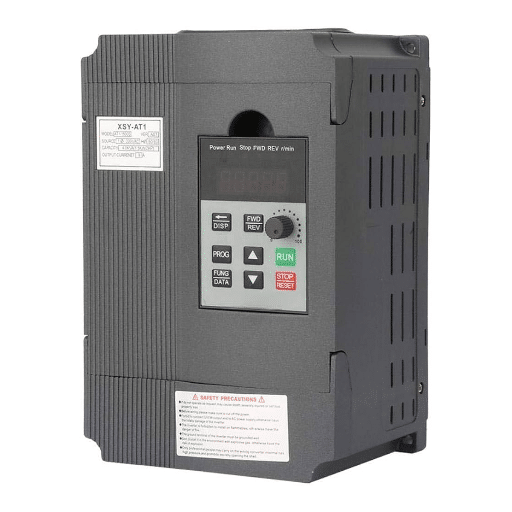
This is the most searched topic in the small motor VFD space, and it is also where the most mistakes happen.
First, disconnect all power and lock out the supply. Remove the motor terminal cover. Identify the start capacitor and run capacitor (if present). Disconnect both capacitors from the winding circuit entirely. Short the capacitor terminals with an insulated screwdriver to discharge any residual charge before handling. Identify the main winding and auxiliary winding leads using a multimeter. The main winding has lower resistance. Label every wire before cutting anything.
Connect the main winding across two output phases, typically U and V. Connect the auxiliary winding across V and W. This creates a two-phase supply from the three-phase VFD output. The motor will run, but torque output drops to roughly 70% of nameplate because the third winding phase is not energized. Do not attempt to connect all three windings to U, V, and W on a single-phase motor; the internal winding geometry is wrong for three-phase excitation and the motor will overheat or fail to start. For wiring and commissioning best practices, see our installation guide for grounding and cable selection details.
Single-phase input compact VFDs (220V single-phase in, three-phase out) are available from 0.4 kW to 2.2 kW and are the simplest single phase to three phase VFD solution for small shops without three-phase power. They cost 80to80to250 depending on features. If you already have three-phase power, a standard three-phase input drive gives full-rated output and often costs less per kW. The choice is driven by your existing power infrastructure, not by the motor itself.
Need help with a specific motor? Request motor compatibility verification from our application engineering team. We will check your nameplate data against the drive parameter requirements.
This section is the single most important part of the guide. Most small motor VFD failures are not wiring failures. They are parameter failures.
Every VFD ships with a default motor rated current that assumes a mid-range motor for that drive frame size. A 2.2 kW compact drive might default to 4.5 A. If your actual motor is 1 HP and draws 1.6 A, the drive will not protect the motor correctly. Enter the exact nameplate full-load amps into the motor rated current parameter. On most keypads this is labeled “Motor Rated Current,” “FLA,” or “I_n.” This one parameter determines overload tripping, thermal modeling, and current limiting.
Small motors heat up faster than large motors because they have lower thermal mass. NEMA and IEC define overload classes by trip time at 600% current: Class 5 trips in roughly 5 seconds, Class 10 in roughly 10 seconds, and Class 20 in roughly 20 seconds. For motors under 3 HP, use Class 5. For 3 to 5 HP motors, Class 10 is usually adequate. Using Class 20 on a 1 HP motor means the drive will let the motor cook for 20 seconds at severe overload before tripping. That is enough time to damage the winding insulation.
Carrier frequency is the PWM switching rate. Compact VFDs default to 4 to 6 kHz, which is fine for 5 HP and larger motors. Small motors have less winding inductance to smooth the PWM current ripple, so higher carrier frequencies cause more heating. For motors under 2 HP, drop the carrier frequency to 2 to 4 kHz. The motor will run slightly louder (audible switching tone), but it will run cooler. If noise is critical, raise the carrier frequency to 8 kHz or higher and monitor motor temperature carefully during the first hour of operation.
Small motors driving high-inertia loads (like a heavy grinding wheel or a large fan) need longer acceleration ramps to avoid overcurrent trips. A good starting point is 5 to 10 seconds for acceleration and 10 to 20 seconds for deceleration. If the drive trips on overcurrent during ramp-up, increase the acceleration time. If it trips on DC bus overvoltage during ramp-down, increase the deceleration time or add a braking resistor.
[Image placeholder: Small motor VFD protection settings table showing motor rated current, overload class, and carrier frequency by brand]
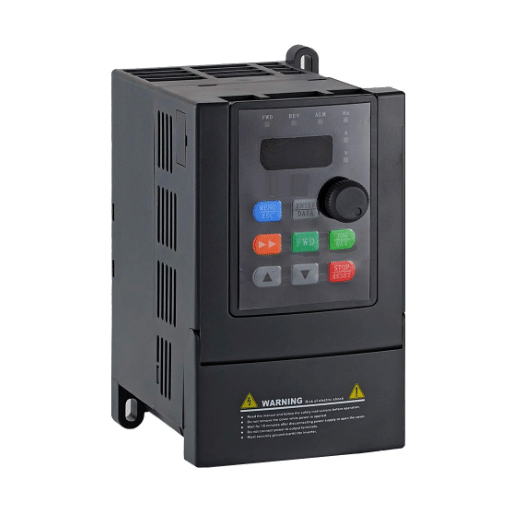
The safest rule is to match the drive kW rating to the motor kW rating one-to-one. A 0.75 kW motor gets a 0.75 kW drive. A VFD for 5 HP motor would be a 3.7 to 4 kW drive. There are two cases where upsizing by one frame makes sense. First, when the motor has high starting torque requirements (positive-displacement pumps, conveyors with heavy product). Second, when using a single-phase input drive, which typically requires 30% to 50% derating on the input side. A 1 HP three-phase motor on a single-phase input drive should use a 1.5 kW or 2.2 kW frame to avoid input current limits.
Single-phase input drives from 0.4 kW to 2.2 kW are the entry point for most small motor applications. They accept 220V single-phase household or shop power and output three-phase variable frequency. Price points range from roughly 80fora0.4kWunitto80fora0.4kWunitto250 for a 2.2 kW unit with vector control and a small keypad. For tight panel layouts, see our notes on compact drive footprint comparison.
If your facility already has three-phase power, a standard three-phase input drive gives full-rated output, lower input current harmonics, and often a lower price per kW. The wiring is simpler because no input derating math is required. For small motors in industrial settings, three-phase input is the preferred path when power is available.
Three symptoms account for most support calls about whether a VFD can damage a small motor. The answer is yes, but only when protection settings are wrong. All three failure modes are preventable.
The most common cause is carrier frequency set too high for the motor size. Drop it to 2 to 4 kHz. The second most common cause is incorrect motor rated current entered into the drive. Verify the nameplate amps match the parameter exactly. Third, check motor ventilation. A TEFC motor mounted in a tight enclosure with no airflow will overheat regardless of the drive settings. Fourth, confirm the overload class is Class 5 for motors under 3 HP.
If the drive trips on overcurrent during start or acceleration, the ramp time is too short for the load inertia. Increase the acceleration ramp by 50% and try again. If the trip happens at steady-state speed, check for mechanical binding, a seized bearing, or a load that has changed since commissioning. Also verify the motor rated current parameter is not set too low, which can cause nuisance trips under normal load.
A low carrier frequency (2 to 4 kHz) produces an audible switching tone that some operators find annoying. If noise is a concern, raise the carrier frequency in 1 kHz steps and monitor motor temperature after each change. Some drives also offer skip-frequency bands that avoid mechanical resonance points in the motor or driven load. For example, if the motor frame resonates at 23 Hz, program the drive to jump from 22 Hz to 24 Hz without dwelling at 23 Hz.

A VFD on a small motor is not always an energy-saving decision. Sometimes it is a process-control decision. Knowing the difference matters.
Energy payback works when the motor runs a variable-torque load (fan, centrifugal pump, mixer) for 1,000 or more hours per year. In these applications, power drops with the cube of speed reduction. A fan running at 80% speed uses roughly 51% of full-load power. That is where the savings live.
The formula is straightforward: annual savings equals (full-load power minus average variable-load power) multiplied by run hours multiplied by electricity rate. For example, a 1 HP motor drawing 0.85 kW at full load runs a fan 2,000 hours per year. With a VFD modulating speed to an average 75% load, power drops to roughly 0.55 kW. At 0.12perkWh,annualsavingsare(0.85minus0.55)times2,000times0.12,whichequals0.12perkWh,annualsavingsare(0.85minus0.55)times2,000times0.12,whichequals72 per year. A $120 compact VFD pays back in roughly 20 months.
Constant-speed loads with intermittent duty rarely justify a VFD on energy savings alone. A bench grinder that runs 30 minutes a week saves maybe $3 per year. A small compressor with a pressure switch and unload valve already cycles efficiently enough that a VFD adds cost without meaningful return. In those cases, buy the VFD for speed control or soft starting, not for energy payback. For application-specific energy data, our energy savings calculation by application covers pumps, fans, and conveyors in detail.
The practical minimum is about 1/4 HP (0.18 kW) on a modern compact VFD with adjustable carrier frequency. Motors under 1/8 HP are usually not worth the drive cost and may overheat due to low winding inductance relative to the PWM waveform.
Yes, but only after removing the start and run capacitors and rewiring the motor for two-phase operation across two of the VFD’s three output phases. Shaded-pole motors cannot be used with VFDs. Expect roughly 70% of nameplate power after rewiring.
Yes. The start capacitor and run capacitor must be completely disconnected from the winding circuit. The capacitor’s fixed phase shift conflicts with the VFD’s variable-frequency output and can cause overcurrent trips, overheating, or capacitor failure.
The three most common causes are carrier frequency set too high, incorrect motor rated current entered in the drive parameters, and overload class set too slow for the motor’s thermal mass. Drop carrier frequency to 2 to 4 kHz, enter exact nameplate amps, and use Class 5 overload for motors under 3 HP.
A 0.75 kW VFD is the direct match for a 1 HP motor. If the drive has single-phase input, upsize to 1.5 kW to account for input current derating. Always verify the drive’s output voltage matches the motor voltage (220V, 380V, or 460V).
A VFD is worth it when the application needs variable speed, soft starting, or energy savings on a variable-torque load running 1,000+ hours per year. It is not worth it for constant-speed, intermittent-duty applications where a contactor or soft starter is the simpler and cheaper choice.
A VFD for small motors is not a scaled-down version of industrial drive practice. It is a different discipline with its own rules. The minimum practical size is about 1/4 HP. Single-phase motors require capacitor removal and two-phase wiring. Three-phase motors need exact nameplate data entered into the drive parameters. Carrier frequency must drop to 2 to 4 kHz. Overload class must match the motor’s thermal mass, not the drive frame defaults. Get these five things right and a 90compactVFDwilloutlastamisconfigured90compactVFDwilloutlastamisconfigured400 unit every time.
If you are evaluating a VFD for a fractional-HP or small three-phase motor and want a second opinion on sizing, wiring, or protection settings, request motor compatibility verification from our application engineering team. We work across ABB, Siemens, Yaskawa, Schneider, and our own Shandong Electric drive lines.