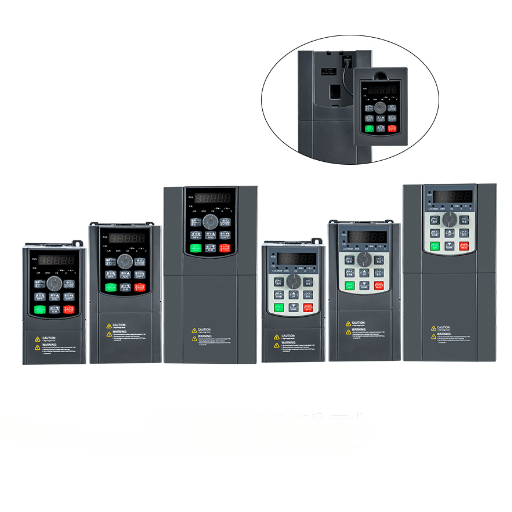
Ready to Get Your VFD Solution?
Whether you need a single drive or a complete system, we have the VFD products and engineering support to ensure your project's success.


Your single phase motor operates at maximum speed during every operational cycle. The motor maintains almost identical power consumption when the conveyor operates at reduced speed or the pump needs only half of its maximum capacity.
Your equipment experiences increased operational costs and decreased lifespan because of the continuous operational mode that restricts its speed. A VFD for single phase motor changes everything. The system provides accurate motor speed control, allows users to track energy consumption benefits, and delivers improved performance through existing motor systems.
The guide provides you with detailed information about single phase VFD operation, identification of its most valuable applications, process for model selection, and installation method that requires no estimation.
For a deeper dive on single-phase input configurations, (see our guide to single phase vfd guide)

The variable frequency drive VFD for single phase motor operation accepts single phase input power to produce variable controlled single phase output for motor drive. The system uses voltage and frequency changes to create smooth efficient motor speed control.
A single phase VFD system uses electrical supply modulation to control motor speed while standard across-the-line starters directly connect motors to full line voltage. The drive enables you to select your required speed by changing output frequency which ranges from 0 Hz to 60 Hz or higher.
These drives provide compact and cost-effective solutions for situations which lack three phase power or do not require it. The equipment operates on 220V or 240V single phase power which makes it suitable for light industrial applications and HVAC systems and agricultural machinery and workshop tools.
Shandong Electric provides multiple low voltage VFD systems which feature dedicated single phase systems. The units deliver dependable performance which our industrial clients demand but they have been designed to handle lower power needs.
A single phase VFD operates according to its basic functioning in the same way that all variable frequency drives operate. The system first transforms incoming AC power into DC power through its rectifier which then uses a capacitor bank to filter the DC power before the system produces output AC power at the required frequency and voltage.
The three-stage process AC-DC-AC enables the drive to separate motor speed control from the fixed frequency of the power line. The single phase system requires the rectifier stage to process one hot wire together with a neutral wire while the inverter stage creates a single phase motor waveform.
Current single phase VFDs include advanced control systems that use microprocessors for their operation. The system provides multiple functions which include programmable acceleration and deceleration ramps together with torque compensation and fault protection.
The motor operates at approximately half speed when the drive decreases its output frequency to 30 Hz. The VFD reduces voltage in direct proportion to the motor’s magnetic flux requirements which protects the motor windings. The motor needs coordinated voltage reduction because otherwise it risks overheating which results in torque loss.
Higher-end single phase drives use vector control algorithms which enhance their ability to produce low-speed torque and dynamic performance. This is important when you need to drive loads that experience both starting friction and changing resistance.
Adding a single phase VFD to your motor system delivers advantages that go far beyond simple speed adjustment.
A single phase motor running at full speed consumes nearly its rated power even when the mechanical load is light. A VFD reduces both speed and voltage, cutting energy use proportionally. In fan and pump applications, reducing speed by just 20% can lower power consumption by approximately 50% due to the cubic relationship between speed and power in centrifugal loads.
Direct-on-line starting pulls five to eight times the motor’s full-load current. That inrush current stresses windings, wears bearings, and flickers lights across the circuit. A VFD ramps the motor up smoothly, eliminating mechanical shock and electrical surge.
Smoother acceleration, controlled speed, and built-in overload protection all reduce wear. Motors last longer. Couplings, belts, and gearboxes experience less fatigue. Maintenance intervals stretch further apart.
The VFD system provides precise flow rates and maintains constant tension while enabling synchronized speed operation. The user sets a target value which the drive maintains through load variations.
When Chen upgraded his small textile workshop in rural Shandong, three-phase power was not an option. The single phase winding machines operated at fixed speeds which resulted in unpredictable yarn tension and excessive waste. The installation of compact single phase VFDs on his motors provided him with his first experience of variable speed control. The results showed a 40% reduction in yarn breakage while his electricity costs decreased by almost 25%. The drives paid for themselves in under eight months.
Single phase VFDs serve a surprisingly wide range of industries and equipment types. Anywhere single phase power exists and motor speed control adds value, these drives make sense.
Exhaust fans and blowers and air handling units experience major operational improvements through variable speed technology. The VFD system controls airflow to match actual demand instead of shutting down and restarting the fans. The system produces silent operation which enhances comfort control while generating significant energy savings.
Booster pumps and pressure systems and small irrigation pumps operate at higher efficiency when their speed is controlled. The system maintains steady pressure through its operation because it uses direct pressure control instead of using throttling valves which would result in energy losses and increased water hammer effects.
Grain augers, feed conveyors, milking equipment, and ventilation fans often run on single phase supplies in rural settings. A VFD adds control without requiring expensive three phase infrastructure.
Conveyors, mixers, and small packaging machines frequently use single phase motors. Precise speed adjustment improves product consistency and throughput.
Lathes, saws, grinders, and drills in small workshops frequently run on 220V single phase. Variable speed lets operators optimize cutting conditions for different materials and tool sizes.
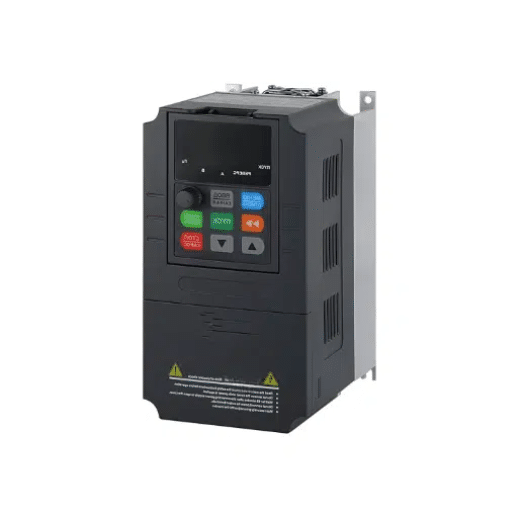
Choosing the correct VFD for single phase motor applications requires matching several key parameters. Getting this right ensures reliable operation, long service life, and full performance.
Verify your supply voltage and motor voltage. Most single phase VFDs are rated for 220V to 240V input and output. Confirm that your motor nameplate voltage matches the drive’s output rating.
Motor horsepower ratings can vary by region and standard. NEMA and IEC standards define different frame sizes and performance ratings, so always verify the motor nameplate before selecting a drive. The safest approach is to compare full-load current (FLA) on the motor nameplate against the VFD’s continuous output current rating. Select a drive with a current rating equal to or greater than the motor’s FLA.
Standard practice is to oversize by roughly one frame size for single phase applications. This provides margin for overload, voltage imbalance, and high-temperature environments.
Centrifugal loads such as fans and pumps require less starting torque than conveyors or compressors. High-torque applications may need a drive with vector control or enhanced overload capacity. Check the drive’s overload rating. Many units handle 150% overload for 60 seconds, which is adequate for most light industrial duty.
Operating temperature, humidity, dust, and vibration all affect drive life. If the drive will mount inside an enclosure or near a heat source, choose a model with adequate derating or add external cooling.
Some applications need simple potentiometer speed control. Other applications require users to provide external analog signals together with digital inputs and serial communication capabilities. The control method you choose should determine your model selection because different models require different interfaces.
Last autumn, a poultry farm in Hebei province experienced problems because their ventilation system failed to provide suitable airflow. Their fixed-speed exhaust fans operated continuously at maximum capacity, which created air currents that disturbed the flock while increasing their heating expenses.
The farm decided to use a single phase VFD solution after our engineering team conducted their evaluation of the fan motor setup. The drives now use temperature sensors to manage airflow operations. The farmers achieved better animal health which resulted in 35% reduced energy consumption and they could finally enjoy uninterrupted nighttime sleep because they no longer needed to manually adjust dampers.
Proper installation determines whether your single phase VFD performs reliably or generates noise, trips, and premature failure.
Run the VFD on its own breaker-protected circuit. Do not share the line with sensitive electronics or lighting circuits. The drive generates harmonic noise that can interfere with other equipment.
Mount the drive with adequate spacing above, below, and beside the unit for airflow. Blocked ventilation is one of the most common causes of drive overheating.
Connect protective earth according to the installation manual. Use the specified wire gauge and keep ground leads as short as possible. Good grounding reduces electrical noise and improves safety.
Route motor cables in shielded conduit or use shielded cable. Keep motor wiring separated from control and power lines. This prevents induced noise that can disturb nearby sensors and controllers.
On long line runs or in areas with poor power quality, an input reactor or EMC filter protects the rectifier and reduces harmonics fed back into the grid.
Most drives ship with default parameters. Enter your motor nameplate data: rated voltage, current, frequency, and speed. Set acceleration and deceleration ramps appropriate for your load. A too-aggressive ramp can trip overcurrent; too gentle wastes time.

Even well-installed drives occasionally need attention. Here are the most common issues and how to resolve them.
Check for mechanical binding in the load. Verify that acceleration ramp time is not set too short. Ensure the motor is properly wired and that cable insulation is intact. Oversizing the drive by one rating often eliminates nuisance trips.
Inspect cooling fans for dust buildup. Confirm ambient temperature is within the drive’s rating. Improve ventilation or add external cooling if the drive operates inside a cabinet.
Some single phase motors produce audible carrier-frequency noise when run by a VFD. Increase the carrier frequency parameter if the drive allows it. If vibration occurs only at certain speeds, check for mechanical resonance and use skip-frequency settings to avoid those bands.
Recheck motor parameter settings against the nameplate. For sensorless vector drives, perform an auto-tune procedure so the drive learns the motor’s electrical characteristics. Verify that voltage boost settings are appropriate for your motor size.
If nearby sensors or controllers malfunction when the VFD runs, improve shielding and grounding. Install ferrite cores on motor cables. Keep power and signal wiring well separated.
A VFD for single phase motor is a powerful solution, but it is not always the final answer. There are situations where upgrading to a three phase system delivers better long-term value.
Single phase VFDs are generally limited to smaller motors, typically up to 3 hp or 5 hp depending on the manufacturer and supply capacity. Above that, three phase drives and motors become more practical and cost-effective.
If you already own a three phase motor and only have single phase supply, a phase-converting VFD is an option. These drives accept single phase input and output three phase power to the motor. However, the motor must be properly derated, and not all three phase VFDs support single phase input.
As production expands, the limitations of single phase power become restrictive. Three phase systems distribute power more efficiently, reduce conductor sizes, and simplify motor starting across larger facilities.
If your facility is growing beyond single phase capacity, our engineering team can evaluate your load profile and recommend a scalable migration path.
Maria ran a small bakery in Zibo with three single phase mixers and conveyors. Each motor hammered the electrical panel on startup, and her utility bills climbed every summer.
She installed single phase VFDs as a first step and immediately saw softer starts and lower demand charges. Two years later, when she expanded into a larger facility with three phase service, she kept the same VFD expertise and simply upgraded to larger three phase drives. That early investment in speed control knowledge made her expansion smoother and her new line more efficient from day one.
The VFD system functions as the best upgrade solution for single phase motors when three phase power systems are not required. The system enables equipment operation through variable speed control, which results in energy savings, longer equipment lifespan, and better operational performance.
Key takeaways from this guide: